640 Year Old Lost Castle Unearthed Beneath Private Mansion Courtyard in France
Archaeologists have discovered a hidden, unexpected castle beneath a private courtyard in Brittany, offering new insights into its mysterious builder.
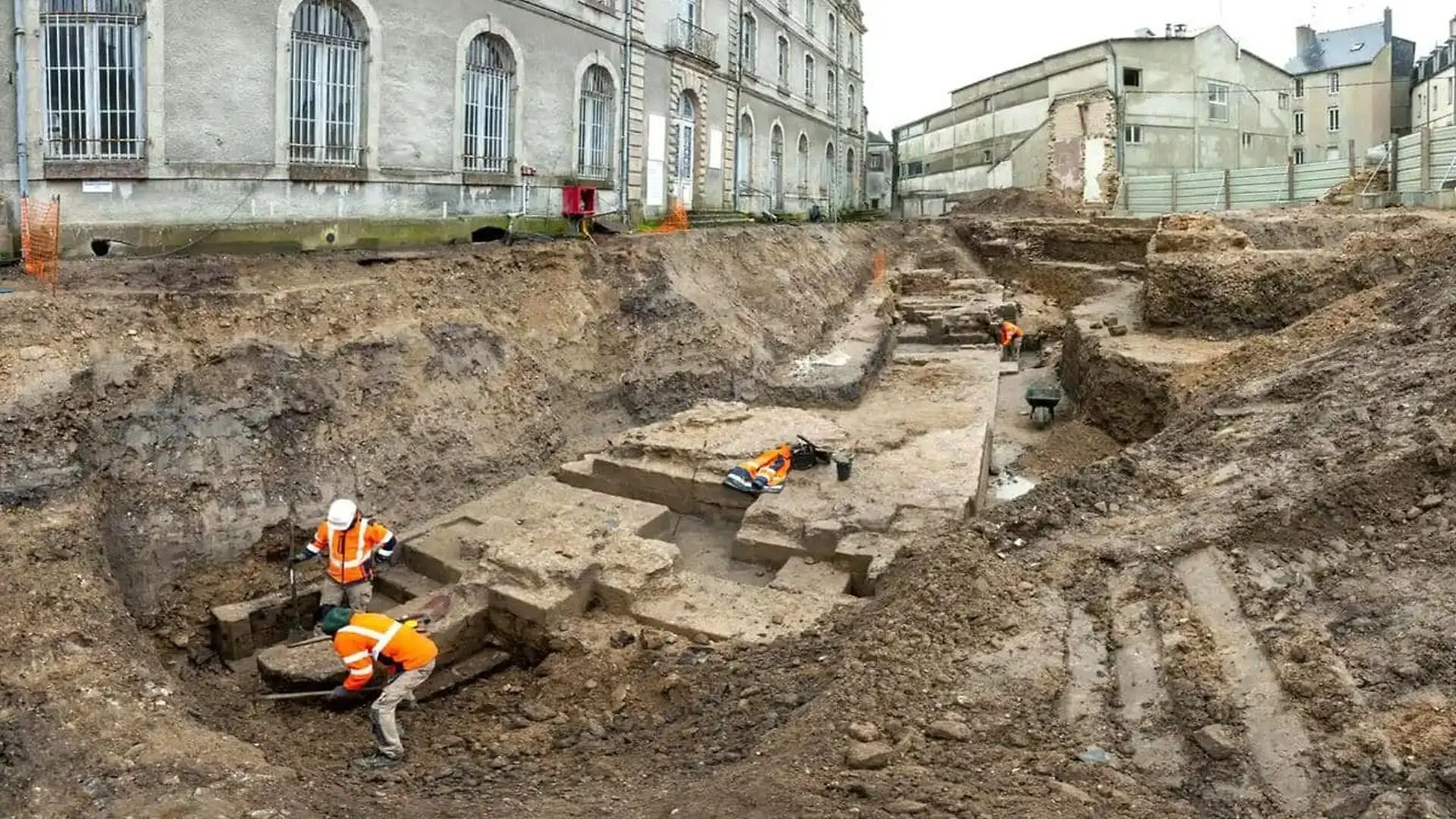
Archaeologists working in the city of Vannes in northwestern France have uncovered the remarkably preserved ruins of the Château de l’Hermine, a medieval fortress constructed in the 1380s. The site, which had long been concealed beneath the courtyard of a private mansion, was identified during excavation work ahead of a planned museum development.
The discovery, which took experts by surprise when initial traces were first spotted in 2021, sheds light on the architectural ambitions of Duke John IV of Brittany. Following the initial find at the Hôtel Lagorce, researchers returned in 2023 to conduct a thorough investigation, revealing the full scale of the ducal residence.
A Royal Footprint Uncovered
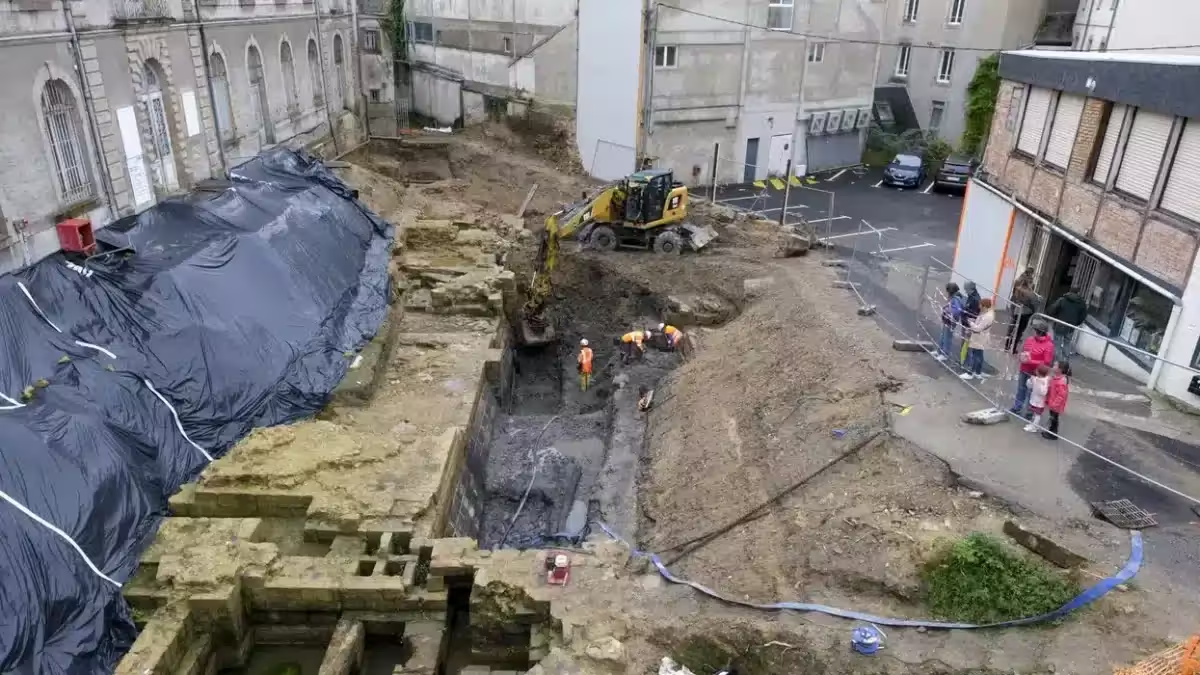
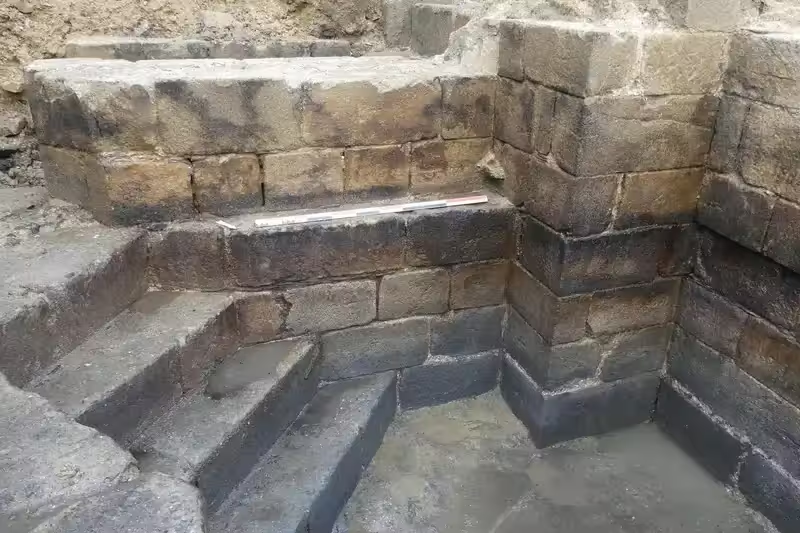
The excavations, led by the National Institute for Preventive Archaeological Research (INRAP), unearthed more than mere foundation stones. The team successfully exposed the building’s ground floor, which spans 42 meters in length and 17 meters in width. The structure features remarkably sturdy walls, some standing as high as 5.6 meters, offering a rare look at the layout of a 14th-century ducal residence.
Defensive Design and Vertical Scale
The site’s geography reveals a sophisticated defensive strategy. The castle was bordered by a moat, and its internal circulation was organized around a central corridor connecting the city-facing facade to a rear gate guarded by two massive towers. Based on the thickness of the walls and the complexity of the internal staircases, INRAP researchers believe the structure originally stood three or four stories tall. A distinct square tower was also identified on the eastern edge of the residence, further highlighting the site’s strategic importance.
Glimpses into Medieval Daily Life
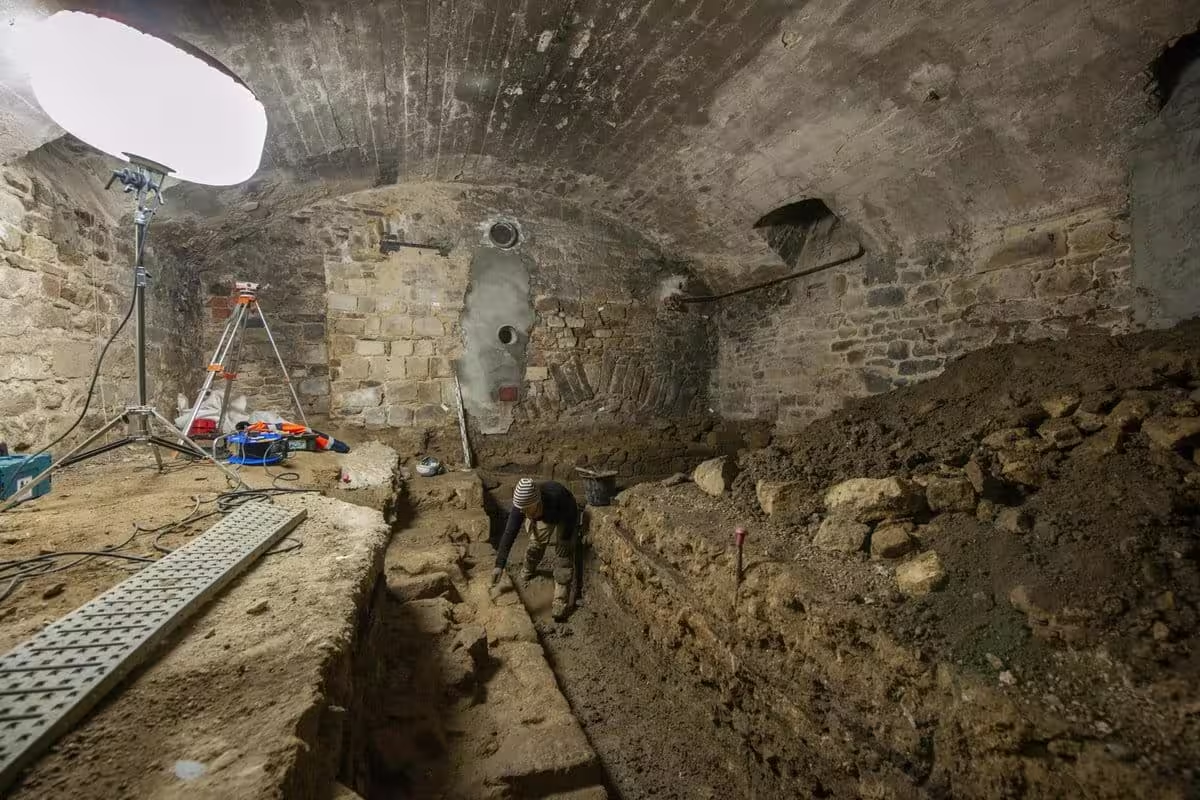
Beyond the structural masonry, the damp soil beneath the courtyard served as a preservative, yielding a collection of artifacts that provide a window into the daily lives of those who inhabited the castle. Excavations produced a variety of items, including coins, decorative jewelry, and kitchen implements such as roasting spits and cooking vessels, largely dating to the 15th and 16th centuries. The survival of delicate wooden objects, such as barrels and bowls, underscores the significance of the site’s waterlogged conditions.
According to INRAP, the quality of both the masonry and the recovered goods reflects the high standards set by Duke John IV, who was known to employ the most skilled engineers and artisans available at the time. As noted by People in early 2026, the discovery successfully bridges the gap between modern urban Vannes and its medieval foundations.
This article has been fact checked for accuracy, with information verified against reputable sources. Learn more about us and our editorial process.
Last reviewed on .
Article history
- Latest version
Reference(s)
- “Actualité | À Vannes, le château de l’Hermine refait surface (Morbihan).”, March 26, 2024 Inrap <https://www.inrap.fr/vannes-le-chateau-de-l-hermine-refait-surface-morbihan-17902>.
- <https://people.com/640-year-old-abandoned-castle-chateau-de-l-herminebeneath-discovered-beneath-mansion-11900713>.
Cite this page:
- Posted by Vikram Desai