Webb Just Traced a Record-Breaking Radio Burst to a Tiny, Star-Bursting Galaxy
Webb telescope observations have traced the most distant fast radio burst ever recorded to a strange, young dwarf galaxy 3 billion years after the Big Bang.
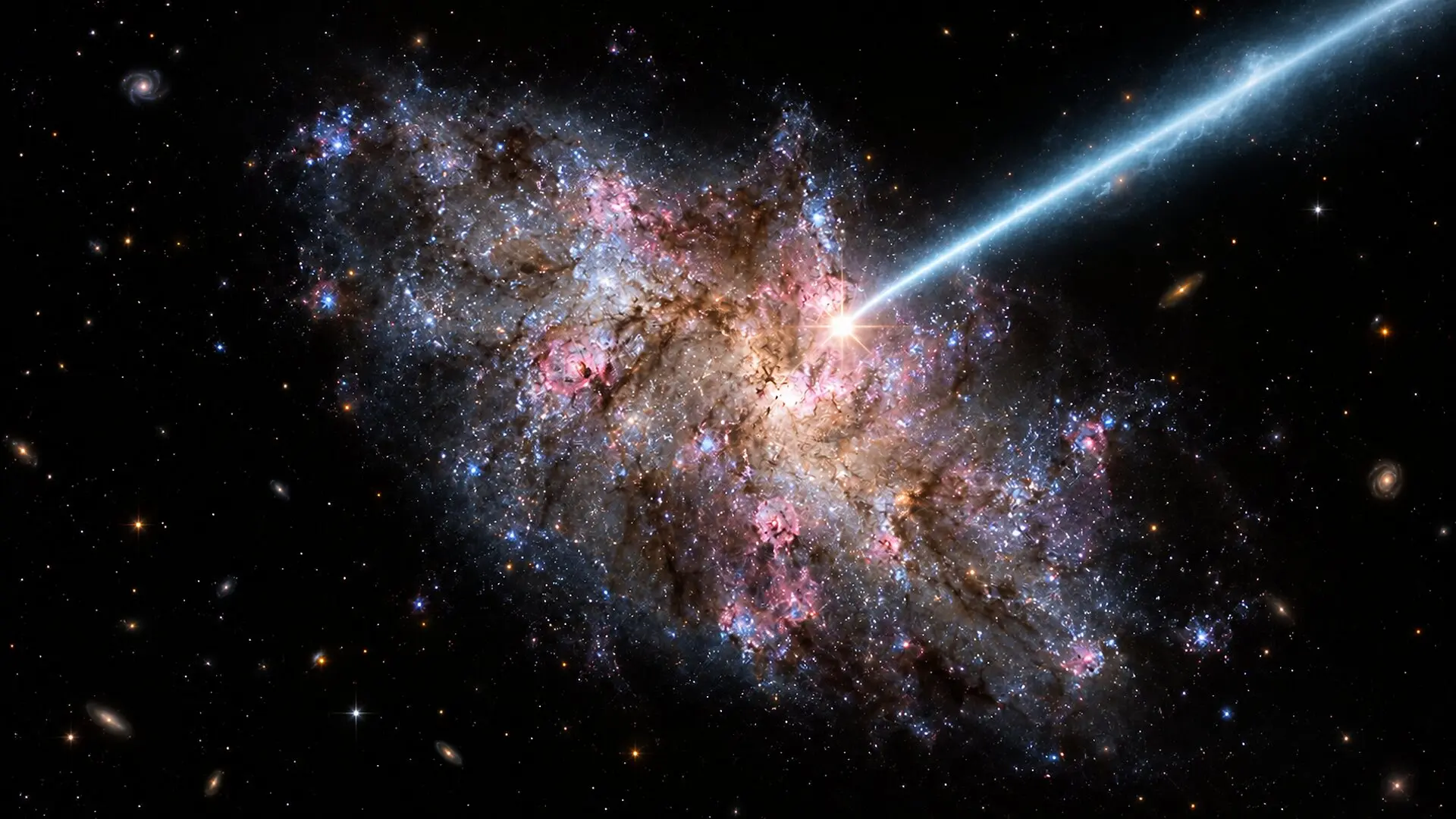
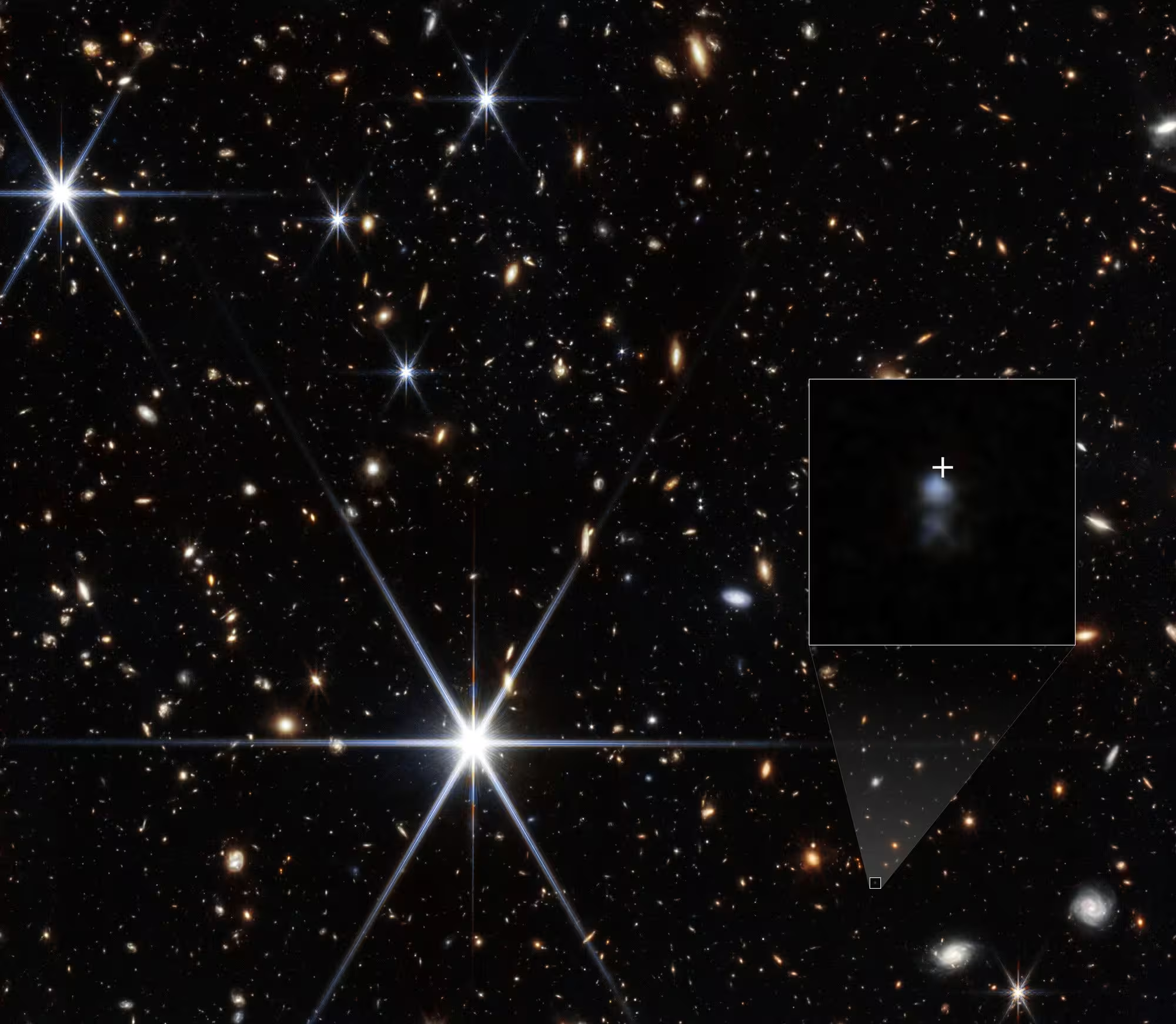
Astronomers have traced a fleeting radio flash to a surprisingly humble origin. Utilizing the advanced observational power of NASA’s James Webb Space Telescope (JWST), a research team led by the University of Sydney has identified the home of FRB 20240304B, the most distant fast radio burst (FRB) ever linked to a specific galaxy.
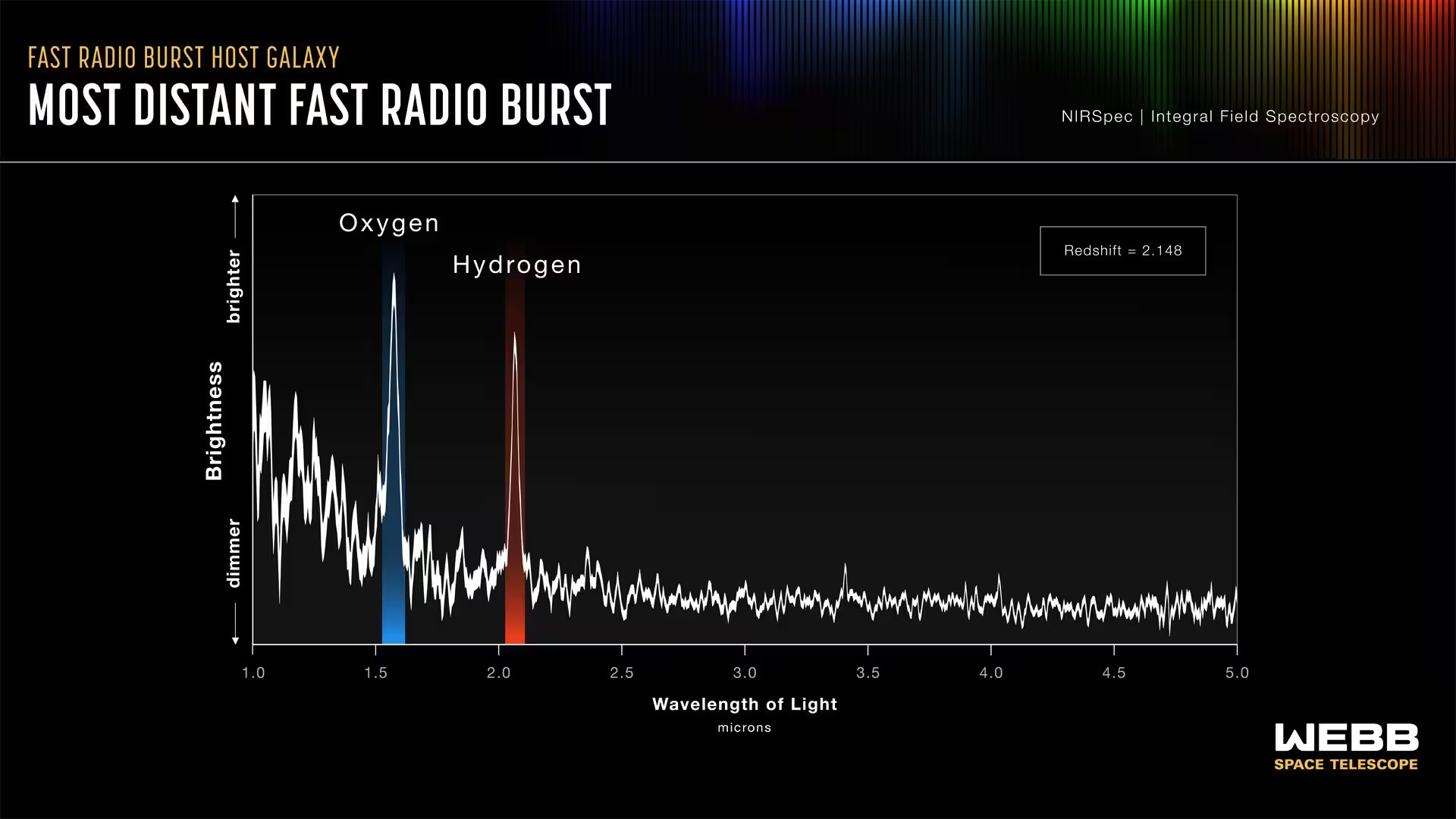
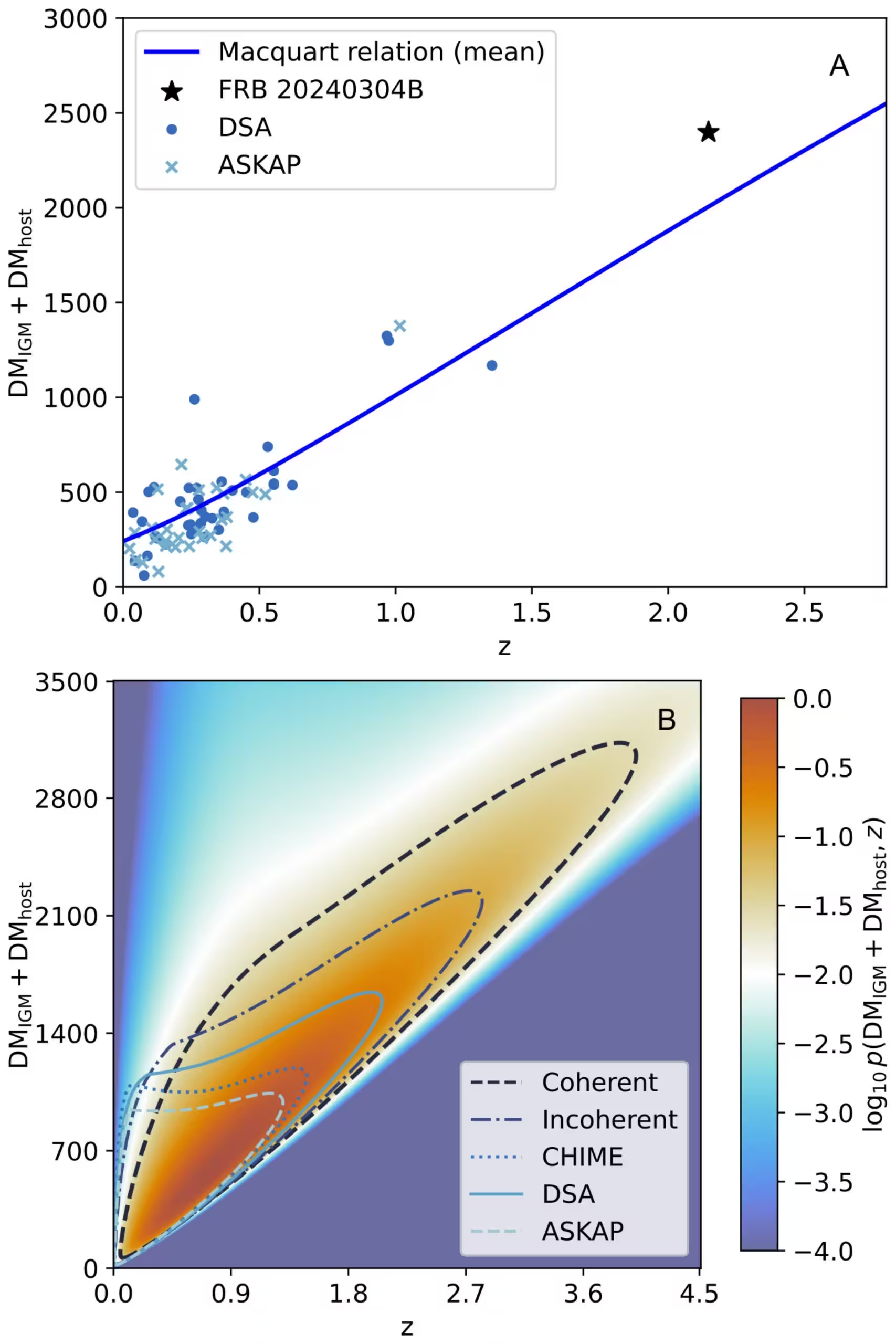
The discovery, detailed in the journal Science, places the origin of this powerful cosmic signal at a redshift of 2.148. This corresponds to an era approximately 3 billion years after the Big Bang, during the height of the universe’s stellar production known as “cosmic noon.”
Unlocking a Cosmic Distance Record
The signal was initially detected by the MeerTRAP project using South Africa’s MeerKAT radio telescope. Because FRBs last only a few milliseconds, pinpointing their exact origin is notoriously difficult. While the radio data provided a tantalizing hint of a distant source, it lacked the precision necessary to confirm a host galaxy. Subsequent deep-field imaging from optical telescopes proved insufficient, as the host was far too faint to detect.
It was only through the infrared sensitivity of the JWST’s Near-Infrared Camera (NIRCam) that researchers could isolate a tiny, dim galaxy just 0.23 arcseconds from the burst’s calculated position. Spectroscopic analysis via the telescope’s Near-Infrared Spectrograph (NIRSpec) confirmed the galaxy’s redshift, shattering the previous record for a localized FRB host, which stood at a redshift of 1.016.
Insights into the Nature of FRBs
The host galaxy is an outlier compared to those of previously studied bursts. While most FRB hosts are massive, well-established star-forming galaxies, this host is a compact dwarf galaxy characterized by intense, rapid star formation. The team’s analysis suggests that the galaxy is relatively poor in heavy elements and has undergone a massive growth spurt, with roughly 90 percent of its stellar mass generated in the 30 million years leading up to the burst.
This youthful environment serves as a critical diagnostic tool. It strongly favors models involving young, highly magnetic neutron stars known as magnetars, which can emerge rapidly following a supernova. Conversely, the data makes it increasingly unlikely that the burst resulted from the merger of binary neutron stars, a process that typically requires a much longer time to develop.
“Our work suggests that it’s very unlikely that this FRB was produced by a merger,” noted lead author Manisha Caleb.

Probing the Intergalactic Medium
Beyond the source itself, the signal offers a unique opportunity to study the matter it encountered on its journey across the cosmos. As the radio waves traveled toward Earth, they passed through various ionized environments, causing a frequency-dependent delay known as dispersion. By mapping this dispersion against the galaxy’s confirmed redshift, researchers can better test the Macquart relation, a fundamental tool for estimating the density of ordinary matter in the universe.
The signal also bore the hallmarks of turbulent, ionized plasma along its path, evidenced by pulse broadening and polarization changes. These details provide scientists with a rare window into the magnetized structures that populate the vast, empty spaces between galaxies.
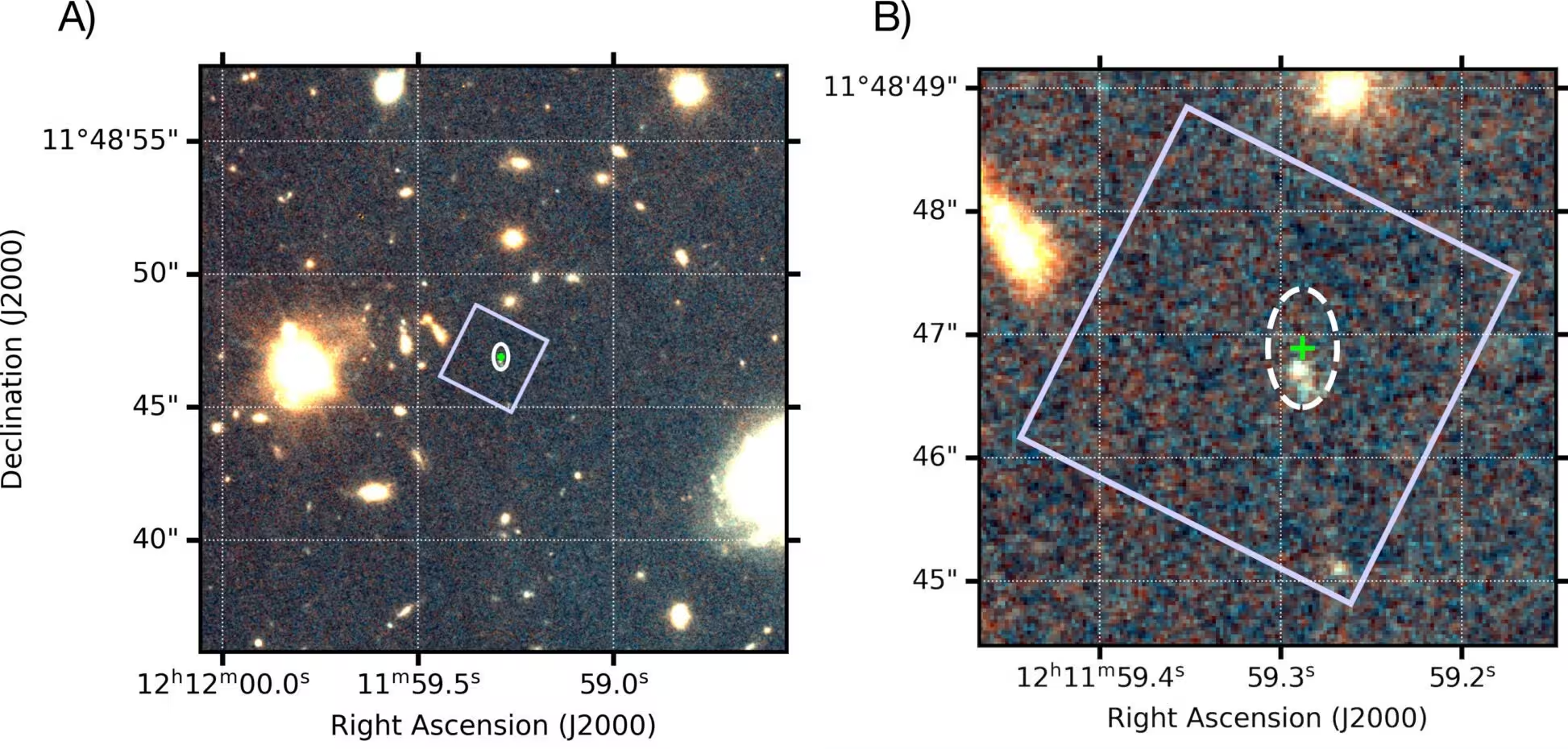
This discovery underscores the necessity of multi-wavelength cooperation in modern astronomy. While radio telescopes excel at finding these ephemeral signals, the infrared capabilities of observatories like Webb remain essential for characterizing the distant, faint galaxies that host them. As more of these signals are located, researchers hope to determine whether such dwarf galaxies are standard birthplaces for FRBs or if this event represents a unique exception.
This article has been fact checked for accuracy, with information verified against reputable sources. Learn more about us and our editorial process.
Last reviewed on .
Article history
- Latest version
Reference(s)
- Caleb, Manisha., et al. “A fast radio burst at redshift 2, three billion years after the Big Bang.” Science, October 8, 2026 American Association for the Advancement of Science (AAAS), doi: 10.1126/science.adz2675. <https://www.science.org/doi/10.1126/science.adz2675>.
Cite this page:
- Posted by Aisha Ahmed