NASA Is Turning Trash Into Treasure To Build Heat Shields For Future Mars Missions
NASA is testing 12 experimental heat shields on a doomed cargo spacecraft, potentially revolutionizing the safety and success of future Mars missions.
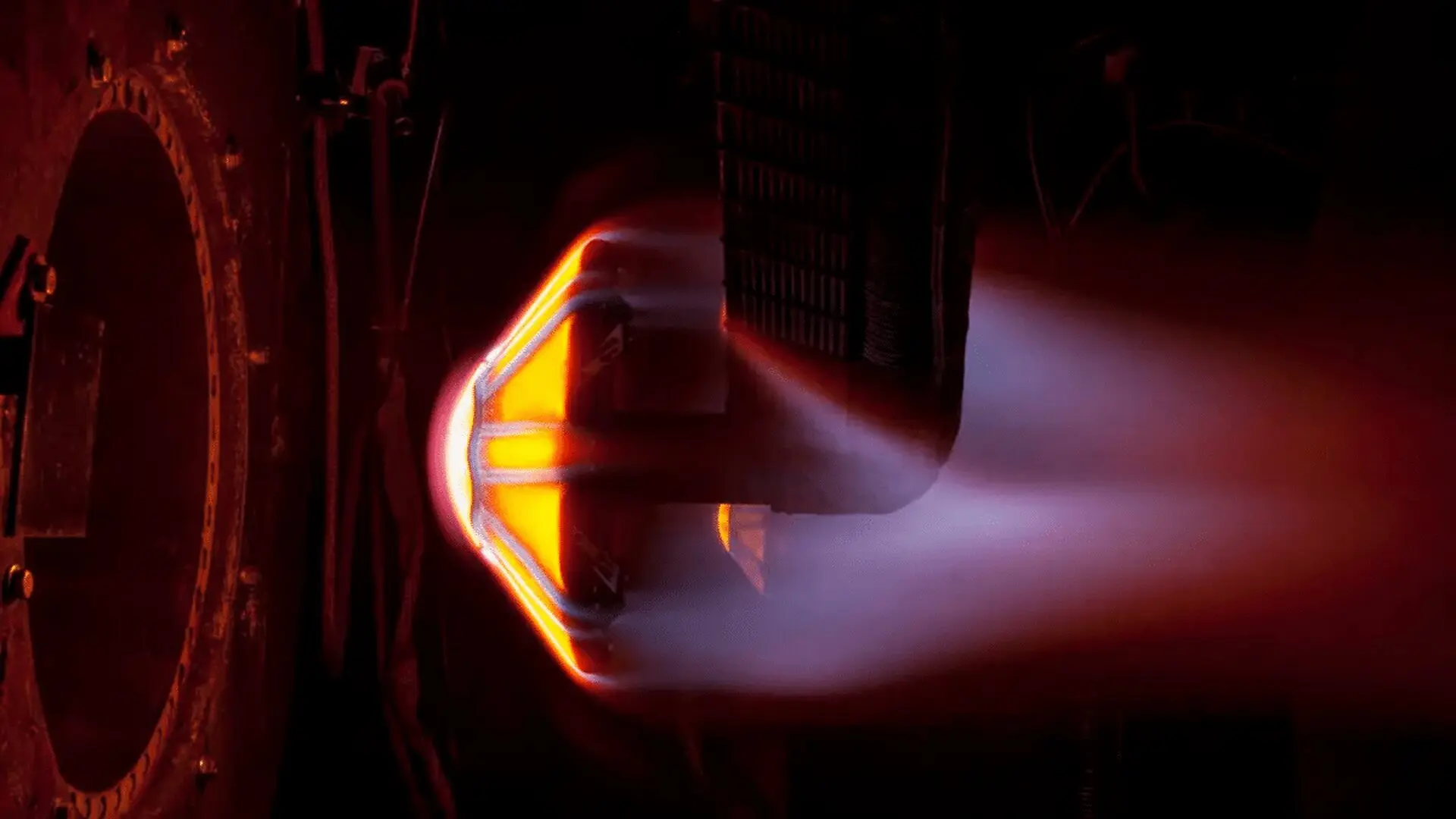
NASA is repurposing a departing cargo spacecraft, destined for destruction, into a high-speed laboratory to test next-generation thermal protection systems. As the Cygnus XL vessel completes its 24th commercial resupply mission for the International Space Station, it carries 12 experimental capsules designed to survive the intense heat of atmospheric reentry, providing a rare opportunity to gather real-world data for future Martian exploration.
Transforming Orbital Debris into Cutting-Edge Research
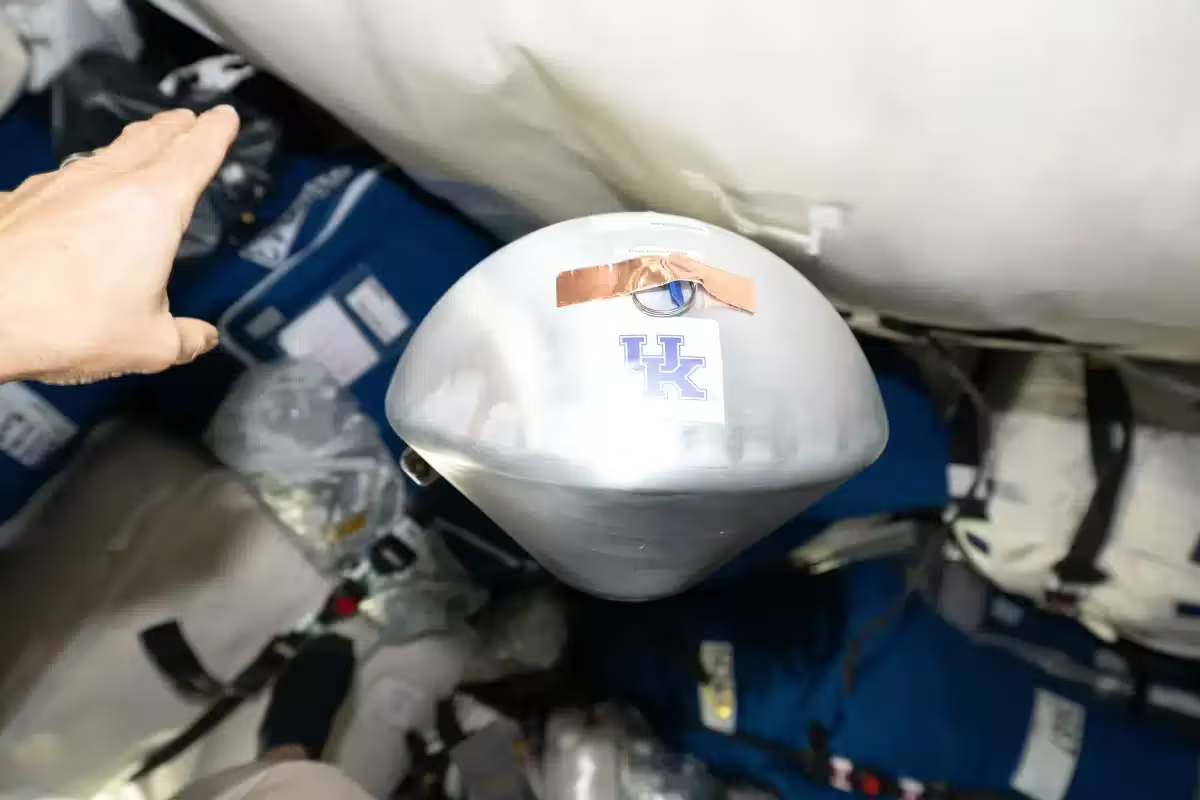
The Kentucky Reentry Probe Experiment (KREPE-3) represents a shift in how aerospace researchers evaluate heat shield technology. Rather than relying solely on computer simulations or ground-based testing, the team—which includes students from the University of Kentucky alongside various NASA centers and commercial partners—is utilizing the final, destructive descent of the Cygnus XL as a testing ground. Once the cargo vehicle begins its planned atmospheric breakup, the 12 small probes are designed to detach and relay critical data back to Earth.
Before the spacecraft left the ISS, astronauts activated these capsules, which are equipped with specialized instrumentation to monitor magnetic fields, light, pressure, motion, and extreme temperatures. The mission is part of NASA’s EPSCoR program, which aims to cultivate new engineering talent while advancing the agency’s long-term exploration goals.
Pioneering Materials for Future Deep Space Missions
The capsules house a diverse array of thermal shielding, ranging from heritage ceramic materials similar to those used on the Space Shuttle to innovative, 3D-printed systems developed by NASA’s Johnson Space Center and the Oak Ridge National Laboratory. A primary focus of the experiment is the evaluation of MERINO—Materials Engineered for Re-entry using Innovative Needling Operations. Developed at NASA’s Ames Research Center, this material uses layered carbon and phenolic fibers stitched into a flexible, felt-like fabric.
“It’s a smart way to get flight data on materials that are still in development,” noted Keith Peterson, a materials engineer at NASA’s Ames Research Center. “We’re essentially hitching a ride on a vehicle that’s already coming back to Earth.”
Because MERINO is both lightweight and flexible, it is viewed as a high-potential solution for missions to Mars, where the planet’s thin atmosphere necessitates specialized entry strategies compared to those used on Earth.
Testing Geometries and Advanced Deployable Tech
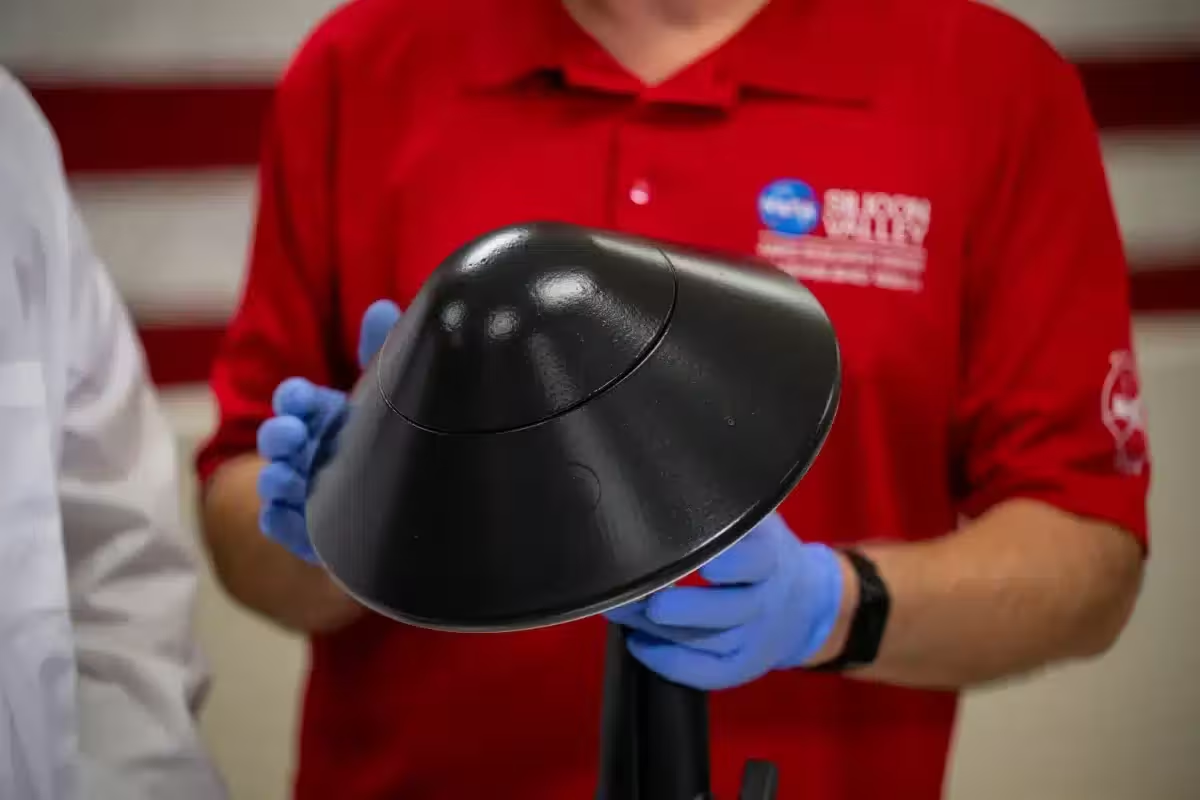
KREPE-3 is also exploring how spacecraft shape influences aerodynamic stability during reentry. One probe utilizes a dual-cone structure, while another mirrors the aeroshell design intended for the Dragonfly mission to Saturn’s moon, Titan. The latter uses Phenolic Impregnated Carbon Ablator (PICA), a proven heat-shielding material with a strong track record on missions like Mars 2020 and Stardust.
Researchers are also testing the Adaptable Deployable Entry and Placement Technology (ADEPT), which functions like a folding umbrella. By expanding its surface area, this deployable heat shield could eventually allow spacecraft to shed speed more effectively while enabling larger cargo to fit inside smaller, more cost-effective launch vehicles.
Building a Safer Future for Space Travel
By leveraging missions already slated for disposal, KREPE-3 provides a cost-effective path to critical data that would otherwise be difficult to secure. The insights gained from these probes will help refine thermal models and validate innovative manufacturing processes, directly informing the design of next-generation heat shields.
While the immediate focus is on developing robust protection for planetary probes and lunar return missions, the long-term objective is to push the boundaries of what is possible in extreme entry environments. “We’re pushing the boundaries of what heat shields can do,” said Peterson, “and we’re testing them in a way that’s fast, affordable, and incredibly effective.”
This article has been fact checked for accuracy, with information verified against reputable sources. Learn more about us and our editorial process.
Last reviewed on .
Article history
- Latest version
Cite this page:
- Posted by David Anderson