Webb Telescope Detects Chemical Fingerprints of Violent Planetary Collisions in Deep Space
NASA’s James Webb telescope has detected the dusty remains of 21 planetary collisions, offering new insights into how solar systems evolve and destabilize.
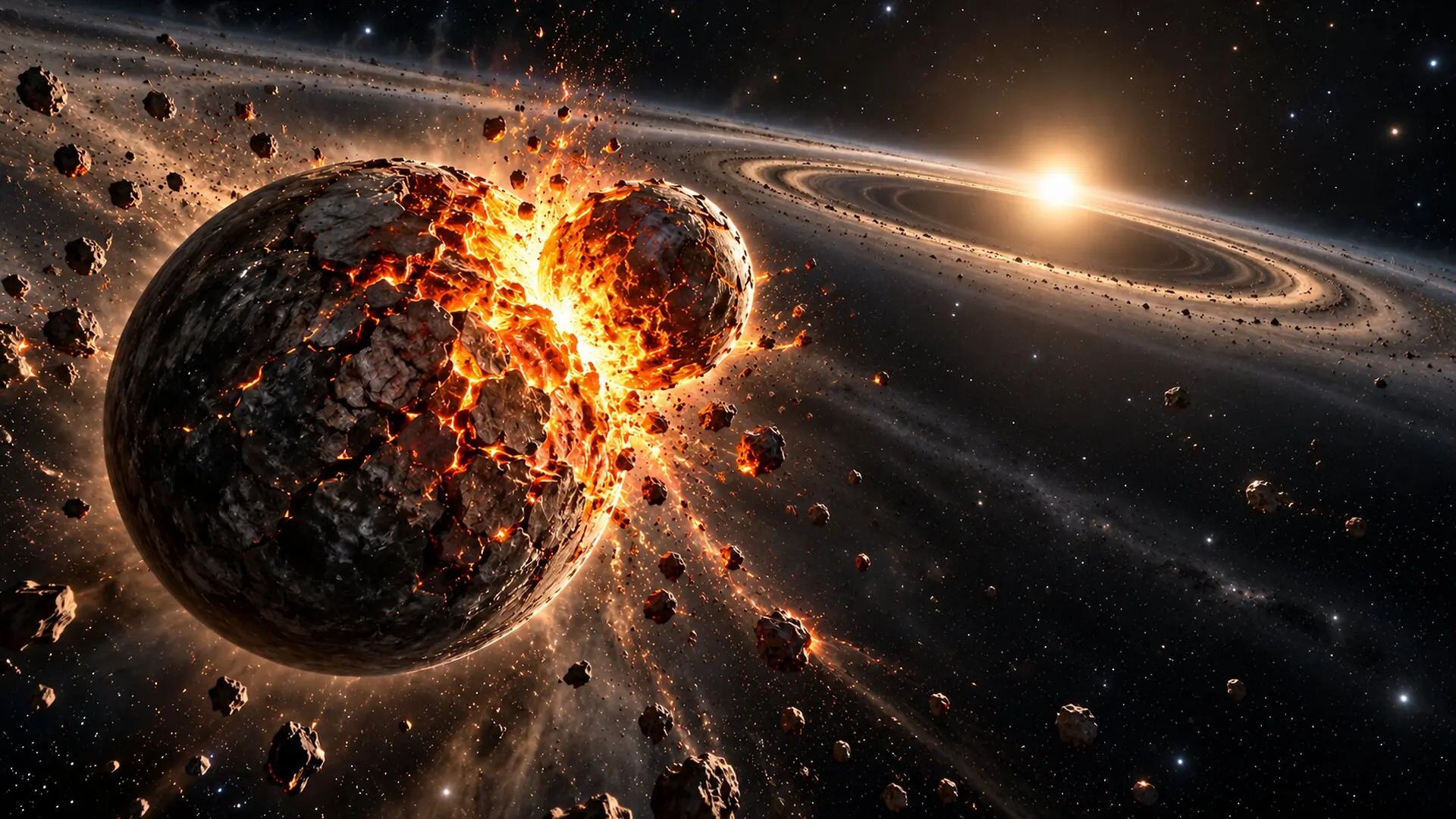
Planetary collisions are violent, transformative events that shape the architecture of solar systems, yet their signatures often fade long before observers can witness them. By analyzing the infrared light emitted by 21 extreme debris disks, researchers have identified distinct mineralogical fingerprints that may reveal the nature of these catastrophic impacts occurring around distant stars.
Led by Kate Su of the Space Science Institute, the research team synthesized data from NASA’s James Webb Space Telescope (JWST) and the retired Spitzer Space Telescope. The study, published in The Astrophysical Journal, categorizes these debris disks into two primary groups based on their chemical composition, offering a window into the energetic processes that govern planet formation.
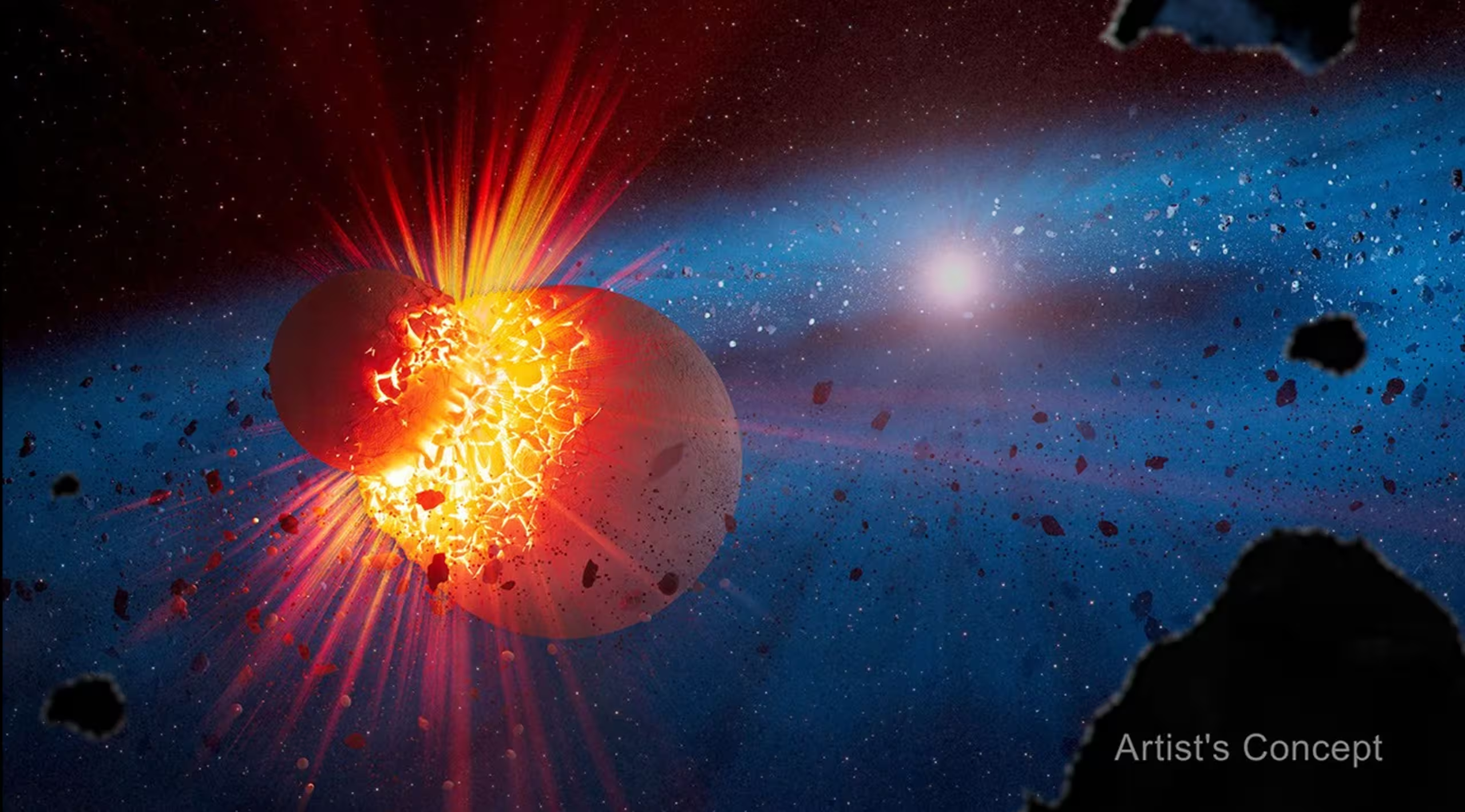
Categorizing the aftermath of cosmic impacts
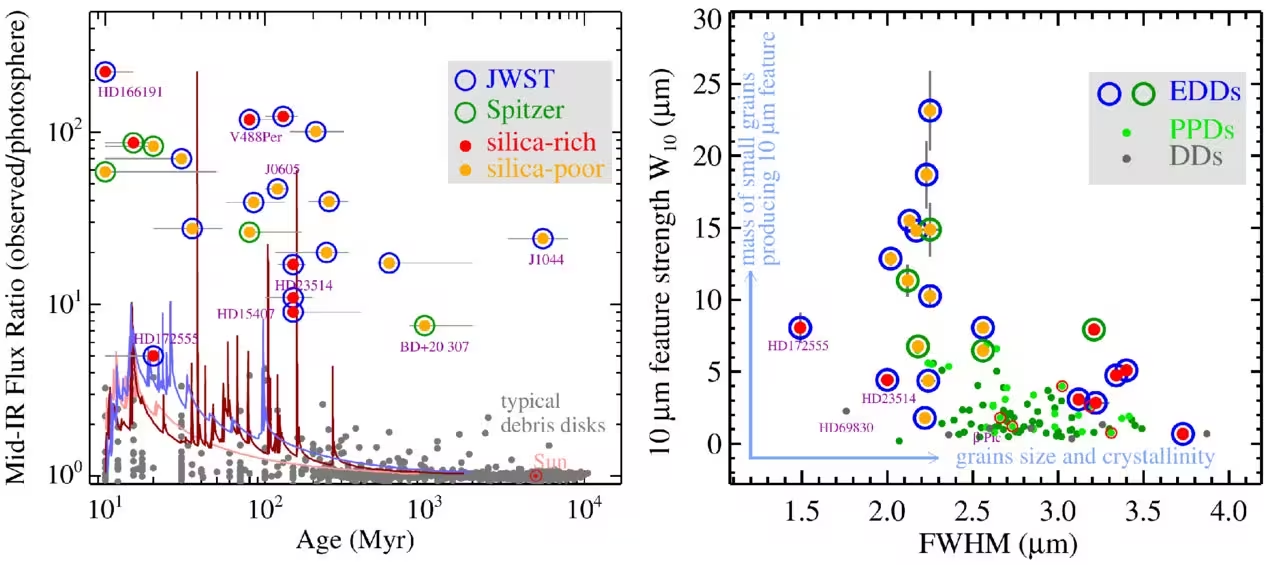
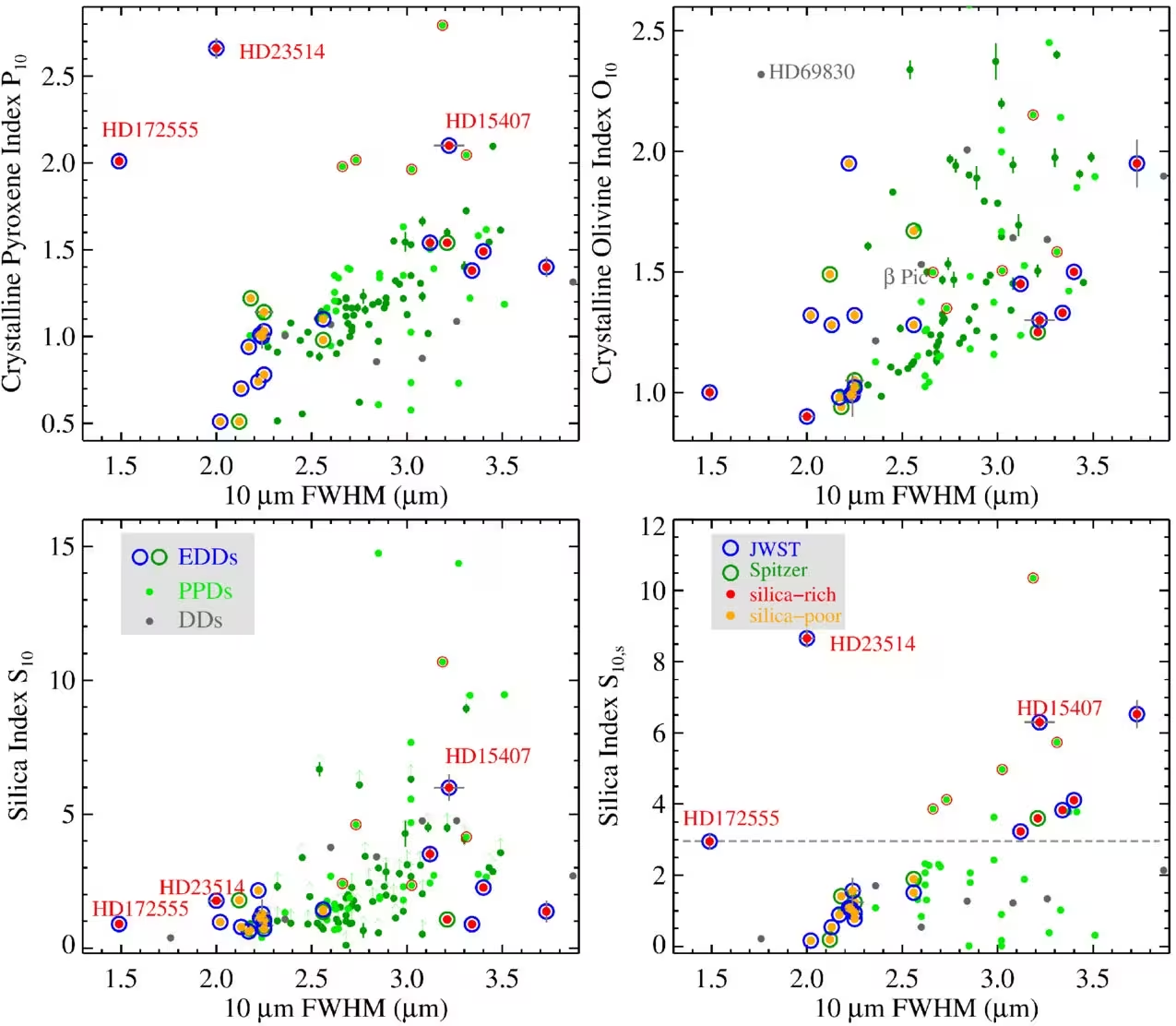
Extreme debris disks are characterized by an unusually high concentration of warm, orbiting dust located in regions where rocky planets typically form. These systems are rare, appearing in only about 1% of debris disks at similar ages, which makes them prime targets for studying active planetary assembly. By utilizing JWST’s Mid-Infrared Instrument, researchers examined the spectral features around the 10-micrometer mark, a region sensitive to silicate minerals.
The analysis revealed that 8 of the 21 disks were silica-rich, while the remaining 13 were classified as silica-poor. The team suggests that this chemical divide is driven by the energy of the initial impact. In silica-rich systems, collisions are likely energetic enough to vaporize significant portions of the planetary bodies involved. As this rock vapor cools, it condenses into tiny droplets that are subsequently shattered into fine dust. This process is consistent with high-energy impacts between Mars-sized planetary embryos.
Conversely, silica-poor disks may result from less energetic encounters, such as collisions between smaller, Moon-sized objects or grazing impacts. While these disks still exhibit signs of thermal processing, the lower energy levels prevent the widespread vaporization of rock.
Age and variability as indicators of planetary evolution
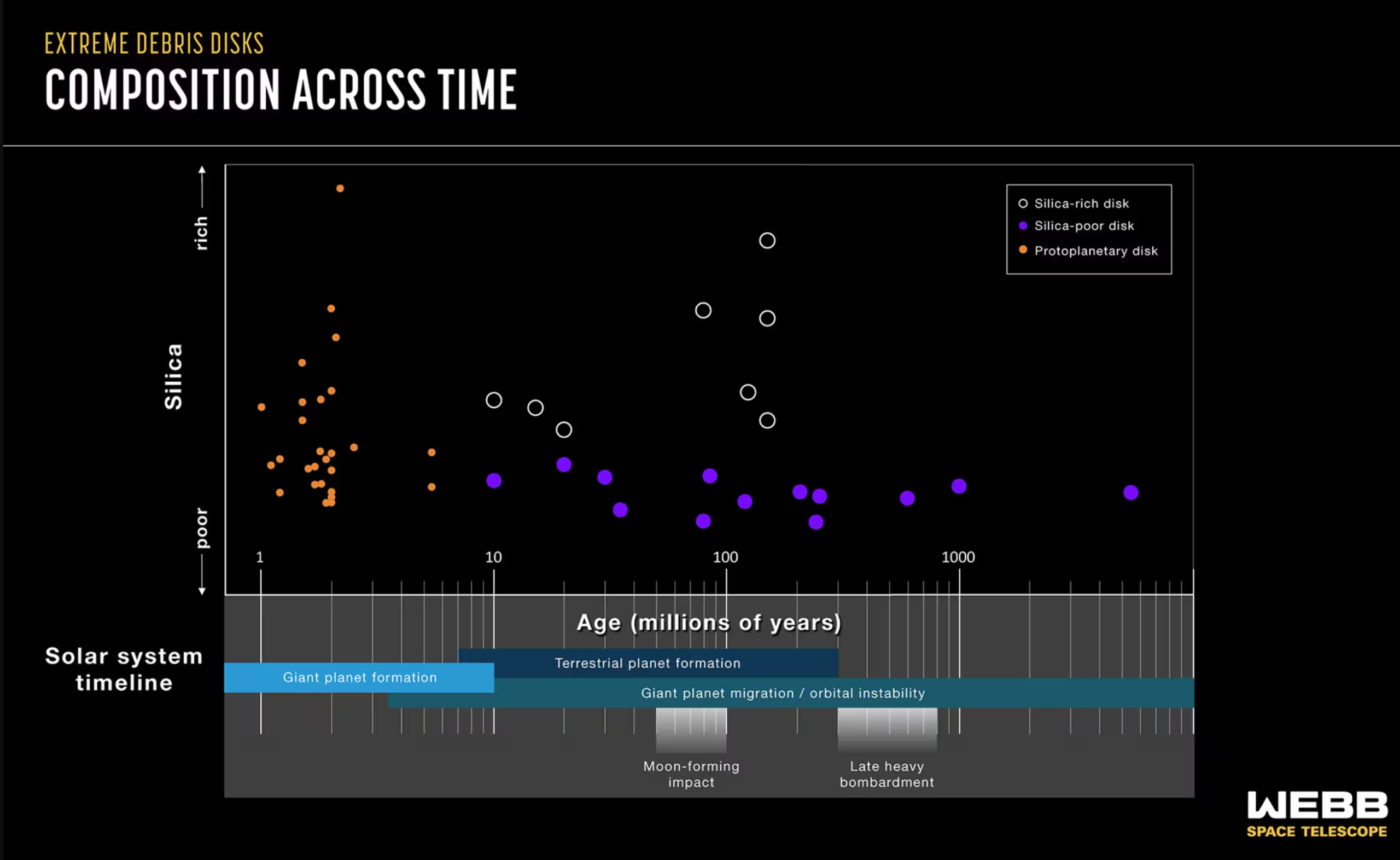
The study highlights a potential temporal boundary in planetary development: all identified silica-rich disks surround stars younger than 300 million years. This aligns with current theoretical models that place the most intense phase of rocky-planet growth within the first few hundred million years of a system’s life. While the sample size of older stars remains small, the absence of silica-rich signatures in systems exceeding 300 million years suggests that the most violent collisions characterize the early stages of planetary architecture.
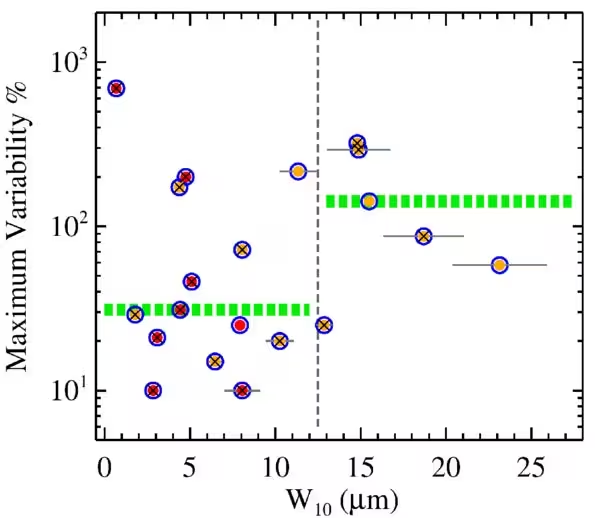
Beyond composition, the researchers tracked changes in infrared brightness over decades. They discovered that some silica-poor disks exhibited significant fluctuations in brightness, sometimes up to five times greater than their counterparts. This variability might point to secondary, less energetic collisions triggered by shifting planetary orbits rather than the initial, chaotic assembly of rocky worlds.
Reflecting on Earth’s history
These distant observations provide a modern lens through which to view the early solar system. The widely accepted giant-impact hypothesis for the formation of Earth’s Moon—where a Mars-sized object collided with the proto-Earth—bears similarities to the events likely occurring in the silica-rich systems observed by the team. By expanding these surveys, astronomers hope to better distinguish between the collisions that build planets and those that merely rearrange existing planetary material.
“Our work on extreme debris disks helps us bring together the big picture of what we currently understand,” said Su. Future observations will be critical to determine whether these mineral signatures are universal markers of planetary growth or if they represent unique paths taken by diverse stellar systems.
Further reading and research
For those interested in the dynamics of planetary debris and the evolution of stellar systems, the following resources provide additional context:
- Carbon monoxide gas produced by a giant impact in the inner region of a young system(Nature, 2021)
- Immediate Origin of the Moon as a Post-impact Satellite(The Astrophysical Journal Letters, 2022)
- Large impacts around a solar-analog star in the era of terrestrial planet formation(Science, 2014)
- The Late Heavy Bombardment(Annual Review of Earth and Planetary Sciences, 2017)
- Evolution of Debris Disks(Annual Review of Astronomy and Astrophysics, 2008)
This article has been fact checked for accuracy, with information verified against reputable sources. Learn more about us and our editorial process.
Last reviewed on .
Article history
- Latest version
Reference(s)
- “Space Science Institute.” <http://www.spacescience.org/index.php>.
- Su, Kate Y. L.., et al. “Extreme Debris Disks: Insights into Violent Collisions in Planet Formation and Destruction.” The Astrophysical Journal, vol. 1010, no. 1, October 1, 2026, pp. 1 American Astronomical Society, doi: 10.3847/1538-4357/ae88fe. <https://doi.org/10.3847/1538-4357/ae88fe>.
- Schneiderman, Tajana. “Carbon monoxide gas produced by a giant impact in the inner region of a young system - Nature.”, vol. 598, no. 7881, pp. 425-428. Nature, doi: 10.1038/s41586-021-03872-x. <https://www.nature.com/articles/s41586-021-03872-x>.
- Kegerreis, J. A.., et al. “Immediate Origin of the Moon as a Post-impact Satellite.” The Astrophysical Journal Letters, vol. 937, no. 2, October 4, 2022, pp. L40 American Astronomical Society, doi: 10.3847/2041-8213/ac8d96. <https://doi.org/10.3847/2041-8213/ac8d96>.
- Meng, Huan Y. A.., et al. “Large impacts around a solar-analog star in the era of terrestrial planet formation.” Science, vol. 345, no. 6200, August 29, 2014, pp. 1032-1035. American Association for the Advancement of Science (AAAS), doi: 10.1126/science.1255153. <https://doi.org/10.1126/science.1255153>.
- Bottke, William F.., et al. “The Late Heavy Bombardment.” Annual Review of Earth and Planetary Sciences, vol. 45, no. 1, August 30, 2017, pp. 619-647. Annual Reviews, doi: 10.1146/annurev-earth-063016-020131. <https://doi.org/10.1146/annurev-earth-063016-020131>.
- Wyatt, Mark C.. “Evolution of Debris Disks.” Annual Review of Astronomy and Astrophysics, vol. 46, no. 1, September 1, 2008, pp. 339-383. Annual Reviews, doi: 10.1146/annurev.astro.45.051806.110525. <https://doi.org/10.1146/annurev.astro.45.051806.110525>.
Cite this page:
- Posted by Aisha Ahmed