25-Year Study Reveals Major Gaps in Lung Cancer Surgery Research
An analysis of global publishing trends shows that modern immunotherapy has drastically increased surgical complexity, yet functional patient outcomes are rarely tracked.
Lung cancer patients facing complex tumor treatments are at the center of a major shift in surgical science, as new data reveals how medical research priorities have evolved over the past quarter-century. Investigators examining global publication patterns have uncovered a striking disconnect between the technical difficulties introduced by modern therapies and what medical literature actually measures.
While oncologists have increasingly turned to treatments administered before surgery, such as chemotherapy combined with immunotherapy, these therapies often leave behind dense scar tissue and altered blood vessel structures. These physical changes make operations considerably more challenging for thoracic surgeons in the operating room.
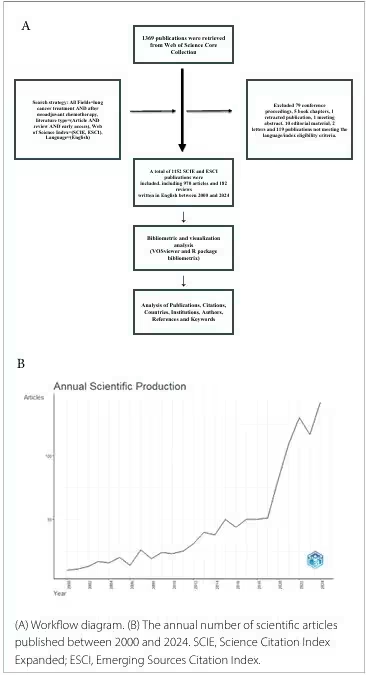
To understand how the scientific community has responded to these challenges, researchers analyzed 1,152 surgical oncology manuscripts published between 2000 and 2024. The bibliometric study, published in the Sao Paulo Medical Journal, tracked publication output, institutional contributions, and shifting keyword trends across global thoracic surgery centers.
How Global Research Output Accelerated Over Twenty-Five Years
Scientific output related to surgery after preoperative therapy expanded at an annual rate of 11.69 percent across the study period. While annual publication counts remained modest from 2000 through 2006, they climbed steadily to reach 50 publications per year by 2018 before accelerating sharply between 2019 and 2024, rising to 142 annual publications.
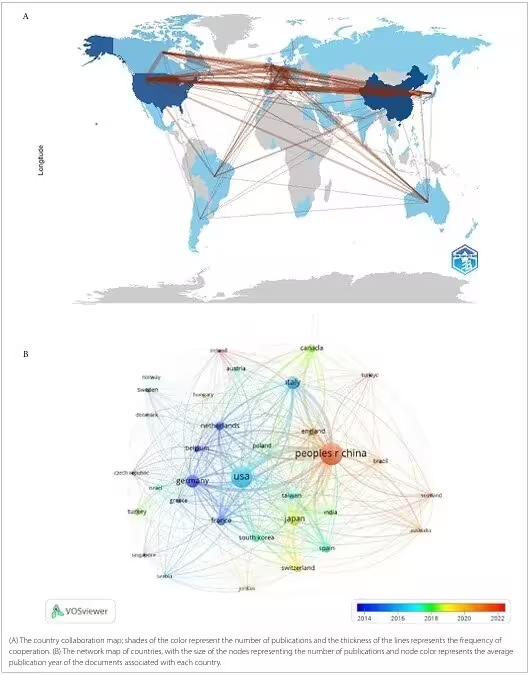
Geographic analysis showed that Chinese institutions led total publication volume with 330 manuscripts, which accounted for 28.7 percent of the global output. Researchers in the United States contributed 222 publications, achieving the highest citation impact with an average of 50.9 citations per article. Institutions such as the University of Texas MD Anderson Cancer Center and Memorial Sloan Kettering Cancer Center drove much of this high-impact work by pioneering techniques that preserve healthy lung tissue.
The Immunotherapy Era Brought New Technical Complexities
The widespread adoption of immunotherapy starting around 2018 marked a major turning point in surgical oncology. Keyword analysis revealed a three-fold increase in terms such as “surgical complexity” and “postoperative complications” following 2018. This surge reflects growing academic awareness of the dense tissue fibrosis and intraoperative hurdles that follow modern chemoimmunotherapy regimens.
Despite these rising technical demands, the authors found that only 23 percent of studies published after 2018 examined limited resections. Furthermore, regional adoption of minimally invasive techniques varied widely. For instance, while high publication numbers from East Asia correlated with high adoption rates of video-assisted thoracoscopic surgery, high-volume centers in the United States reported lower utilization rates of these minimally invasive approaches in their published clinical series.
Critical Gaps Remain in Tracking Patient Quality of Life
Perhaps the most concerning finding involves the lack of attention given to functional outcomes and patient recovery. Out of 970 original investigations analyzed, only 12 percent incorporated pulmonary function tests or measurements of forced expiratory volume in one second into their keyword sets.
The authors emphasize that preserving respiratory function is one of the primary justifications for administering preoperative therapy in the first place. Yet, roughly 90 percent of the literature continues to focus primarily on traditional cancer control endpoints rather than postoperative quality of life. With terms like “elderly” and “comorbidity” showing a 4.5-fold increase in research literature since 2015, the study points to an aging patient population where functional recovery matters just as much as long-term survival.
The research was published in Sao Paulo medical journal = Revista paulista de medicina on November 13, 2026.
This article has been fact checked for accuracy, with information verified against reputable sources. Learn more about us and our editorial process.
Last reviewed on .
Article history
- Latest version
Reference(s)
- Karataş, Okan., et al. “Global evolution of surgical complexity after neoadjuvant therapy: a bibliometric and quantitative trend analysis.” Sao Paulo Medical Journal, vol. 144, no. 5, January 1, 2026 FapUNIFESP (SciELO), doi: 10.1590/1516-3180.2026.3715.31082026. <https://doi.org/10.1590/1516-3180.2026.3715.31082026>.
Cite this page:
- Posted by Susan White