Astronomers Discover the First Known Green Star and the Reddest Star Ever Seen
Astronomers have discovered a mysterious color in starlight that defies current astrophysical models, challenging our understanding of stellar physics.

For most of the universe, a star’s color is a straightforward indicator of its temperature. Cool stars cast an orange glow, sun-like stars appear white, and the most searingly hot stellar bodies burn a brilliant pale blue. However, a new study from researchers at the University of Warwick reveals that white dwarfs—the dense, cooling embers left behind by stars like our Sun—defy these standard rules, with some displaying colors that are entirely unexpected to the human eye.
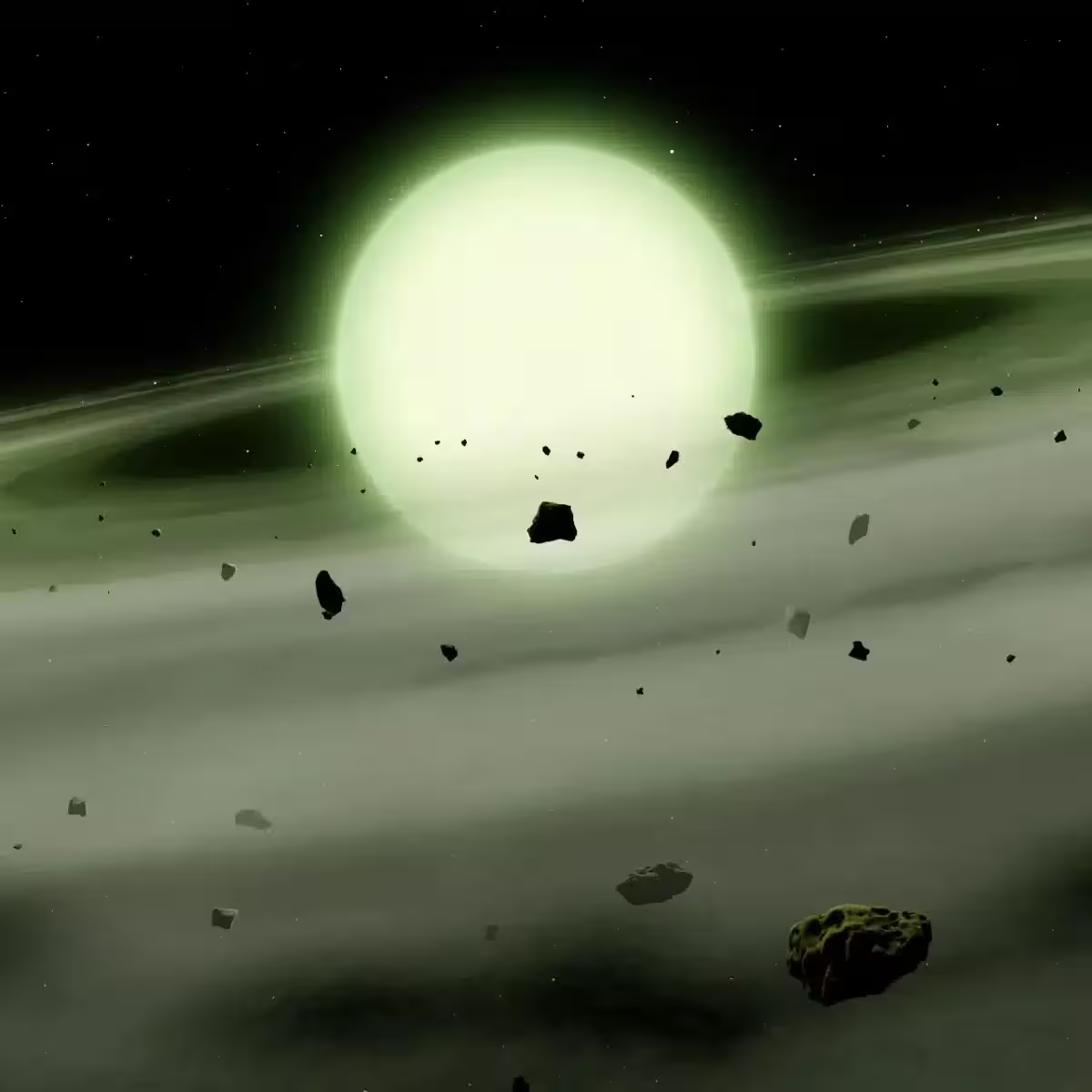
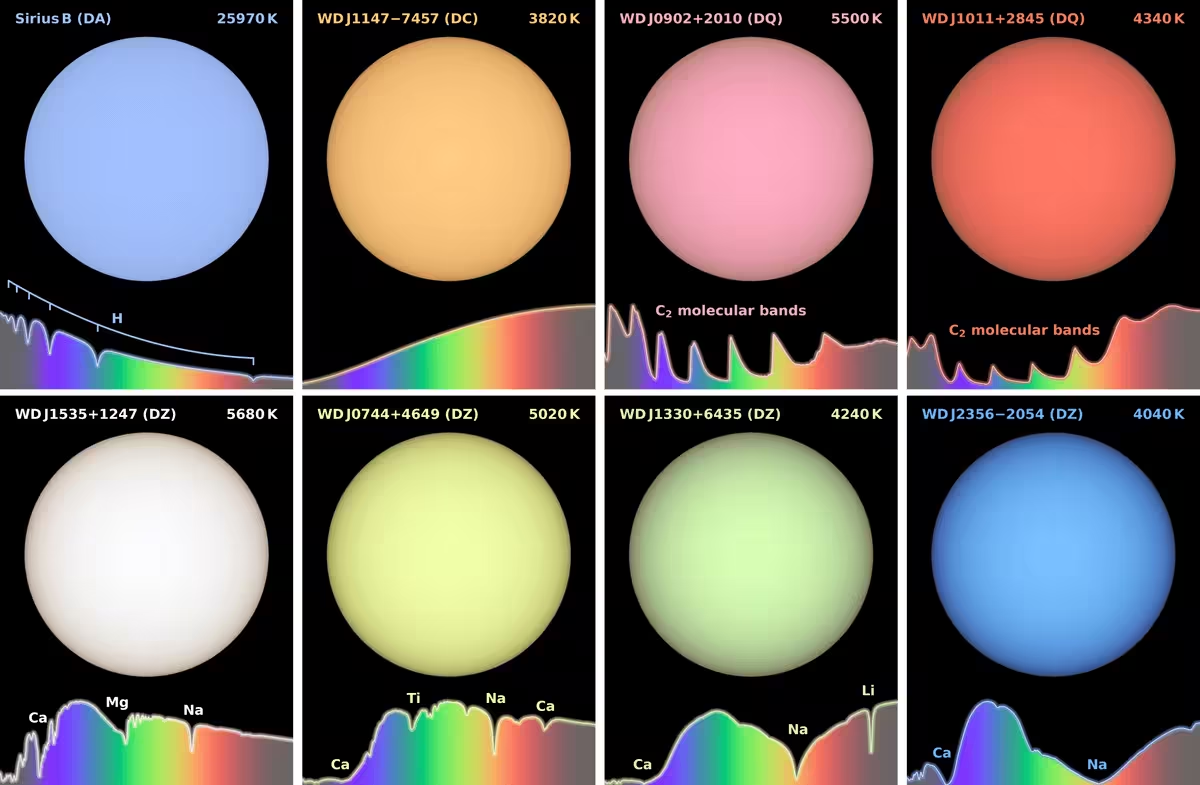
By analyzing the spectral light signatures of these stellar remnants and applying models of human color perception, the team identified WD J1330+6435 as a true anomaly: a star that would appear a striking, chartreuse-green if viewed from close range. While stars are often described as blackbodies—objects whose color is defined solely by heat—the extreme conditions within white dwarf atmospheres scramble this relationship.
Atmospheric Chemistry as a Color Filter
The secret behind these exotic hues lies in the incredible density of white dwarf atmospheres, which can reach that of liquid water—millions of times thicker than the Sun’s photosphere. This density allows atoms to absorb light across unusually wide bands of the spectrum. For WD J1330+6435, which has a surface temperature of roughly 4,240 K (4,000 °C), the presence of heavy elements like sodium and calcium—likely scavenged from the remnants of a destroyed planetary system—acts as a celestial filter.
According to lead author Mark Hollands, the sodium effectively suppresses orange wavelengths, while calcium cuts into the violet end of the spectrum. The result is a peak in the light emission around 500 nanometers, creating a distinct yellowish-green shade. “Imagine standing on a planet and looking up at a green star,” Hollands noted.
The researchers also identified other outliers, such as the exceptionally blue WD J2356–2054. Despite being cool, its intense sodium absorption blocks out enough of the visible spectrum that it would appear an vivid, impossible blue to the human eye, a color profile that transcends traditional blackbody radiation physics.
The Reddest Star in the Neighborhood
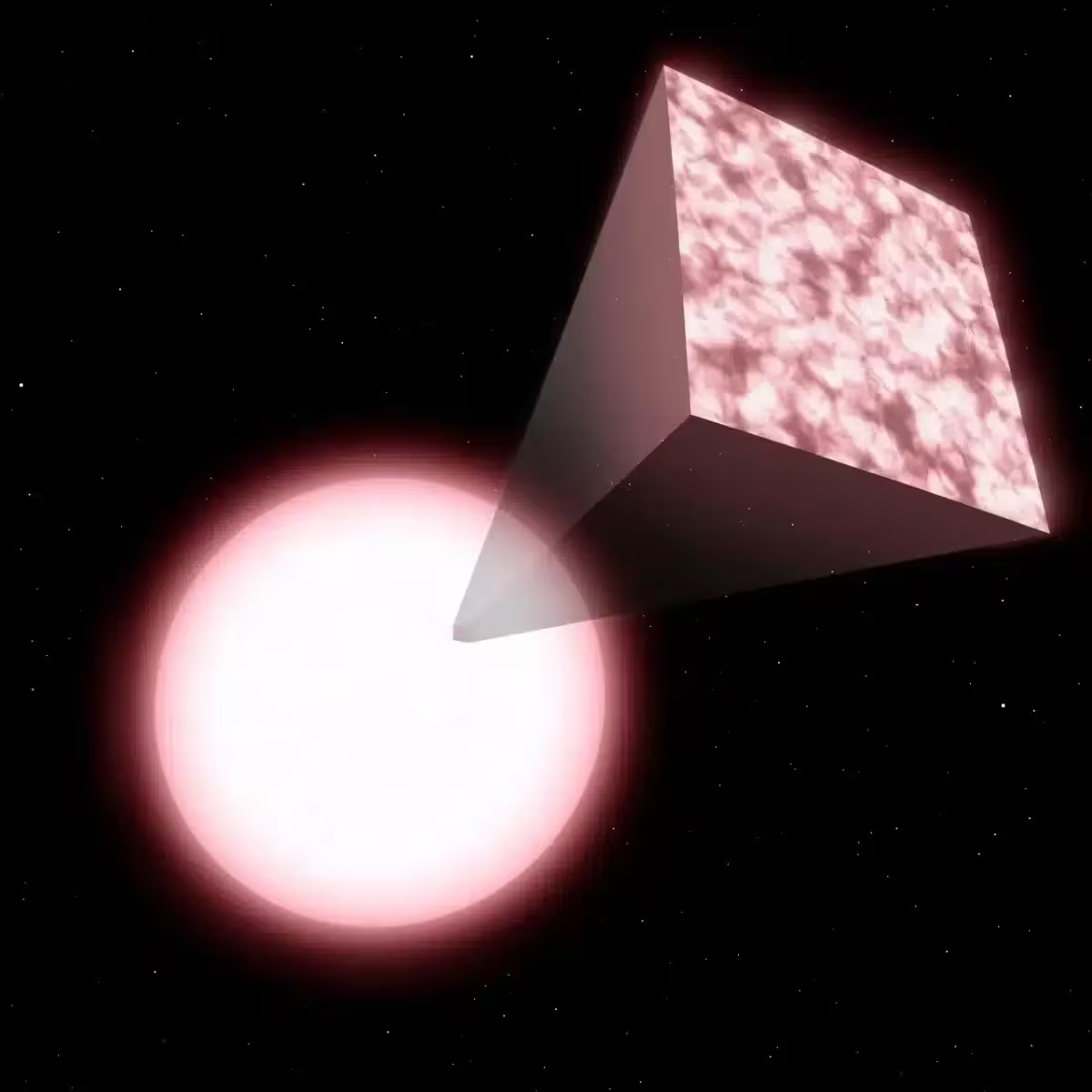
While some white dwarfs display green or blue tints, others lean toward the extreme red end of the spectrum. The study highlights WD J1011+2845, located 48 light-years away, as a prime candidate for the reddest-looking star currently known. In this case, carbon-based molecules in the atmosphere, combined with the influence of a powerful magnetic field, absorb nearly all light in the 400 to 600-nanometer range. The remaining light produces a deep salmon-pink appearance.
In their research published in RAS Techniques and Instruments, the team surveyed white dwarfs within a 65-light-year radius to determine the prevalence of these color anomalies. They found that approximately 3.4%—or roughly one in 30—of these nearby remnants possess “non-standard” colors, including yellow and pink varieties. The vast majority of white dwarfs, however, possess a median color temperature of about 6,800 K, which the human eye perceives as a steady, neutral white.
The findings offer a rare glimpse into the complex chemistry of dead stars. While we often rely on simple color-temperature charts to categorize the cosmos, these white dwarfs serve as a reminder that extreme physics and the presence of “pollutants” from former planetary systems can paint a far more vibrant—and unusual—portrait than our current models often suggest.
This article has been fact checked for accuracy, with information verified against reputable sources. Learn more about us and our editorial process.
Last reviewed on .
Article history
- Latest version
Reference(s)
- “Astronomers reveal surprising true colours of white dwarfs.” <https://warwick.ac.uk/news/pressreleases/astronomers-reveal-true-colours-of-white-dwarf-stars/>.
- Hollands, Mark A., et al. “Any colour you like: the diverse chromaticities of white dwarfs.” RAS Techniques and Instruments, vol. 5, October 15, 2026 Oxford University Press (OUP), doi: 10.1093/rasti/rzag069. <https://doi.org/10.1093/rasti/rzag069>.
Cite this page:
- Posted by Zara Tariq