Scientists Propose New Quantum Sensor to Detect Earth Twisting Spacetime in a Lab
A new quantum sensor using ultracold helium could detect how Earth’s rotation subtly twists the fabric of spacetime, opening new frontiers in physics.
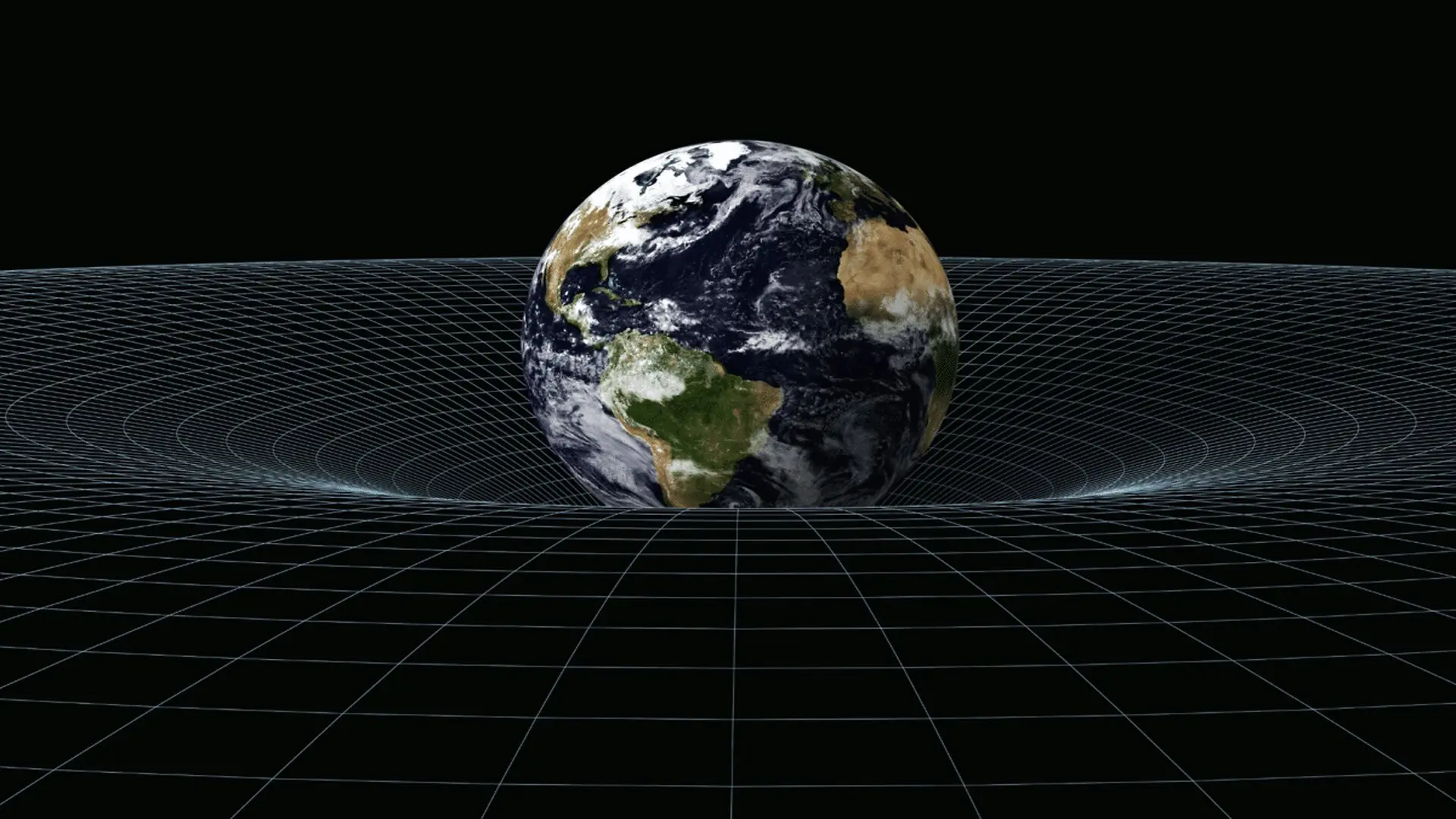
Albert Einstein’s general theory of relativity posits that massive, rotating objects do not merely exist in spacetime; they actively tug at the fabric of the universe around them. This phenomenon, known as frame-dragging or the Lense-Thirring effect, suggests that Earth’s own rotation creates a subtle, twisted wake in spacetime. While this effect has been observed by satellites like NASA’s Gravity Probe B, scientists are now proposing a novel way to detect it within the confines of a laboratory using the unique properties of quantum fluids.
Research published in Physical Review Letters details a collaborative effort between the University of California, Berkeley, the Austrian Academy of Sciences, and the California Institute of Technology (Caltech). The team has designed a theoretical quantum sensor capable of measuring the infinitesimal relativistic distortion of spacetime, offering a potential shift in how we perform tabletop gravity tests.
Harnessing the Quantum Precision of Superfluid Helium
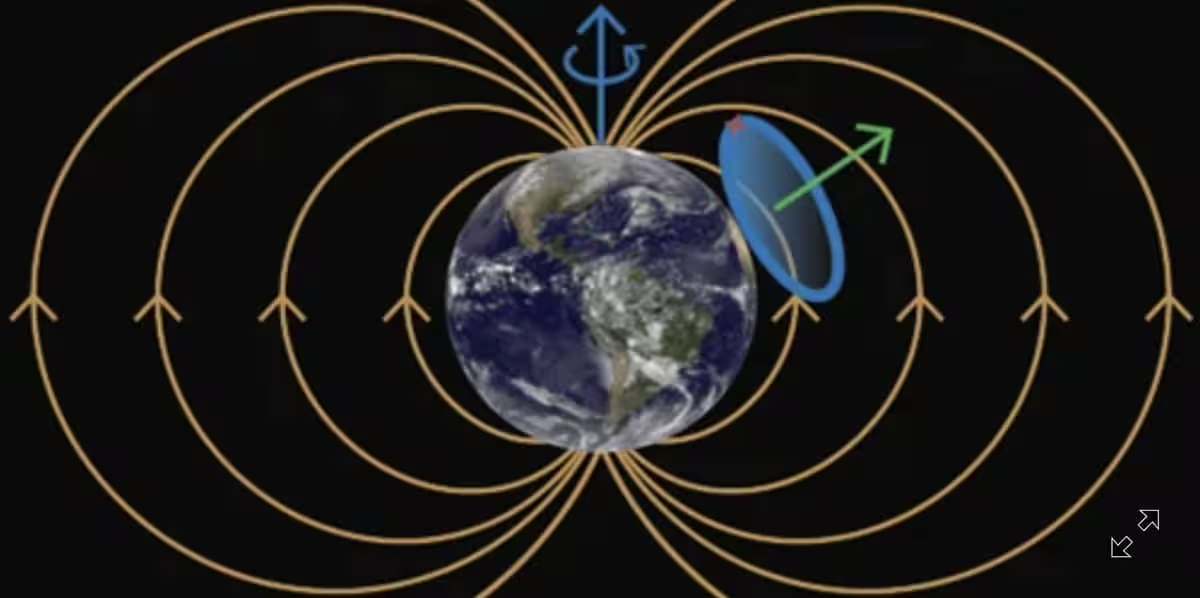
The proposed device centers on the use of helium-4, which transitions into a superfluid state when cooled below 2.17 kelvin (-456°F). In this state, the liquid loses its viscosity, allowing it to flow with zero resistance and display collective quantum behavior. The researchers aim to house this superfluid within a toroidal, or doughnut-shaped, tube equipped with a Josephson junction—a structural “weak link” featuring microscopic openings.
According to Kai-Isaak Ellers, the study’s lead author, the rotation of the Earth induces a quantum mechanical phase difference across this junction. By tracking the motion of a mechanical diaphragm connected to the superfluid loop, the sensor could theoretically register the minute rotational signatures of frame-dragging. To distinguish this delicate relativistic signal from the overwhelming noise of Earth’s rotation and thermal fluctuations, the team proposes cooling the device to 10 millikelvin—just a fraction of a degree above absolute zero.
From Theoretical Framework to Laboratory Reality
The project originated from a cross-disciplinary dialogue between experts in superfluidity and gravitational physics. The team sought to determine if existing laboratory techniques could be pushed to the limits required for such a high-precision measurement. Keith Schwab of Caltech, who specializes in the construction of superfluid devices, played a key role in ensuring the feasibility of the proposed instrumentation.
The researchers believe this apparatus could eventually reach sensitivities that rival or surpass current space-based experiments while operating on a significantly smaller scale. Furthermore, the sensitivity of the quantum phase within the loop might offer a window into even more exotic physical regimes. The team suggests that the device could potentially probe proper-time differences that approach the scale of the Planck time, roughly 5.39 × 10⁻⁴⁴ seconds.
While the proposal remains a theoretical breakthrough, the practical groundwork has already begun. Efforts to develop the necessary Josephson junctions capable of functioning reliably at extreme millikelvin temperatures are currently underway at Caltech. If successful, this research could pave the way for testing not only the limits of Einstein’s general relativity but also potential gravitational interactions that exist beyond the currently established physical paradigm.
This article has been fact checked for accuracy, with information verified against reputable sources. Learn more about us and our editorial process.
Last reviewed on .
Article history
- Latest version
Reference(s)
- Ellers, Kai-Isaak., et al. “Quantum Sensing of Gravitational Frame Dragging with a Superfluid
Cite this page:
- Posted by Farah Siddiqui