NASA Reveals Hard Lessons From Daring Mission To Save An Aging Space Observatory
NASA’s Swift mission successfully tested innovative spacecraft servicing techniques, offering critical insights for the future of orbital operations.
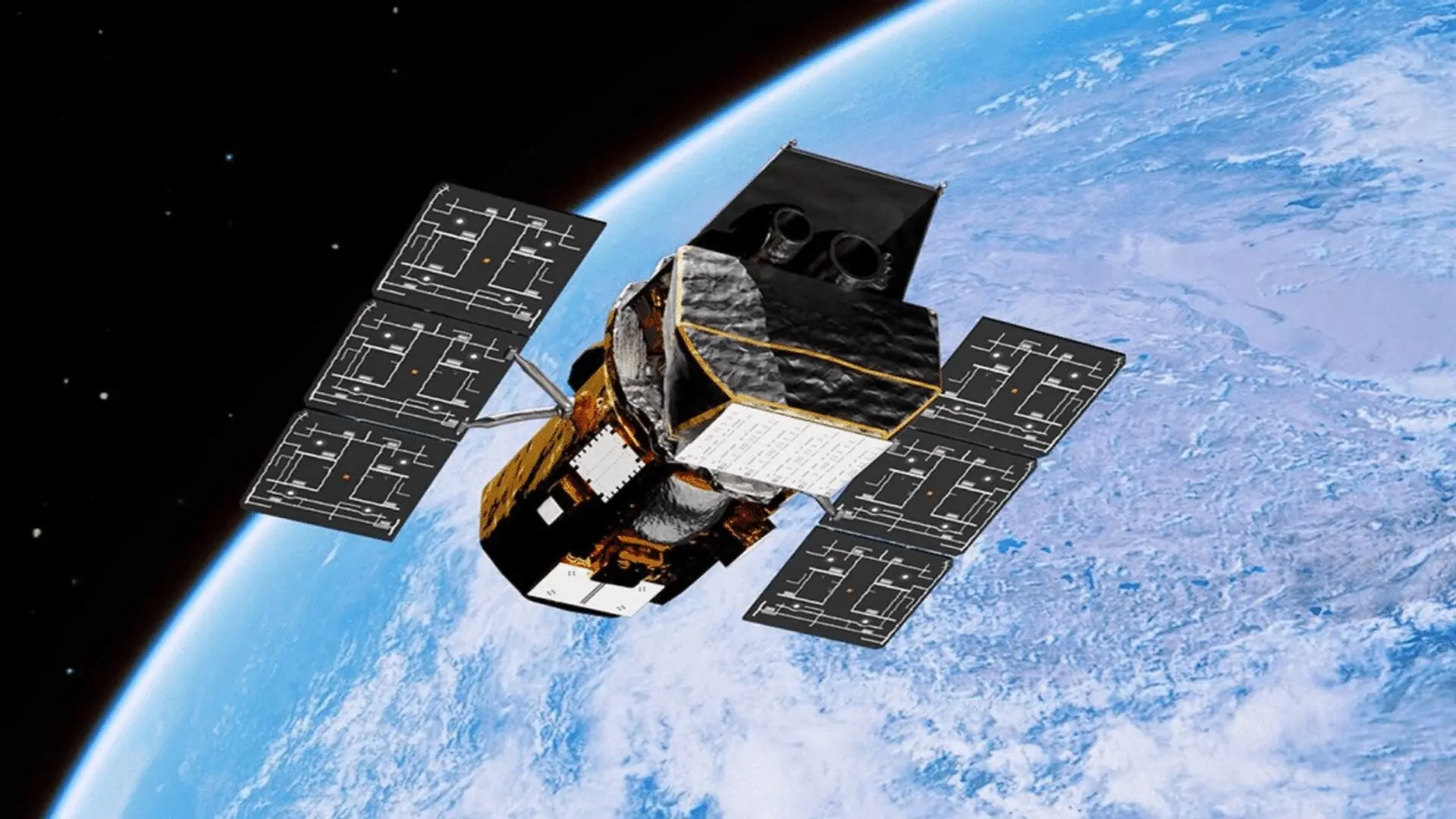
NASA has released a comprehensive review of the Swift boost mission, an ambitious endeavor that sought to extend the lifespan of the Neil Gehrels Swift Observatory through pioneering robotic intervention. The project served as a high-stakes testbed for commercial space capabilities, demonstrating how rapid development cycles and private-sector partnerships can address the critical problem of aging infrastructure in low Earth orbit.
Pushing the Boundaries of Satellite Longevity
The Swift Observatory had been battling atmospheric drag, which threatened to pull the satellite into a premature, uncontrolled re-entry. In a race against time, NASA initiated a collaborative project to determine if a commercial spacecraft could rendezvous with the observatory and successfully adjust its orbital altitude.
This initiative pushed beyond traditional mission parameters, prioritizing the preservation of a high-value scientific asset over its decommissioning. By attempting to service a craft that was never originally designed for robotic docking, the agency sought to generate a roadmap for future orbital maintenance and life-extension operations.
“From the beginning, this was a high-risk, high-reward mission,” said Shawn Domagal-Goldman, director of the Astrophysics Division at NASA Headquarters. “Without intervention, Swift was going to re-enter the atmosphere by year’s end. While we will be sad to see the mission reach its natural conclusion, we knew this effort would be invaluable to the agency on multiple levels, advancing U.S. spacecraft servicing technology and testing our operational capacity to maintain assets in low Earth orbit.”
Commercial Innovation Meets Unprecedented Technical Hurdles
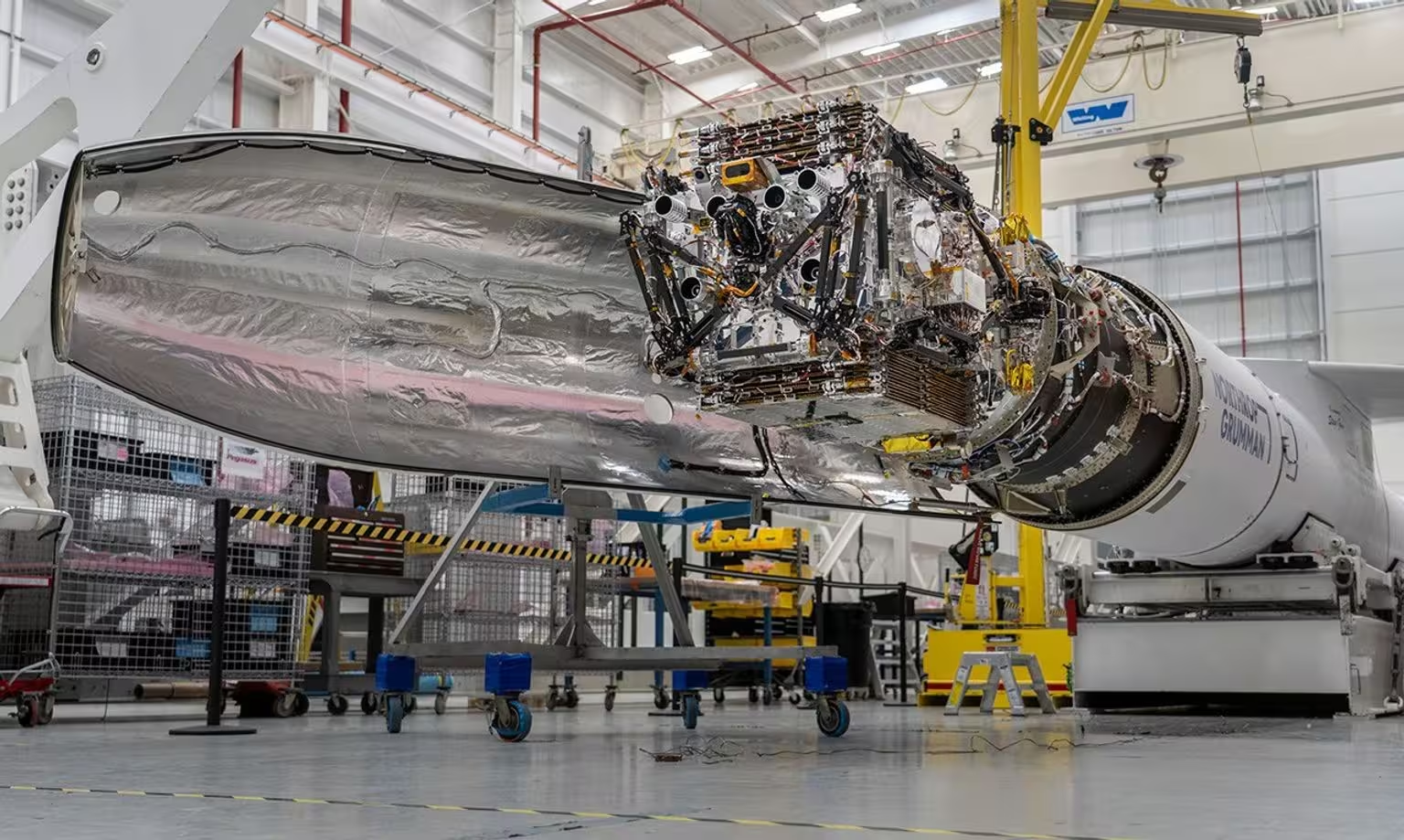
At the heart of the operation was the LINK robotic vehicle, developed by Katalyst Space. The project required an aggressive development timeline, transitioning from initial concept to launch and orbital execution in less than twelve months.
The mission demanded precision in mission planning and real-time operational flexibility. While the effort did not achieve every intended milestone, it successfully validated the speed at which commercial entities can now move from the design phase to active space deployment. “LINK was built to take on a problem that did not have an easy solution,” said Ghonhee Lee, CEO of Katalyst Space. “This was an ambitious mission on an aggressive timeline. In less than a year, we went from concept to launching and operating the first commercial space robot. This is a foundation we can build on.”
Institutional Lessons for the Future of Space Operations
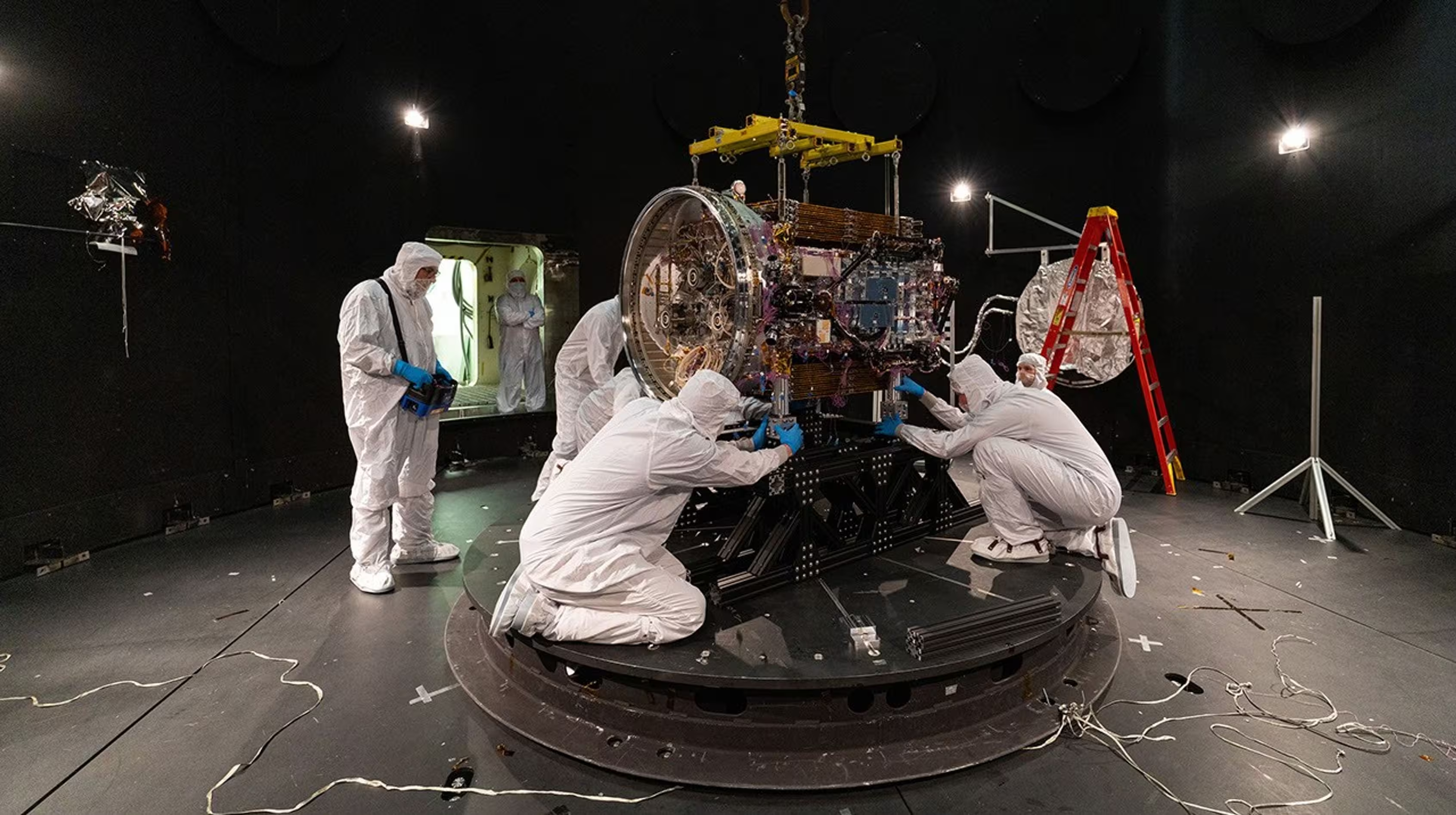
The partnership between NASA and the private sector has provided a wealth of data regarding engineering, communication, and the synchronization of complex space maneuvers. According to NASA, these insights are essential for a future where orbital servicing replaces the need to replace entire satellite fleets.
Russell Carpenter, a project manager in the Satellite Servicing and Manufacturing Office at NASA Goddard, emphasized that the collaboration was about more than just the immediate outcome. He noted that the effort represents a shift toward more resilient and adaptive space architecture, highlighting the tenacity of public-private teams in tackling nearly impossible engineering challenges.
Science Continues Amidst Operational Adjustments
Throughout the duration of the boost attempts, the Swift Observatory remained a vital contributor to high-energy astrophysics. Even when traditional operations were paused to prioritize the orbital maneuver, the team implemented new, innovative methods to minimize atmospheric drag, effectively extending the mission’s life.
“We nonetheless continued our history of innovative space research and operations, pioneering new methods to minimize drag,” said John Nousek, the mission director and a professor at Penn State. “These changes bought valuable time for the boost mission and can be carried forward for future NASA missions.”
Reflecting on a Legacy of Exploration
Launched in 2004, the Neil Gehrels Swift Observatory has served as a critical eye on the cosmos, monitoring gamma-ray bursts, black hole activity, and other high-energy phenomena. The recent boost mission serves as a final, daring chapter for the observatory, embodying the spirit of discovery that defined the mission since its inception.
“When Neil Gehrels, Swift’s namesake, designed the observatory, nothing like it had ever launched,” said S. Bradley Cenko, the mission’s principal investigator. “He would have celebrated that this boost effort was part of Swift’s legacy, that it allowed NASA to try something new and daring even though the outcome wasn’t guaranteed. That is how we explore the universe—as a team, learning from each other, and constantly pushing forward.”
This article has been fact checked for accuracy, with information verified against reputable sources. Learn more about us and our editorial process.
Last reviewed on .
Article history
- Latest version
Reference(s)
- Kazmierczak, Jeanette. “NASA Highlights Lessons Learned From Swift Boost Mission - NASA Science.”, September 28, 2026 NASA <https://science.nasa.gov/missions/swift/nasa-highlights-lessons-learned-from-swift-boost-mission/>.
Cite this page:
- Posted by Farah Siddiqui