Astronomers Discover Ultra Fast Star Racing Around Milky Way’s Black Hole
A newly discovered star orbiting Sagittarius A* could provide astronomers with a rare, groundbreaking way to measure the Milky Way’s central black hole.
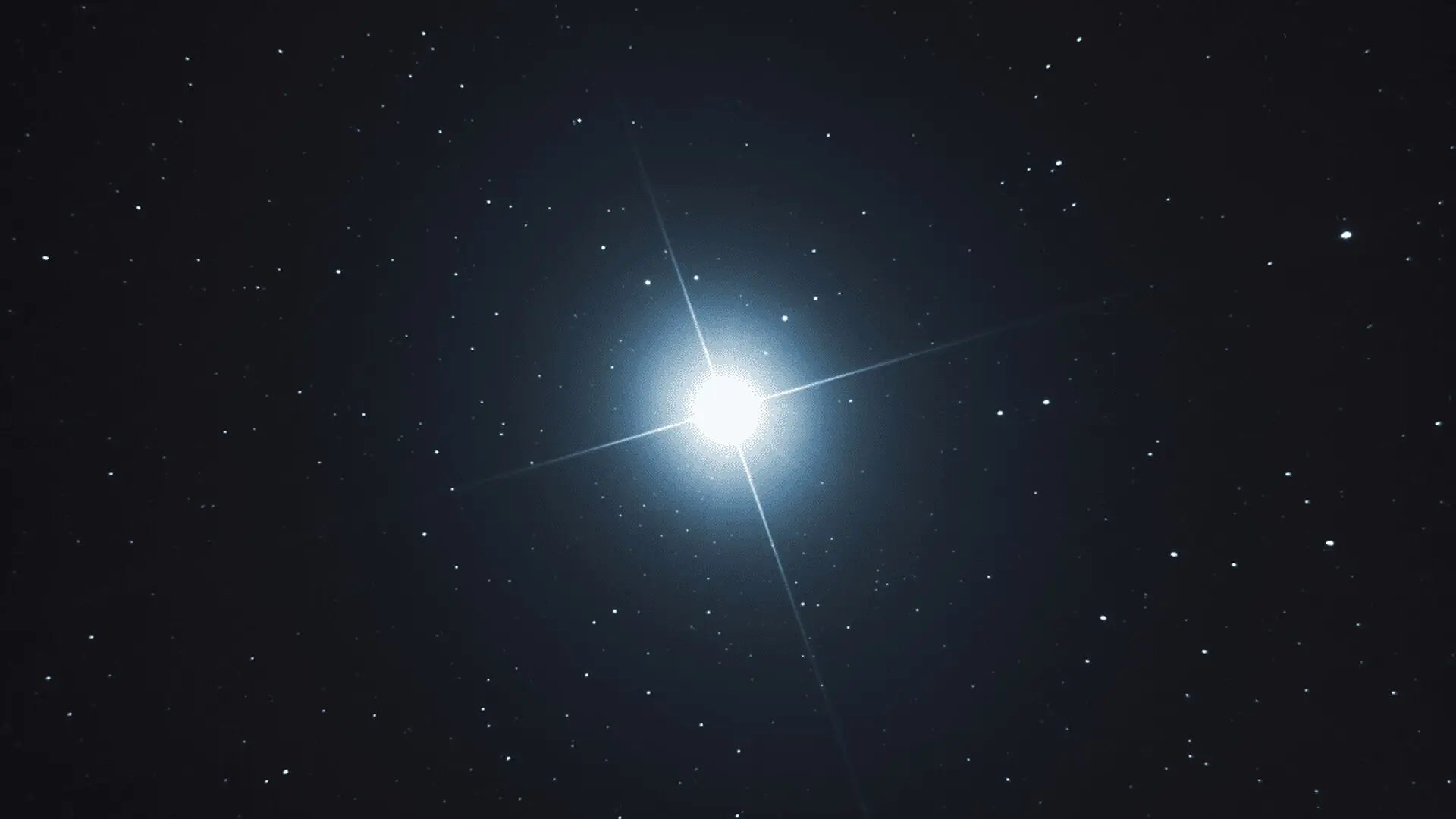
Astronomers have uncovered a celestial speedster named S301, a star hurtling through the extreme environment surrounding Sagittarius A*, the supermassive black hole at the heart of the Milky Way. Traveling at a staggering 25,000 kilometers per second, this star is providing researchers with a rare, natural laboratory to investigate how a rotating black hole warps the fabric of spacetime, according to a study published in Nature.
An Unprecedented Galactic Close-Up
The galactic center is a crowded, high-gravity region where a black hole containing four million solar masses exerts immense influence. S301 stands out for its remarkably tight orbit, completing a full revolution around Sagittarius A* every 8.7 years. At its point of closest approach, the star swings within 12 times the distance between the Earth and the Sun, a proximity comparable to the span between our Sun and Saturn. During this transit, S301 reaches speeds exceeding 8% of the speed of light, or approximately 90 million kilometers per hour. This velocity makes the star a perfect “test particle” for probing the intense gravitational physics of the galactic core.
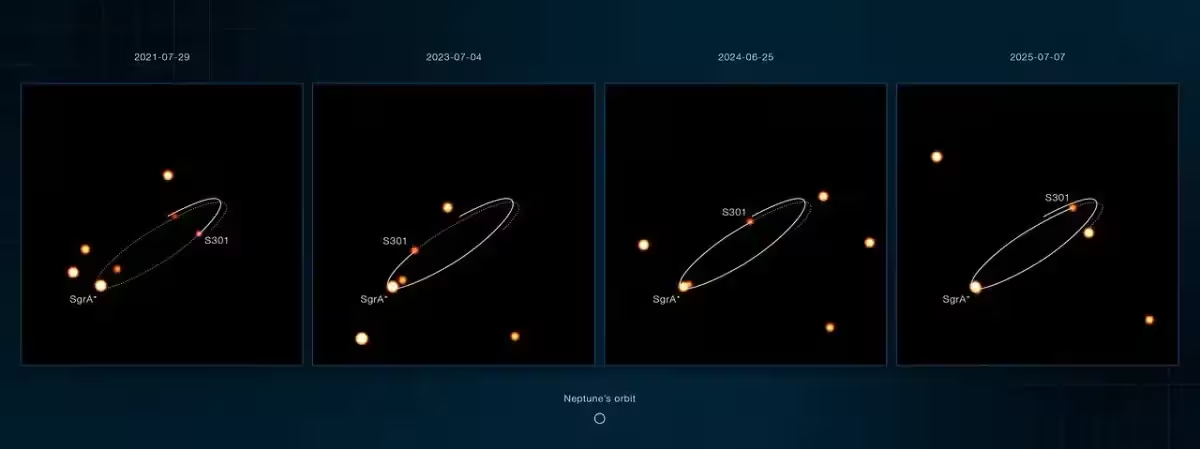
Reinhard Genzel, a Nobel laureate and director at the Max Planck Institute for Extraterrestrial Physics (MPE), notes that the discovery is the culmination of decades spent monitoring the galactic center. He describes S301 as a vital tool for observing spacetime properties that remain hidden in less extreme environments. Study author and MPE researcher Felix Mang emphasizes that the star’s proximity to the black hole is entirely unprecedented, offering a unique opportunity to map the immediate surroundings of Sagittarius A*.
Testing Einstein’s Predictions on Black Hole Spin
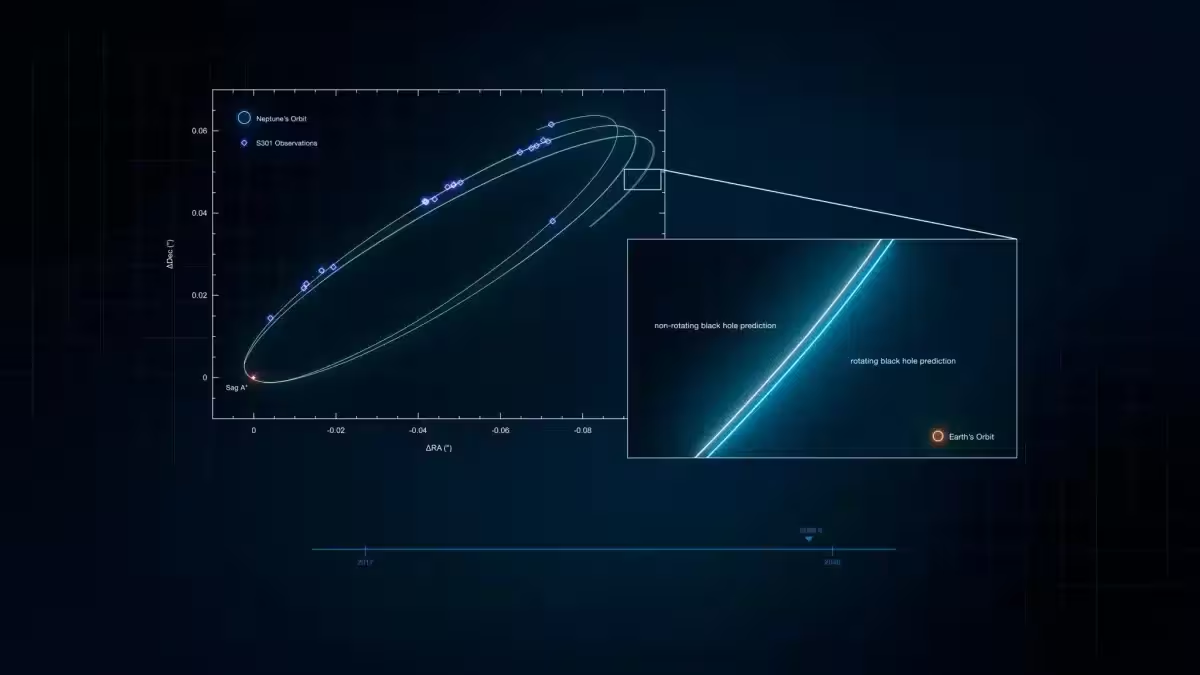
Beyond its speed, S301 holds the potential to solve a long-standing mystery: the rotation rate of Sagittarius A*. Under Einstein’s general theory of relativity, a spinning mass like a supermassive black hole generates an effect known as frame dragging, or the Lense-Thirring effect, where the rotation of the object actually twists the surrounding spacetime. While this effect is typically negligible, the proximity of S301 to the black hole should make its orbit sensitive to these gravitational distortions. By tracking the subtle deviations in the star’s trajectory, astronomers believe they can calculate the black hole’s spin within the coming decade.
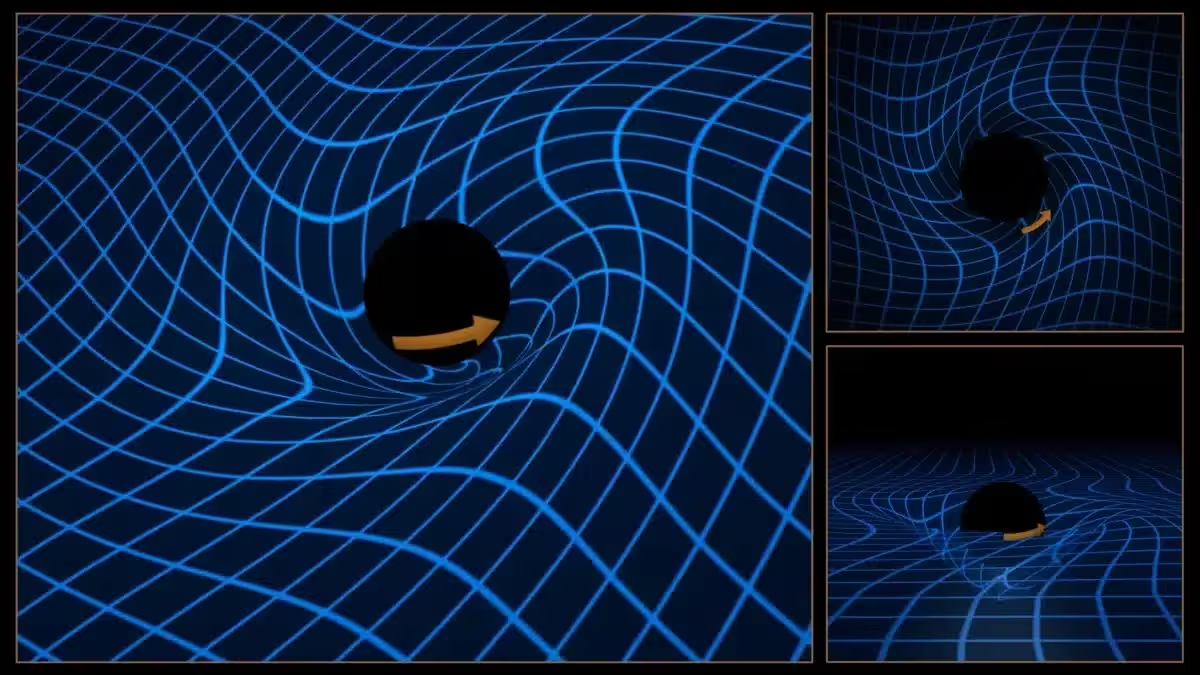
According to Stefan Gillessen, who co-led the research, this represents a direct way to verify Einstein’s work. Juan Osorno of the LIRA Observatoire de Paris–PSL points out that without this specific star, confirming the black hole’s spin would have required many more decades of observation. S301 essentially acts as a high-speed shortcut to these critical gravitational measurements.
Advanced Interferometry Reveals the Hidden Star
Identifying S301 was a formidable challenge, as it is approximately two billion times fainter than the star Betelgeuse and buried within the chaotic glare of the galactic center. To isolate it, the team utilized the Very Large Telescope Interferometer (VLTI) at the European Southern Observatory’s Paranal Observatory in Chile. By linking four 8-meter telescopes to function as a single instrument, the GRAVITY and GRAVITY+ systems provided the extreme spatial resolution required to distinguish the star. Frank Eisenhauer, a principal investigator at MPE, notes that this configuration is currently the only facility worldwide capable of achieving the necessary precision.
A Violent Origin Story
The existence of S301 in such a hostile, high-gravity orbit suggests a turbulent history. Star formation is inhibited by the intense tidal forces near a supermassive black hole, leading astronomers to propose that S301 is a refugee from a binary system. In this scenario, the system drifted too close to the black hole, which subsequently tore the pair apart. While S301 was captured into its current tight orbit, its companion was likely ejected at high velocity, potentially escaping the Milky Way entirely as a hypervelocity star. This event links S301 not just to the physics of the black hole, but to the broader, chaotic dynamics of galactic evolution.
This article has been fact checked for accuracy, with information verified against reputable sources. Learn more about us and our editorial process.
Last reviewed on .
Article history
- Latest version
Reference(s)
- Abd El Dayem, K.. “Discovery of a star sensitive to the spin of Sagittarius A* - Nature.”, vol. 657, no. 8131, pp. 359-363. Nature, doi: 10.1038/s41586-026-10894-w. <https://www.nature.com/articles/s41586-026-10894-w>.
Cite this page:
- Posted by Farah Siddiqui