NASA Observatory Captures Rare Look at Plasma Falling Into a Pulsar
NASA’s XRISM mission has unveiled the complex process of how a pulsar captures and manages stellar wind plasma near a neutron star.
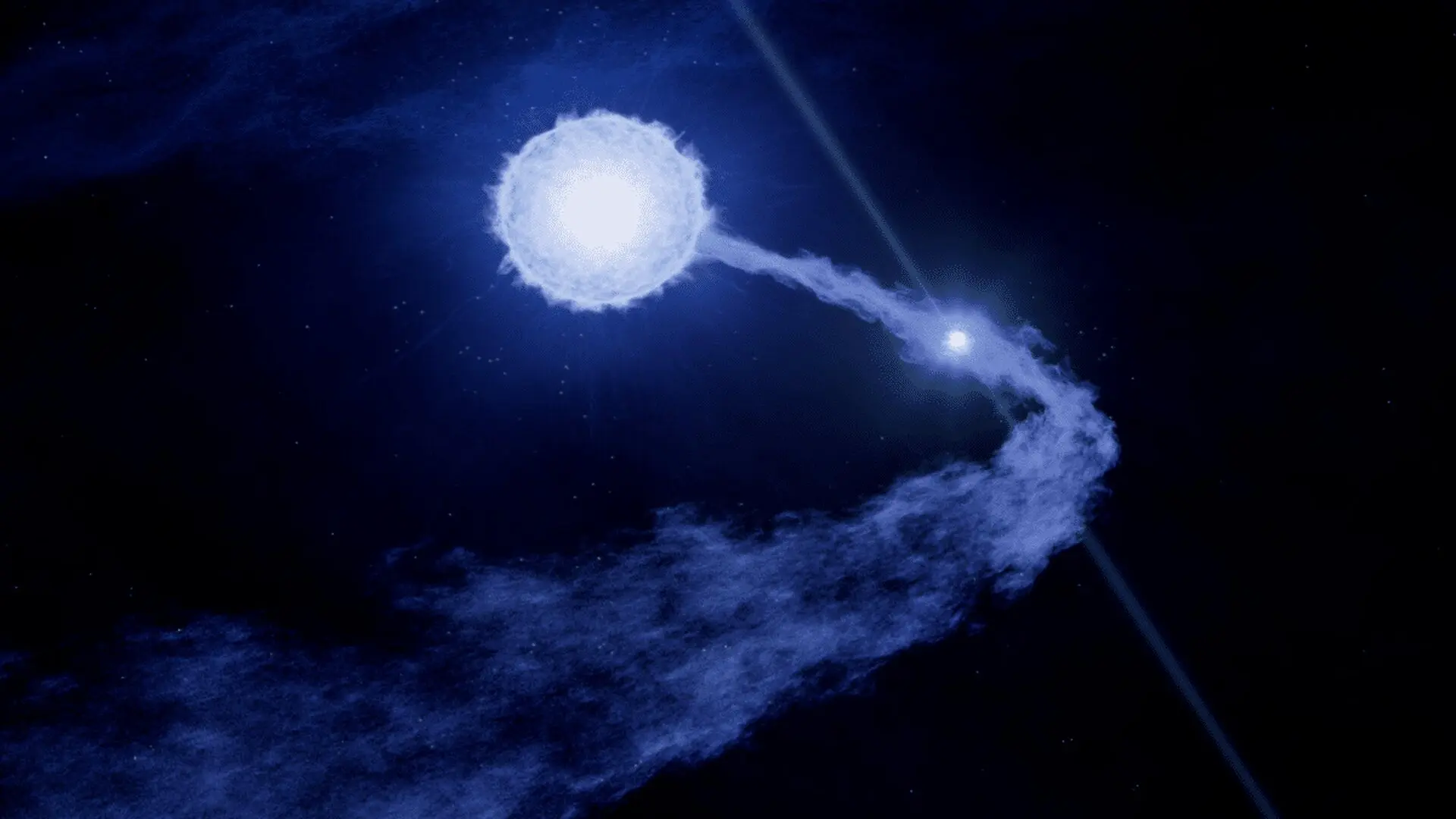
NASA’s XRISM X-ray observatory has captured an unprecedented look at the violent dance between a pulsar and its massive companion star. By tracking plasma as it is stripped away and pulled into the intense gravitational well of a neutron star, researchers have gained a direct observational window into a phenomenon known as wind-fed pulsar accretion, according to findings published in Science Advances.
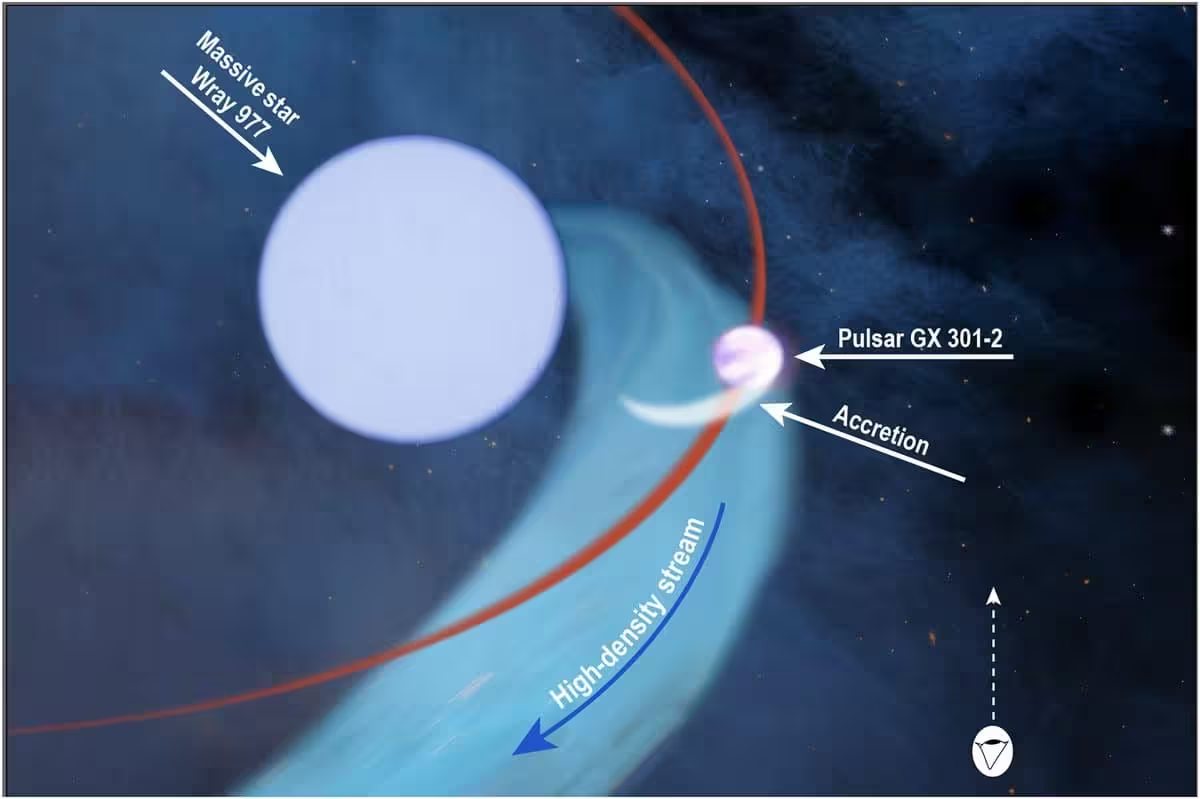
The study centers on the BP Crucis system, a binary pair where the high-speed stellar winds from a massive donor star are intercepted by the powerful gravity of a rotating neutron star. While these interactions are theoretical cornerstones of high-energy astrophysics, the sheer resolution provided by the Resolve spectrometer aboard XRISM has allowed scientists to map the temperature, velocity, and chemical composition of this infalling matter for the first time.
Mapping Matter in Extreme Gravity
In the BP Crucis system, the neutron star acts as a cosmic magnet, drawing in gas from its companion. As this material accelerates toward the dense, city-sized remnant of a collapsed star, it enters a state of extreme agitation, emitting X-rays that provide a clear signature of its trajectory and state of ionization.
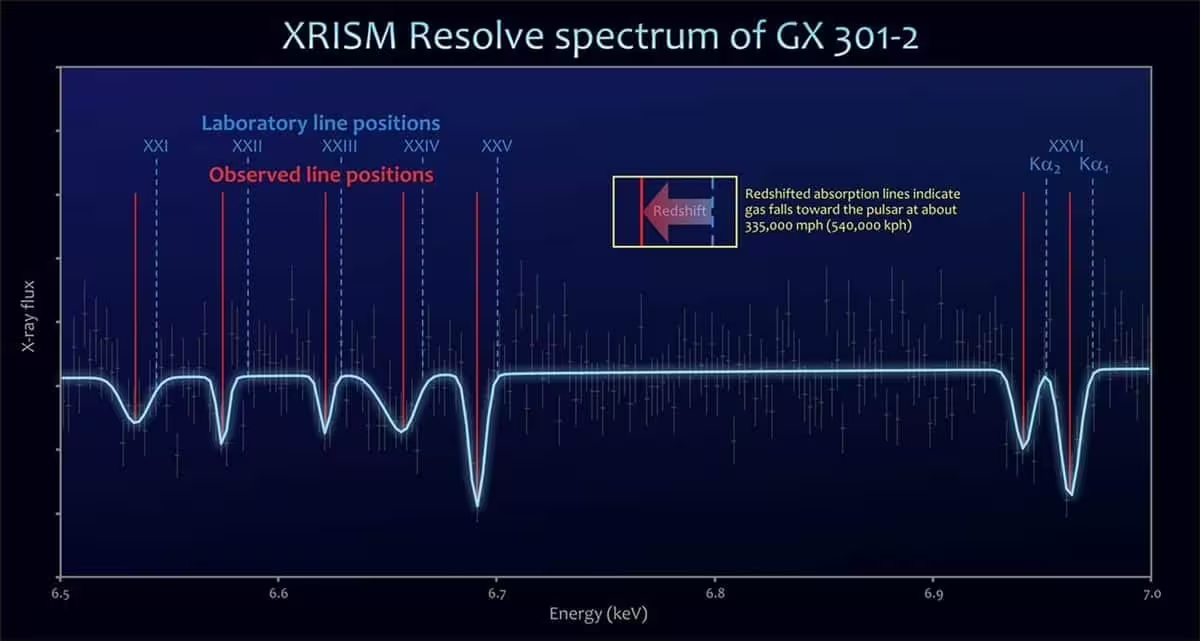
The Resolve instrument acted as a high-precision filter, separating overlapping X-ray emissions to isolate the spectral lines of iron. These lines revealed that the plasma is rushing toward the pulsar at approximately 335,000 mph (540,000 kph). This level of clarity enables astronomers to test models of matter behavior under conditions that are impossible to replicate in terrestrial laboratories.
“We’ve never before seen clear indications of wind plasma falling onto a compact object,” explained Roi Rahin, a researcher at UMBC and NASA’s Goddard Space Flight Center. “We can now test our understanding of these processes in much greater detail.”
New Insights Into Compact Object Evolution
Neutron stars represent the final, crushed remains of massive stars that have undergone supernova events. Despite their modest size, their immense density warps the surrounding space, turning the immediate environment into a high-energy furnace. Analyzing the specific way plasma behaves in the BP Crucis system provides a roadmap for understanding how binary systems evolve over eons.
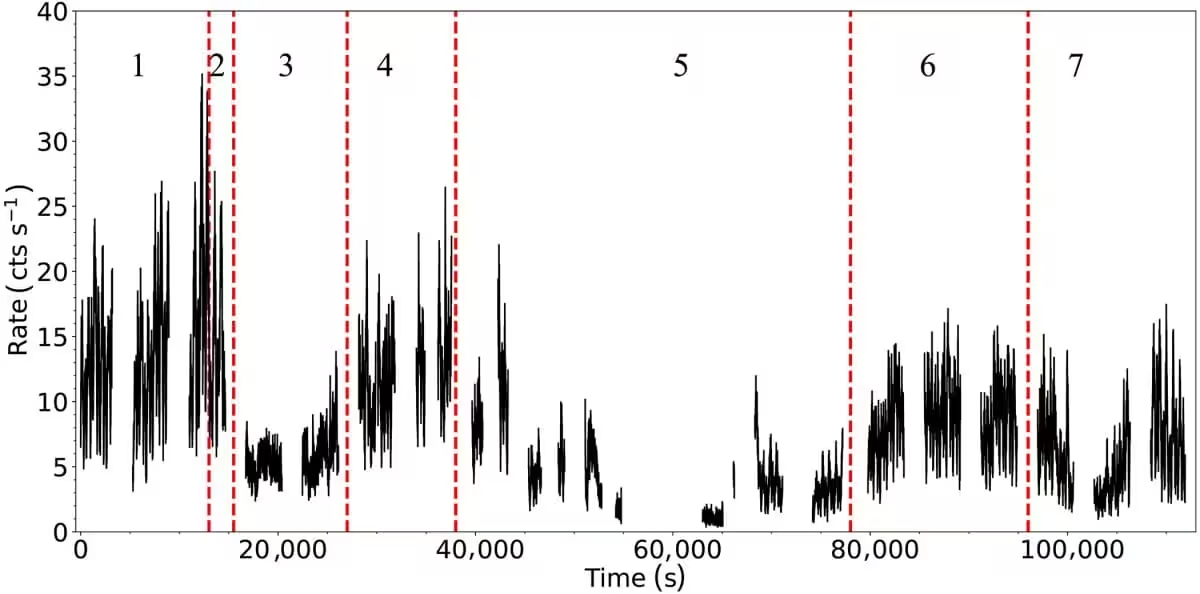
Nazma Islam, a co-author of the study, emphasized the complexity of the data, noting that the team was able to witness the dense plasma streams in the immediate vicinity of the pulsar. This high-resolution data helps bridge the gap between theoretical physics and observed cosmic phenomena.
A Universal Laboratory
The mission, a collaboration between NASA and JAXA, continues to demonstrate its value as a premier tool for exploring the high-energy universe. By focusing on systems where matter is captured and redirected by intense gravitational fields, scientists can extrapolate these findings to understand more complex systems, including black holes and other neutron star binaries.
“The BP Crucis system is an ideal laboratory for studying wind-fed pulsar accretion, and XRISM’s sensitive, high-resolution Resolve spectrometer is an ideal instrument for advancing our understanding of the processes involved,” stated Brian Williams, the mission’s project scientist at NASA Goddard. As XRISM continues its survey, astronomers expect to unlock further mysteries regarding the fundamental laws that govern the most extreme environments in the galaxy, building a more refined picture of how the universe behaves under extreme pressure and gravity.
This article has been fact checked for accuracy, with information verified against reputable sources. Learn more about us and our editorial process.
Last reviewed on .
Article history
- Latest version
Reference(s)
- Rahin, Roi., et al. “Direct spectroscopic observation of matter falling onto a compact stellar object.” Science Advances, vol. 12, no. 38, September 18, 2026 American Association for the Advancement of Science (AAAS), doi: 10.1126/sciadv.aef6686. <https://www.science.org/doi/10.1126/sciadv.aef6686>.
Cite this page:
- Posted by Farah Siddiqui