NASA Accidentally Created Five Craters On Mars And The Results Challenged Everything We Knew
NASA spacecraft debris left five fresh craters on Mars, providing scientists with a unique and unexpected way to measure the strength of the Martian surface.
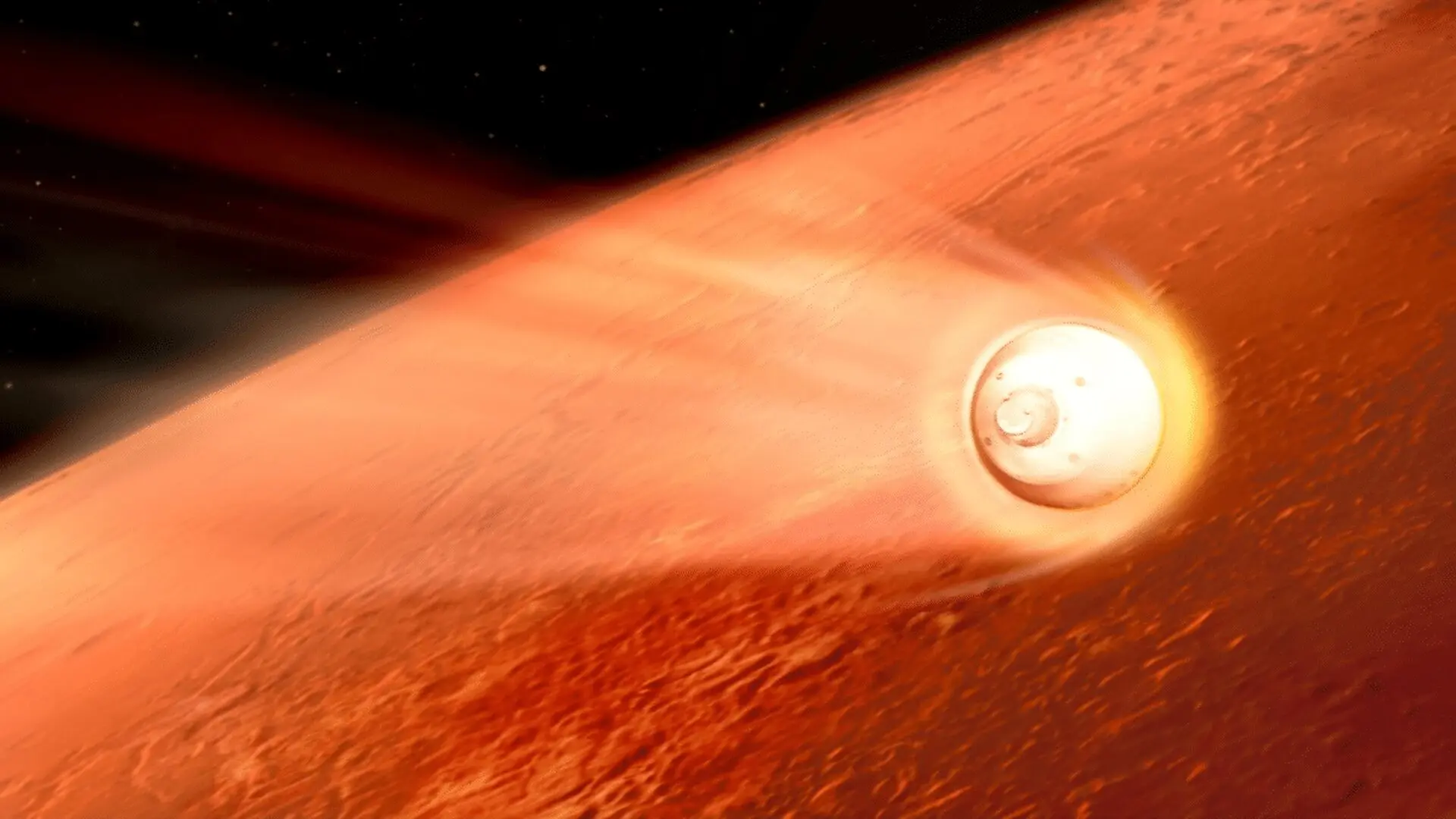
When the Perseverance rover arrived at Mars in 2021, it left behind more than just a trail of exploration. The mission’s landing sequence inadvertently carved five fresh craters into the Martian surface, providing researchers with a unique, controlled experiment that challenges current understanding of how planetary ground reacts to high-velocity impacts.
The findings, detailed in Geophysical Research Letters, highlight a significant disconnect between standard crater-formation models and how the Martian soil actually behaves. Because the objects involved—discarded pieces of the Mars 2020 spacecraft—had known mass, shape, and velocity, scientists could study the resulting craters with a level of precision that natural meteorite strikes rarely afford.
Spacecraft Debris as a Scientific Instrument
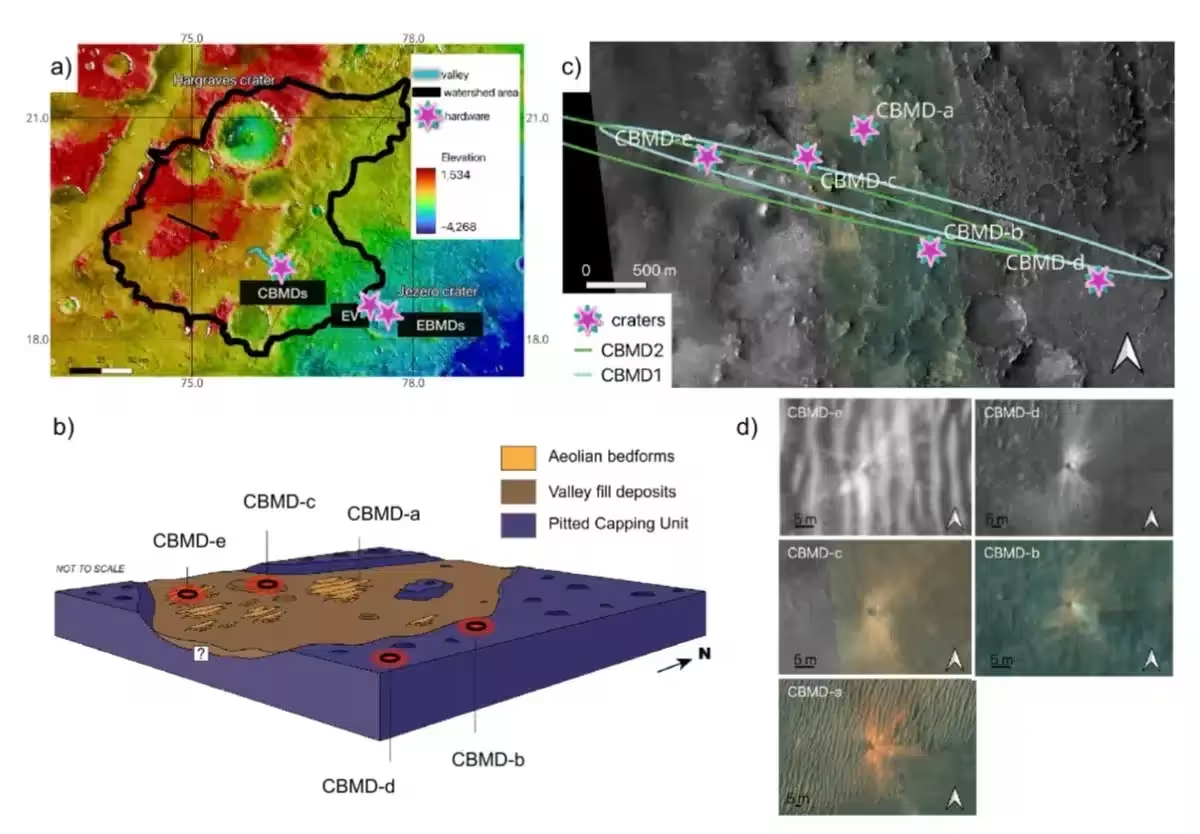
The unexpected research opportunity began when the spacecraft jettisoned hardware during its descent. This included two 77-kilogram tungsten ballast mass devices, which were used to maintain the vehicle’s balance during its transit to the Red Planet. These components, along with other fragments from the cruise stage, struck the Martian surface about 70 kilometers northwest of Jezero crater at speeds reaching 4.7 kilometers per second.
The impact sites went unnoticed until researchers performed a comparative analysis using imagery from NASA’s Mars Reconnaissance Orbiter. By matching recent high-resolution photos against older orbital maps, the team identified new surface scars that correlated with the known trajectory of the discarded hardware.
Challenging Conventional Crater Models
The impacts occurred at a shallow 10-degree angle, interacting with varied terrain that included loose regolith. When researchers compared these craters against standard physics simulations, they found that existing models frequently overestimated the crater size. The data suggests the surface material is significantly weaker than current scaling laws anticipate, forcing a revision in how we interpret impact features across the Martian landscape.
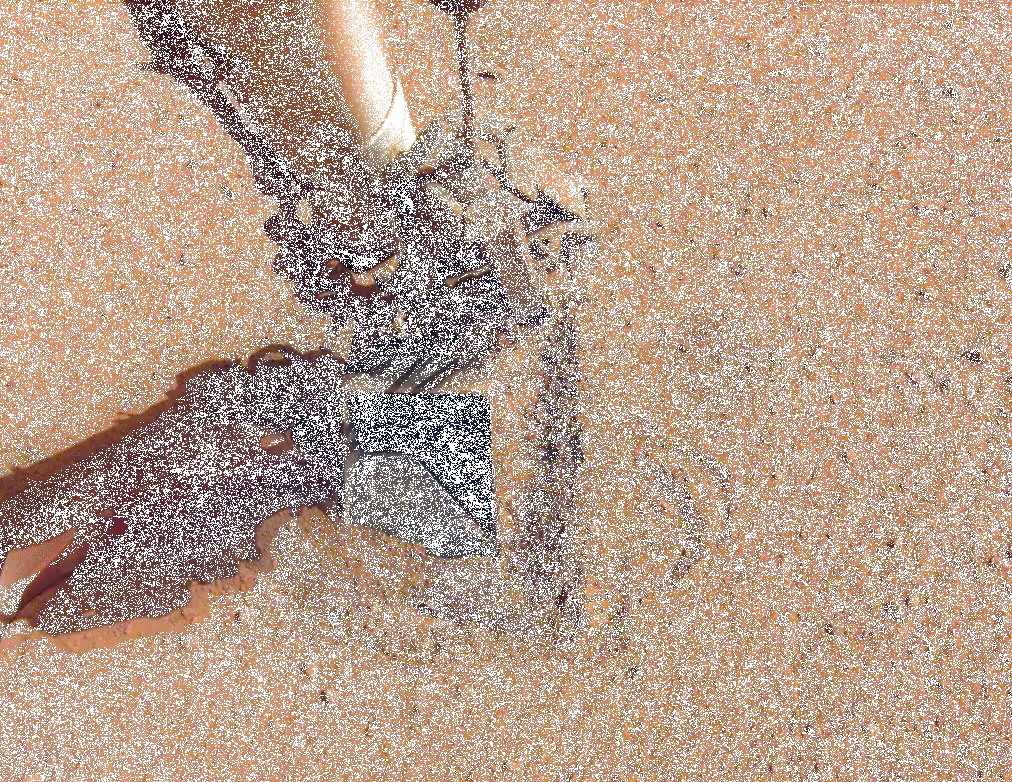
The analysis indicates the impacted soil possesses a cohesion strength of approximately 7 kilopascals, behaving much like loosely packed sand. This finding aligns with previous data from the InSight mission, where the “mole” heat probe struggled to gain the necessary friction to burrow into the ground. The new crater study provides independent confirmation of this soil weakness, offering a macro-scale view of terrain properties that affect everything from drilling operations to future habitat construction.
Leveraging Mission Remnants for Future Discovery
This accidental experiment underscores the potential for future exploration missions to repurpose discarded hardware for planetary science. While intentional impact missions like DART and Hayabusa2 have demonstrated the value of controlled strikes on asteroids, the Perseverance results prove that even unplanned debris can yield critical geological insights.
By transforming mission waste into calibration tools, planetary scientists now have a new, reliable reference point for mapping the physical characteristics of the Red Planet. As exploration continues, these unexpected craters may serve as the foundation for more accurate landing systems and surface operations in the years to come.
This article has been fact checked for accuracy, with information verified against reputable sources. Learn more about us and our editorial process.
Last reviewed on .
Article history
- Latest version
Reference(s)
- Sokołowska, A. J.., et al. “Probing Subsurface Properties With Mission Hardware: Lessons Learned From Artificial Impacts of Mars 2020.” Geophysical Research Letters, vol. 53, no. 18, September 13, 2026 American Geophysical Union (AGU), doi: 10.1029/2026GL122337. <https://agupubs.onlinelibrary.wiley.com/doi/10.1029/2026GL122337>.
Cite this page:
- Posted by Farah Siddiqui