Astronomers Just Discovered a Universal Trigger That Makes Black Holes Launch Powerful Jets
Astronomers have identified a potential universal trigger that dictates when black holes launch powerful, high-energy jets into deep space.
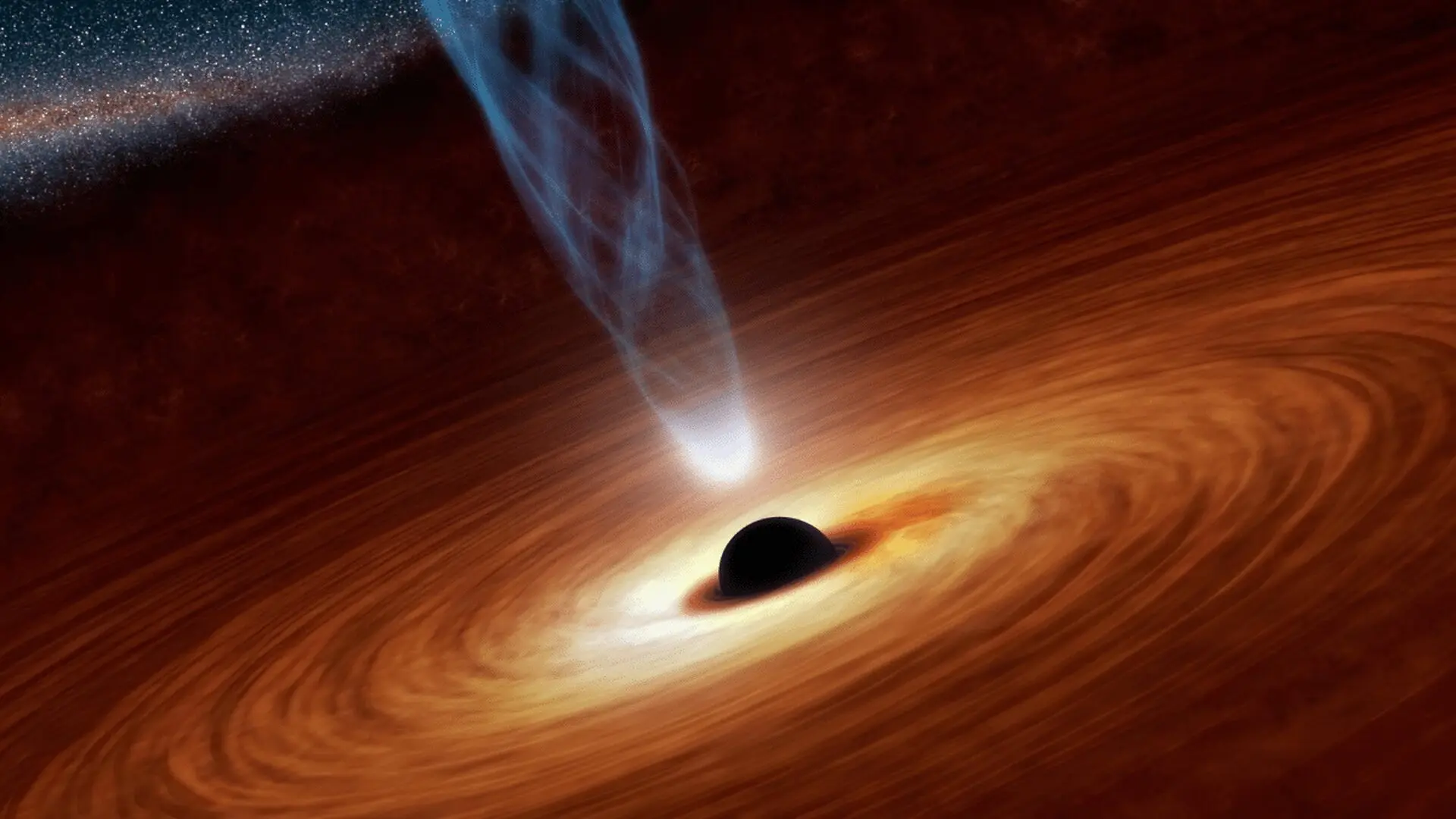
New research published in Nature Astronomy suggests that black holes, ranging from stellar-mass objects to supermassive giants, may trigger their high-energy jets at a universal point in their feeding cycles. This discovery points toward a shared physical mechanism that governs how these cosmic phenomena consume matter and launch outflows across vastly different scales.
The investigation was led by Dr. Adelle Goodwin of the International Center of Radio Astronomy Research (ICRAR) at Curtin University, in collaboration with Dr. Andrew Mummery from the Institute for Advanced Study in Princeton. By studying tidal disruption events—the cataclysmic moments when a star is shredded by a black hole’s gravity—the researchers were able to observe the feeding process unfold on an accelerated timescale.
Uncovering a Consistent Trigger for Cosmic Jets
Astronomers have long grappled with the erratic timing of jet emissions following the destruction of a star. While some black holes emit radio signals shortly after consuming material, others remain dormant for months or even years. By analyzing a sample of 10 tidal disruption events with high-precision optical, ultraviolet, X-ray, and radio data, the team identified a clear, unifying pattern.
The study found that these delayed jets consistently emerge when a black hole’s consumption rate dips to approximately 2% of the Eddington limit. This threshold represents the point where the outward pressure of radiation from infalling matter begins to balance the inward pull of gravity. Remarkably, this 2% mark matches the behavior observed in much smaller stellar-mass black holes within our own galaxy.
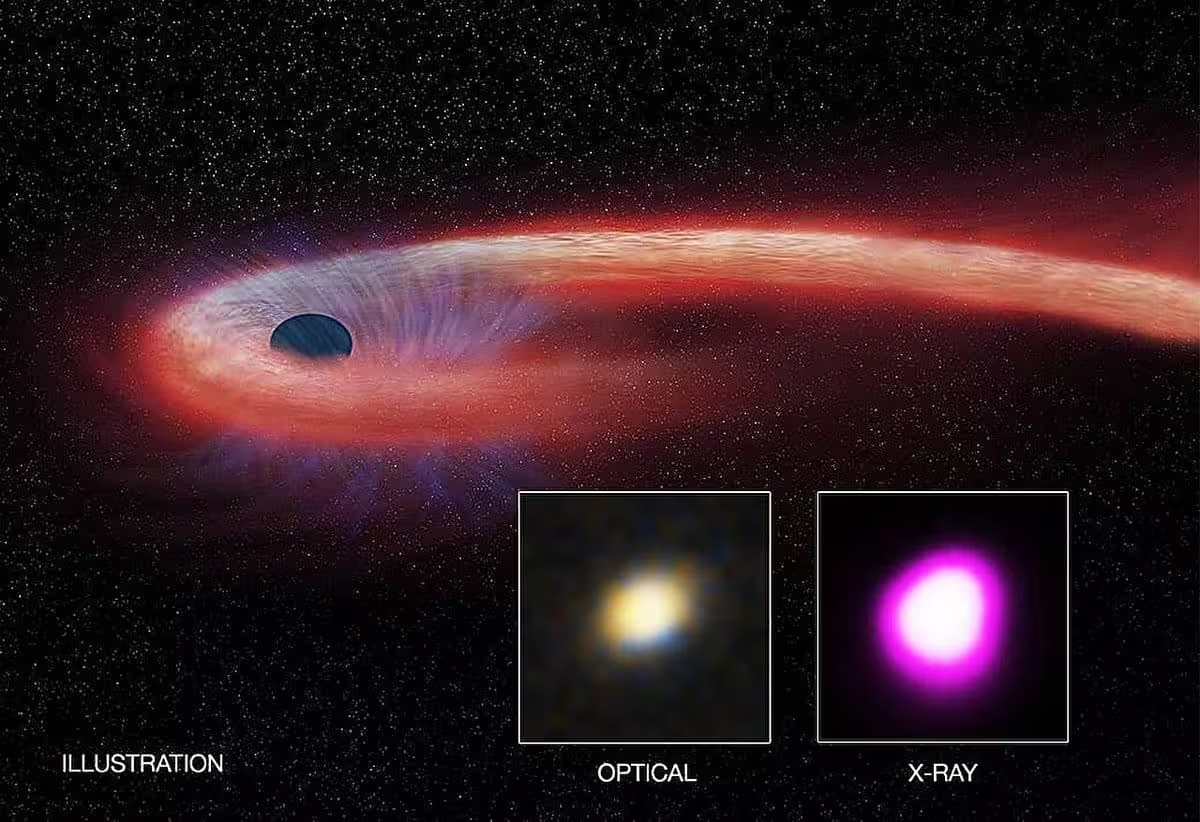
“These black holes are separated by enormous differences in mass, but they appear to switch on their jets at the same point in the feeding process,” Dr. Goodwin noted. “That tells us something fundamental about black holes: the physics does not seem to care how big they are.”
Refining How We Observe the Universe
These findings could significantly alter the strategy for future deep-space observations. Because access to large radio telescopes is highly competitive, knowing when to point these instruments is as vital as knowing where to look. By applying this new predictive timeline, researchers can prioritize observation windows, ensuring they capture these rare, high-energy events at their most critical stages.
As the scientific community prepares for next-generation facilities like the Square Kilometer Array Observatory (SKA), such predictive models will become essential. Improved planning will allow for more efficient use of infrastructure, reducing wasted telescope time and increasing the likelihood of capturing the rare “burps” of material that influence the evolution of surrounding galaxies.
Global Collaboration and Future Prospects
The study was the result of an international effort involving observations from facilities in Australia, the United States, India, and South Africa, as well as several space-based observatories. Supported by the Forrest Research Foundation, the project underscores the importance of fundamental, curiosity-driven research in unlocking the secrets of the cosmos.
Professor James Arvanitakis, Director of the Forrest Research Foundation, praised the work for its international impact, noting that the findings represent the power of backing researchers who tackle difficult, foundational questions. As more tidal disruption events are discovered in upcoming sky surveys, astronomers will have the data necessary to further validate this universal rule of jet formation, providing a clearer understanding of how black holes transform matter into the powerful, far-reaching energy streams that shape our universe.
This article has been fact checked for accuracy, with information verified against reputable sources. Learn more about us and our editorial process.
Last reviewed on .
Article history
- Latest version
Reference(s)
- Goodwin, Adelle. “A universal critical accretion rate for black hole jet formation - Nature Astronomy.”, September 17, 2026, pp. 1-13. Nature, doi: 10.1038/s41550-026-02951-1. <https://www.nature.com/articles/s41550-026-02951-1>.
Cite this page:
- Posted by Farah Siddiqui