Physicists Just Created a High-Precision Beam of Exotic Antimatter to Test Gravity
Physicists are using a new superfluid-helium technique to test how gravity affects antimatter, potentially revealing hidden truths about Einstein’s theory.
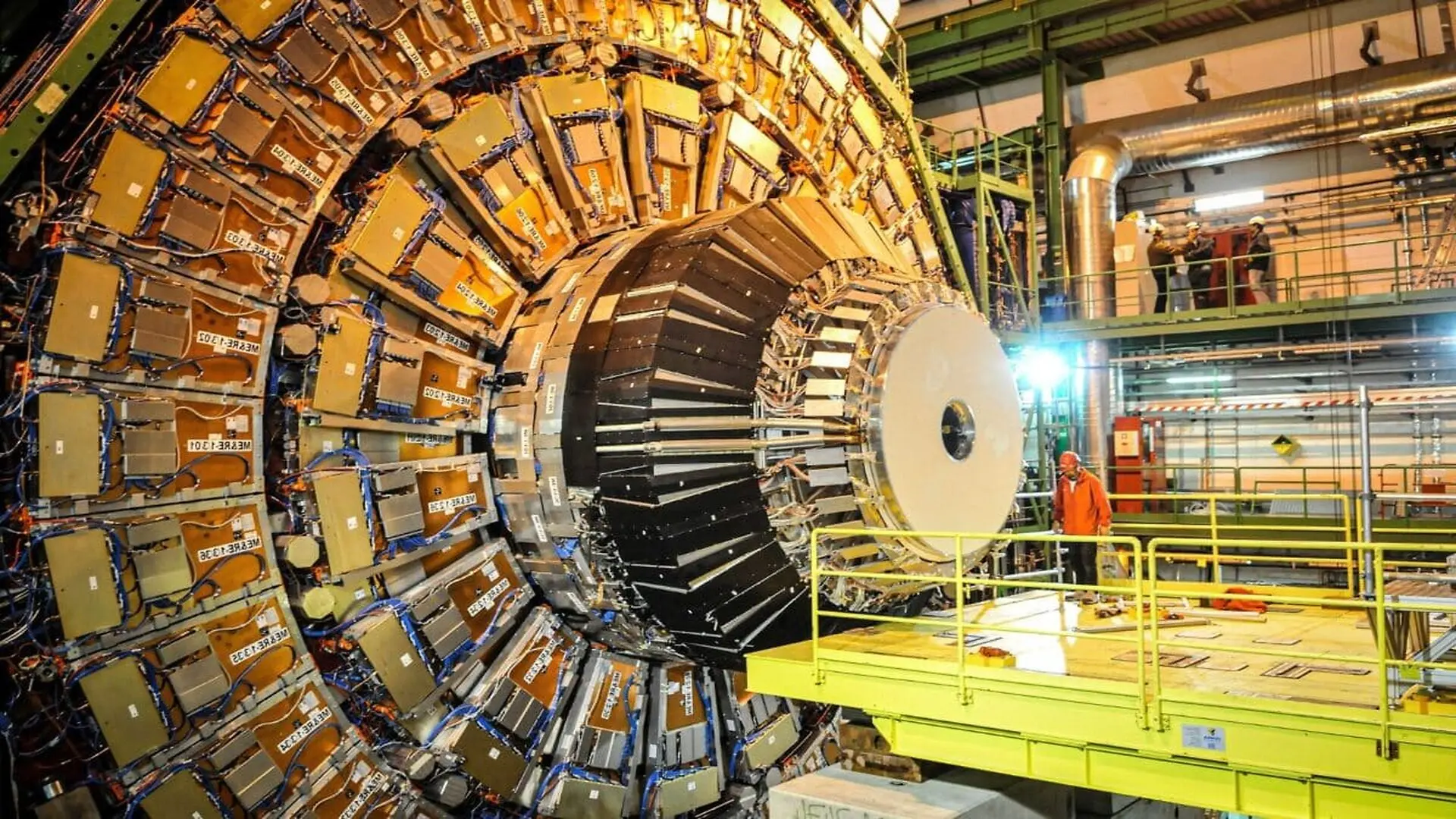
Physicists at the Paul Scherrer Institute (PSI) in Switzerland have cleared a major hurdle in the study of antimatter by successfully generating a tightly focused, high-brightness beam of muonium. This achievement marks a critical step toward testing how gravity influences this exotic, short-lived atom, providing a new window into the fundamental laws of the universe.
Muonium is a unique atomic system consisting of a positively charged antimuon bound to an electron. Because the antimuon accounts for nearly all of the atom’s mass, muonium serves as an ideal candidate for testing the universality of free fall, a core tenet of Einstein’s weak equivalence principle. Unlike antihydrogen, which has been the focus of previous gravitational studies, muonium provides a cleaner test because it lacks a complex hadronic nucleus.
A New Technique for Beam Precision
Previous attempts to create muonium beams were hampered by the limitations of traditional materials like silica powder or aerogel. Atoms emerging from these porous substrates typically travel in broad, chaotic thermal distributions, making them difficult to collimate into a narrow stream. The PSI team overcame this by introducing positive muons into a layer of isotopically purified superfluid helium cooled to 0.2 kelvin.
As the muons came to rest within the liquid, they captured electrons to form muonium. Due to the unfavorable interaction between the muonium atoms and the surrounding superfluid, the atoms were expelled into the vacuum at the surface in a highly directional manner. This “superthermal” process effectively organized the motion of the atoms, resulting in a beam with a longitudinal velocity of approximately 2,180 meters per second.
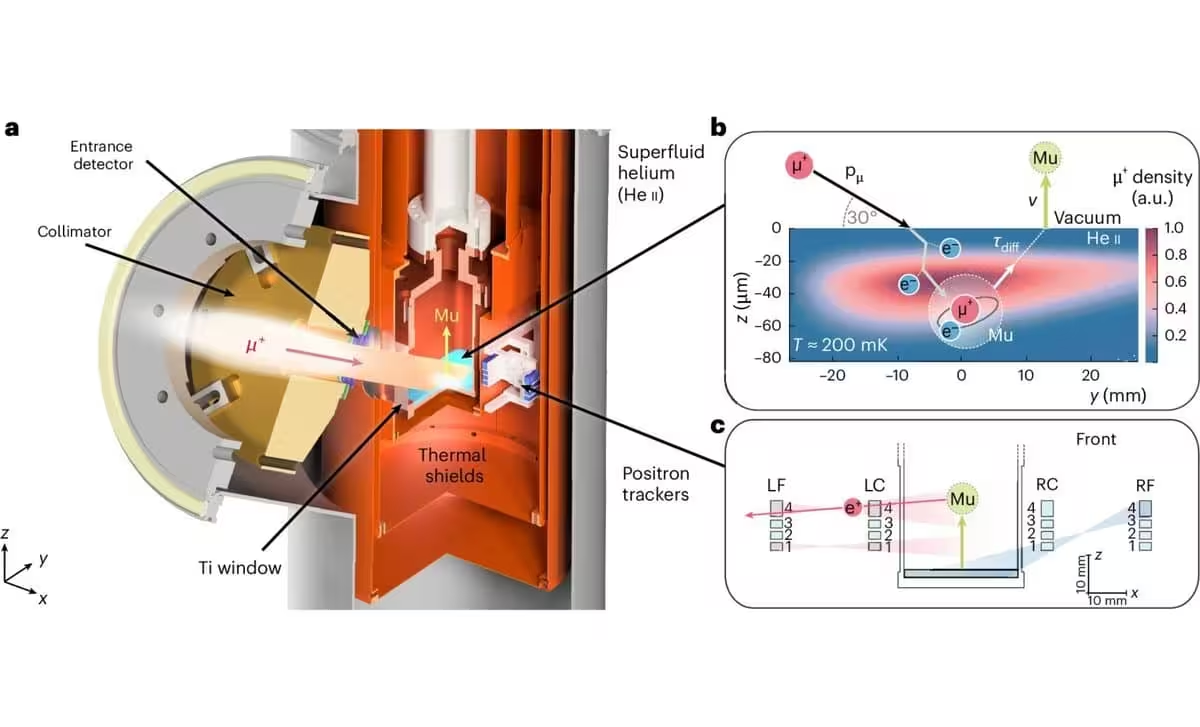
According to the findings published in Nature Physics, the researchers achieved a vacuum conversion efficiency of roughly 8.6 percent. Through precise reconstruction of the decay particles, the team confirmed that their thermal model was significantly outperformed by a superthermal model, validating the efficiency and directional control of the new source.
Pushing the Limits of the Equivalence Principle
The primary challenge in studying muonium is its fleeting existence; an antimuon survives for only about 2.2 microseconds. Consequently, any gravitational measurement must occur almost instantaneously after the atom’s formation, requiring not only a high-intensity beam but also sophisticated interferometric tools. The new source solves the intensity and collimation problems that previously rendered such measurements impossible.
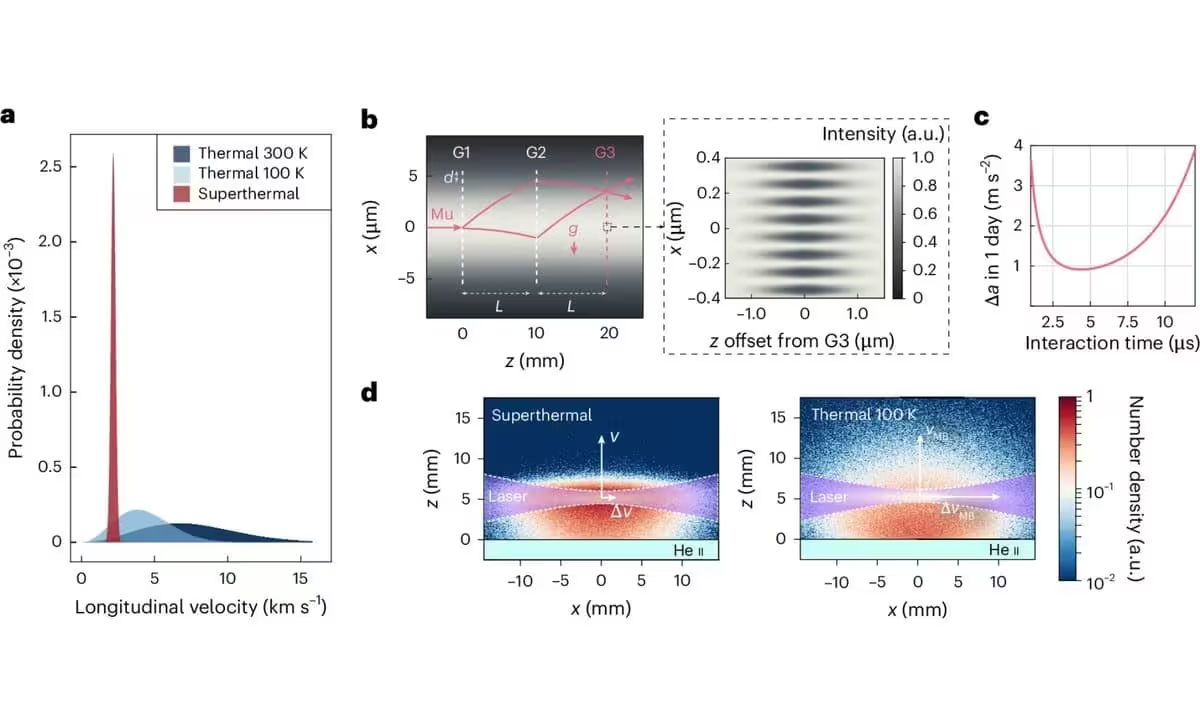
While the current experiment does not yet quantify the gravitational acceleration of muonium, it establishes the experimental foundation for doing so. By isolating this unique atomic system, scientists can now probe a sector of particle physics—specifically second-generation leptons—that has remained largely inaccessible to direct gravitational testing. This breakthrough brings researchers closer to verifying whether the fundamental laws of gravity behave the same way for all matter, regardless of its underlying composition.
This article has been fact checked for accuracy, with information verified against reputable sources. Learn more about us and our editorial process.
Last reviewed on .
Article history
- Latest version
Reference(s)
- Zhang, J.. “Generation of a high-intensity, superthermal muonium beam for gravity and laser spectroscopy experiments - Nature Physics.”, September 14, 2026, pp. 1-6. Nature, doi: 10.1038/s41567-026-03433-x. <https://www.nature.com/articles/s41567-026-03433-x>.
Cite this page:
- Posted by Farah Siddiqui