Primordial Black Holes May Reveal Evidence of a Hidden Fifth Dimension
Could primordial black holes be our key to discovering hidden dimensions? A new study suggests they may hold the secrets to physics beyond our Universe.
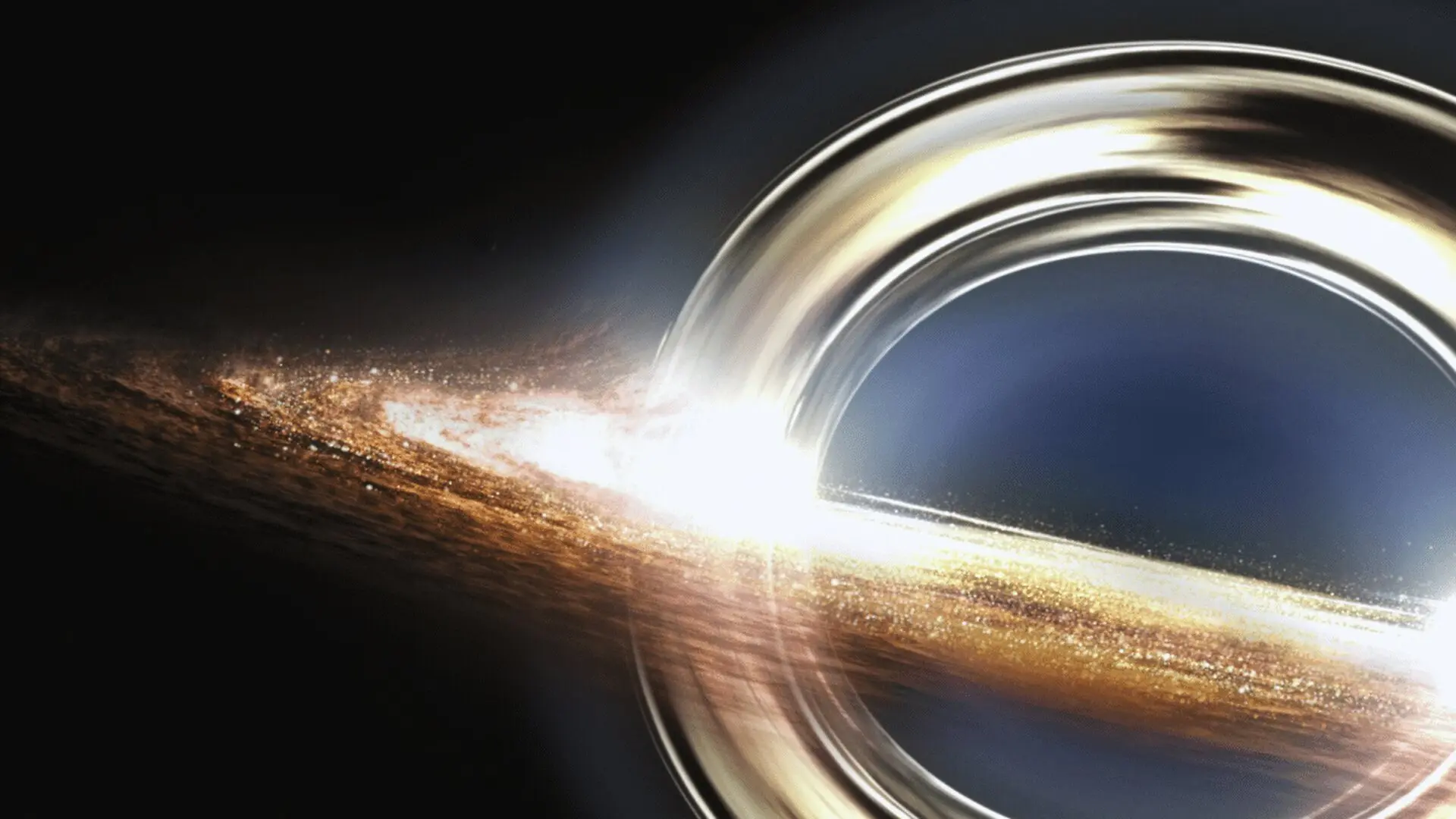
Theoretical physicists are exploring the possibility that primordial black holes—hypothetical objects formed in the chaotic environment of the infant Universe—could serve as conduits to a hidden fifth dimension. A new study proposes that if our reality is embedded within a higher-dimensional space, the gravitational signatures of these ancient black holes would look fundamentally different than what standard four-dimensional physics predicts.
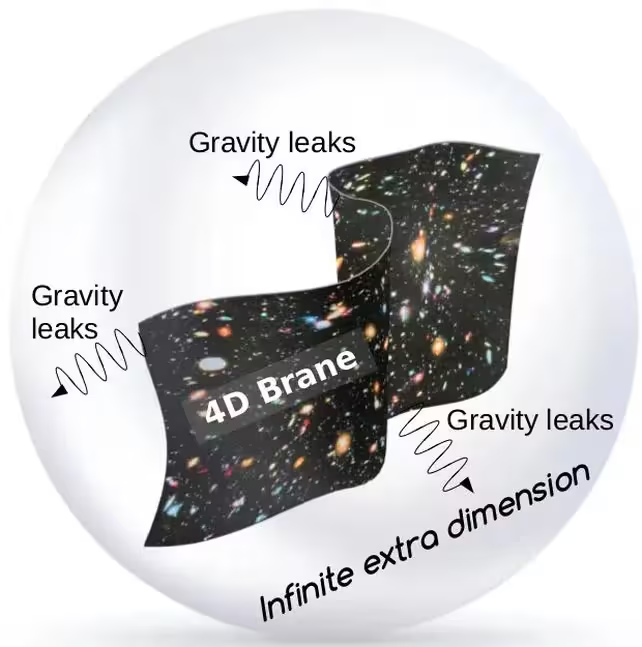
The research, slated for publication in Physical Review D on September 28, investigates how the geometry of extremely small black holes shifts when their size approaches the scale of a proposed “dark dimension.” While our everyday experience is confined to three spatial dimensions and one of time, various theories suggest additional dimensions may exist, remaining inaccessible to standard matter and light while still being permeable to gravity.
Gravity in Higher Dimensions
In this theoretical framework, gravity acts as a bridge between the visible Universe and potential hidden dimensions. When a primordial black hole reaches a critical, diminutive size, its structural stability becomes tied to the geometry of this extra space. Researchers suggest that such objects could undergo a transition—known as the Gregory-Laflamme instability—which forces them to adopt a five-dimensional configuration rather than the traditional four-dimensional spherical model.
Windows into the Cosmic Dawn
Unlike stellar-mass black holes, which are the remnants of dying stars, primordial black holes are theorized to have formed within the high-density fluctuations present shortly after the Big Bang. Because these objects emerged during extreme cosmic phase transitions, they represent a unique archive of the Universe’s earliest moments.
The study suggests that the existence of a fifth dimension would fundamentally alter the life cycle of these objects. According to the laws of quantum mechanics, black holes should slowly evaporate through Hawking radiation. However, five-dimensional primordial black holes might lose mass at a significantly slower rate than their four-dimensional counterparts. This increased stability could allow some of these ancient structures, particularly those formed from the collapse of cosmic strings, to persist in the modern Universe billions of years later.
Searching for Empirical Traces
One of the most intriguing aspects of the research is the attempt to link these theoretical objects to real-world observations. The authors suggest that the decay of a five-dimensional black hole could generate specific particle signatures, potentially correlating with high-energy neutrino events detected by facilities like the KM3NeT observatory. While this connection remains purely speculative at this stage, it provides a rare, testable hypothesis in the study of extra dimensions.
As the scientific community continues to hunt for evidence of dark matter, primordial black holes remain a leading candidate for missing mass in the cosmos. If researchers can confirm the existence of these objects—and find evidence that they interact with hidden dimensions—it would represent a monumental shift in our understanding of gravity, spacetime, and the fundamental architecture of the Universe. For now, the model serves as a vital conceptual tool for probing the extreme conditions that defined the dawn of time.
This article has been fact checked for accuracy, with information verified against reputable sources. Learn more about us and our editorial process.
Last reviewed on .
Article history
- Latest version
Cite this page:
- Posted by Farah Siddiqui