AstroForge Is Launching A Spacecraft That Will Operate With Zero Commands From Earth
AstroForge is preparing a 2027 space mission designed to operate autonomously, marking a major step toward self-sufficient deep space exploration.
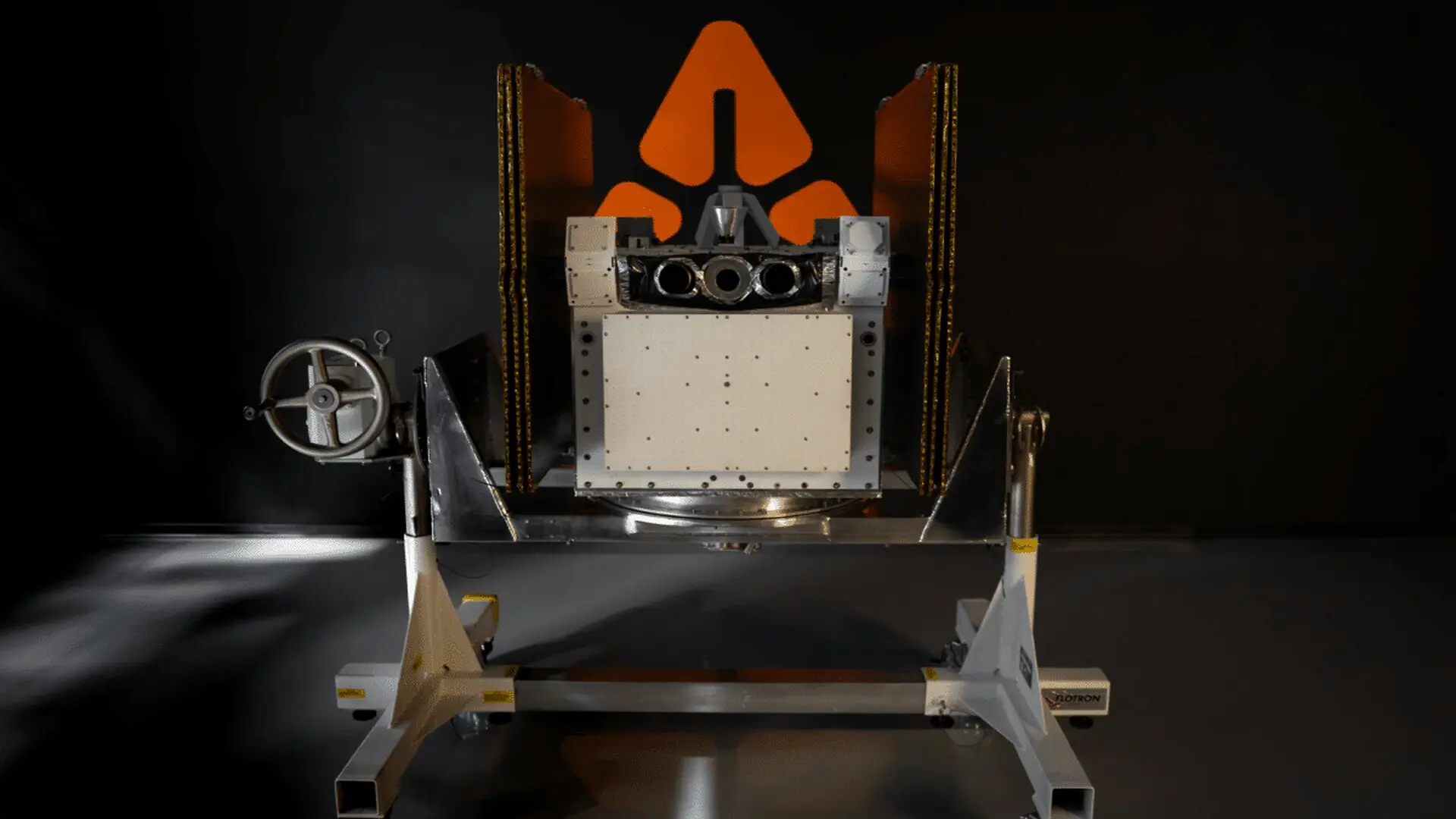
AstroForge has announced a bold leap in space exploration with its upcoming Autonomy-1 mission, scheduled for launch in 2027. The project aims to achieve a significant technological milestone: operating a spacecraft entirely without human intervention once it separates from its launch vehicle.
Removing the Human Element from Mission Control
For decades, space missions have relied on a constant, bidirectional tether between Earth and the void. Ground controllers meticulously plan, verify, and transmit every maneuver to their spacecraft. AstroForge is now set to break that cycle. With the Autonomy-1 mission, the company intends to launch a craft that navigates and executes its objectives independently, effectively taking the human operator out of the loop.
While the spacecraft will continue to transmit status updates, telemetry, and research data back to home base, it will not receive any corrective commands or operational guidance from mission control. This shift is designed to stress-test the limits of self-governing orbital systems.
— AstroForge (@AstroForge) September 23, 2026
AstroForge CEO and co-founder Matt Gialich outlined the significance of this departure from standard flight protocols in a recent statement, noting that the mission serves as a critical proof-of-concept for future endeavors that will be too distant or complex for real-time human interaction.
The Solo Intelligence Model
The brain behind this independence is a new software architecture dubbed Solo. According to the development team, this system is not intended to replace existing flight controls, but rather to act as an intelligent layer built on top of them. While traditional, physics-based software will continue to manage the deterministic aspects of the flight, Solo is tasked with making high-level operational decisions in real time.
By layering this autonomous capability over standard spacecraft engineering, AstroForge hopes to prove that machines can maintain operational health and achieve mission objectives without waiting for the signal latency associated with deep-space communication.
Stepping Toward Asteroid Resource Extraction
Although the Autonomy-1 flight is fundamentally an engineering demonstration, its success is a foundational requirement for AstroForge’s broader ambitions in the asteroid mining sector. The company has dedicated its resources to mastering the logistical hurdles of identifying and interacting with asteroids for potential resource acquisition.
The strategy behind this mission is intentionally stark. By creating a one-way data flow, the company aims to move from a paradigm of active, moment-to-moment control to a passive observer model. In this scenario, engineers on the ground will track the progress of the spacecraft only to analyze the logic and performance of the Solo system as it navigates its environment.
This autonomy is widely considered a prerequisite for the future of the commercial space industry. As companies look toward deep-space missions and complex resource extraction, the ability for a probe to analyze environmental variables and react instantaneously—without the interference of light-speed delays—will likely become the standard for successful exploration.
This article has been fact checked for accuracy, with information verified against reputable sources. Learn more about us and our editorial process.
Last reviewed on .
Article history
- Latest version
Reference(s)
- “Introducing Autonomy-1: The First Autonomous Space Mission, Powered by Solo - AstroForge.”, September 21, 2026 <https://www.astroforge.com/updates-collection/introducing-autonomy-1-the-first-autonomous-space-mission-powered-by-solo>.
Cite this page:
- Posted by Farah Siddiqui