The Bizarre True Story Of The Soviet Scientist Who Tried To Create A Human Chimpanzee Hybrid
A nearly century-old Soviet experiment attempting to create a human-ape hybrid remains one of the most bizarre and controversial chapters in science history.
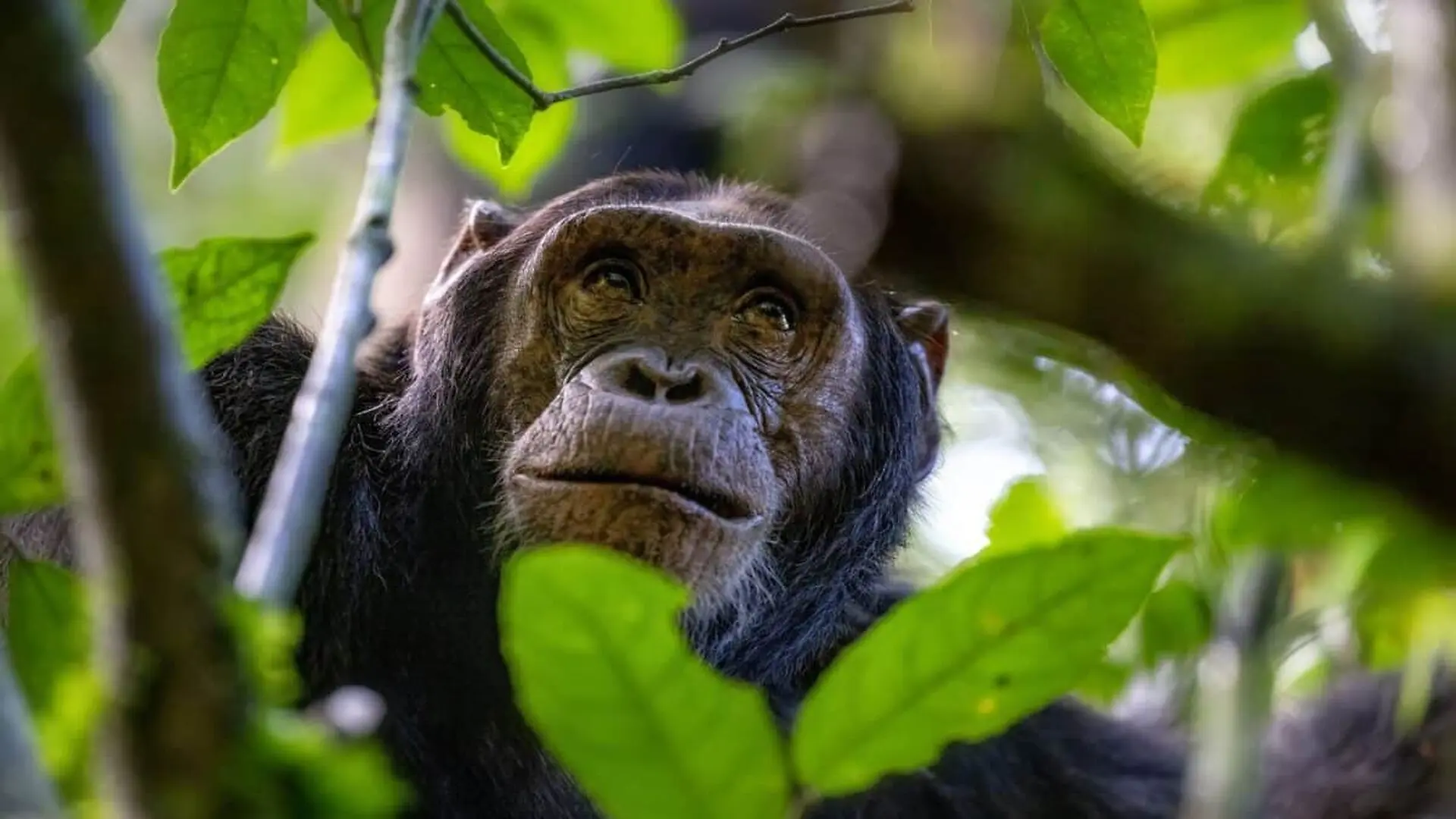
In 1926, Soviet biologist Ilya Ivanov embarked on a pursuit that would become one of the most polarizing chapters in the history of science. Attempting to create a human-chimpanzee hybrid—a so-called “humanzee”—Ivanov sought to empirically validate the evolutionary links between our species and our closest primate relatives. While his efforts ultimately failed to produce a hybrid, the experiment remains a stark case study in the intersection of radical scientific ambition, geopolitical influence, and the development of modern bioethical standards.
A Controversial Pursuit of Evolutionary Proof
During the early 20th century, the scientific community remained deeply embroiled in debates regarding Charles Darwin’s theory of evolution. As a specialist in artificial insemination, Ilya Ivanov posited that his reproductive techniques could resolve lingering doubts about the common ancestry shared by humans and great apes. His ambition was not merely theoretical; it was a practical experiment intended to force a biological intersection between two species separated by millions of years of distinct development.
As documented by historian Alexander Etkind and reported by Popular Science, the project saw Ivanov and his son travel to French Guinea in 1926. There, he attempted to use human sperm to inseminate female chimpanzees under controlled conditions. Despite his efforts, the procedures proved unsuccessful, and no hybrid offspring were ever conceived. Following his return to the Soviet Union, Ivanov attempted to continue his research near the Black Sea, but his work was abruptly halted in 1930 when he was arrested and sent into exile for reasons unrelated to his laboratory experiments.
Biological Barriers and Ethical Red Lines
From the perspective of modern genetics, the challenge of creating such a hybrid is immense. Humans and chimpanzees diverged from a common ancestor approximately 6 million years ago, a period long enough to establish profound differences in chromosome structure and reproductive compatibility. Evolutionary biologist James Mallet of Harvard University highlights that these barriers are not merely biological inconveniences but essential components of how species maintain their integrity over time.
Beyond the technical improbability, the project raises severe ethical questions. “It’s a horrible thing to do to a human when you know it’s liable to cause problems for the offspring,” Mallet noted, emphasizing that modern research is governed by stringent frameworks designed to prevent such risks. The prospect of generating a hybrid entity brings forward insurmountable questions regarding individual rights, legal personhood, and biological welfare.
The Broader Scope of Evolutionary Hybridization
While Ivanov’s specific experiment remains an outlier, the study of natural hybridization continues to offer critical insights into evolution. Nature frequently facilitates the exchange of genetic material between species, a process that can drive new adaptations. Mallet’s work on Heliconius butterflies demonstrates how hybridization acts as a mechanism for genetic innovation, effectively pooling advantageous traits. “Hybridization is very much the same sort of thing [as mutation], only you’re dealing with gene combinations, multiple genes coming together, making a new adaptation,” he explained.
This reality is also reflected in our own history. Genetic evidence confirms that Neanderthals and Homo sapiens interbred during their migration out of Africa. These ancient unions left behind traces of Neanderthal DNA in modern human populations, a testament to the complex, fluid nature of our evolutionary lineage—one that is far more nuanced than the forced, singular experiments attempted by researchers in the 1920s.
This article has been fact checked for accuracy, with information verified against reputable sources. Learn more about us and our editorial process.
Last reviewed on .
Article history
- Latest version
Reference(s)
- projects, Contributors. “Russian biologist (1870-1932).”, December 29, 2005 Wikimedia Foundation, Inc. <https://en.wikipedia.org/wiki/Ilya_Ivanov>.
- projects, Contributors. “Russian historian and cultural scientist.”, June 22, 2020 Wikimedia Foundation, Inc. <https://en.wikipedia.org/wiki/Alexander_Etkind>.
- Sharma, Nidhi. “In 1926, a Russian biologist tried to create a human-chimpanzee hybrid.”, August 18, 2026 Popular Science <https://www.popsci.com/science/human-chimpanzee-hybrid/>.
- <https://www.oeb.harvard.edu/people/james-mallet>.
Cite this page:
- Posted by Hassan Raza