Greenland Sharks Can Live for Centuries and Their Eyes Remain Remarkably Youthful
New research reveals that Greenland sharks maintain intact vision for centuries, defying assumptions that these long-lived predators are effectively blind.
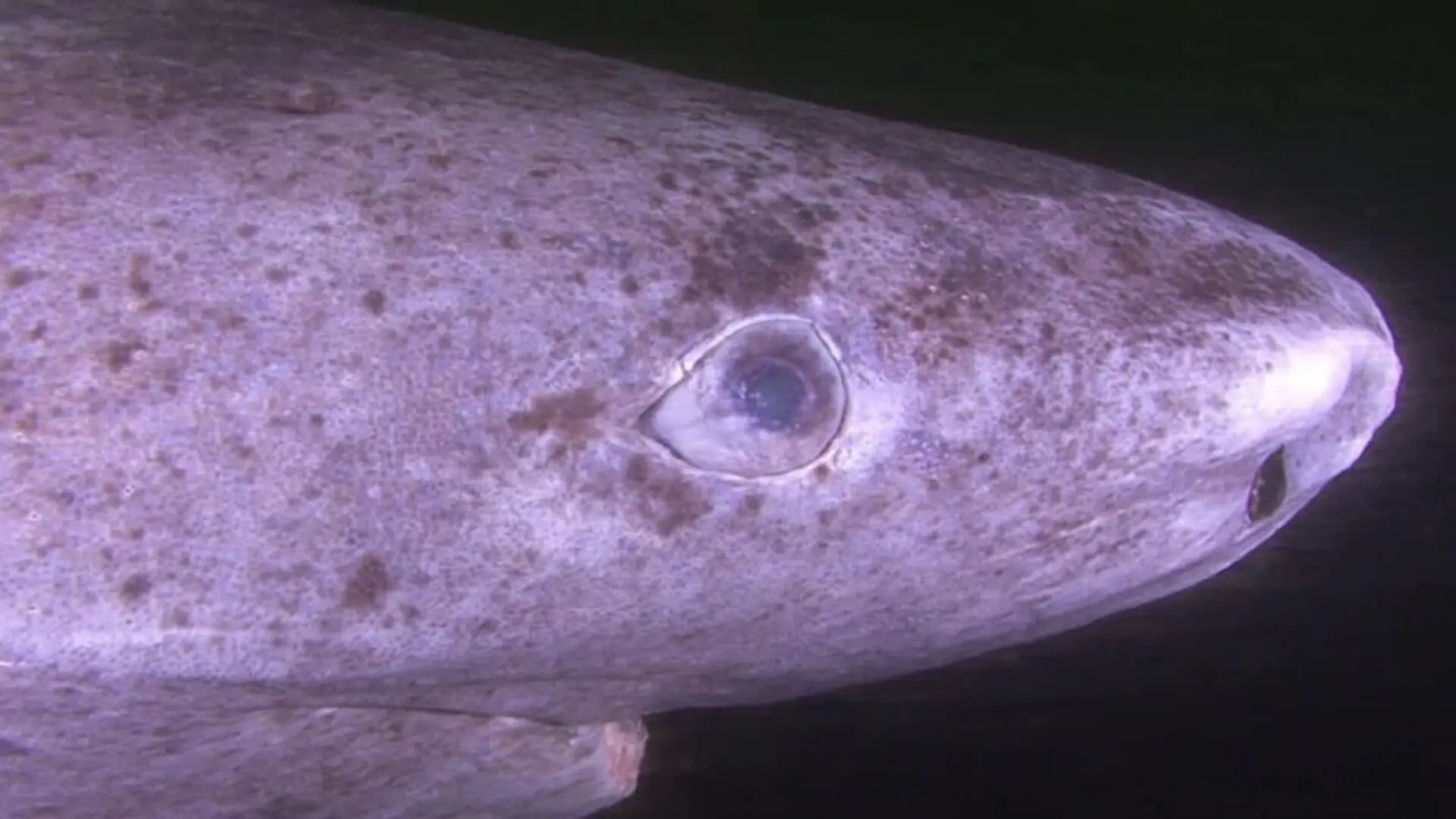
New research published in Nature Communications has upended long-standing assumptions about the Greenland shark, a mysterious predator of the deep Arctic that can live for as long as 400 years. While these sharks are frequently afflicted by parasitic copepods known as Ommatokoita elongata—which physically attach to their eyes and create a cloudy appearance—the study reveals that their visual systems are not only functional but highly specialized for survival in near-total darkness.
By examining specimens over a century old, scientists discovered that the shark’s retina remains remarkably preserved, showing no signs of the typical age-related degeneration seen in other species. This longevity suggests the Greenland shark possesses an extraordinary, perhaps unique, biological model for maintaining functional tissue over multiple centuries.
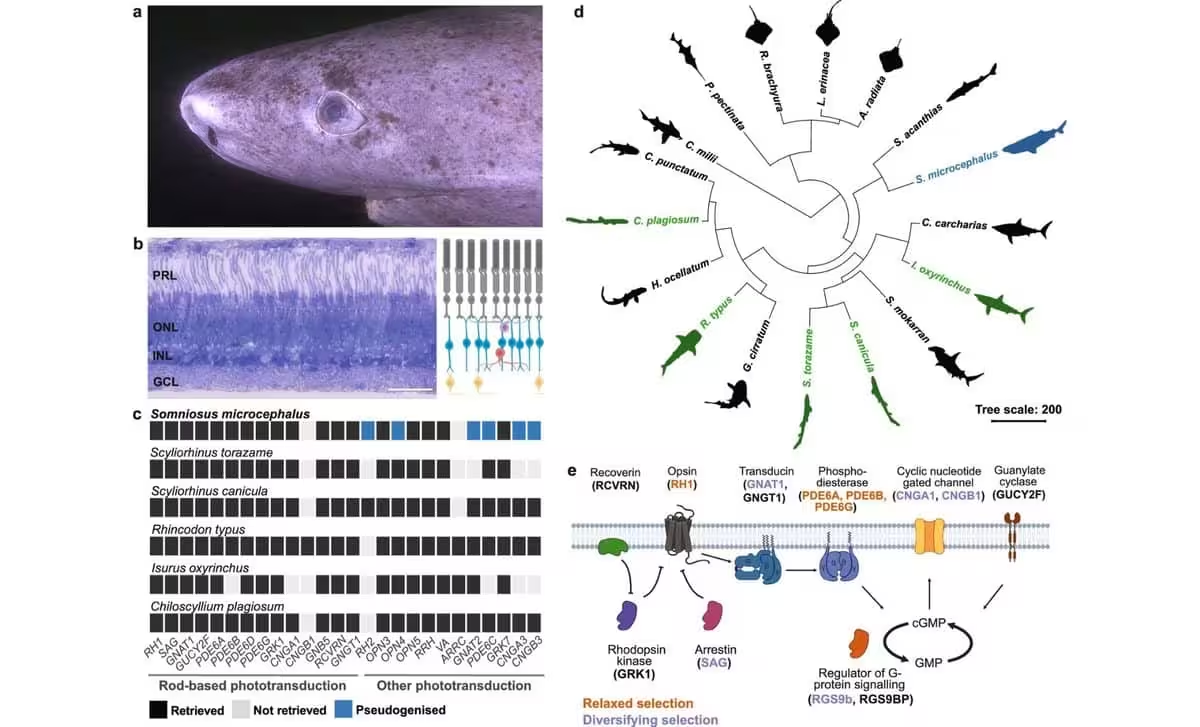
Evolutionary Adaptations for the Deep Ocean
Histological analysis indicates that the Greenland shark’s retina is composed entirely of rods, the photoreceptors responsible for scotopic or low-light vision. Unlike species that rely on cones for sharp color vision in bright settings, these sharks have evolved to detect the faint blue-spectrum light that penetrates deep into Arctic waters. The team found that the light-sensitive protein rhodopsin in these sharks is tuned to a maximum absorbance of 458 nanometers, a shift that optimizes their vision for the blue-dominated depths.
Even the presence of corneal parasites did not significantly impede light transmission. When researchers tested six shark corneas, they found that light transmission remained between 70% and 100%, demonstrating that the physical barrier caused by the copepods is less detrimental to vision than previously thought.
Maintaining Tissue Integrity Over Centuries
The secret to this lifelong ocular health may lie in the animal’s molecular maintenance systems. The research team identified an elevated expression of the ercc4 (or xpf) gene, which is part of the DNA repair pathway essential for maintaining genome stability. This robust repair machinery, combined with the presence of specific cell types like Müller glia and bipolar cells, appears to shield the retina from the gradual cellular decay that accompanies aging in most vertebrates.
Furthermore, the lipid composition of the shark’s retina provides additional protection. The tissue contains a high concentration of docosahexaenoic acid (DHA) and other long-chain polyunsaturated fatty acids, which help maintain the membrane fluidity and structural integrity necessary for rhodopsin to function effectively over such an immense lifespan.
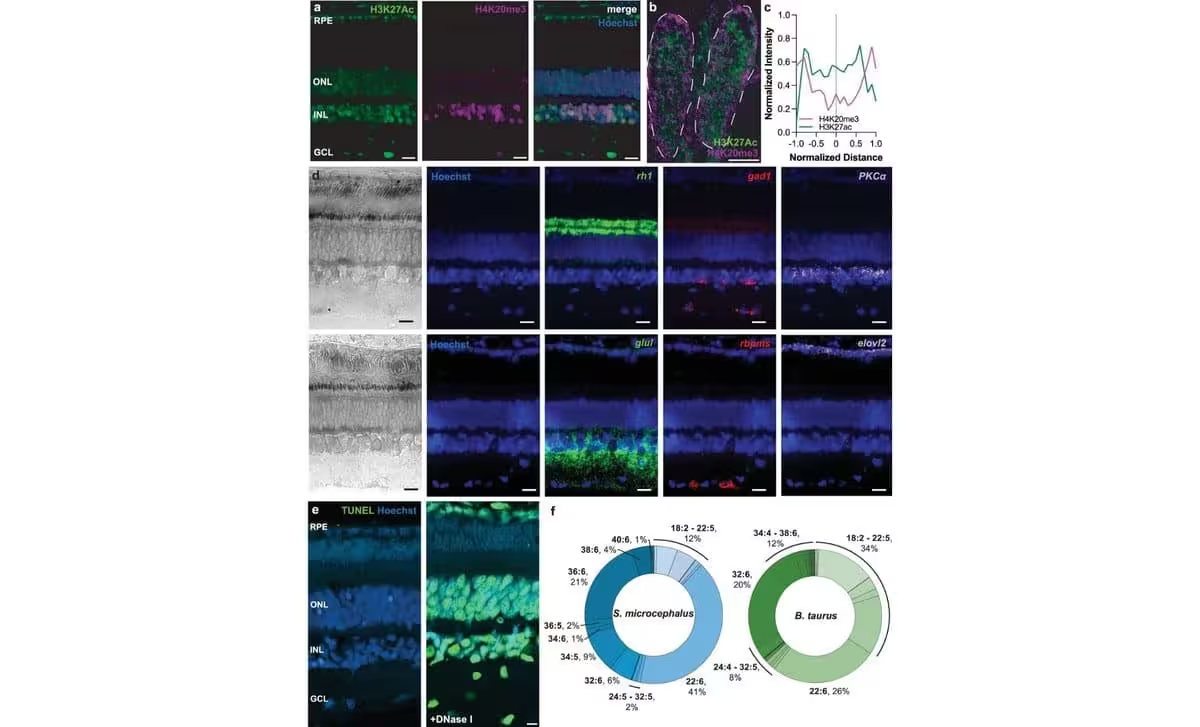
The investigation was sparked in part by field observations led by Dorota Skowronska-Krawczyk of the University of California, Irvine, who noticed that the sharks exhibited behavioral responses to light sources. While the study does not suggest these specific mechanisms can be immediately applied to human medical treatments, it provides a crucial insight into how biological systems can be “built” to survive extreme conditions and vast spans of time.
By identifying the specific gene expression patterns and metabolic markers that allow for such enduring cellular health, researchers are beginning to understand the unique evolutionary strategies that allow the Greenland shark to thrive in one of the planet’s most challenging environments.
This article has been fact checked for accuracy, with information verified against reputable sources. Learn more about us and our editorial process.
Last reviewed on .
Article history
- Latest version
Reference(s)
- “Dorota Skowronska Krawczyk | UCI Gavin Herbert Eye Institute.” <https://ophthalmology.uci.edu/about/faculty/dorotask>.
Cite this page:
- Posted by Hassan Raza