New Dinosaur Discovery Reveals How Long Necks Defied Gravity With Air Filled Bones
Paleontologists in Thailand have discovered a rare dinosaur fossil that could finally unlock the secrets behind how these giants evolved such long necks.
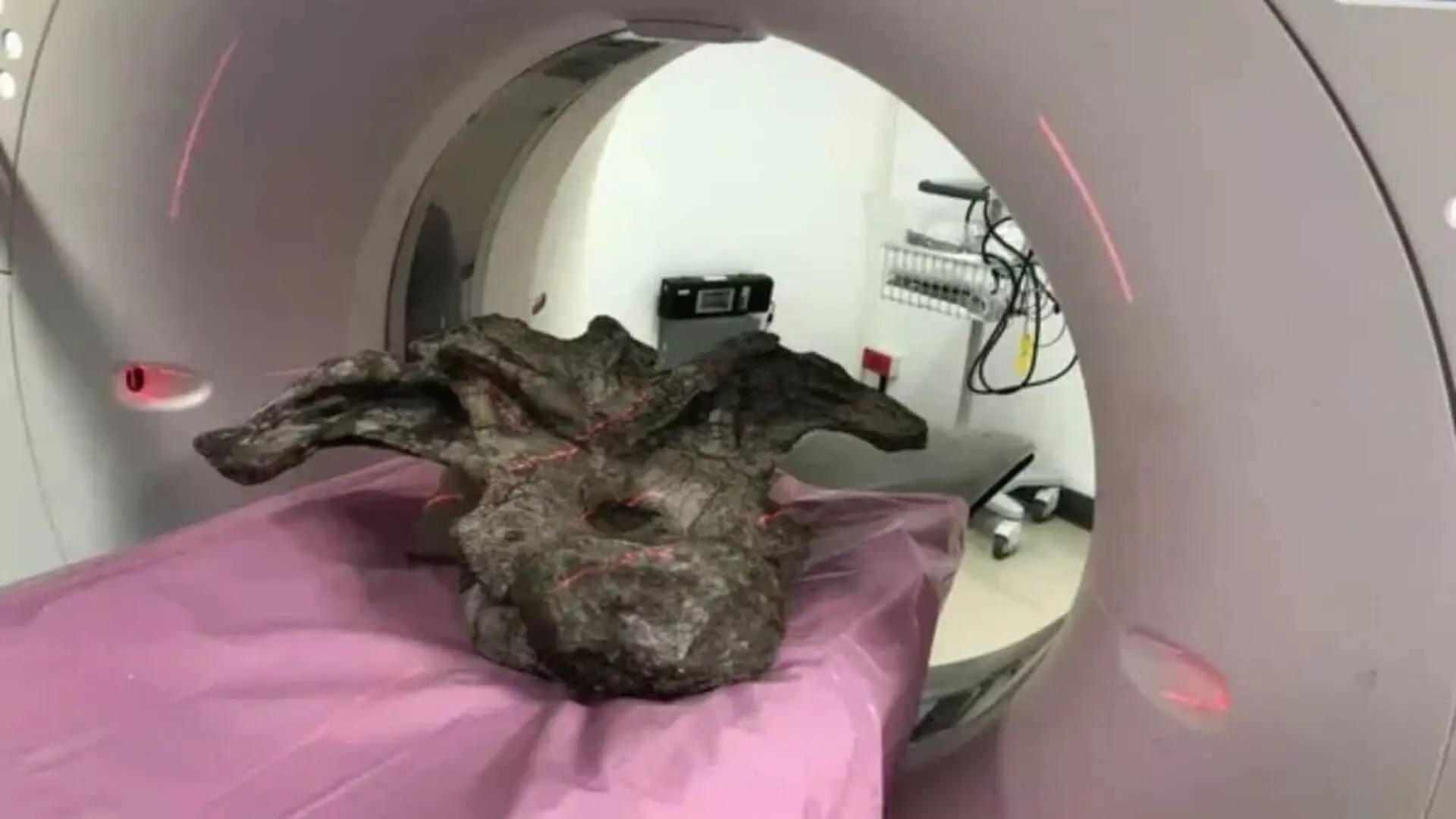
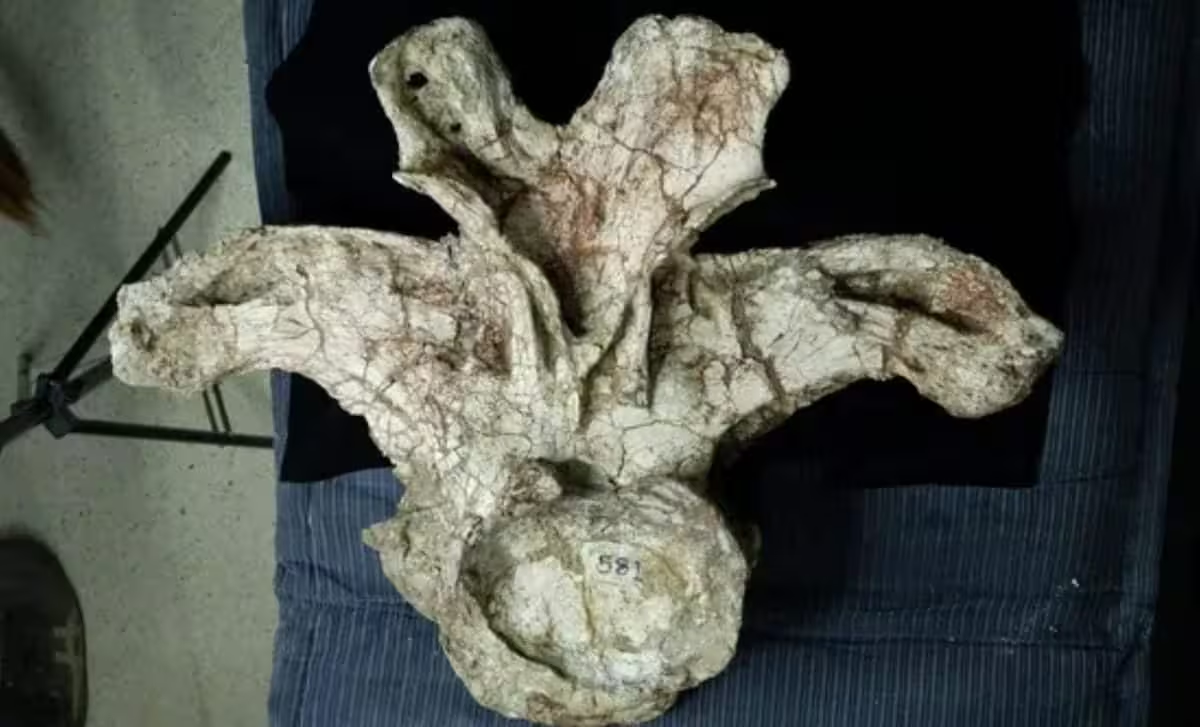
A single, fossilized vertebra recovered from northeastern Thailand has unveiled a previously unknown species of long-necked dinosaur, Uragasaurus kalasinensis. This discovery not only provides a new entry in the fossil record but also clarifies how these massive sauropods managed the biomechanical feat of supporting extraordinary neck lengths.
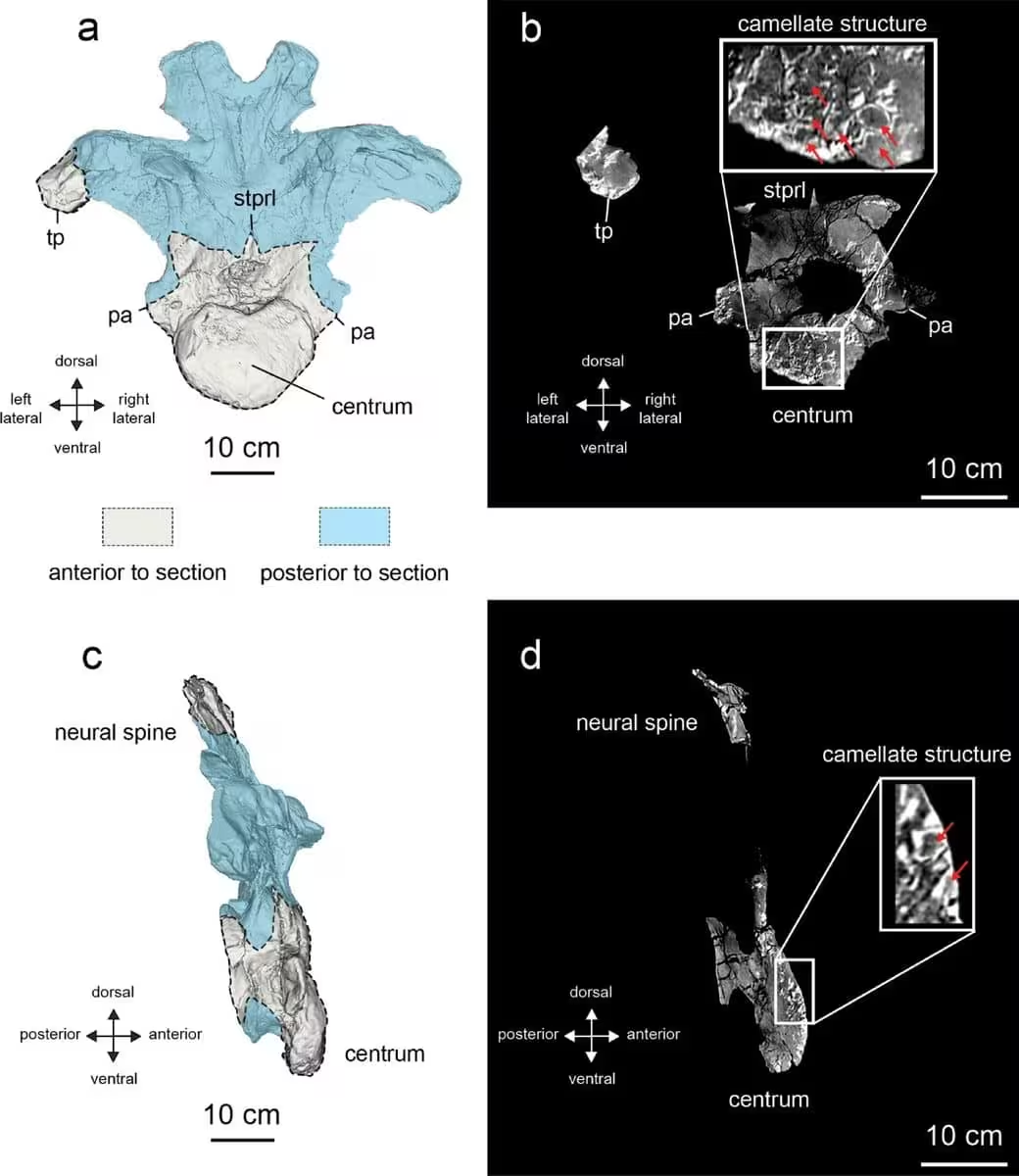
The specimen was identified within the Phu Kradung geological formation. Despite the limited fossil material, the bone exhibits a distinct Y-shaped architecture and internal air-filled chambers, or pneumatic structures, that allowed the animal to maintain a massive frame without excessive weight. The findings were recently detailed in the journal Scientific Reports.
Expanding the Map of Mamenchisaurid Dinosaurs
Uragasaurus kalasinensis belongs to the Mamenchisauridae, a family of sauropods famed for their record-breaking neck anatomy. Historically, fossil evidence for this group has been almost entirely confined to the Sichuan Basin in China, where the first member of the family, Mamenchisaurus constructus, was unearthed in 1952. While some older findings in Tanzania have been reclassified to include mamenchisaurids, their presence in Southeast Asia has remained largely undocumented until now.
The name Uragasaurus kalasinensis combines the Sanskrit term for “serpent” with a reference to the Kalasin province where the bone was found. According to lead researcher Komsorn Lauprasert, a professor at Mahasarakham University, the find proves that Southeast Asia served as a critical hub for the evolution and distribution of this dinosaur lineage during the Jurassic period.
Engineering a Super-Sized Neck
To understand the structural efficiency of the new species, researchers utilized CT scanning technology. The imagery revealed teardrop-shaped depressions known as fossae, alongside an intricate network of air-filled chambers. This internal air-sac system, similar to those found in modern birds, allowed the sauropod to minimize bone density while mitigating the intense mechanical stress associated with such an elongated neck.
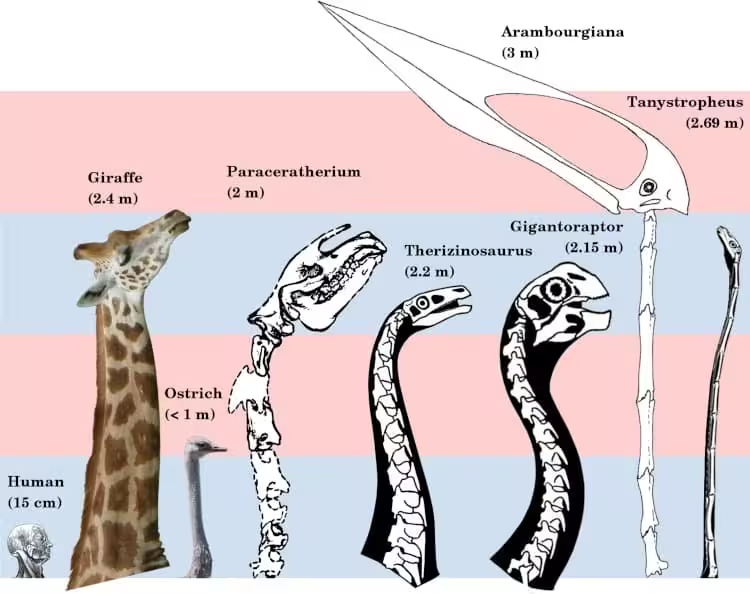
While other prehistoric groups, including pterosaurs and theropods, also possessed pneumatic bones, their neck lengths were significantly more modest, often peaking at roughly 6 to 9 feet. In contrast, sauropods achieved lengths exceeding 50 feet. Modern giraffes, the tallest land animals alive today, rely on an entirely different biological framework, lacking the specialized air-sac systems that enabled the extreme proportions seen in their Jurassic predecessors.
Lauprasert believes this find is only the beginning for Thai paleontology. He suggests that the country’s vast, underexplored Jurassic sedimentary layers are highly likely to yield additional mamenchisaurid specimens as excavation efforts intensify.
This article has been fact checked for accuracy, with information verified against reputable sources. Learn more about us and our editorial process.
Last reviewed on .
Article history
- Latest version
Reference(s)
- “S41598 026 XXXXX X.” <https://www.nature.com/articles/s41598-026-XXXXX-X>.
- <https://www.researchgate.net/profile/Komsorn-Lauprasert>.
Cite this page:
- Posted by Hassan Raza