Scientists Discover 419 Million Year Old Fish That Glided Through Ancient Seas Like A Bat
A newly discovered fossil from China reveals a bizarre, jawless Devonian fish that likely evolved its head into a wing-like structure for underwater flight.
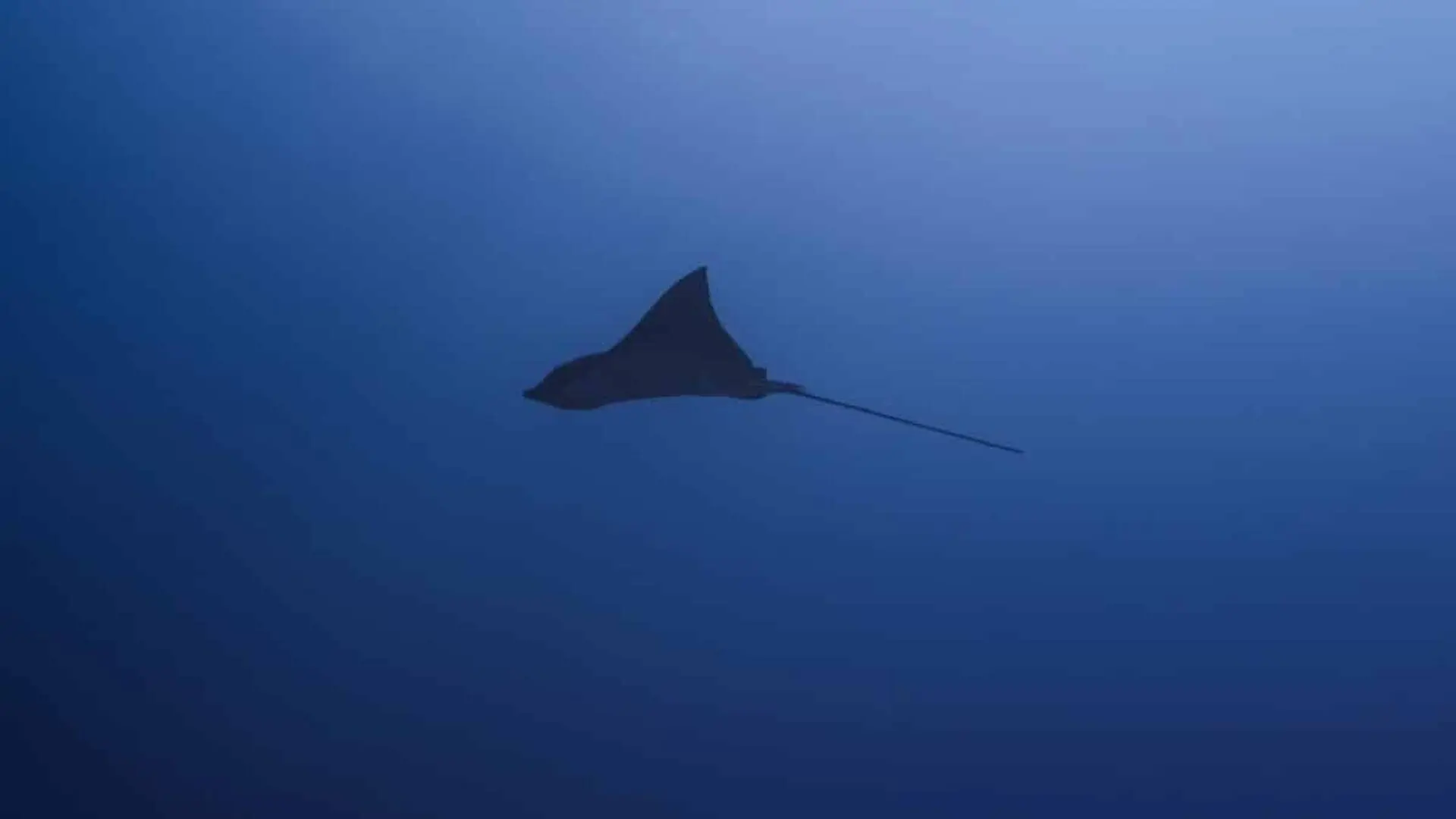
Paleontologists have uncovered evidence of a 419-million-year-old creature that navigated ancient oceans using an evolutionary design unlike any other seen in the fossil record. Identified as Bataspis crux, this armored, jawless fish possessed a distinctively wing-shaped head, a feature researchers suggest served as a biological glider in the waters of the early Devonian Period.
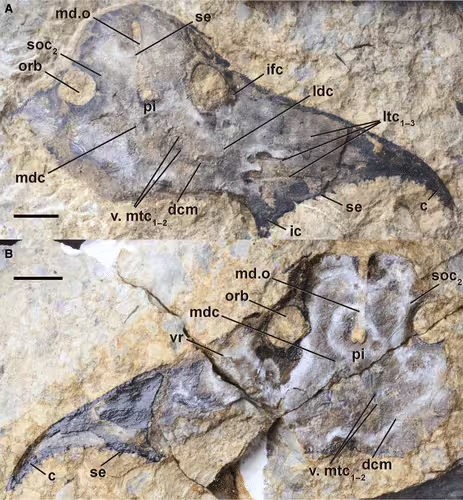
The fossils were unearthed within the Xishancun Formation near Qujing, in China’s Yunnan province. This species is classified as a galeaspid, an extinct group of jawless fish that once inhabited the coastal regions of ancient China and northern Vietnam. While these organisms vanished hundreds of millions of years ago, they are of immense interest to evolutionary biologists because they represent a pivotal lineage closely related to the ancestors of all jawed vertebrates.
An Evolutionary Shift in Hydrodynamics
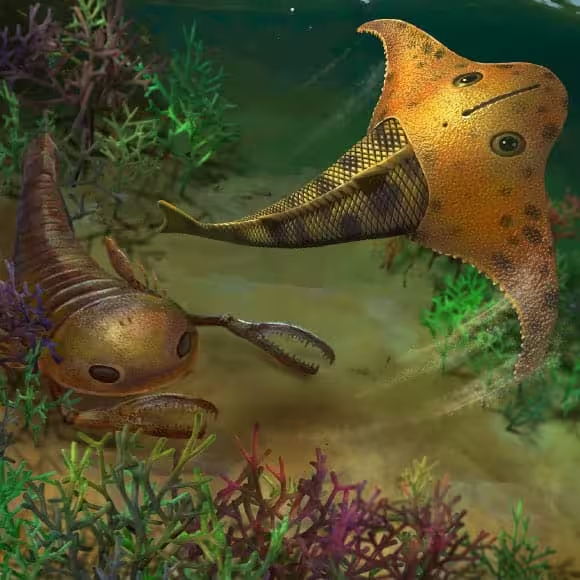
Unlike the rounded or spike-laden headshields typical of other galeaspids, Bataspis crux features a structure that extends backward into two broad, wing-like lobes, creating a silhouette that bears a striking resemblance to a bat. To determine the functional purpose of this morphology, the research team, as detailed in the journal Palaeontology, developed a sophisticated digital 3D model to simulate how water interacted with the creature’s anatomy.
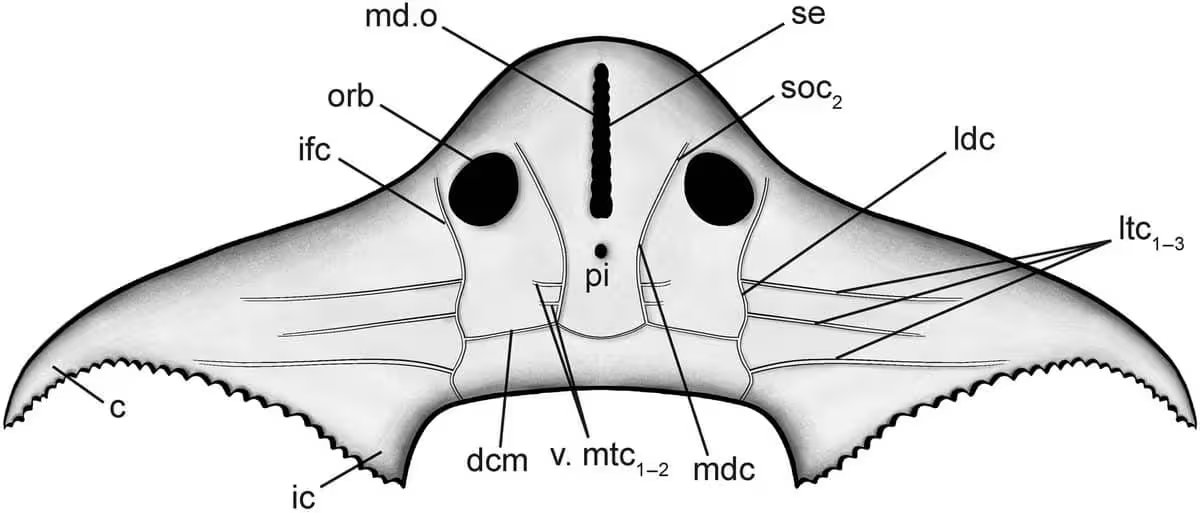
The simulations indicated that the headshield functioned as a hydrofoil. By utilizing the curvature of the upper surface and the relative flatness of the underside, the fish was able to generate lift in a manner comparable to an airplane wing. This anatomical configuration provided Bataspis crux with the most significant lift-to-drag ratio ever observed within the galeaspid group, likely enabling the fish to maintain stability and glide efficiently through the water column.
Redefining Ancient Marine Locomotion
The discovery forces a rethink of the ecological capabilities of early jawless fish. Previously, the scientific consensus often categorized galeaspids as primarily bottom-dwelling organisms or rudimentary swimmers. Bataspis crux demonstrates that these animals were far more versatile, utilizing highly specialized adaptations to navigate their environment.
As the study authors noted, the presence of these unique features suggests that the absence of flexible paired fins did not necessarily limit the ecological range of these jawless stem-gnathostomes. Instead, these creatures exploited complex physical shapes to achieve maneuverability long before the advent of more familiar aquatic vertebrate structures.
The holotype specimens are currently housed at the Institute of Vertebrate Paleontology and Paleoanthropology within the Chinese Academy of Sciences, where they remain a critical resource for understanding the early diversification of vertebrate life.
This article has been fact checked for accuracy, with information verified against reputable sources. Learn more about us and our editorial process.
Last reviewed on .
Article history
- Latest version
Reference(s)
- Meng, Xinyuan., et al. “Bataspis crux , a galeaspid (jawless stem gnathostome) from the Lochkovian of Yunnan with a batwing‐shaped head adapted for hydrodynamic efficiency.” Palaeontology, vol. 69, no. 4, August 4, 2026 Wiley, doi: 10.1111/pala.70081. <https://onlinelibrary.wiley.com/doi/10.1111/pala.70081>.
Cite this page:
- Posted by Hassan Raza