School Architecture Shapes How Teens Connect With Cultural Heritage
A study of 516 middle school students reveals that everyday campus architecture influences cultural identity and digital versus offline behavior.

Walking past traditional gray bricks and curved tile roofs every day on the way to class shapes how teenagers connect with their roots, according to a recent study examining student behavior. Researchers found that ordinary school architecture acts as an active psychological space that guides adolescent cultural identity and determines whether young people engage with heritage traditions online or in person.
The study, published in PLOS One, investigated 516 middle school students aged 15 to 18 at Changting No. 1 Middle School in Changting County, China. The participants represented a balanced mix of genders and academic grades, with roughly 34 percent non-Hakka, 33 percent partial Hakka, and 32 percent full Hakka ancestry. Researchers used structural equation modeling to analyze how students perceive campus landscapes featuring Hakka cultural symbols, such as white walls, carved pillars, and ancestral hall elements.
How Visual Spaces Shape Adolescent Identity
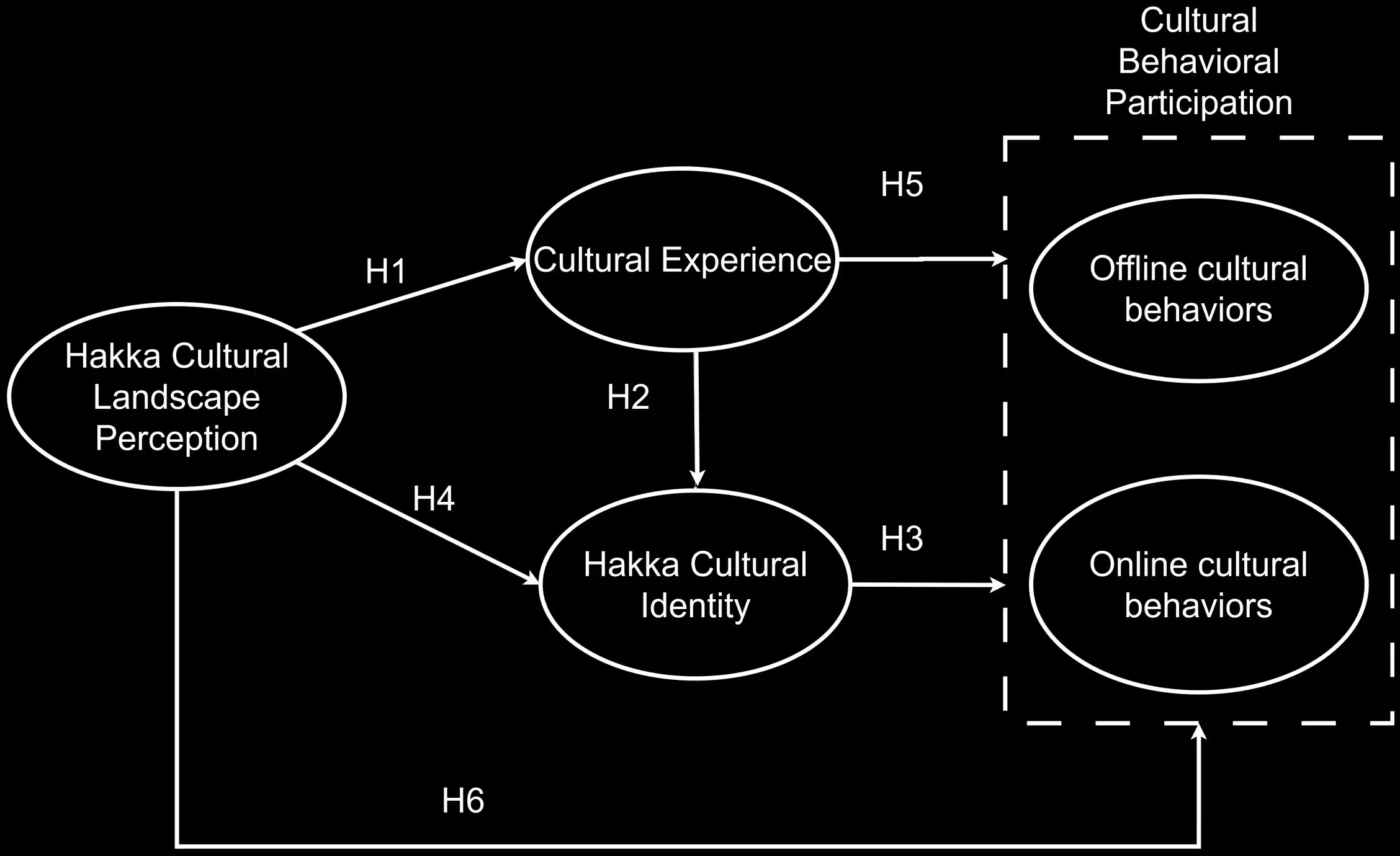
The statistical analysis revealed that student perception of cultural landscapes follows a dual-pathway pattern consisting of symbol recognition and cultural meaning perception. When students spot familiar architectural features, it sparks a sensory and emotional experience that eventually reinforces their cultural identity. However, simply recognizing visual elements works differently than understanding the historical and ethical values behind them.

Visual symbol recognition relies heavily on the physical environment, requiring emotional experiences to build long-term identity and behavior. In contrast, understanding cultural meaning connects directly to cultural identity without needing intermediate sensory experiences. This suggests that while seeing traditional buildings prompts initial awareness, comprehending the deeper meanings fosters a robust sense of personal belonging.
Why Online and Offline Behaviors Diverge Among Students
The research uncovered a clear split in how cultural identity translates into real-world actions. Students with strong symbol recognition tended to engage in offline activities requiring on-site interaction, such as helping with handicraft exhibitions or joining traditional ceremonies. Meanwhile, students who grasped deeper cultural meanings showed a higher tendency to participate in online cultural discussions and share heritage content on social media platforms.
Statistical tests showed that cultural identity is the strongest predictor of behavioral participation, with a significantly larger path coefficient for online behavior compared to offline activities. The authors suggest this reflects the digital habits of modern teenagers, for whom sharing and liking digital content involves fewer logistical barriers than attending physical workshops or ceremonies constrained by time and venue limits.
What These Findings Mean for School Architecture
The authors point out that traditional heritage preservation does not require isolated museum exhibits or specialized programs. Instead, everyday spaces embedded within a school environment can successfully transmit cultural values through passive, repeated exposure during the school day. Buildings featuring regional architectural elements serve as active educational tools rather than mere background scenery.
Despite these insights, the study carries certain limitations. Because the work relied on a cross-sectional design involving students from a single county in China, the findings cannot automatically be generalized to other age groups or cultural settings. The authors note that future investigations should incorporate longitudinal tracking, broader geographic samples, and multi-source data to better understand how campus design influences youth heritage participation over time.
The research was published in PloS one on November 17, 2026.
This article has been fact checked for accuracy, with information verified against reputable sources. Learn more about us and our editorial process.
Last reviewed on .
Article history
- Latest version
Reference(s)
- Luo, Jing., et al. “Cultural identity and behavioral participation: The role of Hakka landscapes in campus heritage education—A case study of a middle school in changting county.” PLOS One, vol. 21, no. 11, November 17, 2026, pp. e0362944 Public Library of Science (PLoS), doi: 10.1371/journal.pone.0362944. <https://doi.org/10.1371/journal.pone.0362944>.
Cite this page:
- Posted by Jessica Martin