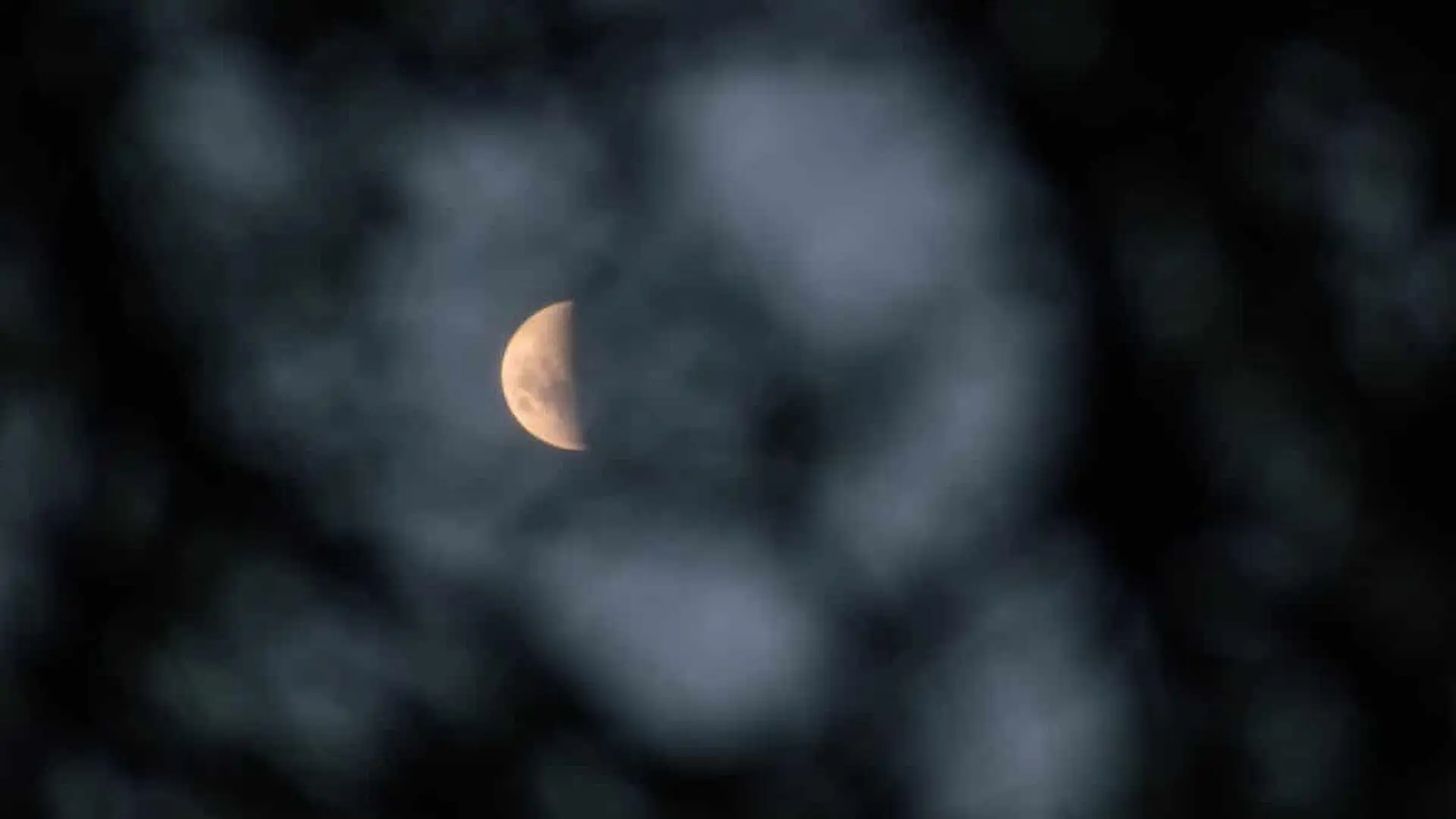
Astronomers and skywatchers are preparing for a striking celestial event as a deep partial lunar eclipse takes place on the night of August 27 into August 28, 2026. During this event, Earth will position itself directly between the sun and the moon, casting its shadow across the lunar surface. At its peak, approximately 96 percent of the moon will be obscured by Earth’s umbra, leaving only a sliver of the lunar disk illuminated by direct sunlight.
This astronomical alignment, which will be visible to roughly 3.3 billion people across North America, South America, Europe, and Africa, offers a unique opportunity to witness the mechanics of our solar system in real time. As sunlight is filtered and refracted through Earth’s atmosphere, the moon may take on a distinct reddish hue, often described as a near-total lunar appearance.
Prime Viewing Across the Western Hemisphere
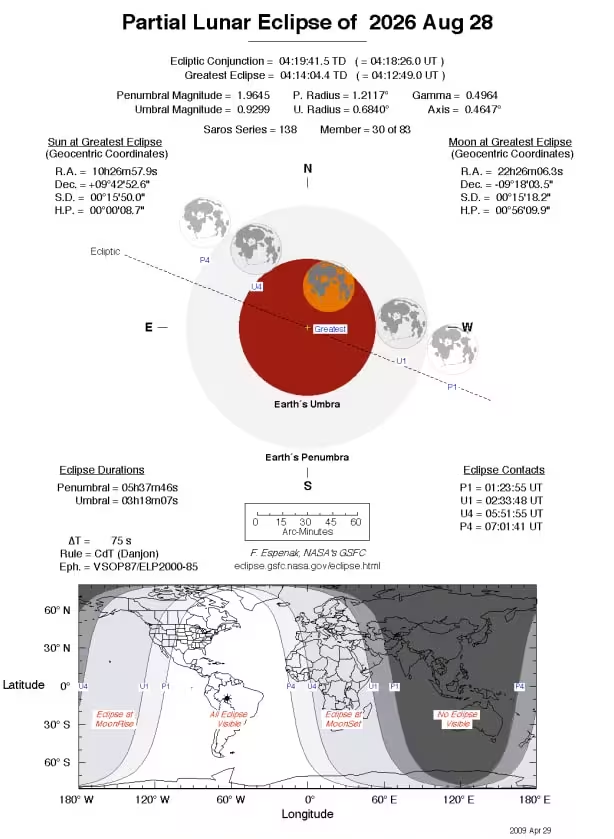
Observers throughout the Americas are positioned for an excellent view of the progression. In the western United States, including cities like Los Angeles and Portland, the eclipse will reach its maximum phase shortly after sunset. For those in eastern regions, such as New York and Jacksonville, the peak of the event is expected to occur around local midnight.
While the eclipse occurs at the same absolute moment for all observers, the specific timing and the moon’s position in the sky will vary based on geographical location and Earth’s rotation. South American residents will also have a clear vantage point to track the shadow as it traverses the lunar landscape.
For those across the United Kingdom, Europe, and parts of Africa, the event will unfold during the pre-dawn hours of August 28. According to reports from Space.com, the moon will hang low in the western sky as the sun begins to rise. Because the visibility depends heavily on local horizon conditions and altitude, viewers in these regions may experience the eclipse differently than their counterparts in the Western Hemisphere.
Accessibility for All Skywatchers
Unlike solar eclipses, which require specialized eye protection, a lunar eclipse is perfectly safe to observe with the naked eye. No sophisticated equipment is required to enjoy the sight, though binoculars or a telescope can significantly enhance the experience, allowing enthusiasts to better observe the moon as the shadow crawls across its craters and plains.
The characteristic copper or reddish tint observed during these phases is a result of Rayleigh scattering, where Earth’s atmosphere scatters shorter-wavelength blue light while allowing longer-wavelength red light to pass through and illuminate the lunar surface.
Visibility map of the August 2026 partial lunar eclipse. Credit: F. Espenak, NASA’s GSFC
This event serves as a stark reminder of our planet’s place in the celestial neighborhood, providing a clear demonstration of the orbital dynamics that govern our sun, Earth, and moon.
Fact Checked
This article has been fact checked for accuracy, with information verified against reputable sources. Learn more about us and our editorial process.
Ahmed, Aisha. “Massive 96 Percent Partial Lunar Eclipse Set To Darken The Moon In August 2026.” BioScience. BioScience ISSN 2521-5760, 23 August 2026. <https://www.bioscience.com.pk/en/subject/astronomy/a-96-lunar-eclipse-is-coming-in-august-2026-and-billions-of-people-will-watch-earths-shadow-nearly-cover-the-moon>.
Ahmed, A. (2026, August 23). “Massive 96 Percent Partial Lunar Eclipse Set To Darken The Moon In August 2026.” BioScience. ISSN 2521-5760. Retrieved August 23, 2026 from https://www.bioscience.com.pk/en/subject/astronomy/a-96-lunar-eclipse-is-coming-in-august-2026-and-billions-of-people-will-watch-earths-shadow-nearly-cover-the-moon
Ahmed, Aisha. “Massive 96 Percent Partial Lunar Eclipse Set To Darken The Moon In August 2026.” BioScience. ISSN 2521-5760. https://www.bioscience.com.pk/en/subject/astronomy/a-96-lunar-eclipse-is-coming-in-august-2026-and-billions-of-people-will-watch-earths-shadow-nearly-cover-the-moon (accessed August 23, 2026).