Scientists May Have Been Tracking Venus’s Atmosphere Instead Of Its Rotation For Decades
New research suggests Venus’s complex movement patterns, long obscured by dense cloud cover, may be far more mysterious than scientists previously believed.
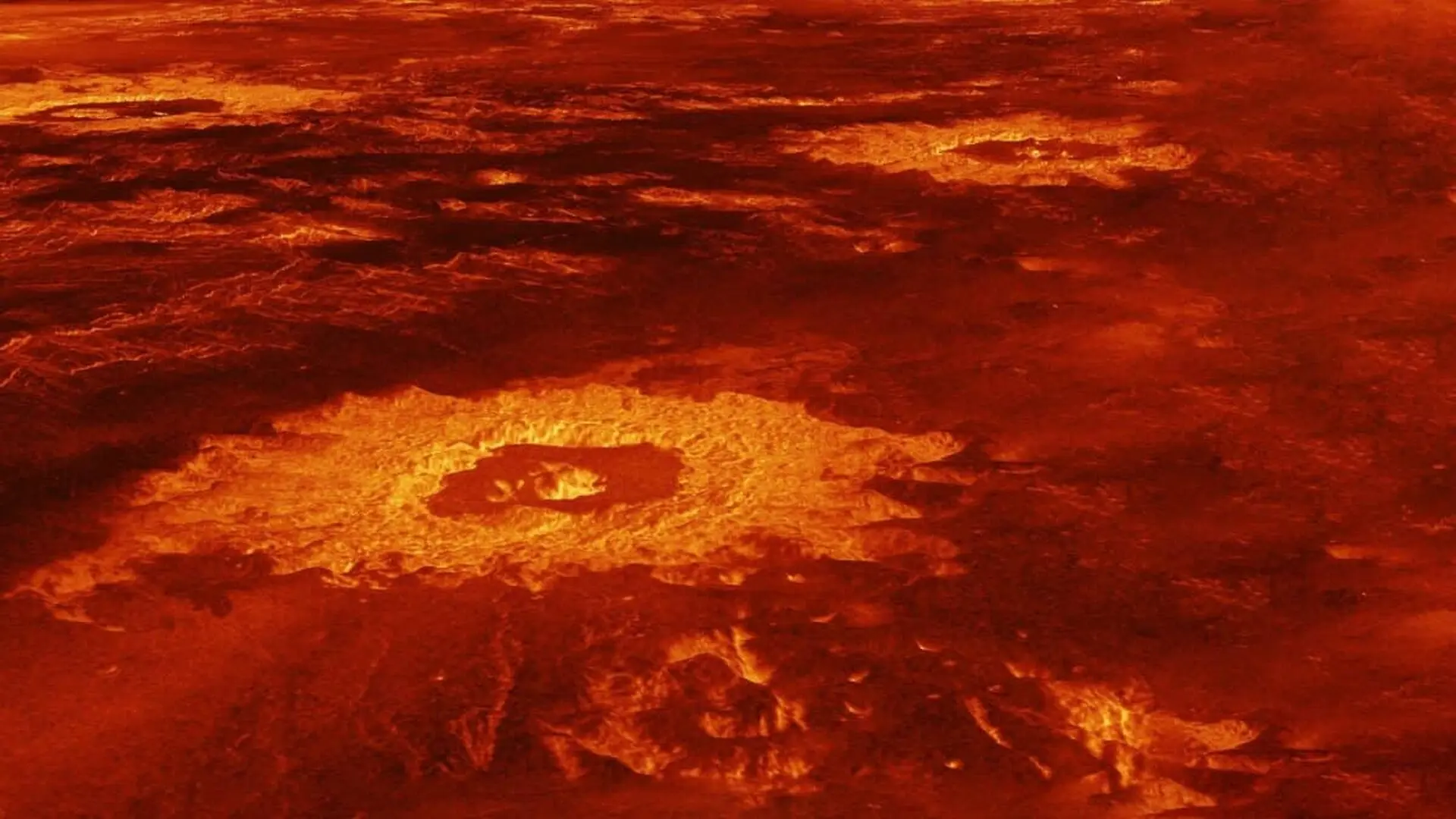
For years, planetary scientists have relied on shifting cloud patterns to determine the rotation rates of distant worlds, but a new analysis suggests this method may be fundamentally flawed. By studying Venus as a case study, researchers have concluded that we may frequently be measuring the high-speed velocity of an atmosphere rather than the true, sluggish spin of the planet residing beneath it.
The discrepancy is nowhere more apparent than on Venus, where a single rotation takes roughly 243 Earth days. In contrast, the planet’s dense, upper-level cloud layers whip around the globe in just four days, a phenomenon known as super-rotation. This creates a significant risk for researchers, as observational data often captures the motion of these winds instead of the underlying surface.
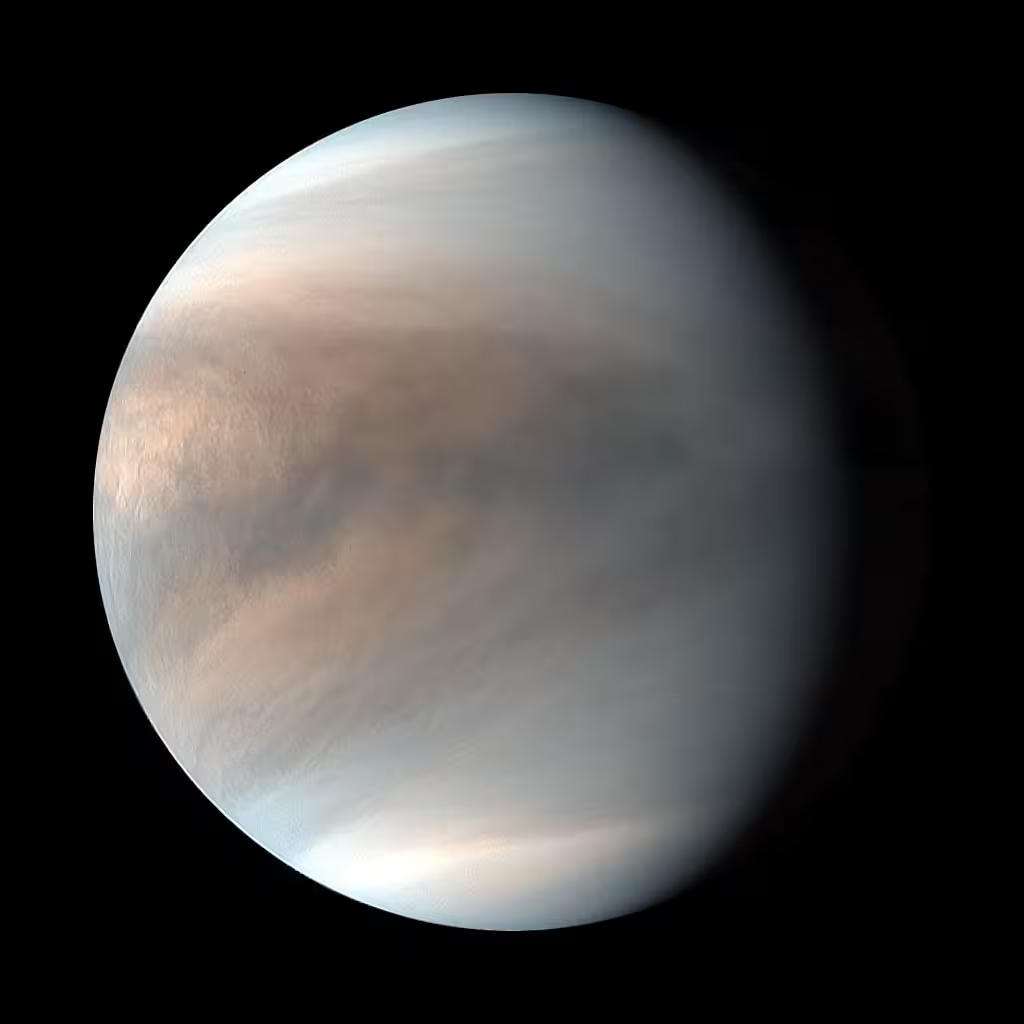
Stephen Kane, an astrophysicist at the University of California, Riverside, and his team warn that this confusion could lead to systemic errors in our current planetary models. While observers have clear views of the surface of Mars, our inability to peer through the thick, opaque shroud of Venus forces a reliance on atmospheric signals that are inherently deceptive.
Decoupling Wind Speed from Planetary Spin
The implications of this finding extend far beyond our immediate cosmic neighborhood. As astronomers turn their focus toward identifying and characterizing exoplanets, they are often left with nothing but atmospheric data to work with. If we mistake wind circulation for the length of a planet’s day, we misunderstand the very mechanisms that drive its climate, heat distribution, and potential habitability.
To rectify this, the researchers, as detailed in their report from the University of California, Riverside (UCR), suggest a shift toward multi-wavelength observations. Utilizing infrared technology allows scientists to probe deeper into a planet’s atmospheric layers, where wind speeds are generally slower and more reflective of the world’s actual rotation.
Future Missions and the Search for Earth-Like Worlds
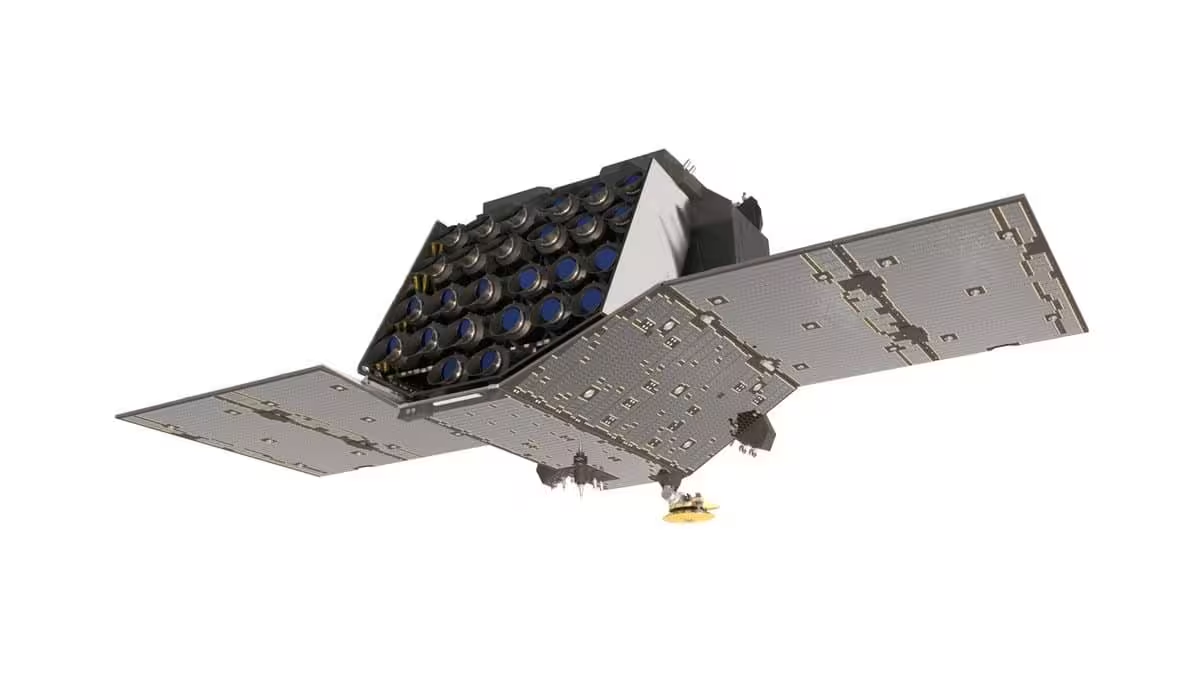
The upcoming launch of the PLATO mission by the European Space Agency in March 2027 represents a critical opportunity to refine these techniques. By surveying a vast new collection of Venus-sized worlds, scientists hope to establish a broader dataset to differentiate between the true rotation of a planet and the chaotic behavior of its sky.
“Venus is a giant mystery,” Kane said. “To understand it, we need to see Venuses in other systems and see how they changed through time. Rotation is a huge piece of that puzzle, and we need to be careful that what we think we’re measuring is really the rotation of the planet.”
Understanding the link between rotation and extreme climate is essential, especially when compared to Earth, where a 24-hour rotation cycle is vital for maintaining the atmospheric and oceanic currents that stabilize our climate. As the research team, which includes doctoral student Emma Miles, continues to analyze the nuances of planetary motion, the goal remains clear: ensuring that our data reflects the reality of the solid world, not just the fleeting, high-altitude movements of its atmosphere.
This article has been fact checked for accuracy, with information verified against reputable sources. Learn more about us and our editorial process.
Last reviewed on .
Article history
- Latest version
Reference(s)
- “Slow spin could explain why planets become hellish.” News <https://news.ucr.edu/articles/2026/08/10/slow-spin-could-explain-why-planets-become-hellish>.
- “Plato.” <https://www.esa.int/Science_Exploration/Space_Science/Plato>.
Cite this page:
- Posted by Aisha Ahmed