Africa to Deploy First Lunar Radio Array in 2029, Unveiling Cosmic Signals Earth Can’t Hear
Scientists launch next‑gen BALLS to the Moon, testing a novel, ultra‑quiet method for space research that could unlock new ways to study the universe.
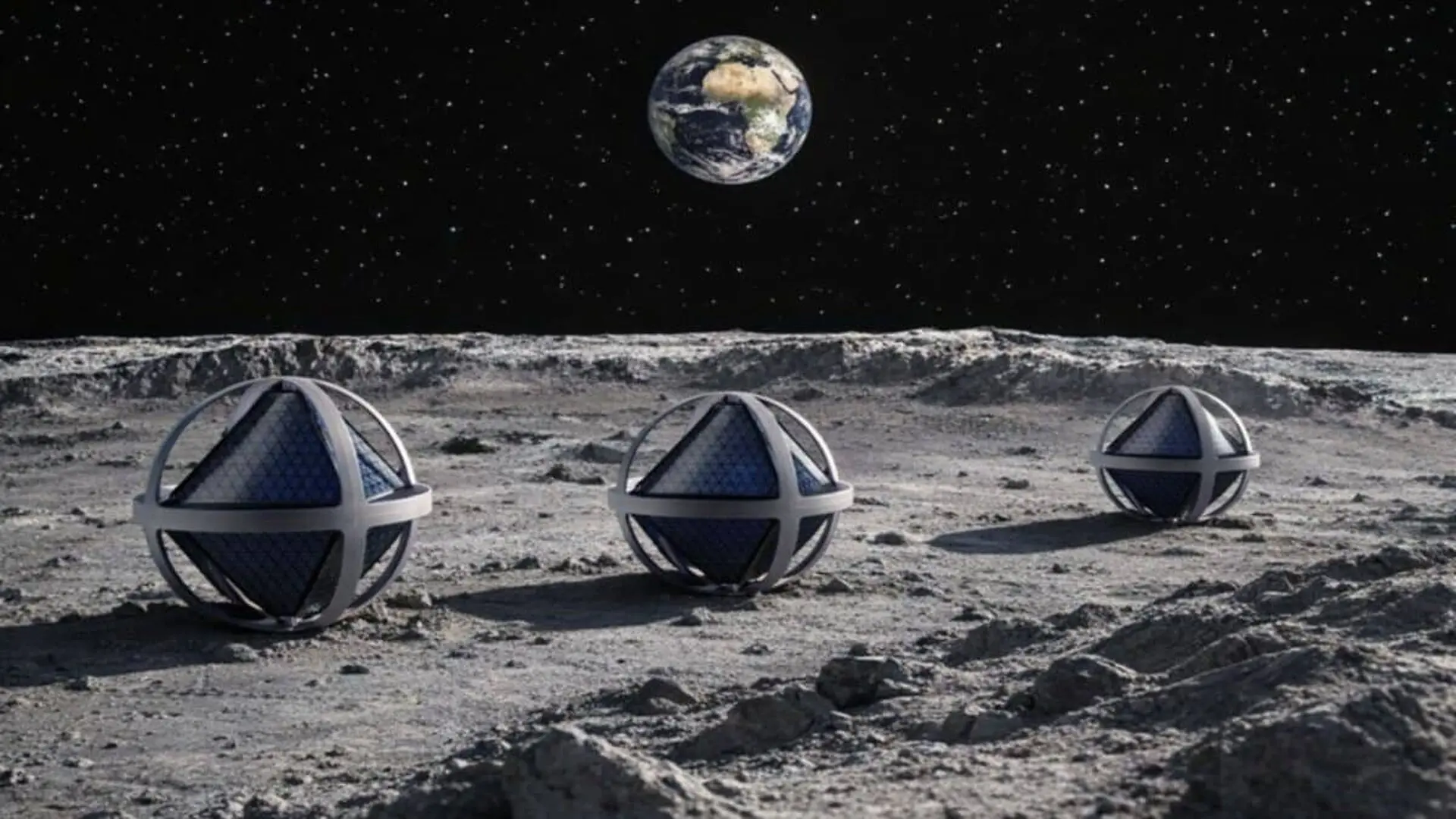
The Africa2Moon programme has secured a slot on China’s upcoming Chang’e‑8 lunar mission, positioning the continent to deploy its first scientific instruments on the Moon by 2029.
At the heart of the payload are three spherical probes – the Bounced African Low Lunar Sphere (BALLS) – intended to demonstrate key technologies for future lunar radio‑astronomy studies. Their primary scientific goal is to capture low‑frequency radio emissions from the most distant and ancient regions of the cosmos, signals that are inaccessible from Earth due to atmospheric absorption and human‑generated interference.
“The lunar surface provides an unparalleled environment for detecting low‑frequency radio waves that are either blocked or distorted by Earth’s ionosphere,” explains Carla Mitchell, mission director of Africa2Moon and Africa Program manager at the South African Radio Astronomy Observatory (SARAO).
A Low‑Frequency Radio Array at the Moon’s South Pole
Once placed on the lunar terrain, the three BALLS probes will operate as a coordinated radio‑astronomy array. Each spherical unit houses antennas tuned to frequencies below 20 MHz, targeting emissions that trace the earliest epochs of the universe. Frequencies under roughly 50 MHz are notoriously difficult to observe from the ground because the Earth’s ionosphere and terrestrial radio noise swamp the signals.
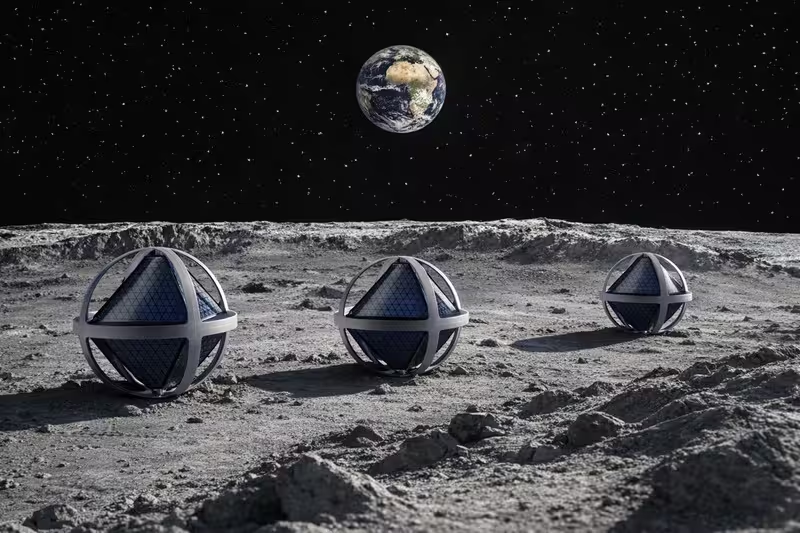
The far side of the Moon, recognized as one of the most radio‑quiet zones near Earth, offers an ideal backdrop for the experiment. After gathering data on the surface, the probes will relay their findings through the Chang’e‑8 lander, which will then forward the information to Earth for analysis.
Each probe consists of a spherical metal framework built from interlocking rings. Inside, two large triangular solar‑panel arrays face opposite directions, creating a tetrahedral configuration that powers the instruments.
China’s Chang’e‑8 Mission to Carry International Payloads
In April 2025, the China National Space Administration (CNSA) selected Africa2Moon as one of roughly a dozen international payloads for the Chang’e‑8 mission, slated for launch in 2029. The BALLS probes will act as pathfinder hardware, validating the technologies required for subsequent lunar radio‑astronomy installations.
According to the Africa2Moon team, the project progressed from early documentation to physical hardware testing, with structural and functional models assembled in April 2026 and subsequently prepared for delivery to the Chang’e‑8 integration team.
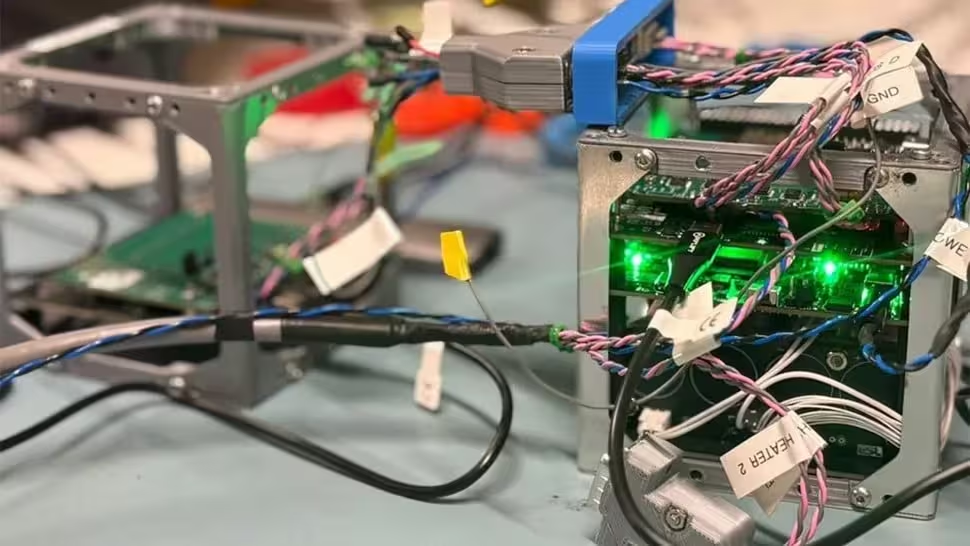
Manufacturing contributions have come from several African engineering groups, including Petrawell in Cape Town, the Aerospace Systems Research Institute at the University of KwaZulu‑Natal, and the Electronic Systems Laboratory at Stellenbosch University.
Toward a Larger African Lunar Antenna Network
The BALLS demonstration is a stepping stone toward a more ambitious goal: a far‑side array of 55 antennas that would vastly extend the scientific reach of the initial three‑probe system. Future instruments are expected to be larger and to launch in a compact, flat configuration before unfolding into a spherical shape, a design necessity dictated by launch‑vehicle constraints.
“We would want to have them a little larger in diameter and so they would have to go in a flat version that will deploy into a ball versus the current version that travels as a ball, due to space constraints,” she said.
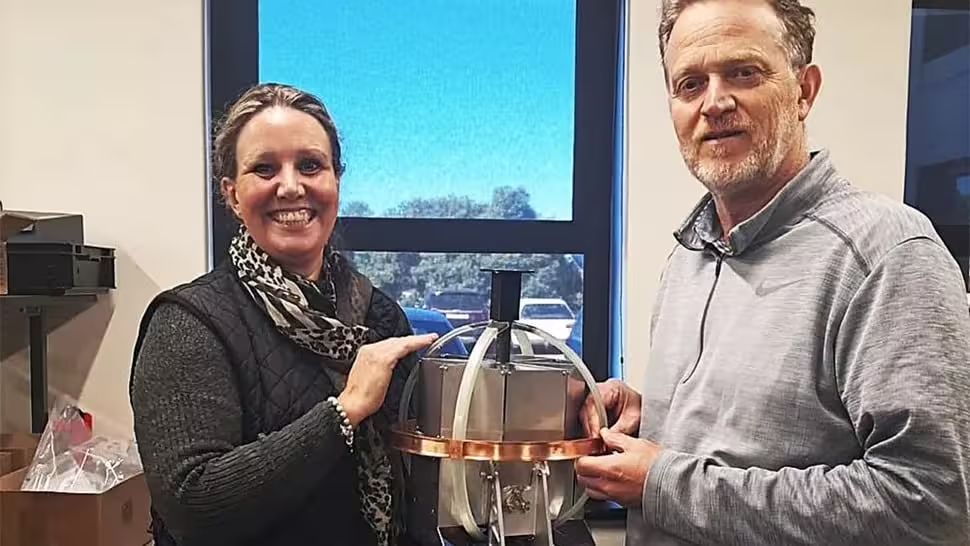
The project’s low‑budget, volunteer‑driven model has attracted attention from the global scientific community. Clive Neal, a lunar‑science specialist at the University of Notre Dame, highlighted the broader impact.
“I am amazed that it is being done on a shoe‑string budget by volunteers. This demonstrates the inspiration of space and if this is successful, it will ignite the reality of space on the African continent.”
This article has been fact checked for accuracy, with information verified against reputable sources. Learn more about us and our editorial process.
Last reviewed on .
Article history
- Latest version
Reference(s)
- “Africa2Moon.” <https://developspace.africa/programs/africa2moon/>.
- “Clive Neal.” <https://engineering.nd.edu/faculty/clive-neal/>.
Cite this page:
- Posted by Aisha Ahmed