U.S. Army Bombed Mauna Loa Lava in 1935 to Protect Hilo: Was the Explosive Tactic Effective
In 1935 the U.S. Army bombed Mauna Loa’s lava flow, sparking a volcanic experiment whose results remain debated 90 years later.
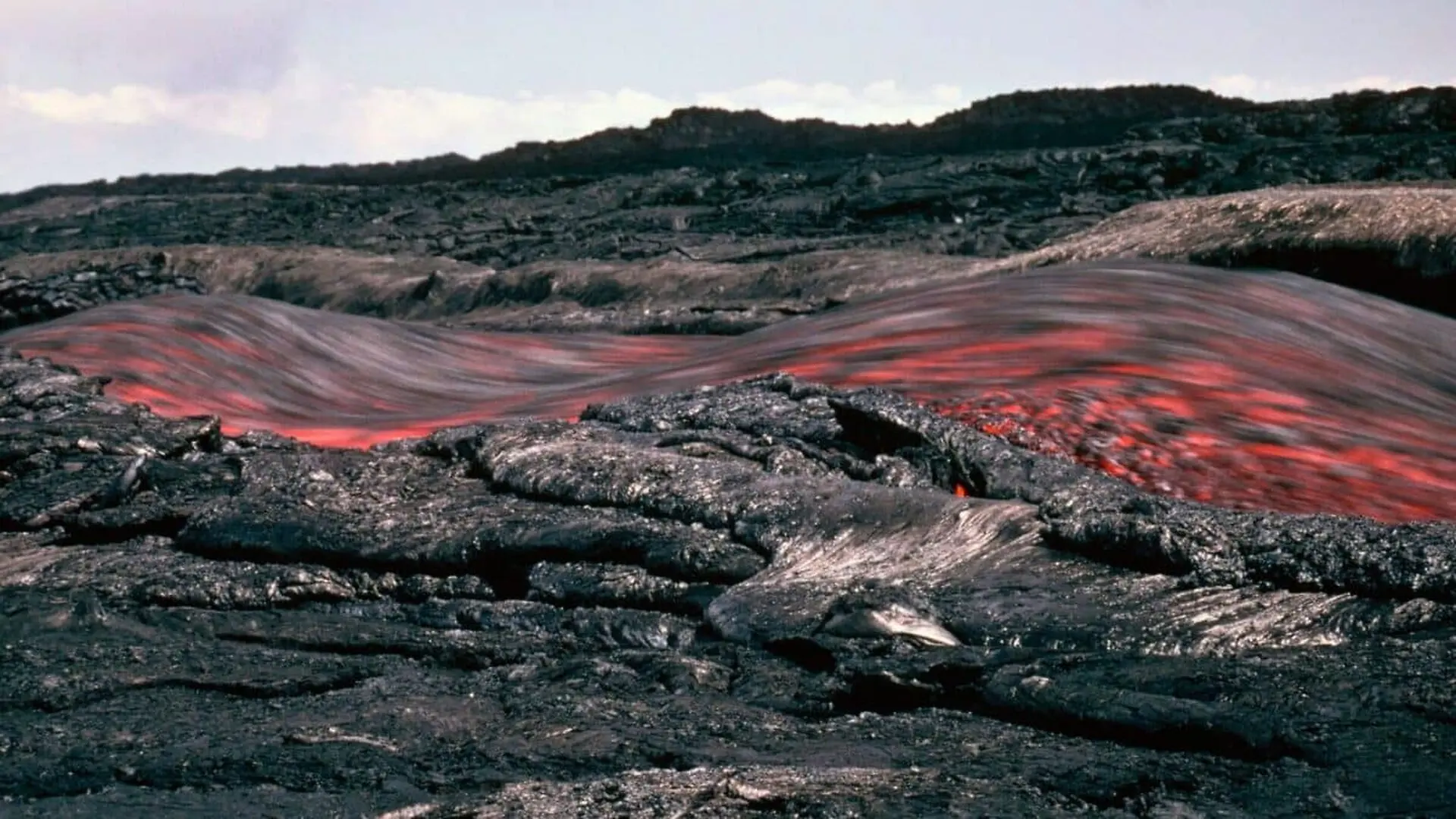
On December 27, 1935, a U.S. Army squadron released a volley of forty bombs onto an active lava stream descending the northern slope of Mauna Loa, aiming to disrupt the channels that threatened the water supply of Hilo, Hawaiʻi.
The eruption began on November 21 within the volcano’s summit caldera and quickly migrated down the Northeast Rift Zone. By November 27 a new vent opened on the mountain’s northern flank, feeding a fast‑moving pāhoehoe flow that raced eastward at roughly one mile per day, according to the U.S. Geological Survey. Communities along the Wailuku River, the primary water source for Hilo, braced for disaster.
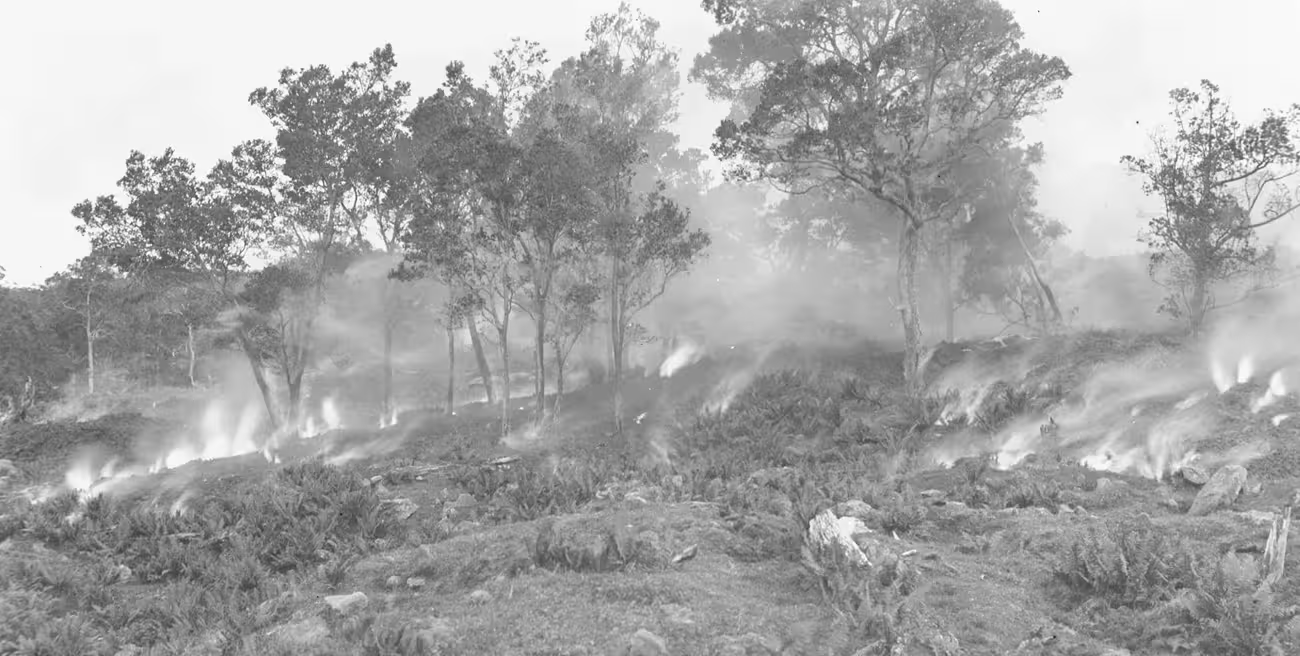
Volcanologists Thomas A. Jaggar, founder of the Hawaiian Volcano Observatory, and Ruy Finch proposed a direct‑action strategy: use explosives to break the lava tubes near their source, forcing the molten rock to spread out and lose momentum before it could reach the town.
Why the Channels Were Critical
Pāhoehoe lava forms a smooth, rope‑like crust while the interior remains fluid. This configuration creates insulated conduits that allow lava to travel great distances without cooling rapidly. By targeting those conduits, the bombers hoped to convert a focused, high‑speed flow into a broader, slower‑moving sheet.
The Bombing Operation
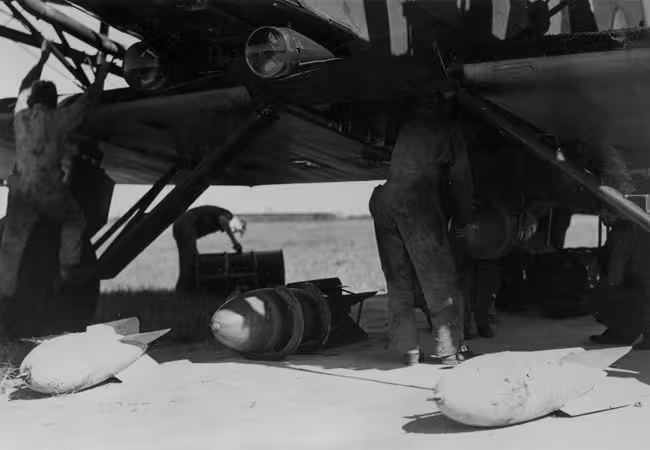
Lieutenant Colonel George S. Patton—later famed for his World War II command—directed the mission. Aircraft stationed on Oʻahu flew to the Humuʻula flow and released two types of ordnance: twenty MK I demolition bombs, each weighing 600 pounds and containing 355 pounds of TNT, and twenty smaller “pointer” bombs loaded with black‑powder charges to mark impact points. The demolition bombs featured short‑delay fuses designed to penetrate the hardened crust before detonating.
According to a 1980 analysis cited by the National Park Service, sixteen of the demolition bombs struck the intended zone, while twelve of the pointer bombs hit the lava tunnel itself. The operation marked the first recorded aerial bombing of an active lava flow, as noted by the National Park Service.
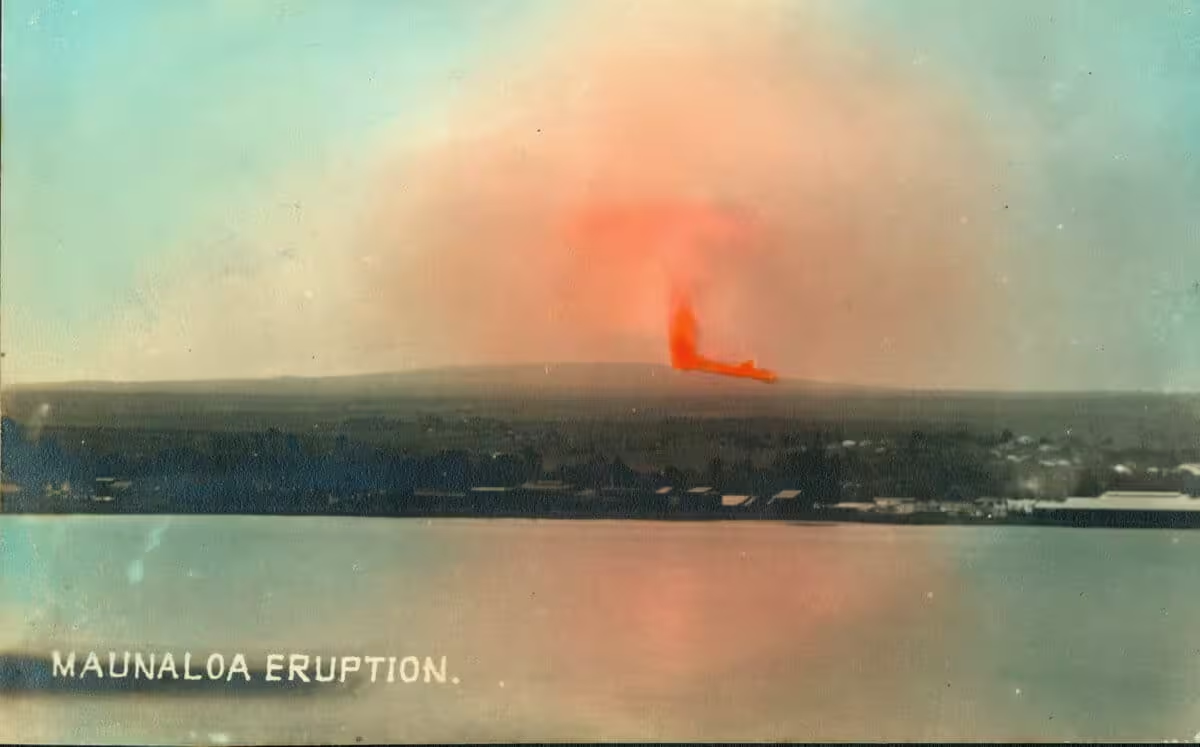
Jaggar observed the raid from a telescope atop Mauna Kea and later declared the experiment a success, stating that the results matched expectations and that the bombing had accelerated the flow’s termination. The lava slowed after the strikes and finally ceased on January 2, 1936.
Scientific Debate Over the Impact
Not all participants agreed with Jaggar’s assessment. USGS geologist Howard Stearns, who flew on the final reconnaissance flight, later wrote that the timing was likely coincidental, noting that the flow continued for several days before diminishing and that the direction of travel was largely unchanged.
Because the eruption was already waning, later analyses have struggled to isolate the bombs’ effect from the natural decline. The USGS now characterizes the efficacy of using explosives to disrupt lava channels as uncertain, and subsequent attempts in 1942 produced similarly modest results.
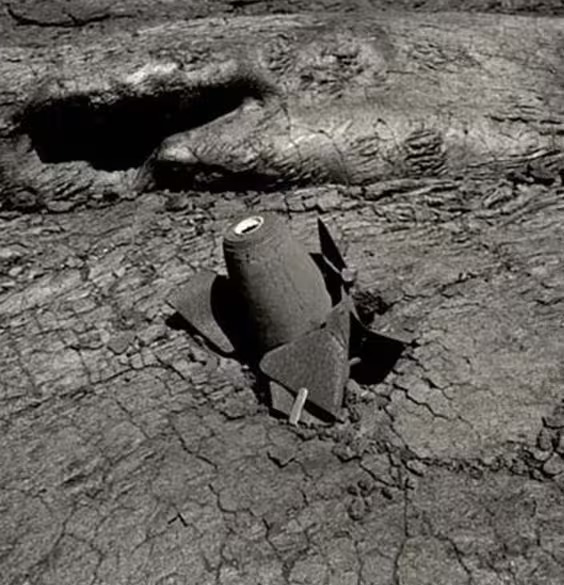
Despite the lingering controversy, the 1935 operation stands as an early illustration of lava‑flow diversion—an approach that seeks to steer molten rock away from critical infrastructure rather than halt the eruption outright.
This article has been fact checked for accuracy, with information verified against reputable sources. Learn more about us and our editorial process.
Last reviewed on .
Article history
- Latest version
Reference(s)
- “1935 Eruption of Mauna Loa Threatened Hilo.” USGS <https://www.usgs.gov/volcanoes/mauna-loa/science/1935-eruption-mauna-loa-threatened-hilo>.
- “1935 Eruption of Mauna Loa - Hawaiʻi Volcanoes National Park (U.S. National Park Service).” <https://www.nps.gov/havo/learn/nature/mauna-loa-1935.htm>.
Cite this page:
- Posted by Aisha Ahmed