Astronomers Spot First Exosatellite Orbiting a Brown Dwarf Around a Sun Like Star
Astronomers discover a Jupiter‑sized planet orbiting a brown dwarf in CD‑35 2722, revealing a rare three‑body system of star, brown dwarf and planet.
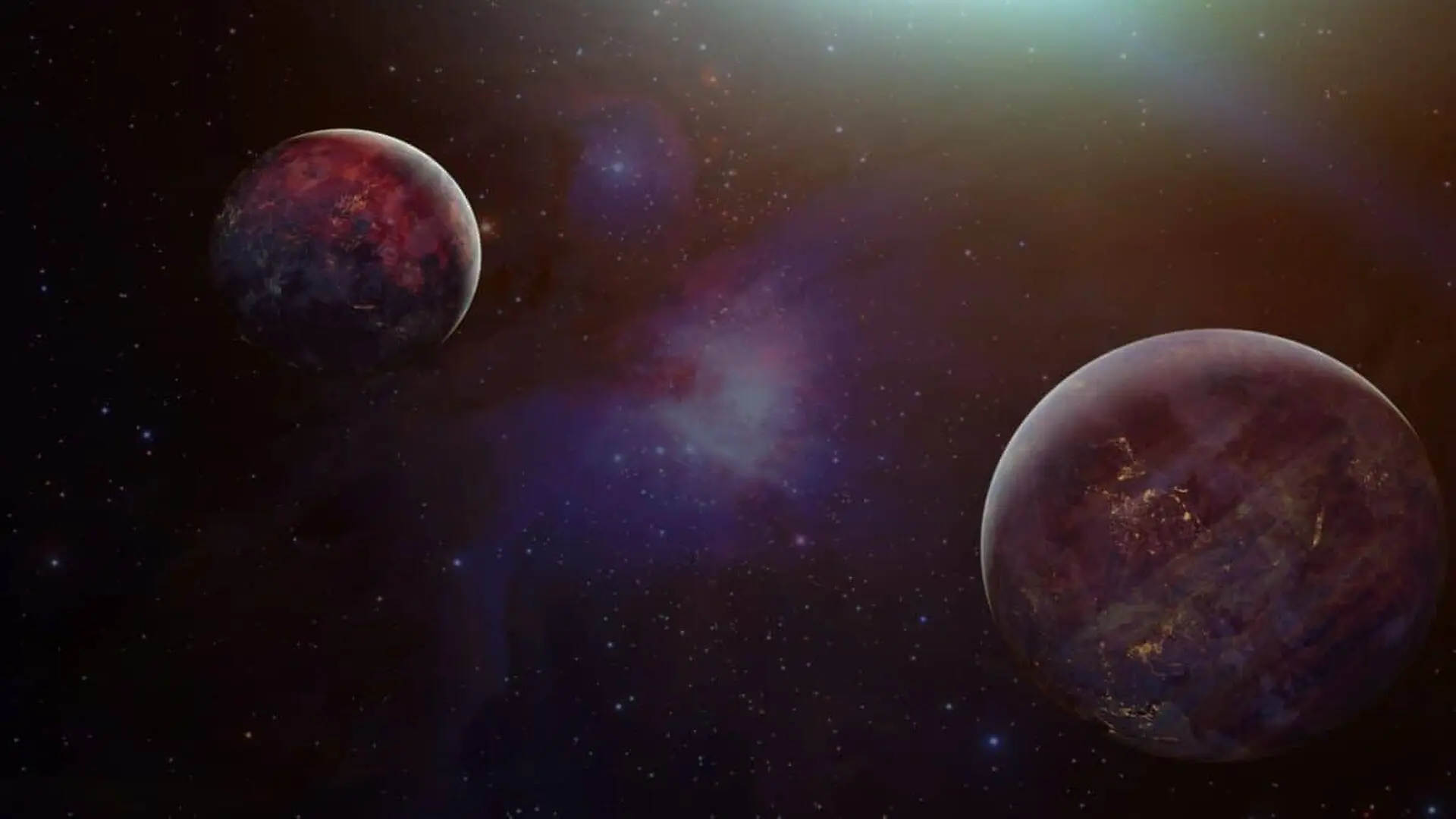
At a distance of roughly 73 light‑years in the constellation Columba, the star CD‑35 2722—about half the mass of our Sun—hosts a brown dwarf companion. Recent observations have uncovered a massive object that circles this brown dwarf rather than the primary star.
Published in Nature, the study led by Kevin Hoy of Universidad Diego Portales in Chile estimates the new body to be at least 0.9 Jupiter masses and to complete an orbit every 170 days.
Hybrid Architecture Defies Classic Labels
Because the brown dwarf—about 37 times Jupiter’s mass—revolves around the star while the newly found companion orbits the dwarf, the system blurs the line between planets and moons. Researchers have tentatively called the object an “exosatellite,” though its exact classification remains a matter of debate.
“This system is somewhat hard to define using solar‑system‑based words like ‘planet’ and ‘moon’,” Hoy explained. “Its mass would qualify it as a planet by physical standards, yet its orbital relationship with a brown dwarf creates a different context.”
天文学史上初めて「太陽系外衛星」を発見! ただし質量は木星に匹敵https://t.co/vS8keHtNJo
— sorae 宇宙へのポータルサイト (@sorae_jp) July 23, 2026
ディエゴ・ポルタレス大学のKevin… pic.twitter.com/Rh5h30MkOQ
Astronomer Alice Zurlo, also of Universidad Diego Portales, highlighted the hierarchy challenge: “We have a clear delineation between the planets and the Sun in the Solar System, so defining things like moons is simple. In CD‑35 2722 the boundaries between stars, planets and moons become less obvious.”
The discussion ties into broader debates over planetary definitions. Some experts argue that, under current criteria, the object could be classified as a planet, while others contend that its position around a brown dwarf makes the term inappropriate.
Radial‑Velocity Measurements Unveil the Companion
The team employed the CRIRES+ spectrograph on ESO’s Very Large Telescope in Chile, tracking subtle shifts in the brown dwarf’s velocity caused by the gravitational tug of an unseen body.
Data gathered between October 2023 and February 2026—spanning 23 observing nights—revealed periodic Doppler variations. The analysis, detailed in the Nature article, favored a single companion with a mass comparable to Jupiter as the most stable explanation.
Nature, Published online: 22 July 2026; doi:10.1038/s41586-026-10751-wRadial velocity measurements provide evidence for a Jupiter-mass exosatellite orbiting the brown dwarf companion CD-35 2722 B, a promising detection of an exomoon-like object.https://t.co/f9n76ahhDQ
— Michael W. Deem (@Michael_W_Deem) July 22, 2026
Applying the radial‑velocity method to a brown dwarf—rather than a conventional star—marks a first in the search for moons beyond our Solar System. While the detection does not yet constitute a formal exomoon confirmation, it provides a compelling candidate for future scrutiny.
Upcoming observatories such as ESO’s Extremely Large Telescope are expected to broaden the hunt for analogous systems, underscoring that planetary architectures can appear in configurations far removed from the familiar Solar‑System layout.
This article has been fact checked for accuracy, with information verified against reputable sources. Learn more about us and our editorial process.
Last reviewed on .
Article history
- Latest version
Reference(s)
- “Kevin Hoy – IEA.” <https://astronomia.udp.cl/en/researcher/kevin-hoy/>.
- “https://sorae.info/astronomy/20260723-cd-35-2722-system.html.” <https://t.co/vS8keHtNJo>.
- “https://twitter.com/sorae_jp/status/2080265486630359220/photo/1.” <https://t.co/Rh5h30MkOQ>.
- “Alice Zurlo – IEA.” <https://astronomia.udp.cl/en/researcher/alice-zurlo/>.
- Hoy, Kevin. “Planetary-mass exosatellite detected around the substellar companion of a star - Nature.”, vol. 655, no. 8124, pp. 865-869. Nature, doi: 10.1038/s41586-026-10751-w. <https://www.nature.com/articles/s41586-026-10751-w>.
- “https://www.nature.com/articles/s41586-026-10751-w.” <https://t.co/f9n76ahhDQ>.
Cite this page:
- Posted by Aisha Ahmed