Astronomers Reveal Helium Nova Binary After 25 Years Spot 20 Million Mph Gas Bullets
After 20+ years hidden by dust, a rare stellar explosion re-emerges, offering fresh insights into supernovae obscured by cosmic clouds.
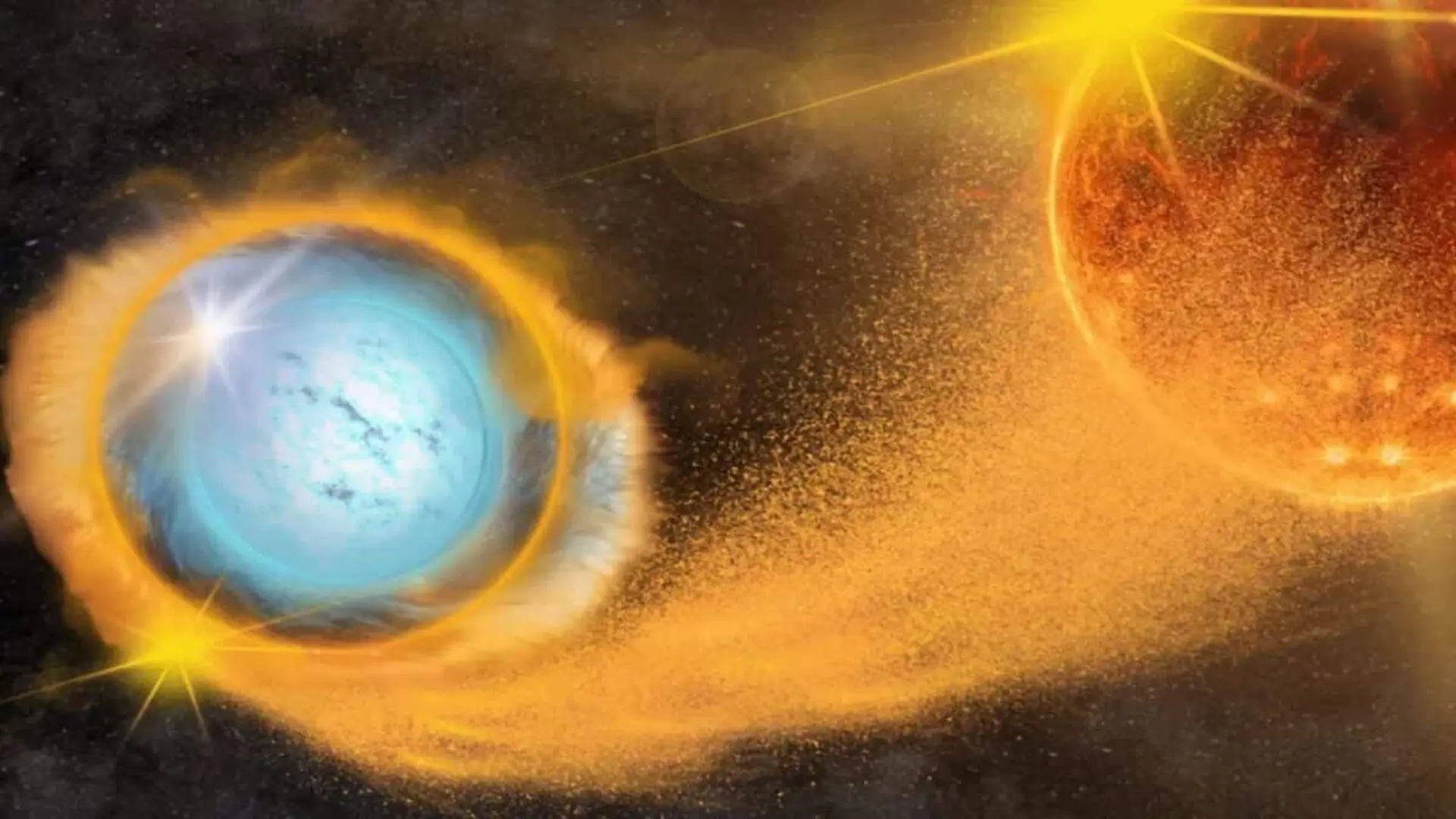
A team of astronomers has identified compact clumps of gas hurtling through space at speeds approaching 20 million miles per hour in the aftermath of the V445 Puppis eruption, the only confirmed helium‑rich nova in our galaxy. The finding clarifies the composition of the binary system that powered the explosion while unveiling a new puzzle about these ultra‑fast structures.
Dust Clearance Unveils a Helium‑Driven Nova
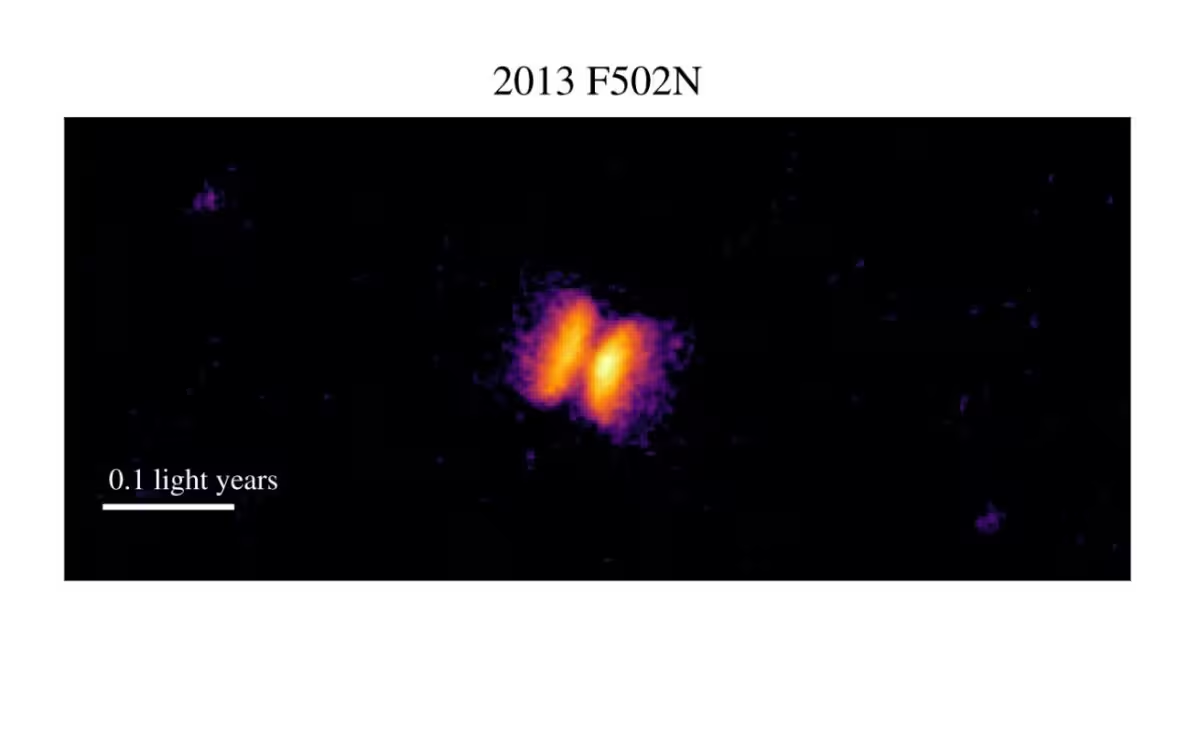
The outburst of V445 Puppis erupted in late 2000, ejecting a pronounced bipolar shell of material. A thick dust disk formed around the event, obscuring direct observation of the central stars for more than two decades. As the dust thinned, the hidden binary emerged, allowing researchers to pinpoint the system as a white dwarf accreting material from an unusual helium star companion.
Most classical novae involve a white dwarf siphoning hydrogen‑rich gas from a nearby star, leading to a thermonuclear flash. In contrast, V445 Puppis displayed a helium‑rich, virtually hydrogen‑free envelope, marking it as a rare example of a hydrogen‑deficient stellar eruption.
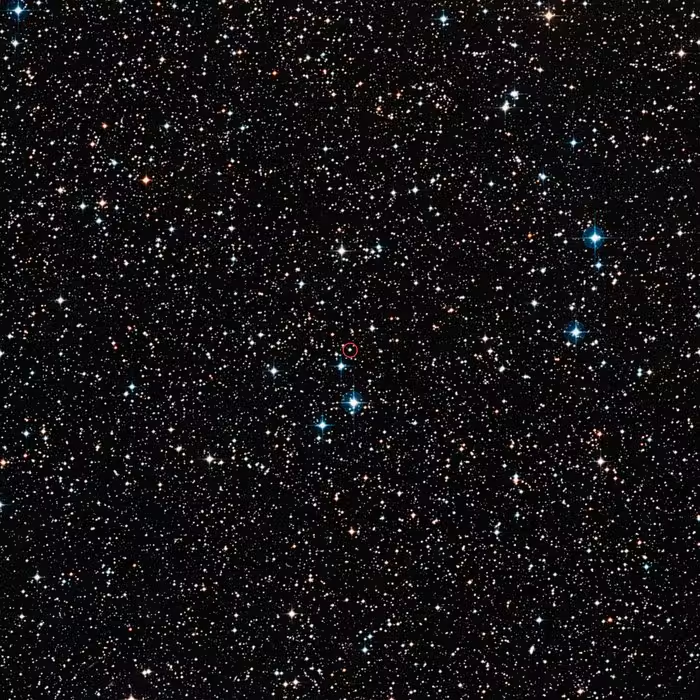
The study, led by John Mills of the University of Warwick and presented at the Royal Astronomical Society’s National Astronomy Meeting in Birmingham, combined infrared data from the European Southern Observatory’s Very Large Telescope, Hubble Space Telescope imaging, spectroscopy from the Southern African Large Telescope, and photometry from NASA’s TESS mission. This multi‑wavelength approach delivered the first definitive confirmation of the binary components behind the helium nova.
“V445 Puppis has long stood out among novae for its complete lack of hydrogen. How could such an event be completely devoid of the most abundant element in the universe?” said John Mills, a researcher and doctoral student at the University of Warwick.
Supersonic Gas Bullets Pose a New Enigma
Within the expanding shell, astronomers identified compact “bullets” of gas racing at up to 20 million miles per hour, likely enriched in oxygen. These high‑velocity clumps appear at both termini of the bipolar outflow, yet their formation mechanism remains unexplained.
“The origin of these ‘bullets’ is a mystery,” Mills said. “We suspect that these originated post‑outburst, but ‘bullets’ of this kind have not been observed in any other nova.”
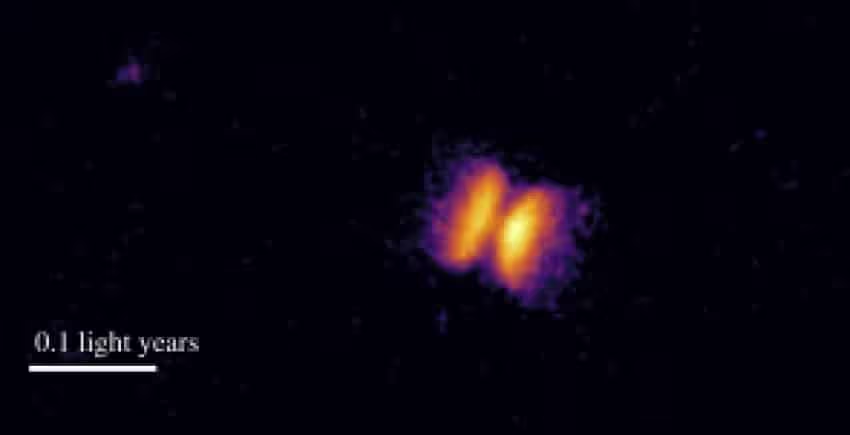
The presence of these bullets adds another layer of complexity to a system already notable for its hydrogen deficiency, a characteristic that has long challenged theoretical models of nova eruptions.
A Unique Laboratory for Helium‑Driven Explosions
Continued monitoring reveals that the binary remains active, with the helium star transferring material to the white dwarf on a 3.7‑day orbital cycle—roughly twice the period previously estimated. Stripped helium stars are exceedingly scarce, with only a few thousand expected among the Milky Way’s billions of stars, making V445 Puppis a valuable case study for the behavior of helium‑rich accretion.
The research team proposes that repeated helium‑rich eruptions could constitute one pathway toward the development of type Ia supernovae, the luminous explosions used as standard candles for measuring cosmic distances.
“I look forward to seeing how this result may help us uncover what powers other similar hydrogen‑poor astronomical explosions, such as the famous Type Ia supernovae,” he added.
While V445 Puppis does not yet solve the broader mystery of hydrogen‑poor stellar explosions, it offers an unprecedented glimpse into the dynamics of a rare helium‑dominated binary and the extreme physics governing one of the galaxy’s most atypical novae.
This article has been fact checked for accuracy, with information verified against reputable sources. Learn more about us and our editorial process.
Last reviewed on .
Article history
- Latest version
Reference(s)
- <https://en.wikipedia.org/wiki/V445_Puppis>.
- Brill, Jennifer. “Type Ia Supernovae - NASA Science.”, October 24, 2023 NASA <https://science.nasa.gov/mission/roman-space-telescope/type-ia-supernovae/>.
Cite this page:
- Posted by Aisha Ahmed