Museum Bone Ignored for 20 Years Reveals Tiny Dinosaur Living Among Coastal Giants
A long-forgotten dinosaur bone discovered on museum grounds is rewriting the history of Japan’s prehistoric coastline and the species that lived there.
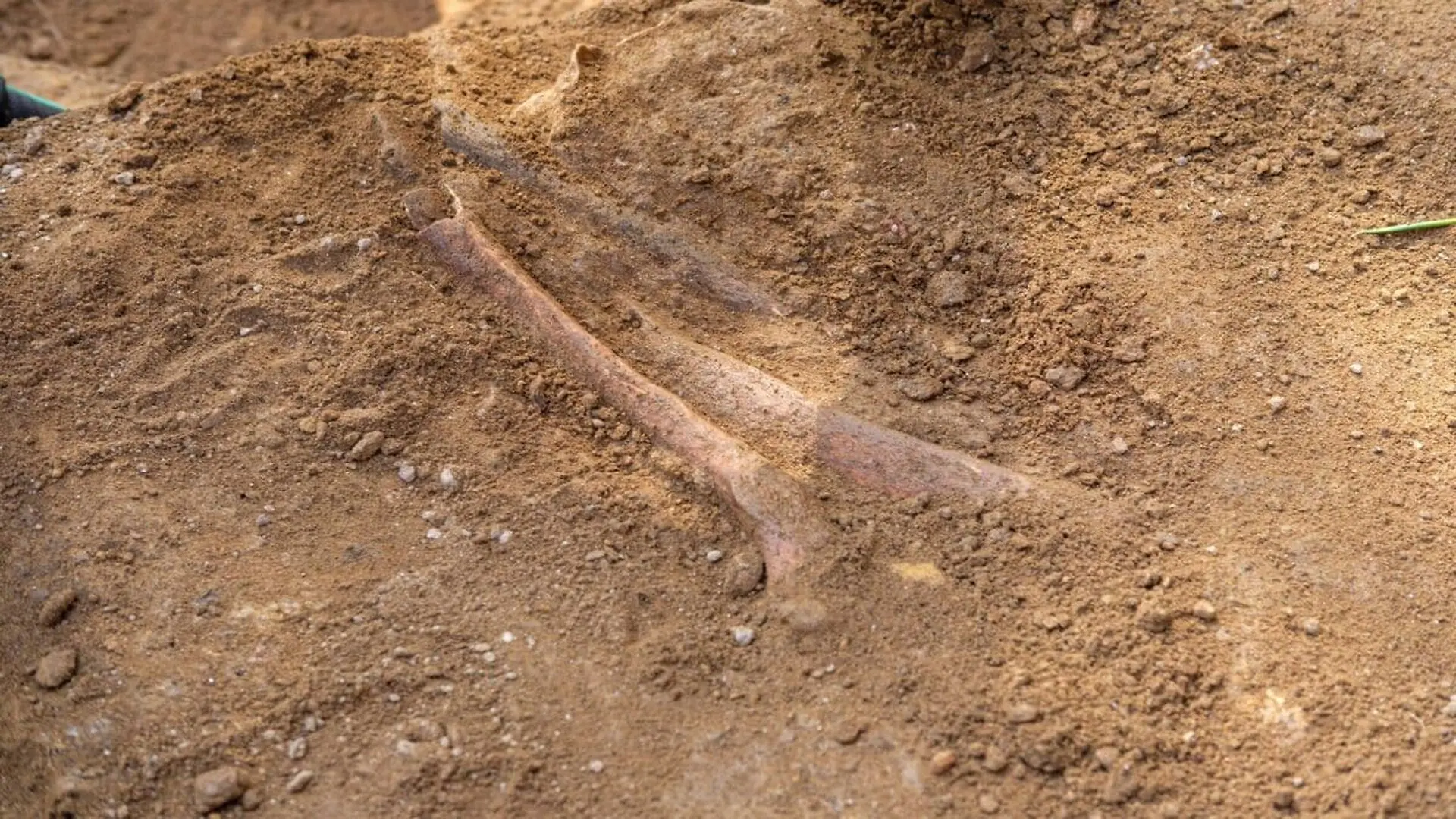
A single, overlooked bone that spent two decades sitting in storage at the Iwaki City Ammonite Center has finally received the attention it deserves. Researchers based in Tsukuba have identified the specimen as the right sternal plate of a small styracosternan, a member of the diverse iguanodontian dinosaur group. The finding offers a rare glimpse into the prehistoric biodiversity of eastern Asia, suggesting that these herbivorous creatures occupied a wider range of ecological niches than previously understood.
A Hidden Piece of Prehistoric History
The fossil was originally recovered in 1999, not through a specialized excavation, but directly from the grounds of the museum in Fukushima Prefecture. It originated in the Obisagawa Member of the Ashizawa Formation, a geological layer dating back to the Late Cretaceous, approximately 90 to 88 million years ago. According to research published in Paleontological Research, this site was once a shallow-marine environment where land-dwelling animals were occasionally deposited alongside sea-dwelling fossils.
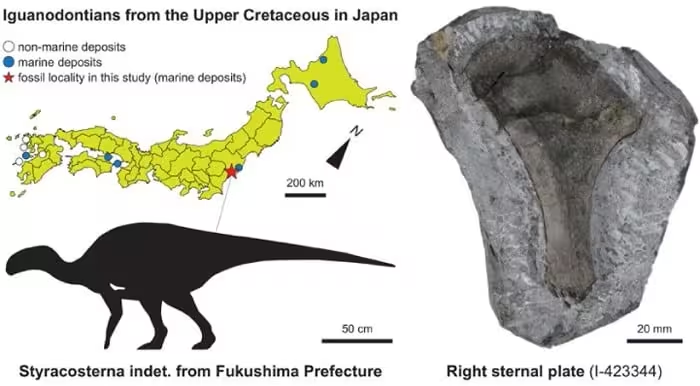
For twenty years, the bone remained in museum storage, tentatively labeled as hadrosauroid material but otherwise unexamined. Its recent re-evaluation highlights the challenges of reconstructing ancient ecosystems in Japan, where fossil evidence is typically limited to isolated teeth or fragmented bone rather than complete skeletons.
Size Variation in Coastal Ecosystems
The new morphological analysis confirms the bone belonged to a styracosternan, a group that includes the well-known hadrosauroids. While the specific genus remains indeterminate, the researchers used comparative measurements to estimate the animal reached a length of approximately 3 meters. This discovery is particularly significant because larger iguanodontians, some measuring up to 8 meters, have previously been identified in the same rock formation.
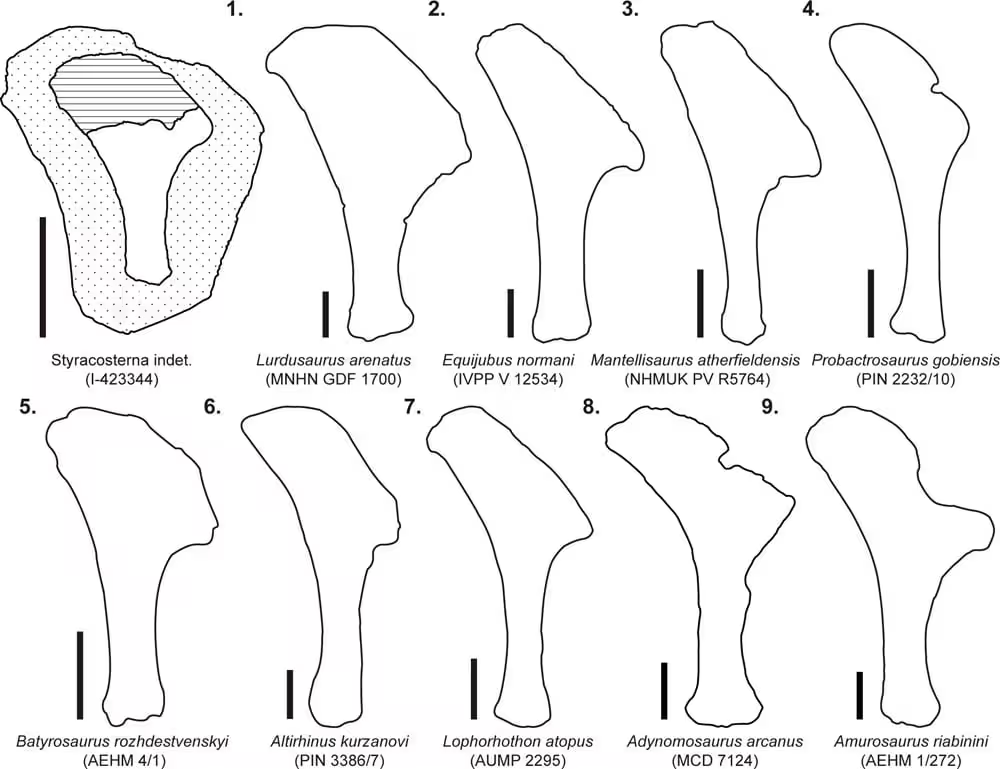
As detailed in a recent statement from the team, the existence of such a significantly smaller dinosaur alongside its larger cousins points to a more nuanced structure within these ancient coastal communities. Iguanodontians were highly successful, traversing the supercontinent of Laurasia and diversifying across what are now Asia, Europe, and North America. In Japan, which represented the eastern edge of this range, the presence of these varied body sizes suggests that the region supported a more complex ecological web than the fragmentary fossil record previously implied.
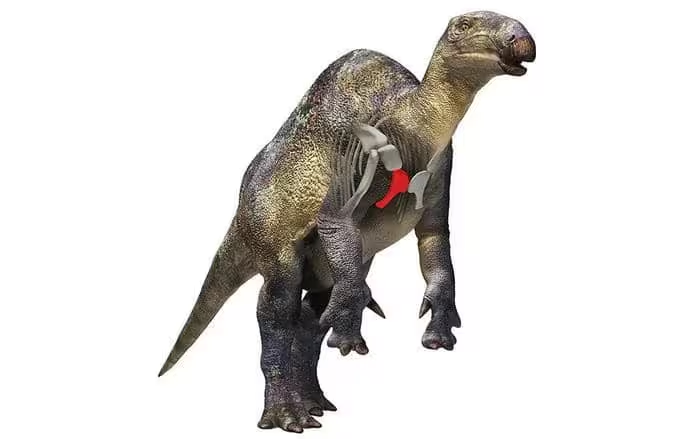
By filling in these gaps, paleontologists are gaining a clearer picture of how diverse and ecologically specialized dinosaurs were along the ancient coastline of East Asia. Every recovered element, no matter how small, serves as a vital component in understanding the evolutionary history of the Cretaceous period.
This article has been fact checked for accuracy, with information verified against reputable sources. Learn more about us and our editorial process.
Last reviewed on .
Article history
- Latest version
Reference(s)
- Kondo, Masami. “An iguanodontian sternal plate from the Upper Cretaceous Ashizawa Formation (Futaba Group) of Fukushima Prefecture, Japan.”, vol. 30, January 1, 2026, pp. 122-134. J-STAGE, doi: 10.2517/prpsj.250042. <https://www.jstage.jst.go.jp/article/prpsj/30/0/30_250042/_article>.
- <https://www.eurekalert.org/news-releases/1140769>.
Cite this page:
- Posted by Hassan Raza