Insect Borings Reveal Lo Hueco Titanosaurs Lingered Exposed For Weeks Before Burial
Tiny borings in titanosaur fossils reveal giant dinosaur carcasses stayed exposed far longer than previously believed.
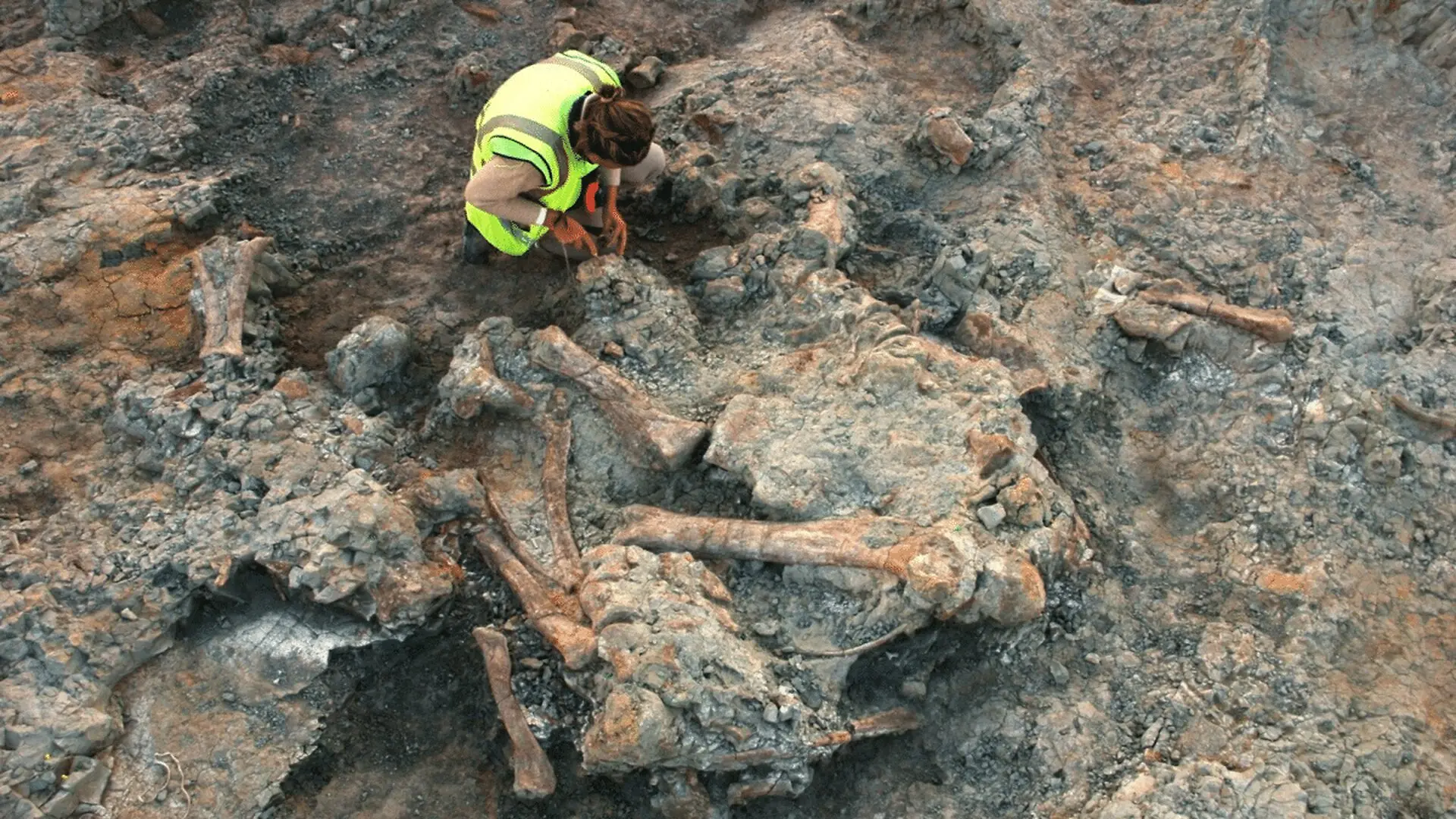
Microscopic damage left by insects on the fossilised bones of gigantic titanosaurs is reshaping how scientists view one of Europe’s most prolific dinosaur sites. The research, appearing in Earth-Science Reviews, indicates that these massive creatures were not swiftly covered by sediment after death. Instead, their remains stayed exposed long enough for specialised scavenging insects to colonise and bore into the bones, providing fresh insight into the Late Cretaceous ecosystem preserved at Spain’s Lo Hueco locality.
Insect Bores Suggest Prolonged Surface Exposure Before Burial
For decades, paleontologists have argued that the exceptional preservation at Lo Hueco implied rapid burial of titanosaur carcasses. The new study overturns that view by documenting abundant bioerosion features—tiny tunnels produced by organisms after death—on both bone and, for the first time, on titanosaur osteoderms, the bony plates embedded in their skin. These marks belong to the ichnogenus Cubiculum, a distinctive type of boring that forms pouch‑shaped or hemispherical cavities and closely mirrors damage made today by dermestid beetles.
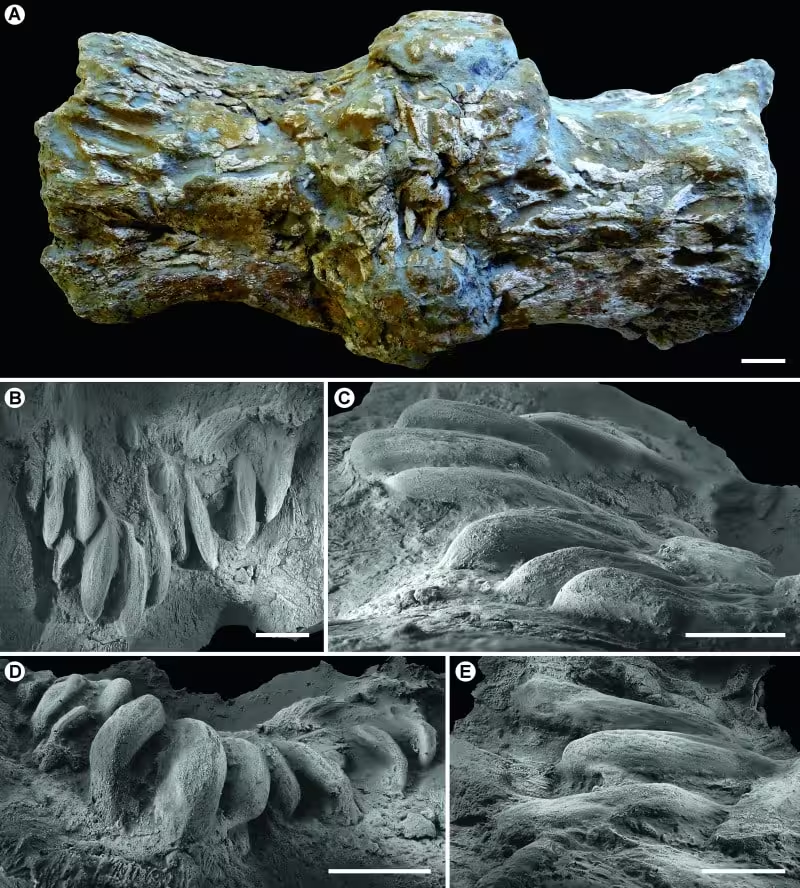
The sheer frequency of these borings points to a considerable interval of exposure, during which necrophagous and saprophagous insects could complete parts of their life cycles while feeding on the decaying tissue. This reinterpretation challenges earlier models that favoured swift entombment and suggests a more dynamic depositional environment at Lo Hueco. As the authors argue in Earth-Science Reviews, the evidence favours a prolonged exposure phase rather than an immediate burial event.
Insect Traces Provide a Fine‑Scale Timeline of Post‑Mortem Processes
Beyond confirming insect activity, each minute boring acts as a biological timestamp that helps piece together the sequence of events following the demise of these colossal herbivores.
“Studying the fossil record of bioerosion caused by insects on different types of bone tissue (bones, horns or osteoderms) can be very useful for gaining insight into the taphonomic process undergone by these skeletal remains, whether they are isolated (bones) or articulated (more or less complete skeletons),” explains Zain Belaústegui, from the Department of Earth and Ocean Dynamics at the University of Barcelona. He continues,
“In any case, this suggests that these remains were exposed for long enough for these scavenging organisms to bore into these skeletal structures.”
The occurrence of insect borings on multiple skeletal parts confirms that decomposition proceeded over an extended span rather than being abruptly halted by sedimentation. These subtle marks enable researchers to infer ecological interactions that are rarely captured in the fossil record, shedding light on both the fate of the titanosaurs and the insects that exploited their carcasses. The traces become key indicators of how scavengers engaged with large vertebrate remains during the final stages of the Late Cretaceous.
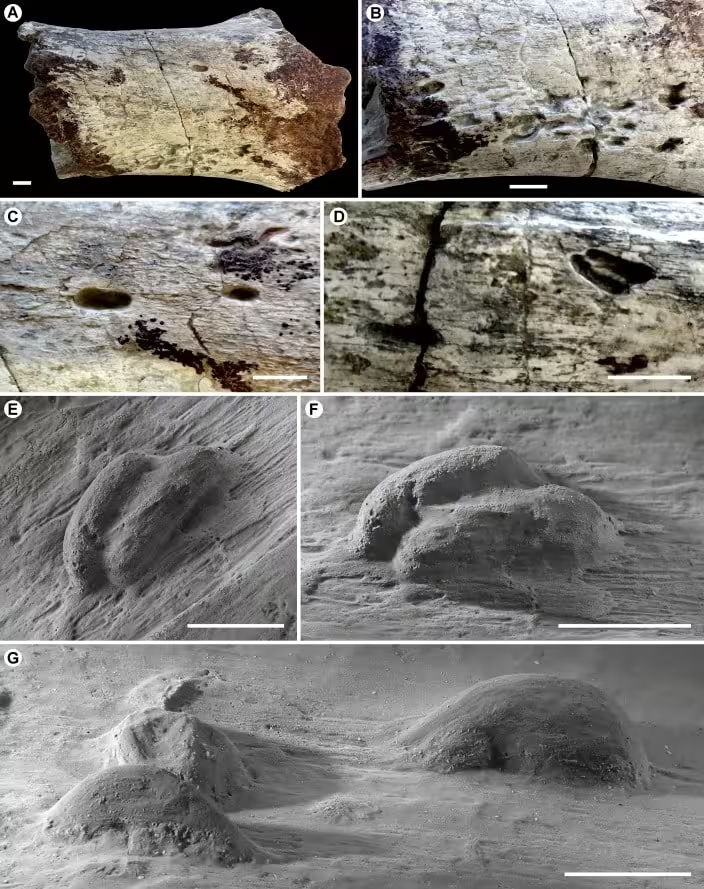
Large Carcasses Could Have Nurtured Whole Scavenger Communities
The research also prompts intriguing questions about the ecological role of massive dinosaur remains in ancient landscapes. A single titanosaur might have acted as a long‑lasting food source capable of supporting a diverse suite of insects and other scavengers. “The question arises as to whether the carcass of a large vertebrate could sustain an entire community of scavengers, necrophages and saprophages for a relatively long period,” the specialist notes, adding that fossilised bioerosion traces may signal specific palaeoenvironmental conditions.
Modern forensic entomology offers a useful analogue. Experiments with larvae of Dermestes frischii, a living dermestid beetle that produces borings strikingly similar to Cubiculum, show that such structures can begin forming after roughly 240 hours of exposure and may continue to develop for much longer under natural conditions. This experimental timeframe bolsters the conclusion that Lo Hueco titanosaurs remained accessible to insects well beyond the intervals suggested by earlier burial models. Consequently, these minute insect traces become reliable markers of environmental stability, carcass exposure duration, and decomposition rates in ancient ecosystems.
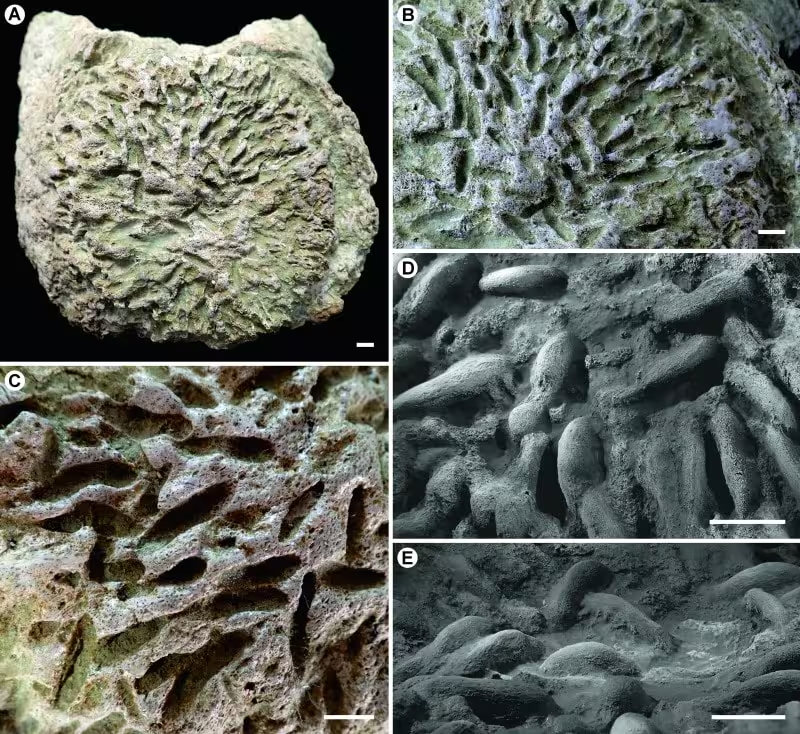
Reassessing Lo Hueco’s Depositional History
Long celebrated as one of Europe’s richest Late Cretaceous fossil localities, Lo Hueco has yielded isolated bones as well as remarkably complete titanosaur skeletons. The new bioerosion evidence forces a re‑evaluation of how these fossils accumulated. Rather than representing rapid burial by sudden sedimentary events, the fossil‑bearing strata now appear to record a prolonged sequence of exposure, scavenging, and eventual burial. The authors propose that the two principal fossil horizons, known as G1 and G2, likely formed over a more extended interval than previously thought.
The study also incorporates a comprehensive review of more than 140 published investigations documenting insect bioerosion on fossil bone from the Middle Triassic to the Holocene. Notably, only a single prior study originated from the Iberian Peninsula, underscoring the exceptional value of the Lo Hueco material.
“The more taphonomic information we can obtain, the more paleoecological and palaeoenvironmental data we will have on the skeletal remains under study,” Belaústegui notes.
As researchers continue to examine these minute traces, the smallest marks left by ancient insects are proving capable of reshaping our understanding of the giant dinosaurs that roamed the Earth around 70 million years ago.
This article has been fact checked for accuracy, with information verified against reputable sources. Learn more about us and our editorial process.
Last reviewed on .
Article history
- Latest version
Reference(s)
- “Redirecting.” <https://linkinghub.elsevier.com/retrieve/pii/S0012825226001728>.
Cite this page:
- Posted by Hassan Raza