Hidden in a Museum for Decades This Bizarre New Millipede Species Was Finally Identified
A long-overlooked millipede specimen sat in a museum for 90 years before a surprise discovery revealed it was an undocumented species in Australia.
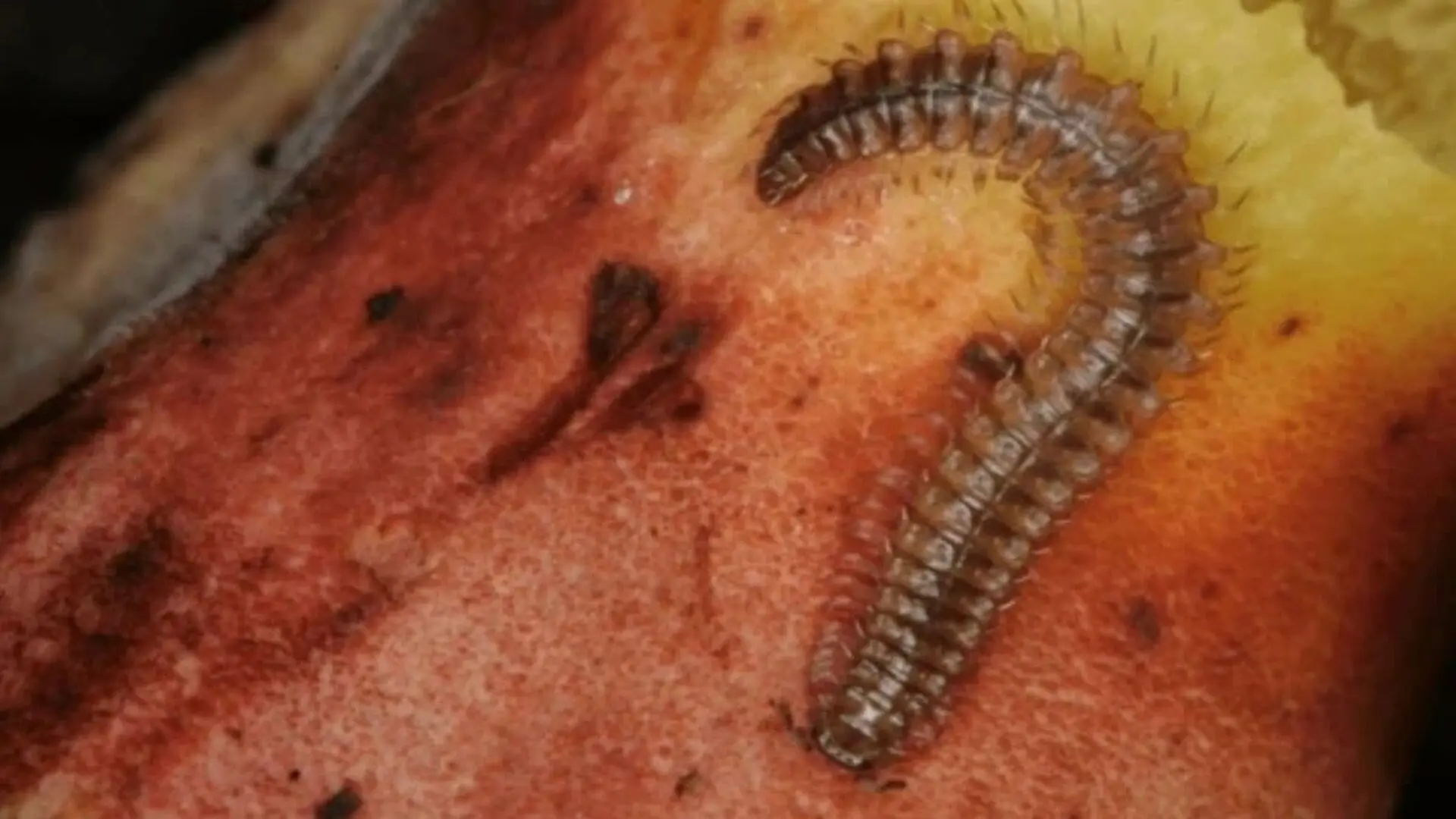
A millipede specimen tucked away in a museum collection for nearly nine decades has been officially identified as a new species, Colobothrix deckeri. The discovery challenges established biological understanding, as the creature belongs to a family of millipedes typically restricted to moisture-rich environments, yet its discovery site in South Australia is notably arid.
The taxonomic breakthrough, detailed in the peer-reviewed journal ZooKeys, serves as a masterclass in modern scientific collaboration, linking unrelated research efforts across nearly a century.
A Hidden Treasure in the Archives
The journey to classification began with a single specimen gathered on South Australia’s lower Yorke Peninsula in 1936. For decades, the arthropod sat unidentified within the South Australian Museum (SAMA). It wasn’t until 2015 that German biologist Peter Decker, while auditing museum holdings for his own doctoral work on a different millipede group, noticed the anomaly.
Recognizing the specimen as a member of the family Dalodesmidae, Decker consulted with Australian specialist Robert Mesibov. The revelation was striking: the original collection site experiences only 400 to 500 millimeters (15.7 to 19.7 inches) of rainfall annually. This makes C. deckeri the first of its kind to be recorded in such a moisture-deprived region. Despite follow-up searches in 2016 and 2017, Mesibov was unable to find living examples in the area, leading to the decision to name the species in honor of Decker.
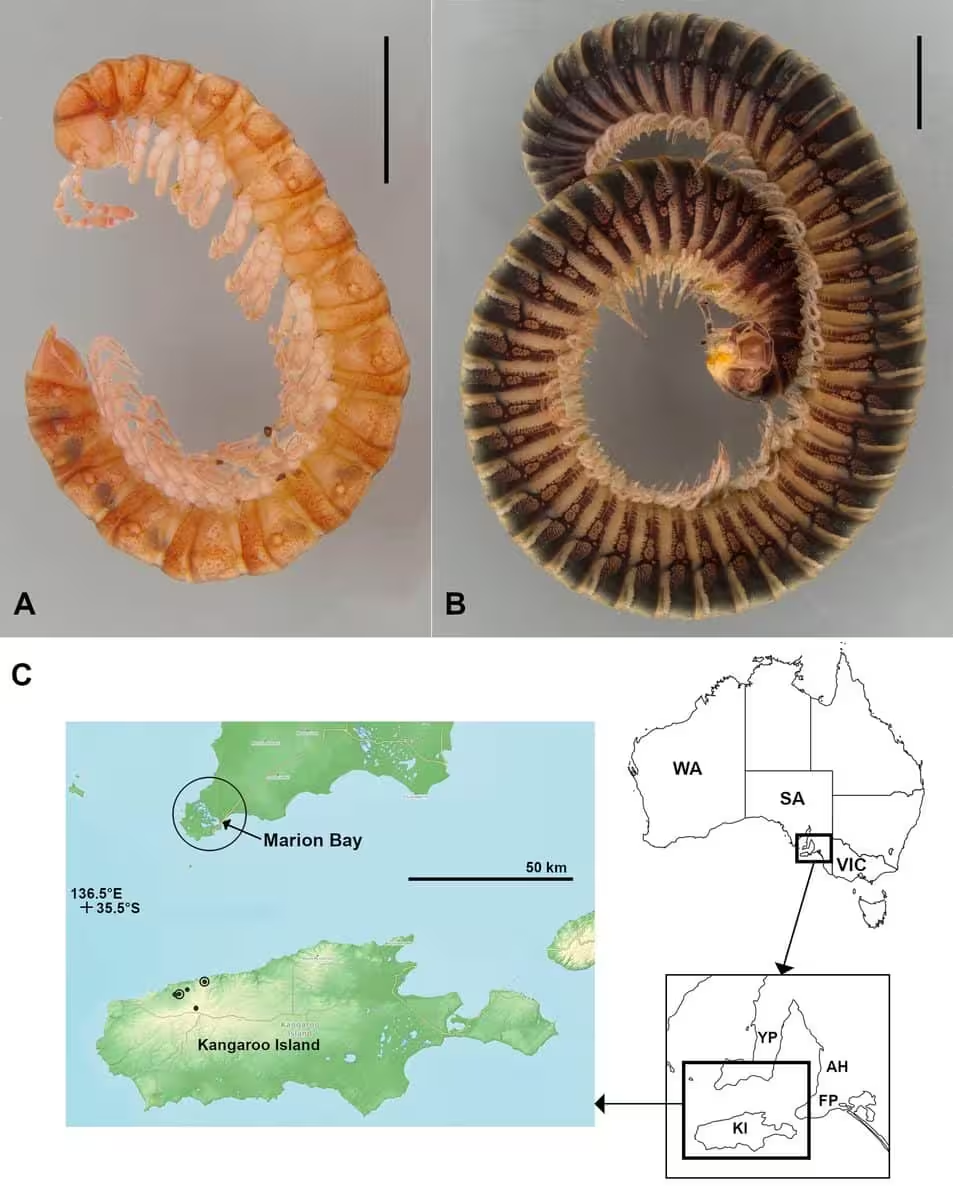
Anatomy and the Origin of a Name
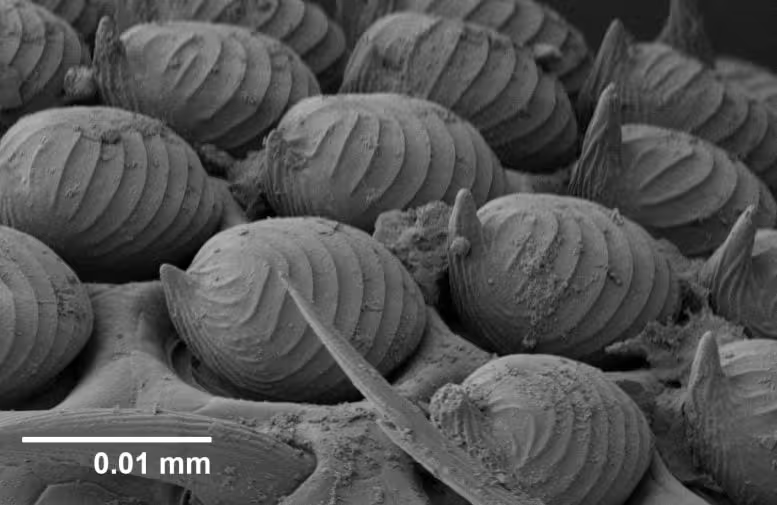
The naming of the genus, Colobothrix, is derived from its unique microscopic morphology. While mature males in this family typically possess ball-like leg structures called sphaerotrichomes topped with long, pointed bristles, this species features a distinct mutation: the bristles are reduced to blunt, stunted rods.
As documented in the published research, scanning electron microscopy by Mesibov clearly captures this “stunted hair” configuration, cementing the species’ unique status within the family tree.
Serendipitous Findings on Kangaroo Island
While the initial discovery was made through historical records, modern fieldwork proved that the species was not extinct. In 2010, arachnologists Michael Rix and Danilo Harms were conducting an unrelated survey of spiders on Kangaroo Island when they inadvertently collected several unidentified millipedes. These specimens were stored at the Western Australian Museum (WAM).
Following the 2020 bushfires, which devastated much of the island’s habitat, subsequent surveys by researcher Jessica Marsh helped confirm the persistence of local invertebrate populations. In 2026, Mesibov identified the WAM’s record online, leading to a confirmation that the Kangaroo Island population was indeed C. deckeri. Subsequent field visits confirmed the presence of the millipede in wetter micro-habitats on the island.
Whether the species persists in its original, arid Yorke Peninsula home remains a subject of intense scientific curiosity. Mesibov hypothesizes that the porous limestone bedrock of the region might act as a subterranean refuge.
“I wonder if the species survives in small voids in this bedrock, as a relict from wetter periods in South Australia’s past,” Mesibov suggests. “That might explain why I couldn’t find it in 2016 and 2017, and how it could persist in such a dry climate.”
This article has been fact checked for accuracy, with information verified against reputable sources. Learn more about us and our editorial process.
Last reviewed on .
Article history
- Latest version
Reference(s)
- <https://www.researchgate.net/profile/Peter-Decker-3>.
- projects, Contributors. “Australian myriapodologist.”, June 2, 2023 Wikimedia Foundation, Inc. <https://en.wikipedia.org/wiki/Robert_Mesibov>.
- Mesibov, Robert. “Two new millipede genera and species from Kangaroo Island, South Australia (Polydesmida, Dalodesmidae, Spirostreptida, Cambalidae).”, vol. 1295, October 23, 2026, pp. 277-291. Pensoft Publishers, doi: PropertyValue. <https://zookeys.pensoft.net/article/214938/>.
- projects, Contributors. “Australian arachnologist.”, October 29, 2016 Wikimedia Foundation, Inc. <https://en.wikipedia.org/wiki/Michael_G._Rix>.
- <https://www.researchgate.net/profile/Danilo-Harms-2>.
- “Jessica Marsh.” <https://www.nespthreatenedspecies.edu.au/people/jessica-marsh>.
Cite this page:
- Posted by Priya Sharma