Scientists Discover Rare Fruit-Eating Dinosaur That Lived Alongside T Rex
Scientists have discovered a new fruit-eating dinosaur, Infernogallus jamesi, that lived alongside T. rex, featuring a unique jaw designed for soft plants.
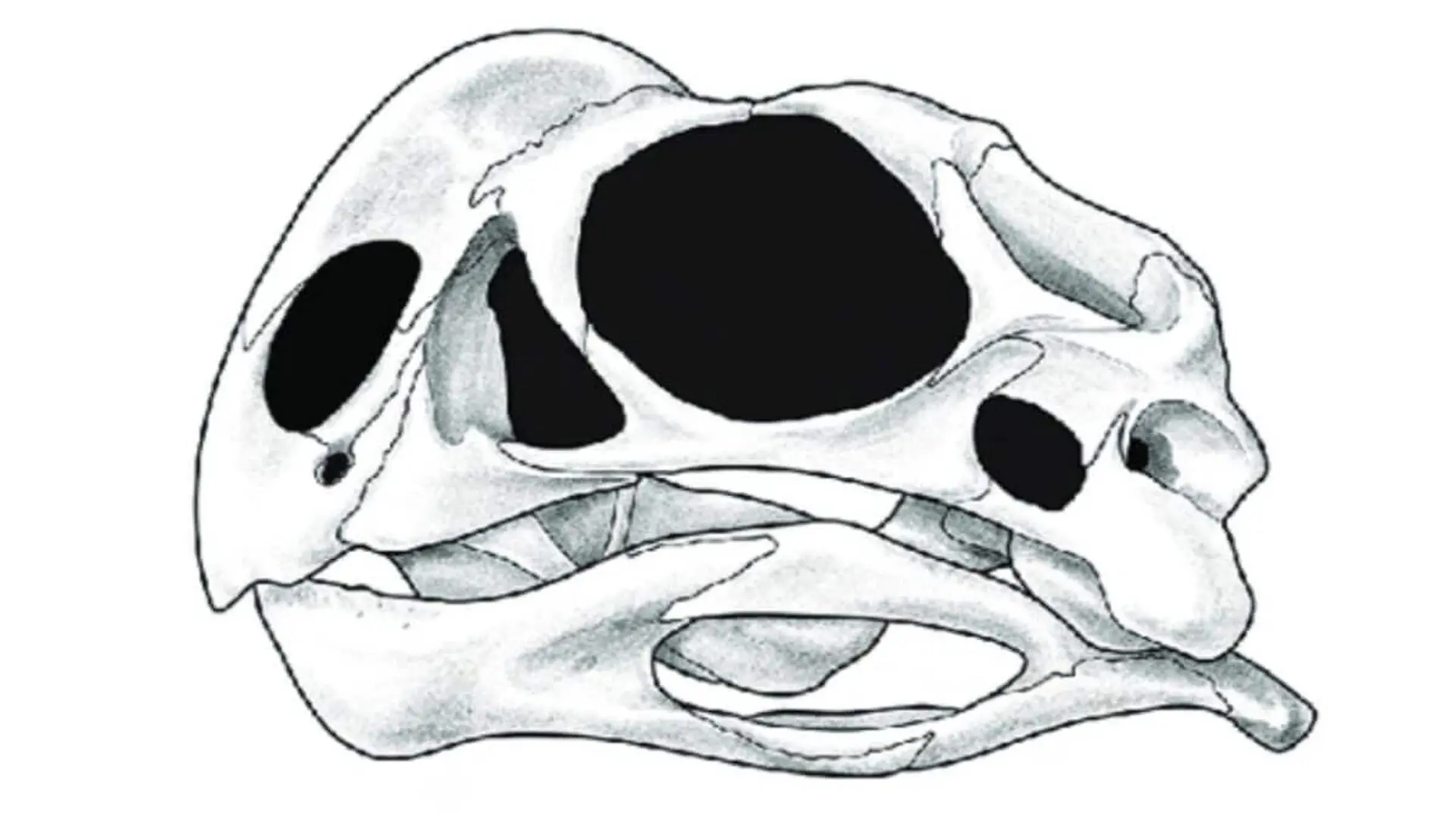
A newly identified dinosaur species offers compelling evidence that some non-avian theropods evolved specialized feeding habits to exploit the rise of flowering plants during the Cretaceous period. The findings, published in Nature Communications, reveal an animal with unique cranial adaptations for consuming fleshy fruits, providing fresh insight into the ecological interactions between dinosaurs and the rapidly changing vegetation of their era.
The “Hell Chicken” of the Hell Creek Formation
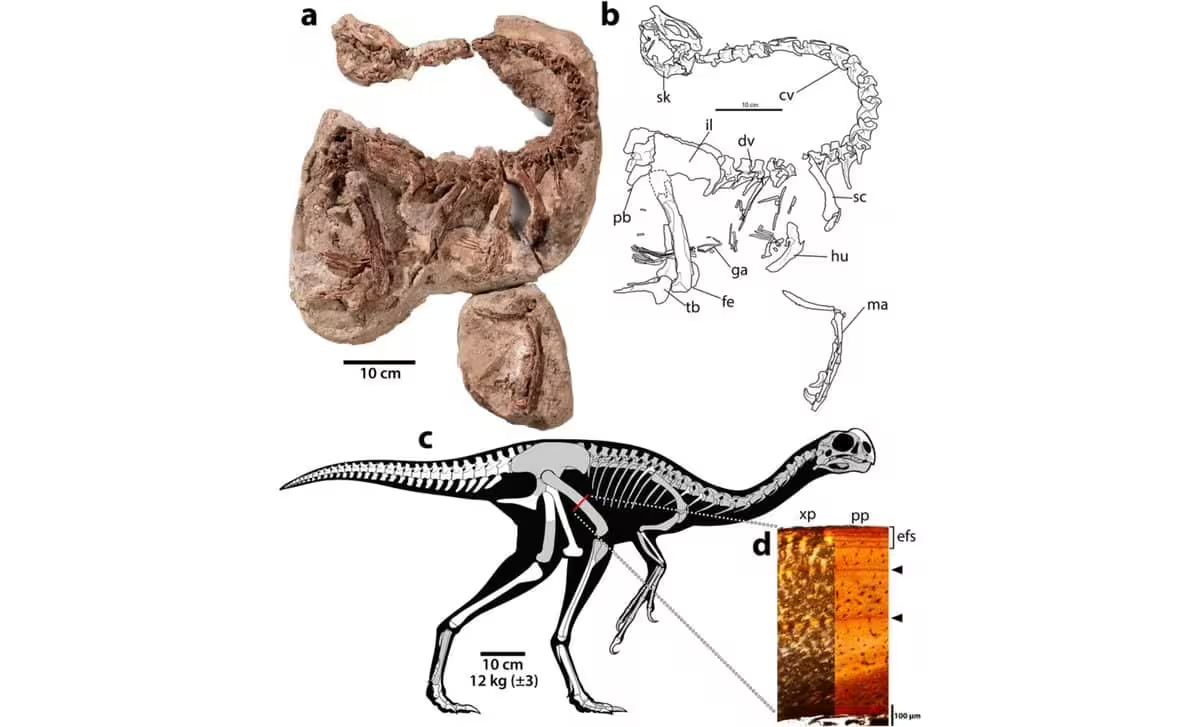
Paleontologists from Stony Brook University, the Royal Ontario Museum, and the North Dakota Geological Survey identified the species, dubbed Infernogallus, after analyzing five distinct fossil specimens. The name translates to “hell chicken,” a nod to the Hell Creek Formation across Montana, North Dakota, South Dakota, and Wyoming, where the fossils were recovered. Among the remains was an exceptionally well-preserved, articulated skull that allowed researchers to reconstruct the animal’s feeding mechanics in granular detail.
Weighing in at approximately 12 kilograms (26 pounds), Infernogallus was roughly the size of a modern turkey, standing as one of the smaller representatives of the caenagnathid family. These creatures were feathered, toothless oviraptorosaurs, a group that traced its lineage back to the carnivorous branch of the dinosaur family tree.
A Unique Mechanism for Mashing Fruit
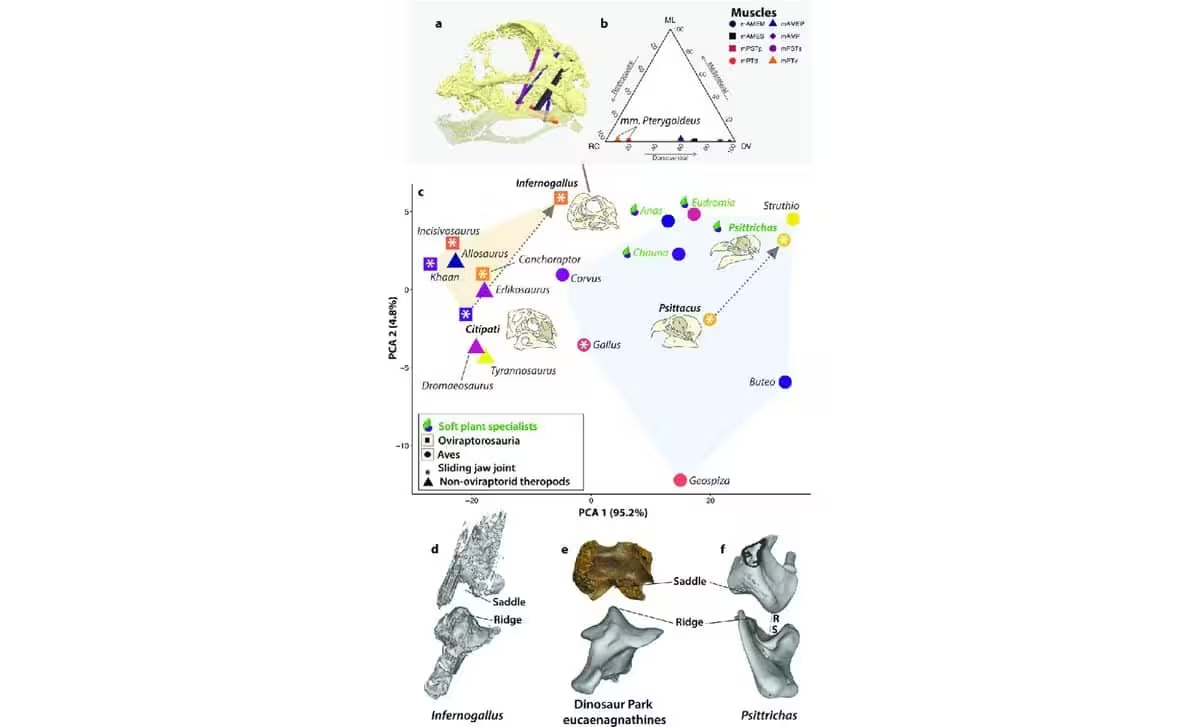
CT scans of the fossilized remains unveiled an unconventional skull architecture. Researchers discovered that the palatal bones curved downward, effectively reorienting the jaw muscles from a traditional vertical alignment to a front-to-back configuration. This structural change permitted the lower jaw to slide backward and forward, enabling a shearing motion that contrasts sharply with the vertical bite typical of most other theropods.
The creature also featured opposing bony surfaces lined with ridges and grooves, functioning effectively as a biological mortar and pestle. According to evolutionary biologist Thomas Dudgeon of the Royal Ontario Museum, the rarity of fruit-based specialization in the animal kingdom makes such adaptations particularly significant. The team drew direct comparisons to modern frugivorous birds like the vulturine parrot, which utilize similar jaw anatomy to process plant material.
Because the dinosaur lacked the heavy-duty grinding teeth necessary for fibrous vegetation and possessed a relatively weak bite, researchers concluded its diet was likely composed of soft, fleshy fruits, such as drupes.
Co-Evolution in the Cretaceous Landscape
The study highlights a potential evolutionary feedback loop between caenagnathids and the diversification of angiosperms (flowering plants). As fruit-bearing plants became more varied during the Cretaceous, Infernogallus—which lived between 68 and 66 million years ago—developed the necessary anatomy to capitalize on these new, nutrient-dense resources.
While it remains speculative whether these dinosaurs acted as seed dispersers in the same manner as modern fruit-eating animals, the discovery confirms that they interacted with their botanical environment in ways scientists had previously underestimated. However, this ecological specialization may have come at a cost. Researchers theorize that such a reliance on seasonal fruits might have rendered Infernogallus highly susceptible to the environmental instability following the terminal Cretaceous asteroid impact, as it lacked the ability to pivot to more resilient food sources like hard seeds.
Ultimately, the fossils provide a nuanced view of dinosaur life in the twilight of the Cretaceous, showcasing a specialized species that occupied a niche entirely distinct from its more carnivorous peers.
This article has been fact checked for accuracy, with information verified against reputable sources. Learn more about us and our editorial process.
Last reviewed on .
Article history
- Latest version
Reference(s)
- “Dr. Thomas Dudgeon.”, January 3, 2027 <https://www.rom.on.ca/people/dr-thomas-dudgeon>.
- Funston, Gregory. “Fruit-eating adaptations in a Late Cretaceous oviraptorosaur (Theropoda) - Nature Communications.”, October 10, 2026 Nature, doi: 10.1038/s41467-026-78343-w. <https://www.nature.com/articles/s41467-026-78343-w>.
Cite this page:
- Posted by Priya Sharma