AI Just Discovered a Massive Viral Structure Inside Our Cells That Has Puzzled Science for 40 Years
Scientists have discovered new relatives of mysterious hollow structures found inside human cells, potentially unlocking secrets about their unknown purpose.
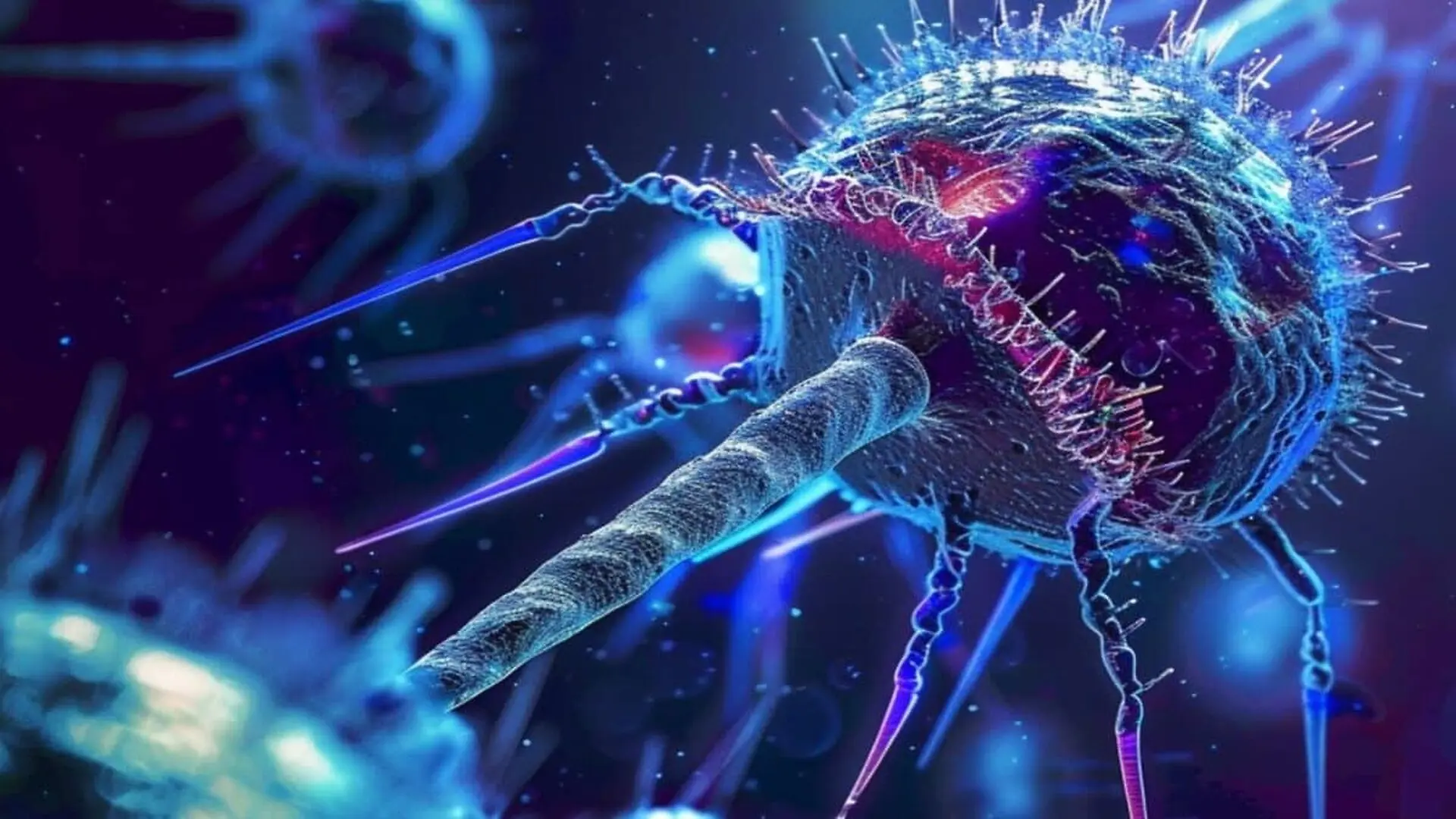
For nearly four decades, the biological role of vault particles—massive, barrel-shaped protein structures found within the cells of almost all humans and other eukaryotes—has remained one of biology’s most stubborn mysteries. Despite their size, which dwarfs that of the ribosome, their exact function has eluded researchers since they were first identified in 1986. Now, a team of scientists at Anthropic has bridged this knowledge gap by discovering that these enigmatic containers are not unique to complex life forms; they also exist in bacteria and, more surprisingly, in the viruses that infect them.
Vaults: From Cathedral Ceilings to Bacterial Origins
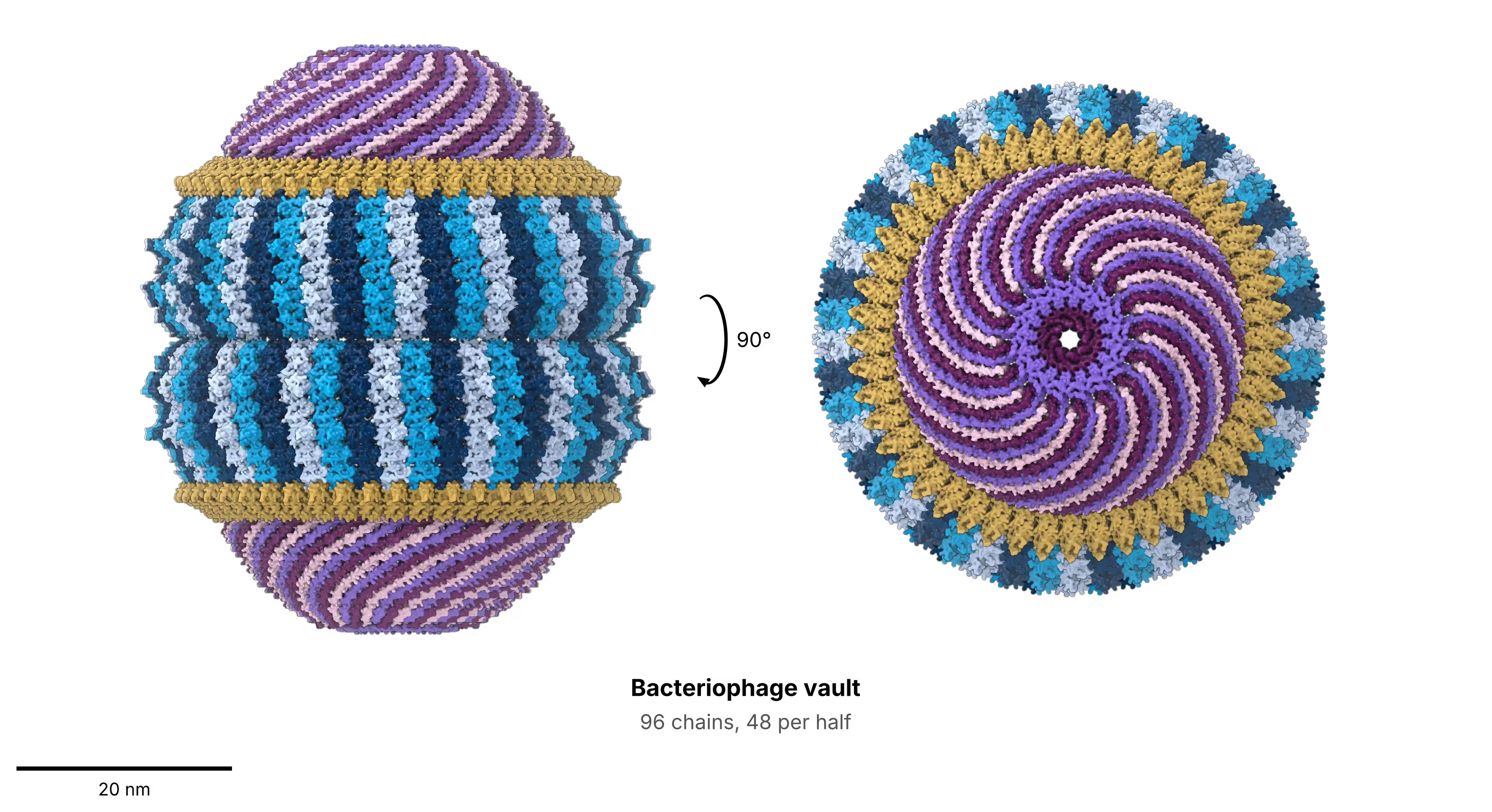
When researchers Leonard Rome and Nancy Kedersha first observed these structures under an electron microscope, they were struck by their resemblance to the vaulted ceilings of a cathedral, a visual characteristic that earned them the name “vaults.” In mammals, these particles are composed of 78 copies of a single protein, forming two symmetrical halves. While their evolutionary persistence across hundreds of millions of years suggests they are vital, experimental evidence has been contradictory. Mice engineered to lack vault proteins have shown no obvious health deficits, and several model organisms—including fruit flies and baker’s yeast—do not possess them at all.
A Large-Scale Genomic Search
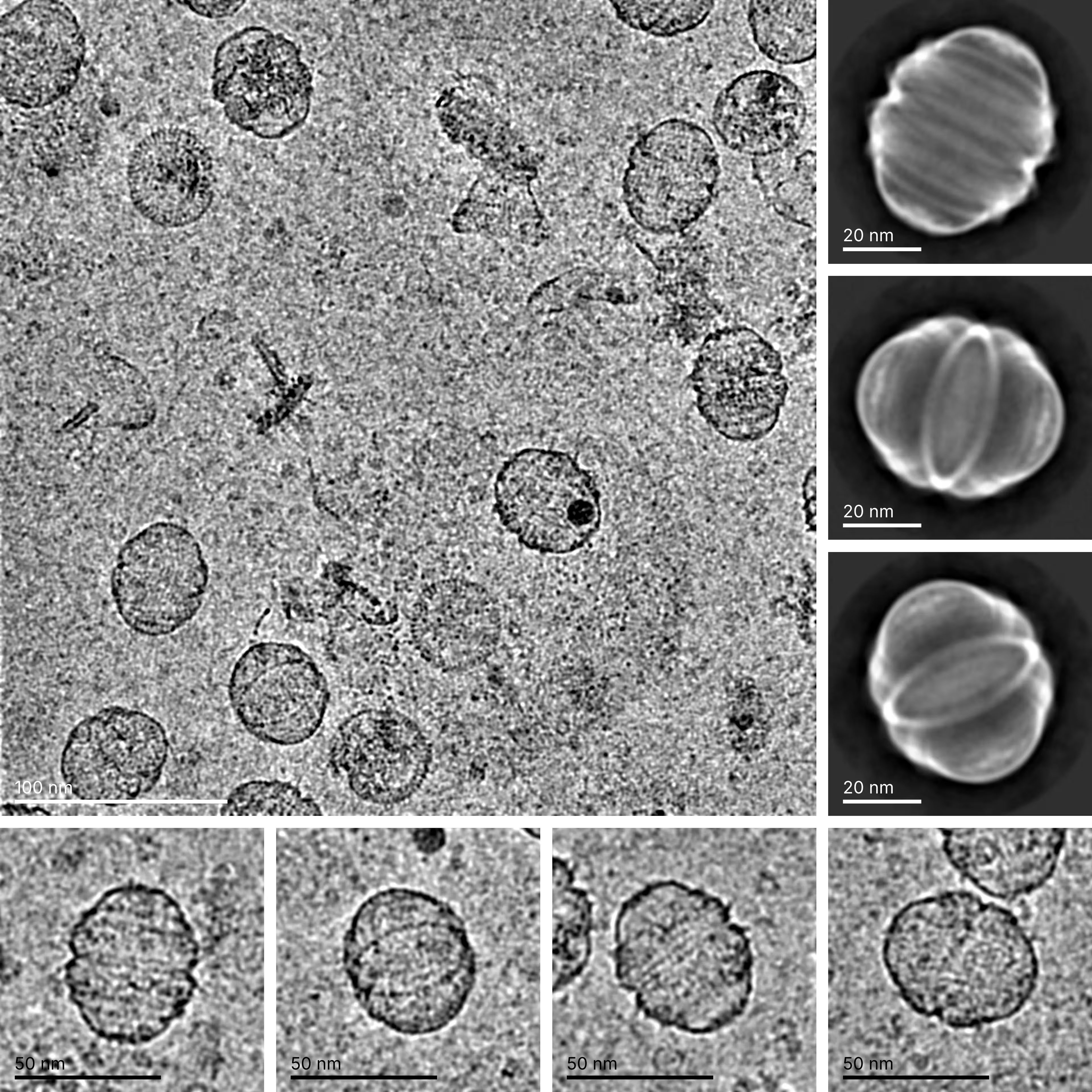
To better understand these structures, the Anthropic team utilized advanced computational tools, including AI-driven protein modeling, to scan a database of roughly 15 billion predicted protein sequences. They identified potential vault-forming proteins in 29 bacterial groups and four groups of archaea, though they were rare, appearing in fewer than 1% of species. After testing 44 candidates, the team successfully synthesized vault particles from seven, confirming their existence in both bacteria and bacteriophages.
The team also bypassed traditional, multi-day purification methods by developing a 90-minute process using porous beads, which allowed for the rapid extraction and analysis of these delicate assemblies via cryo-electron microscopy.
Engineering the Viral Vault
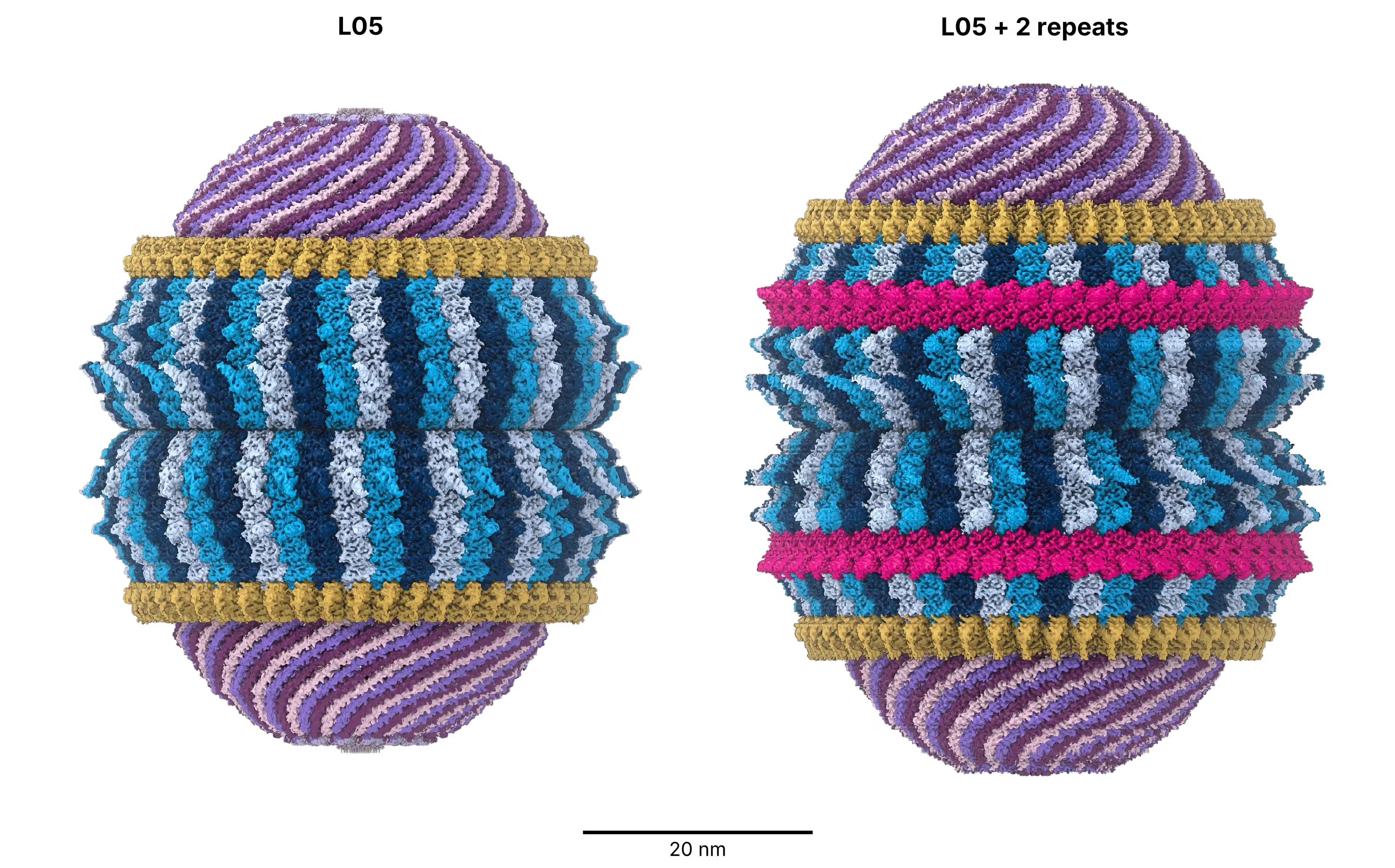
The viral vault designated L05 provided the researchers with their most detailed look at a prokaryotic version. Unlike the human variant, the L05 vault is composed of 96 protein copies, resulting in a structure that is shorter, wider, and possesses roughly 25% more internal volume. The structural design is a masterpiece of biological engineering: 48 protein copies form each half, tapering toward the poles in a tiered, stepped-dome fashion where each identical protein adopts a slightly different configuration to close the shell.
By manipulating the gene sequences of these proteins, the researchers proved that they could control the architecture of the vault. When they duplicated segments within the L05 protein to mimic the nine-segment structure found in humans, the resulting synthetic vaults successfully assembled, creating even larger containers with 20% more capacity. This discovery hints that the evolution of vault size may have been driven by the simple duplication of structural segments.
The Search for Function Continues
Despite these structural insights, the primary question remains: what are these vaults actually doing? While they have not yet linked a specific biological function to the particles, the team noted a small, unidentified molecule lodged within a pocket of the L05 proteins. This molecule bears a striking resemblance to coenzyme A, a common metabolic cofactor, providing a potential clue for future research.
Leonard Rome, who has spent decades investigating these structures, notes that determining the exact physiological purpose of vaults remains a daunting task. However, the newfound ability to engineer them holds significant promise for biotechnology, particularly as a delivery mechanism for therapeutic enzymes or drugs. As researchers continue to probe these mysterious barrels, the discovery of their viral and bacterial variants opens new avenues to understand their evolutionary history and potential utility in modern science.
This article has been fact checked for accuracy, with information verified against reputable sources. Learn more about us and our editorial process.
Last reviewed on .
Article history
- Latest version
Reference(s)
- Anthropic, “Investigating vault particles with Claude.”, November 4, 2026 Anthropic <https://www.anthropic.com/research/investigating-vault-particles-with-claude>.
Cite this page:
- Posted by Priya Sharma