JWST May Have Found the Birthplaces of the Universe’s First Massive Black Holes
The James Webb Space Telescope has discovered unusual features in early galaxies, potentially solving the mystery of how supermassive black holes formed.
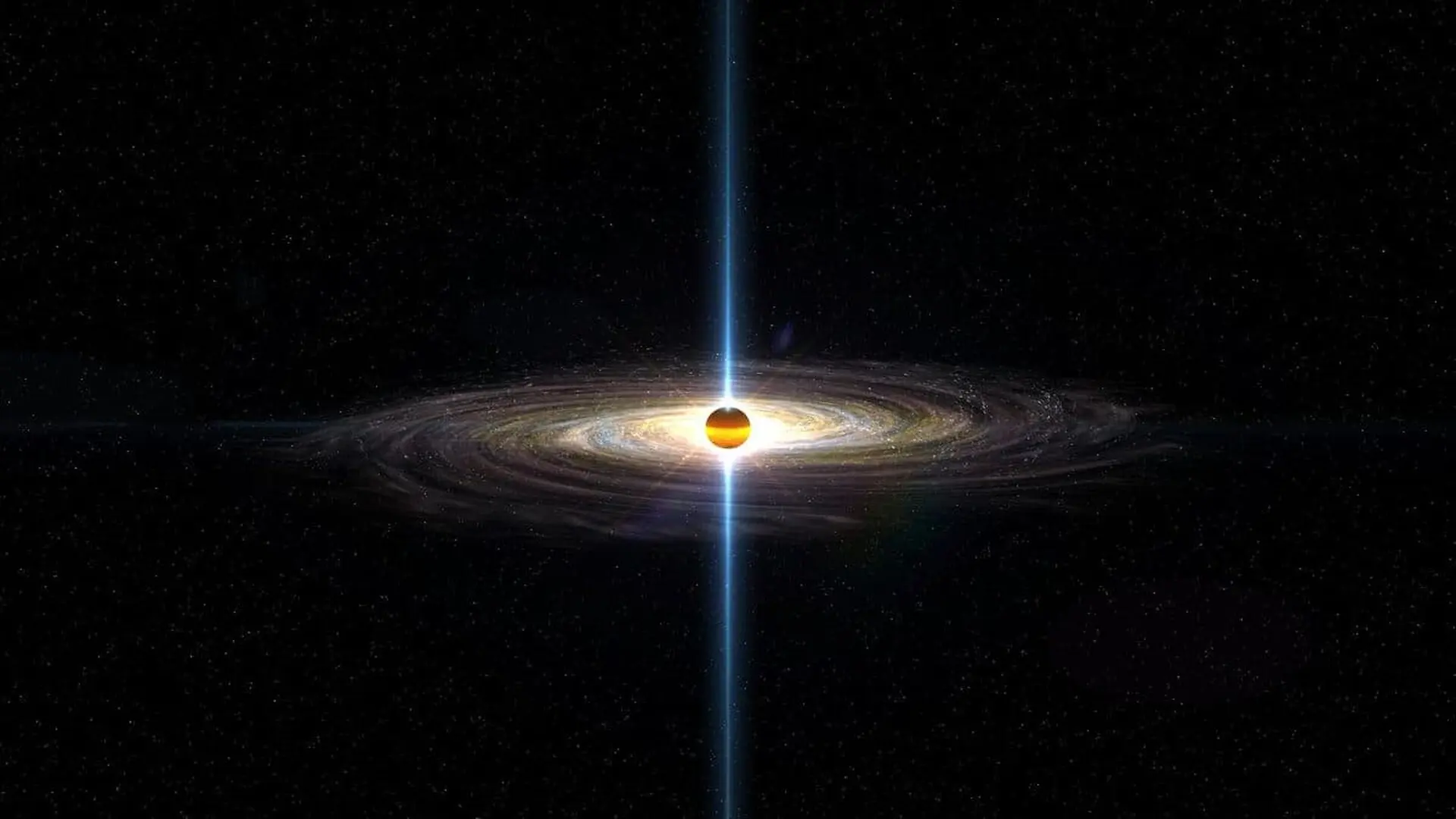
New evidence from the James Webb Space Telescope (JWST) is offering a compelling explanation for one of the most persistent puzzles in modern cosmology: the origins of the first massive black holes. A study published in Astronomy & Astrophysics suggests that the dense, chaotic environments of ancient star clusters served as the perfect nurseries for creating massive black hole “seeds.”
While supermassive black holes currently anchor the centers of most galaxies, their rapid appearance in the early universe has long baffled researchers. Current theories struggle to explain how these giants reached such incredible sizes so quickly after the Big Bang. One leading hypothesis involves intermediate-mass black holes—objects ranging from 100 to 100,000 solar masses—acting as the building blocks for their larger counterparts.
Observing the Early Universe Through Gravitational Lenses
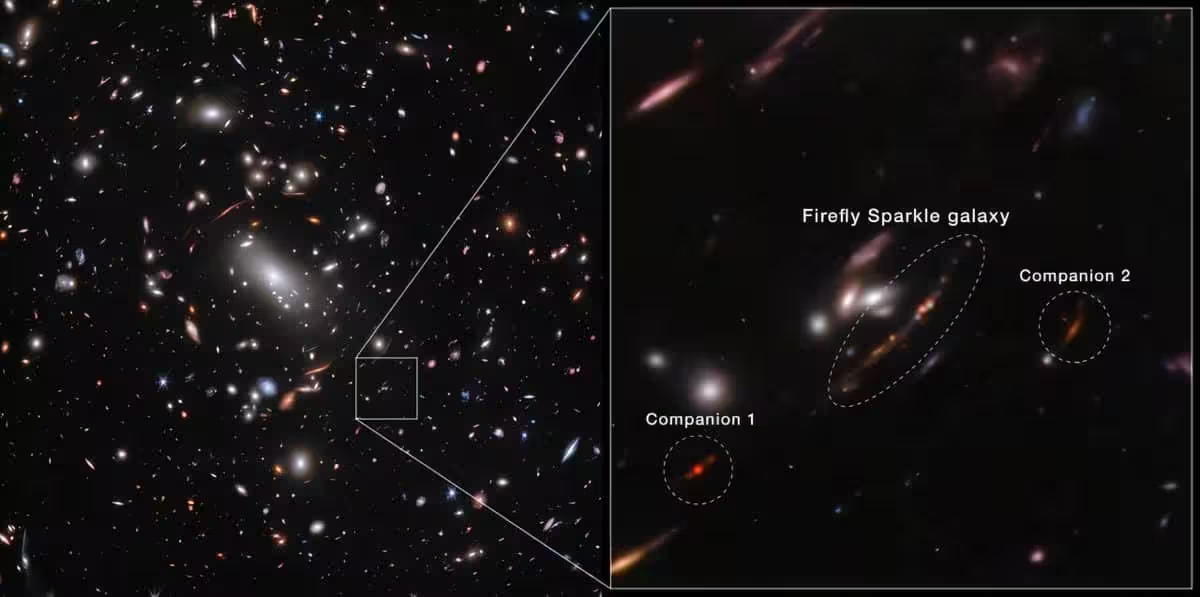
Led by Viola Bocchi of Sapienza University of Rome, the research team focused on two exceptionally distant galaxies, dubbed Cosmic Gems and Firefly Sparkle. These objects were brought into view using the natural magnification provided by gravitational lensing, allowing astronomers to peer back to a time when the universe was less than 600 million years old.
JWST observations revealed that these galaxies are home to intensely packed star clusters containing between 100,000 and 10 million solar masses. Within these confined regions, the proximity of massive stars creates an environment ripe for high-speed stellar collisions. As these stars merge repeatedly, they can form exceptionally massive stellar bodies that eventually collapse into heavy black hole seeds.
The Mechanics of Black Hole Growth
The study highlights how local conditions dictate the potential for black hole formation. In the Cosmic Gems galaxy, where clusters are incredibly compact with radii of about one parsec, the likelihood of stellar collisions is high. Combined with the low metallicity of these early environments—which prevents stars from shedding mass through intense winds—these clusters could potentially produce black holes between 1,600 and 2,700 solar masses.
Conversely, the Firefly Sparkle galaxy presents a different scenario. Its clusters are more diffuse, which limits the frequency of runaway stellar mergers. In these regions, the predicted black hole seeds are lighter, estimated between 180 and 810 solar masses. This variance demonstrates how physical structure and chemical composition during the early stages of galaxy evolution directly influence the growth potential of these massive objects.
Connecting to the “Little Red Dots”
These findings may shed light on the enigmatic little red dots recently identified by JWST across the deep field. These compact, red-shifted objects have puzzled astronomers who suspect they might be early supermassive black holes. The new model suggests that these objects could be the result of the dense cluster environments identified in the study, providing the necessary “seed” material to jumpstart their rapid growth.
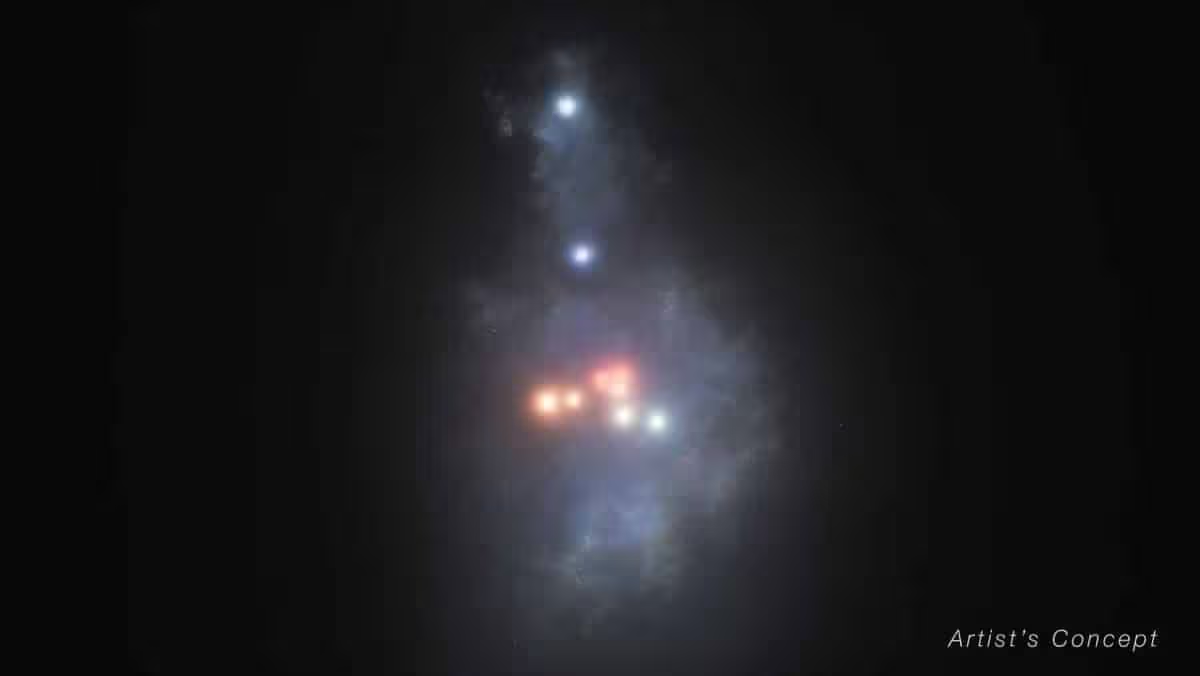
While the study stops short of confirming the presence of black holes within these specific clusters, it offers a concrete target for future investigation. By focusing on ancient, metal-poor, and highly compact star clusters, astronomers now have a clearer roadmap for understanding how the dark titans of the universe first emerged from the cosmic dawn.
This article has been fact checked for accuracy, with information verified against reputable sources. Learn more about us and our editorial process.
Last reviewed on .
Article history
- Latest version
Reference(s)
- Bocchi, Viola., et al. “Formation of intermediate-mass black holes in young massive clusters detected with JWST: Analytic mass estimates.” Astronomy & Astrophysics, vol. 712, August 12, 2026, pp. A146 EDP Sciences, doi: 10.1051/0004-6361/202659622. <https://dx.doi.org/10.1051/0004-6361/202659622>.
Cite this page:
- Posted by John Williams