Interstellar Comet 3I/ATLAS Reveals Its Alien Origin in a Deeply Frozen World
Astronomers have uncovered new insights into the frozen origins of interstellar comet 3I/ATLAS, shedding light on its mysterious journey through space.
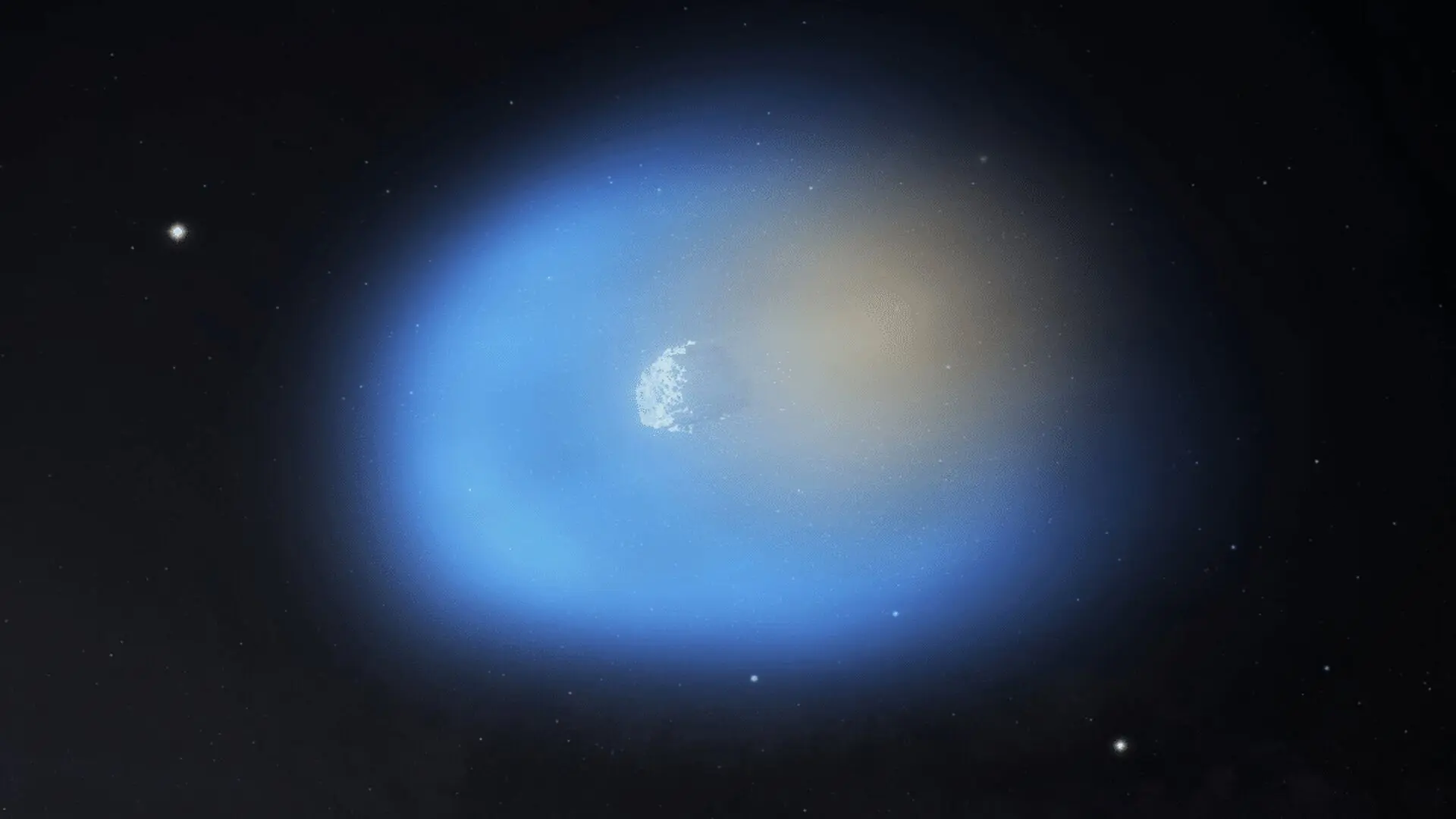
Astronomers have traced the origins of 3I/ATLAS, the third confirmed interstellar visitor to our solar system, to the frigid reaches of a distant star system. New findings published in Monthly Notices of the Royal Astronomical reveal that the comet-like object carries a chemical signature indicative of formation in an environment far removed from the warmth of its parent star. By analyzing the gases released as the object transited through our inner solar system, researchers uncovered conditions that differ significantly from those found in the native comets of our own cosmic neighborhood.
Peering into the Depths of a Distant World
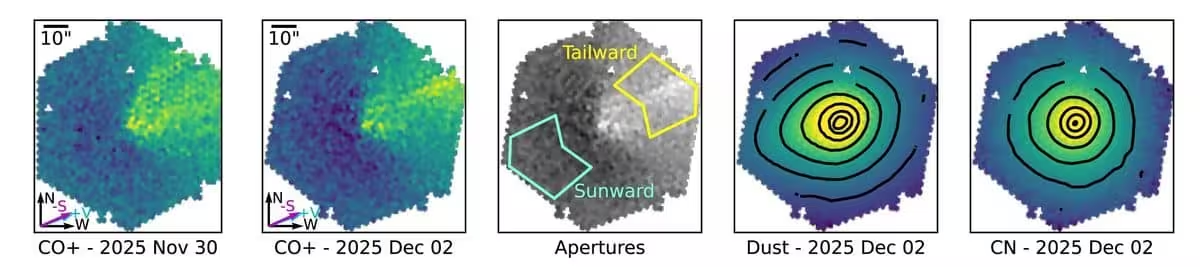
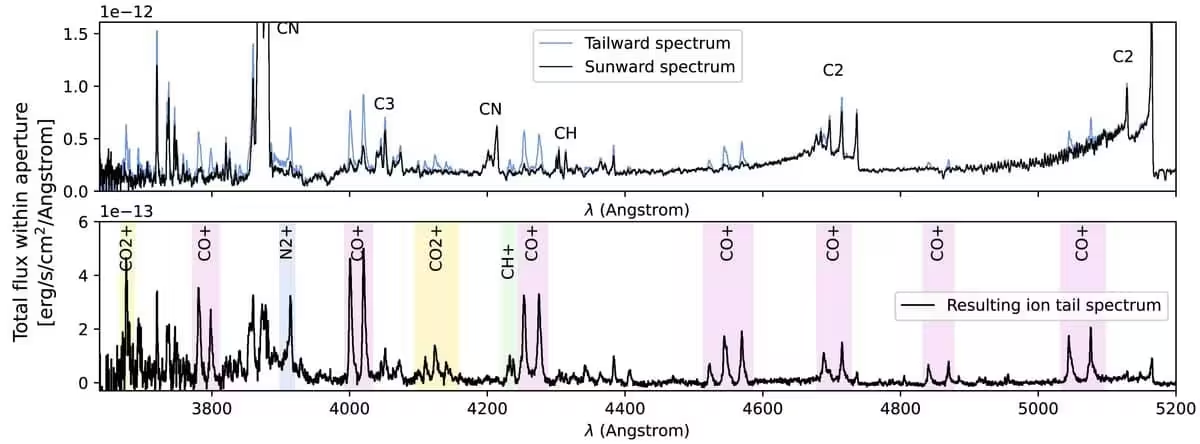
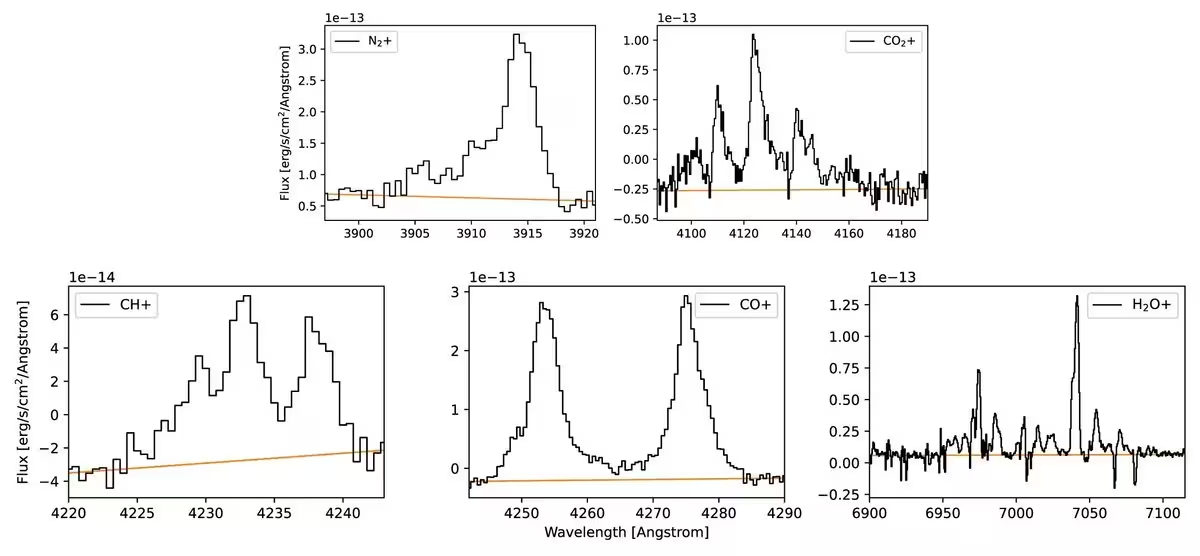
The investigation was led by Dr. Lea Ferellec of Northumbria University’s School of Engineering, Physics and Mathematics. Her team utilized the Large Integral Field Unit (LIFU) mode of the WEAVE instrument, mounted on the 4.2-meter William Herschel Telescope operated by the Isaac Newton Group. Through a combination of advanced imaging spectroscopy and precise non-sidereal tracking, the researchers successfully captured the chemical composition of five distinct ions within the comet’s gas stream simultaneously.
This level of detailed chemical mapping is unprecedented for an interstellar traveler. By examining the ratio between dinitrogen gas and carbon monoxide, the team determined that 3I/ATLAS likely formed at temperatures plummeting below -240°C (-400°F). These extreme conditions suggest the object originated in the icy, outer periphery of its home system, far from the ionizing influence of a host star.
“This object gives us a rare chance to study material that formed somewhere completely different from our own solar system,” said Dr. Ferellec. “Finding that it’s so rich in nitrogen tells us it likely formed in extremely cold conditions, far from its home star. Every one of these objects we study helps us understand a little more about how planets form around other stars.”
Chemical Signatures of an Interstellar Journey
Detected in July 2025, 3I/ATLAS is one of only three known objects to enter our system from the interstellar medium. Because these bodies originate elsewhere, they serve as pristine time capsules containing data on the environments where they first coalesced. The research, detailed in Monthly Notices of the Royal Astronomical, highlights the high abundance of nitrogen-bearing compounds as evidence of the object’s stable, ultra-cold origins before it was ejected into the void.
Observing Plasma Dynamics in Real Time
Beyond determining the object’s birthplace, the researchers—including collaborators from the University of Edinburgh—tracked the evolution of ions as they drifted along the comet’s tail. As 3I/ATLAS encountered the sun, solar radiation stripped material away, creating a plasma tail. The sensitivity of the WEAVE-LIFU instrument allowed for a detailed view of how this plasma behaves when it interacts with a new stellar environment.
“Powerful, large-format IFUs with high sensitivity in the blue optical spectrum—like WEAVE-LIFU on the WHT—are opening new frontiers for the study of comets and other solar system objects,” noted ING Director Rubén Sánchez-Janssen. “This discovery is a perfect example of the value of DDT, which is specifically designed to enable observations of exceptional and urgent scientific importance.”
This work underscores the importance of interstellar visitors as comparative benchmarks for planetary formation theories. As telescope technology advances, each new detection of a wandering object provides deeper insight into the chemical diversity of the galaxy and the shared or unique processes that govern planetary birth across the stars.
This article has been fact checked for accuracy, with information verified against reputable sources. Learn more about us and our editorial process.
Last reviewed on .
Article history
- Latest version
Cite this page:
- Posted by Aisha Ahmed