New Simulation Reveals How Gas Giants Can Form in Just 200,000 Years
A new computer simulation reveals how icy particles drift and clump together to form giant-planet cores before their surrounding gas disks disappear.
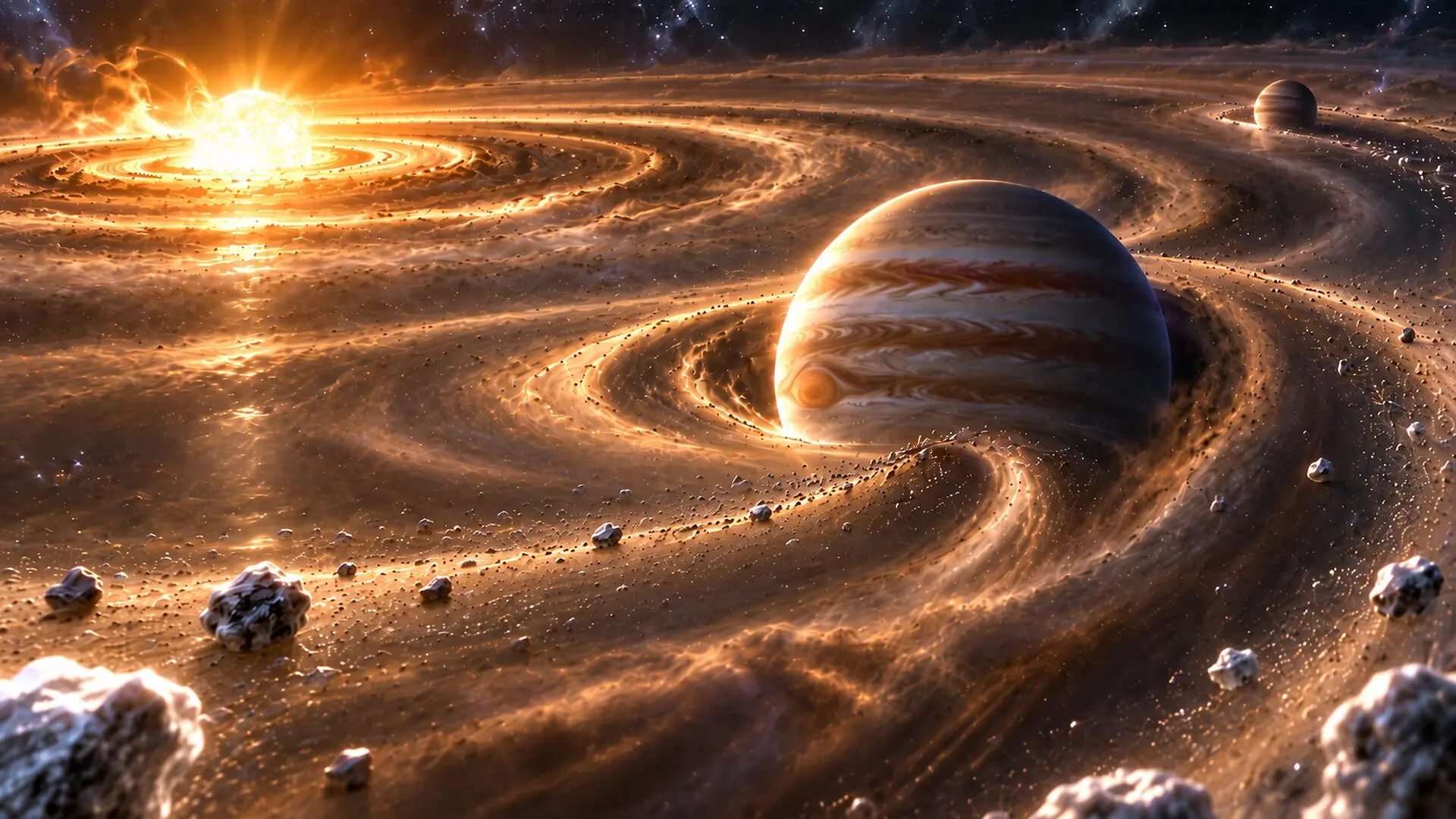
For decades, the formation of gas giants like Jupiter and Saturn has challenged planetary scientists. The conventional model of core accretion requires a massive solid core to form before the surrounding disk of hydrogen and helium dissipates, a process that historically appeared too slow to match the observed timelines of planetary systems. New research published in The Astrophysical Journal suggests that a more efficient “dust-to-planet” mechanism may solve this long-standing orbital riddle.
The study, conducted by Hiroshi Kobayashi of Nagoya University and Hidekazu Tanaka of Tohoku University, utilizes advanced computer simulations to track the lifecycle of solid material from microscopic dust grains to full-scale planetary embryos. By integrating these developmental stages into a single model, the researchers discovered that the rapid assembly of 10-Earth-mass cores can occur in as little as 200,000 years.
The Timing Challenge of Giant Planets
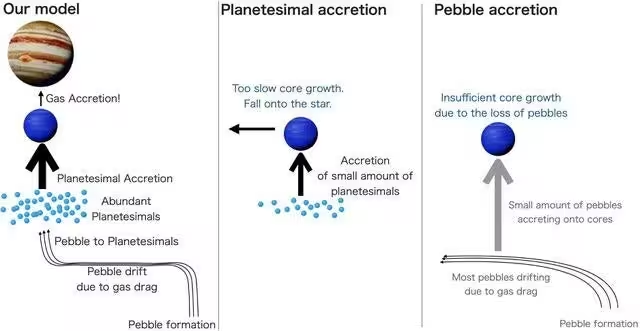
To reach the status of a gas giant, a planet must first accumulate a solid core of roughly 10 Earth masses. This core acts as a gravitational anchor, pulling in the massive envelopes of gas that define planets like Jupiter. The primary hurdle in this process is the “migration clock.” As planetary embryos grow, their gravitational influence often causes them to drift inward toward their host stars via Type I migration. If the core does not reach critical mass quickly, it risks being pulled into the star or losing its gaseous environment as the protoplanetary disk evaporates.
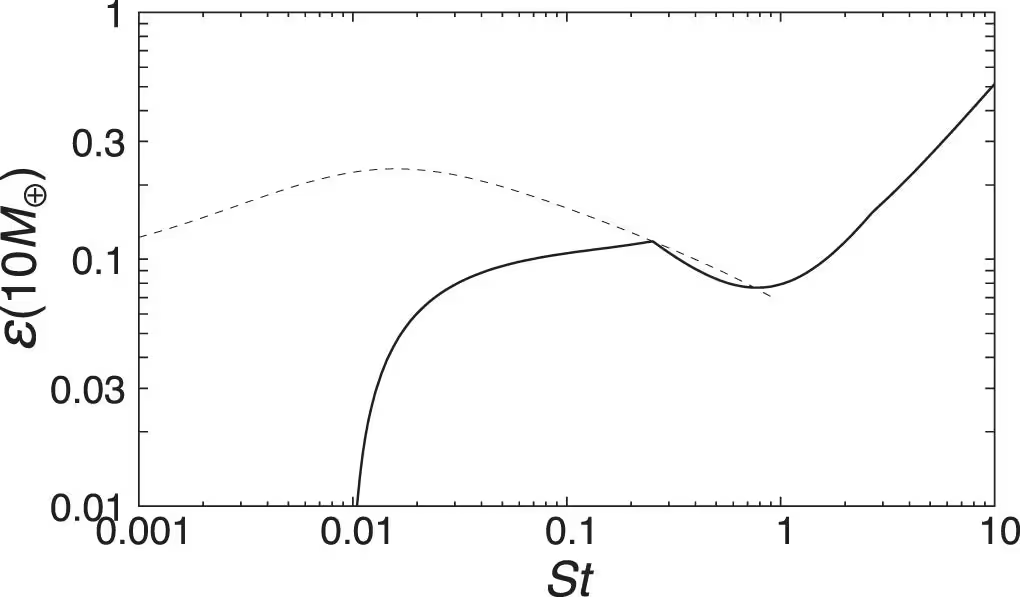
While the theory of “pebble accretion”—where planetary embryos capture small, drifting particles—has gained traction as a way to speed up growth, it faces efficiency issues. A single core often captures less than 10% of the pebbles moving through its orbital path, meaning an unrealistic volume of solid material would be required to build a giant core.
A New Model for Rapid Assembly
Kobayashi and Tanaka’s simulation reveals that the process is significantly more efficient when these drifting icy pebbles are converted into larger planetesimals before they are consumed. As tiny dust grains grow into pebbles in the outer disk, gas drag causes them to drift toward the inner system. Inside the region between 6 and 9 astronomical units (au), these drifting particles collide and coalesce into larger bodies, ranging from 100 meters to 10 kilometers in diameter.
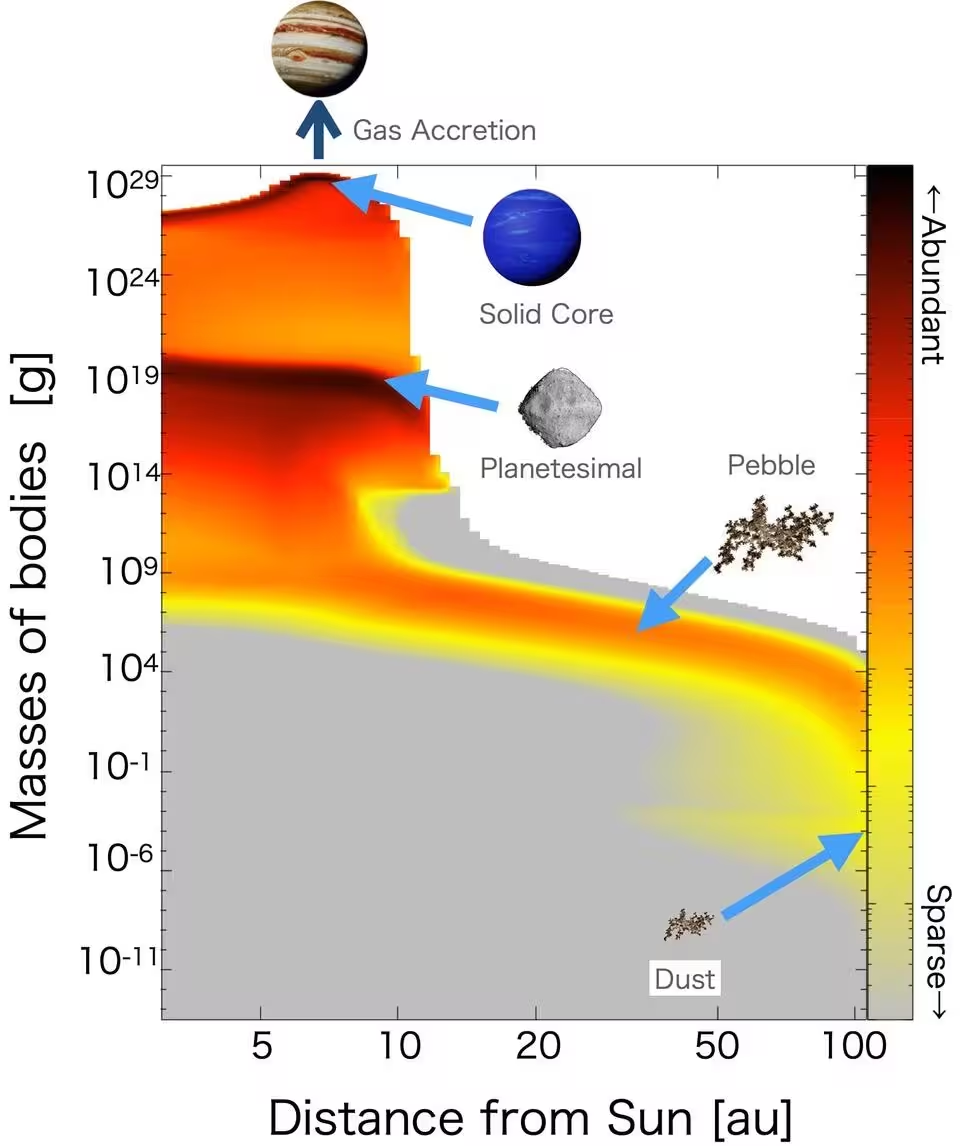
Unlike smaller pebbles, these newly formed planetesimals are less susceptible to the orbital drag that drives inward migration. This allows them to accumulate in a “density trap,” increasing the solid surface density in the 6–9 au range by a factor of ten. This concentrated reservoir provides the perfect feeding ground for growing planetary embryos, which can then ingest the material with high efficiency.
Implications for Solar System Evolution
The researchers note that this model places the emergence of giant cores at distances roughly consistent with the current orbits of Jupiter and Saturn. By bypassing the limitations of direct pebble capture, the model demonstrates that the rapid growth required to form a gas giant is not only possible but likely an expected outcome of the collision-rich environments in young, dusty disks.
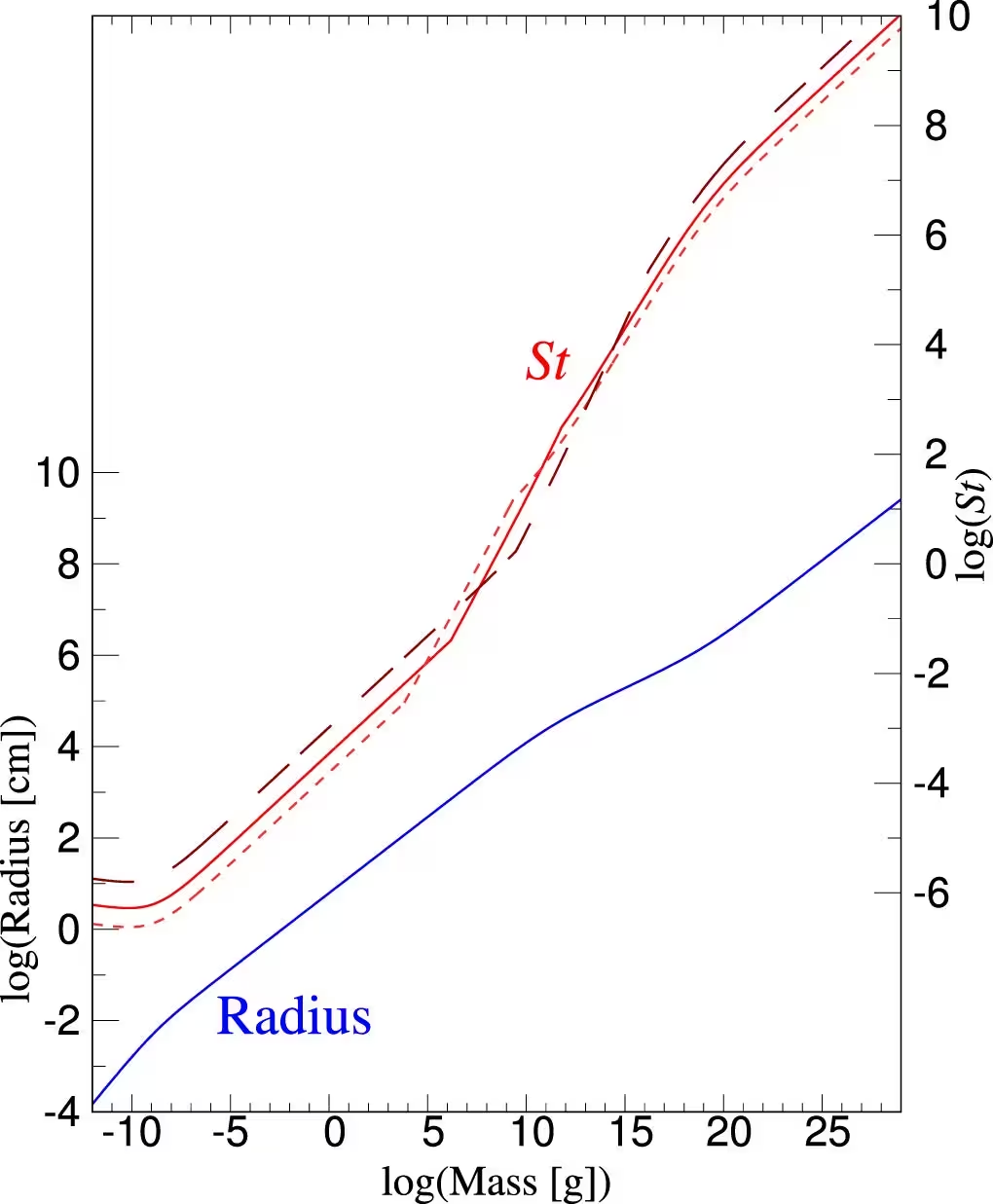
While the model remains a theoretical framework—making assumptions about turbulence and disk composition—it provides a crucial piece of the puzzle for understanding how planetary systems are sculpted. As Kobayashi noted, understanding these early formation dynamics is essential for determining how volatile-rich materials are distributed and which conditions ultimately favor the development of stable, potentially habitable worlds.
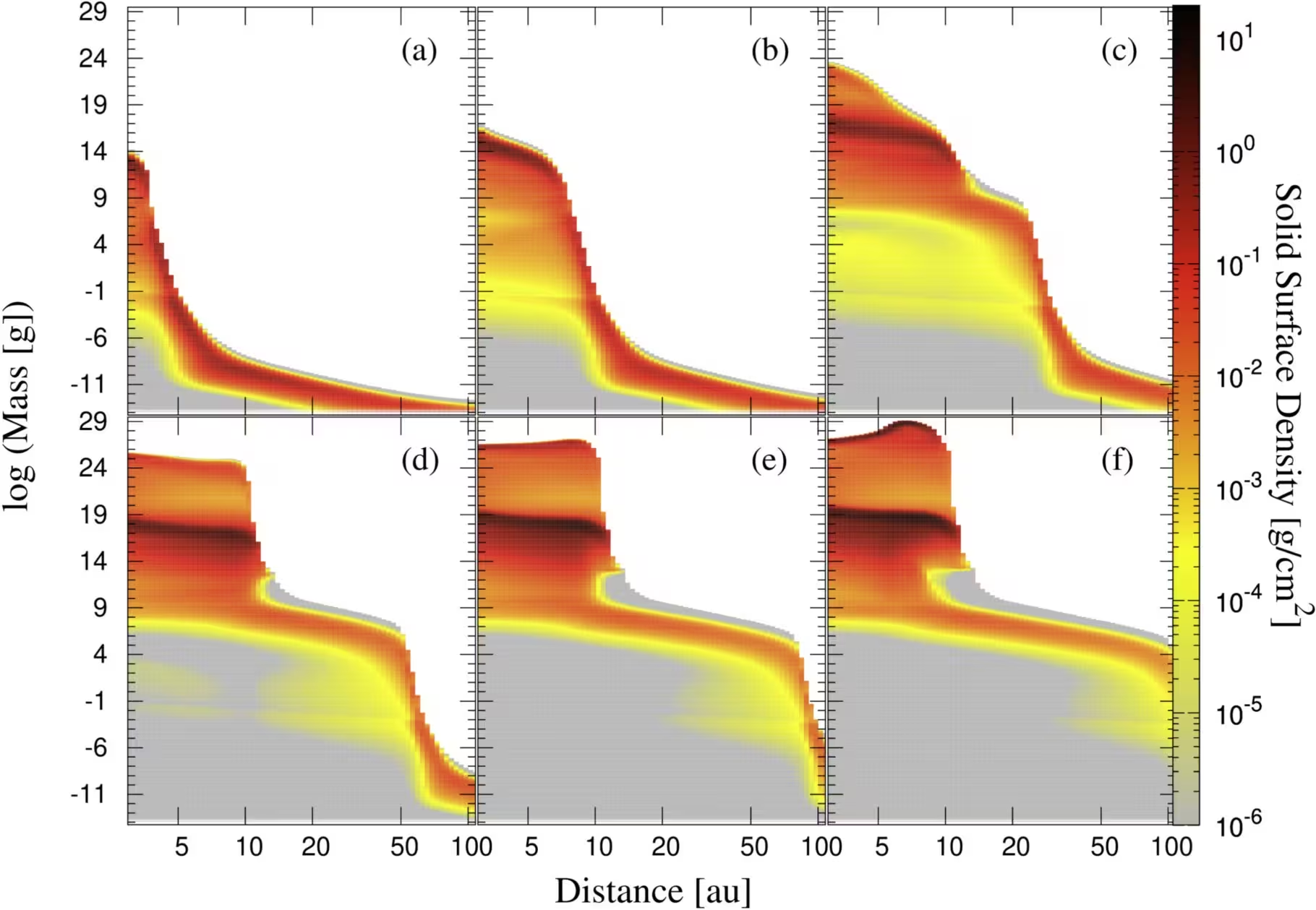
Further research is expected to refine how fragmentation and different disk densities influence the process, providing deeper insight into the architectural diversity of exoplanetary systems observed throughout the galaxy.
Further Scientific Context
For those interested in the underlying mechanics of planetary formation, the following academic resources provide detailed analyses of accretion theories and disk dynamics:
- Formation of Giant Planets: A review of current theories on core growth and gas capture (Annual Review of Astronomy and Astrophysics).
- Giant planet formation in the Solar System: An examination of how disk properties influence giant planet architecture (Icarus).
- Sequential giant planet formation initiated by disc substructure: A study on the unified model of disk-based planet formation (Astronomy & Astrophysics).
This article has been fact checked for accuracy, with information verified against reputable sources. Learn more about us and our editorial process.
Last reviewed on .
Article history
- Latest version
Reference(s)
- Ikoma, Masahiro., et al. “Formation of Giant Planets.” Annual Review of Astronomy and Astrophysics, vol. 63, no. 1, August 18, 2025, pp. 217-258. Annual Reviews, doi: 10.1146/annurev-astro-052722-094843. <https://www.annualreviews.org/content/journals/10.1146/annurev-astro-052722-094843>.
- Raorane, A.., et al. “Giant planet formation in the Solar System.” Icarus, vol. 421, October 1, 2024, pp. 116231 Elsevier BV, doi: 10.1016/j.icarus.2024.116231. <https://www.sciencedirect.com/science/article/abs/pii/S0019103524002914>.
- Lau, Tommy Chi Ho., et al. “Sequential giant planet formation initiated by disc substructure.” Astronomy & Astrophysics, vol. 688, July 31, 2024, pp. A22 EDP Sciences, doi: 10.1051/0004-6361/202450464. <https://doi.org/10.1051/0004-6361/202450464>.
Cite this page:
- Posted by Aisha Ahmed