NASA’s New Horizons Is Nearing a Historic Frontier but Faces a Looming Shutdown
NASA’s New Horizons mission faces an uncertain future as budget constraints threaten further exploration of the solar system’s mysterious outer edge.
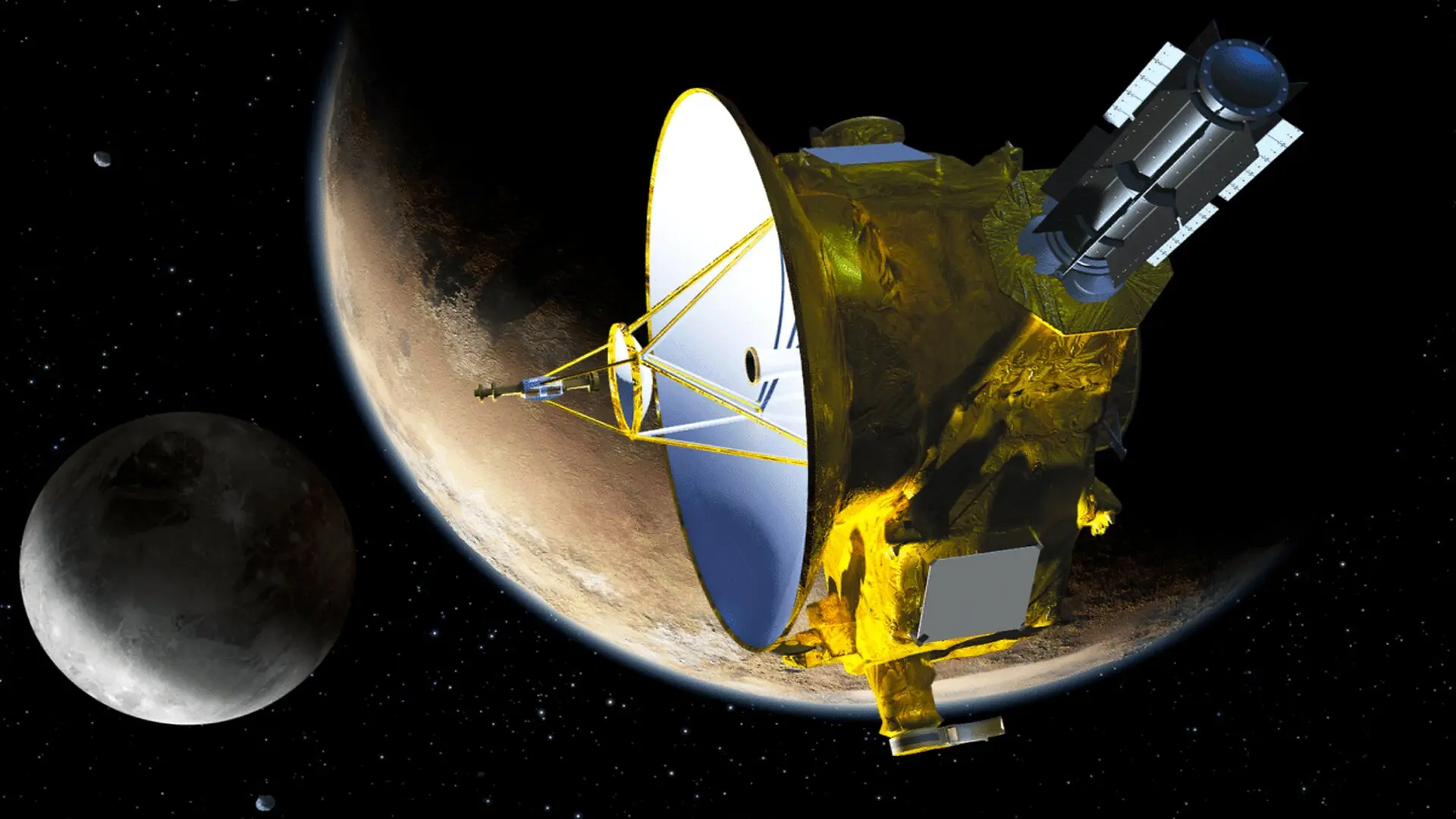
NASA’s New Horizons probe is venturing deeper into the solar system than perhaps any mission in its current operational state, yet the spacecraft faces an uncertain future. While the probe remains in excellent mechanical health with enough power to potentially function into the 2050s, a funding shortfall for ground-based research teams has placed two of its primary scientific instruments at risk of being powered down.
Currently drifting more than 5 billion kilometers from Earth, the spacecraft is nearing the heliospheric termination shock. This critical region serves as the cosmic boundary where the Sun’s solar wind decelerates upon meeting the interstellar medium, marking the effective limit of the Sun’s influence.
From Pluto to the Distant Kuiper Belt
Since its launch in 2006, New Horizons has fundamentally altered our grasp of the outer solar system. After performing a gravity-assist maneuver around Jupiter, the probe made history in 2015 with a groundbreaking flyby of Pluto. The encounter revealed a world of unexpected geological complexity, characterized by active glaciers, towering mountains, and a mysterious atmospheric haze that defied earlier scientific models.
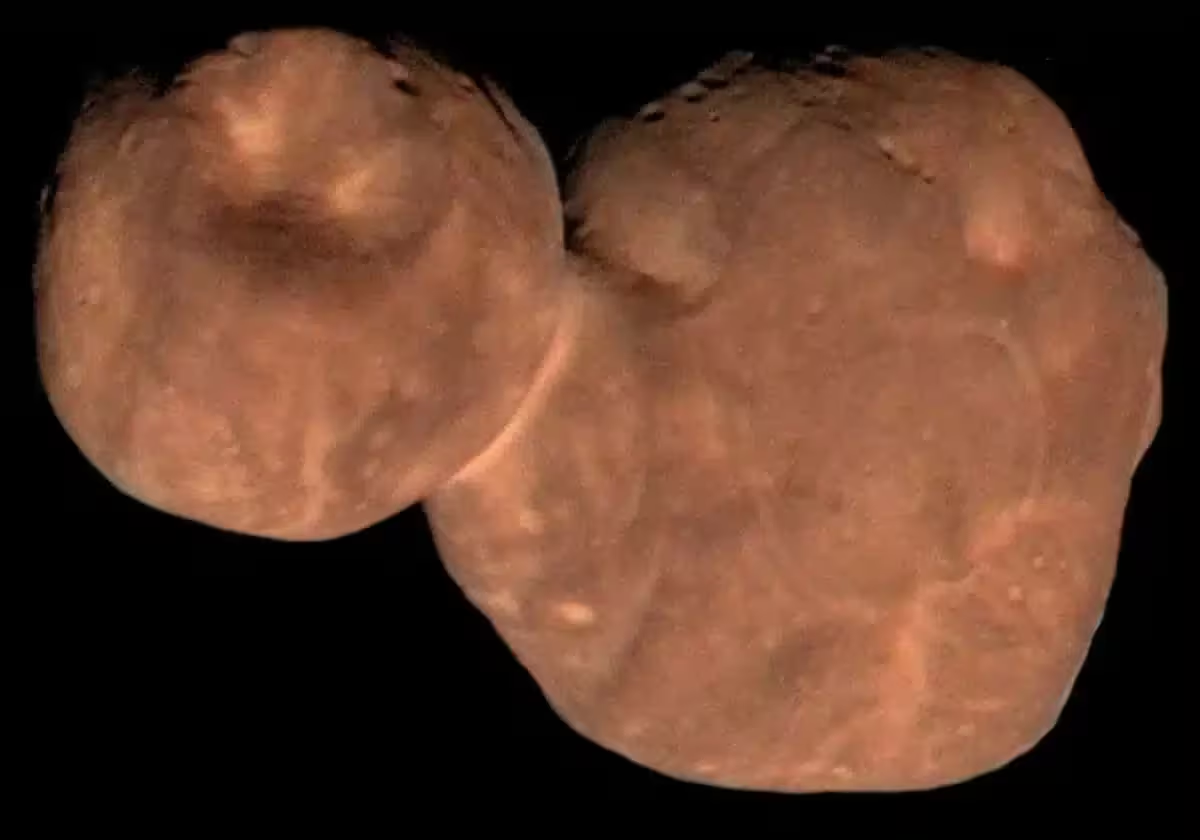
The mission did not conclude at the dwarf planet. In 2019, the probe reached Arrokoth, a primordial object in the Kuiper Belt, providing researchers with a pristine look at the building blocks left over from the solar system’s early formation.
Unique Instruments at Risk of Shutdown
The spacecraft’s current scientific focus centers on the heliosphere, using the Solar Wind Around Pluto (SWAP) detector and the Pluto Energetic Particle Spectrometer Science Investigation (PEPSSI) instrument. These tools are designed to map the interactions between our solar neighborhood and the interstellar void.
Despite the high quality of the incoming data, Principal Investigator Alan Stern has warned that the lack of approximately $2 million in funding over the past two years to support data processing and analysis teams makes a shutdown of these instruments a distinct possibility. Researchers argue that losing these capabilities now would be a significant missed opportunity, as the instruments provide a different perspective than the aging Voyager 1 and 2 probes.
Recent research published in The Astrophysical Journal highlights the importance of these observations. According to the study’s lead author, Elliott, the data helps clarify not just where the Sun’s influence fades, but also the nature of the interface between our system and interstellar space—knowledge essential for the success of future interstellar missions.
Approaching the Solar Boundary
Estimates suggest New Horizons could reach the heliospheric termination shock between 2027 and the mid-2030s. As it moves toward this threshold, the spacecraft is collecting vital information on pick-up ions—charged particles created when neutral atoms interact with sunlight. These ions are believed to shape conditions in the outer heliosphere and offer clues about how the heliosphere protects the inner solar system from hazardous galactic cosmic rays.
— Physics & Astronomy Zone (@zone_astronomy) September 1, 2026
The Future of Extended NASA Missions
The predicament highlights the growing tension in NASA’s long-term budget planning, where the agency must balance the high costs of future exploration against the operational requirements of legacy missions. NASA Administrator Jared Isaacman has indicated that the agency is reviewing the situation, noting a general support for extracting high scientific value from missions that have already seen their primary capital investment fulfilled.
We have heard from a few members of the community on this and indicated we are looking into it. The big dollars were already invested in New Horizons, so generally supportive of generating high-quality scientific returns for low-dollar spend. This mission aside, at NASA, we do…
— NASA Administrator Jared Isaacman (@NASAAdmin) September 1, 2026
As New Horizons continues its lonely trek into the unknown, the upcoming funding decision will likely dictate whether the probe continues to act as our primary window into the edge of the Sun’s domain or if it becomes a silent traveler in the deep dark of space.
This article has been fact checked for accuracy, with information verified against reputable sources. Learn more about us and our editorial process.
Last reviewed on .
Article history
- Latest version
Reference(s)
- Elliott, Heather A.., et al. “The Gradual Slowing of the Solar Wind in the Outer Heliosphere.” The Astrophysical Journal, vol. 1001, no. 1, April 3, 2026, pp. 55 American Astronomical Society, doi: 10.3847/1538-4357/ae39c6. <https://iopscience.iop.org/article/10.3847/1538-4357/ae39c6>.
Cite this page:
- Posted by Aisha Ahmed