Stunning New Image Reveals Hidden Details of the Iconic Helix Nebula
Astronomers have discovered that the iconic Helix Nebula isn’t a giant eye in space, but a massive cylinder of glowing gas pointed directly at Earth.
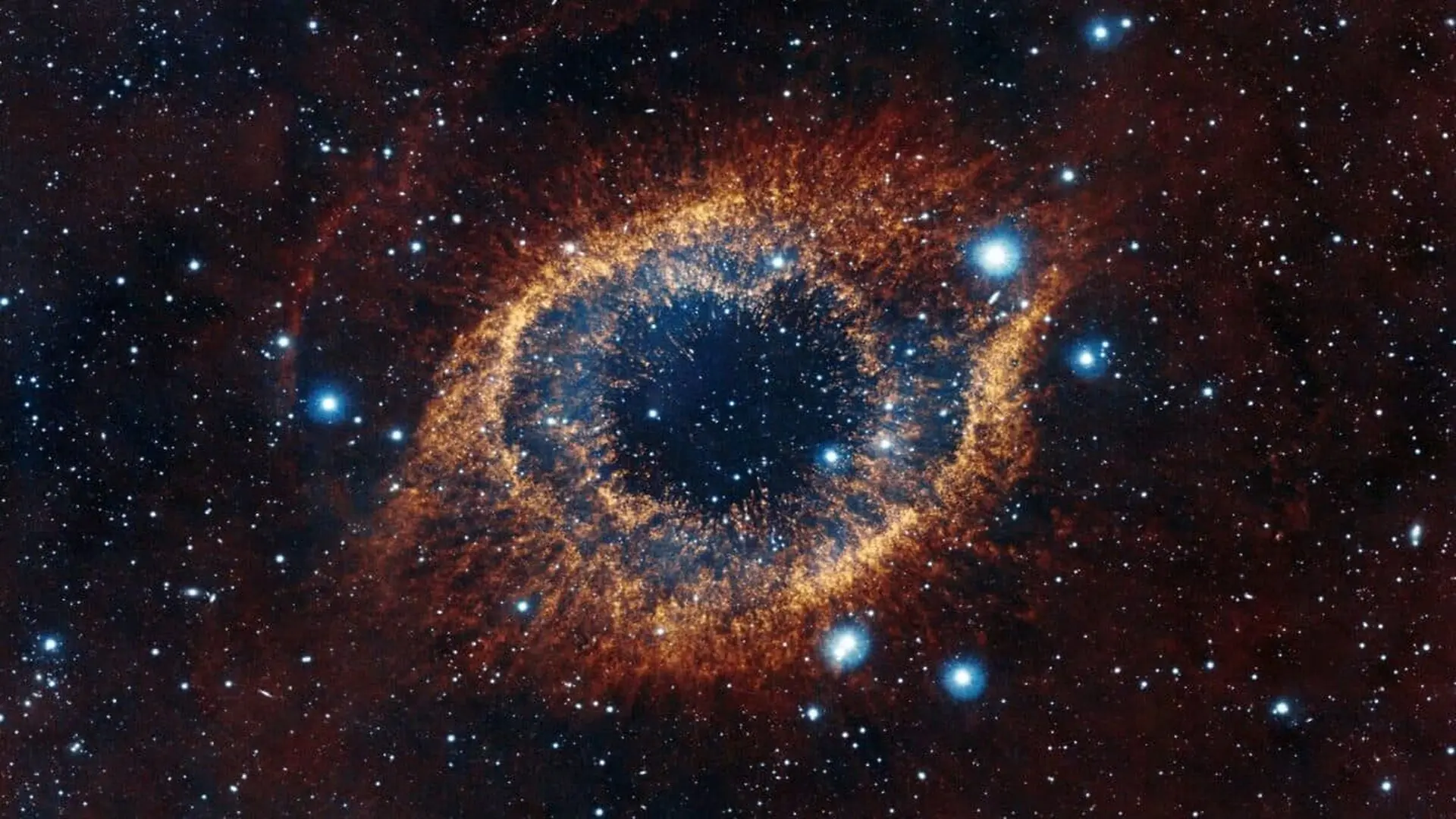
A striking new visualization of the Helix Nebula provides an unprecedented look at one of the cosmos’ most captivating structures. Unveiled to coincide with Astronomy Day, the imagery showcases an intricate tapestry of gaseous filaments encircling the remnants of a dying star, offering clarity that was previously impossible to achieve.
This composite, which represents a massive celestial mosaic, blends high-resolution data from NASA’s Hubble Space Telescope with expansive wide-field observations captured by the Mosaic Camera on the National Science Foundation’s 0.9-meter telescope at Arizona’s Kitt Peak National Observatory. By merging these distinct viewpoints, astronomers have mapped the complex geometry and vibrant hues of one of the closest planetary nebulae to our solar system.
Situated approximately 650 light-years away, the nebula has long been a subject of intense scientific inquiry. While it is often described as resembling a glowing eye or an ethereal bubble when seen from Earth, detailed analysis reveals that its actual geometry is a cylinder of gas oriented almost directly toward our viewpoint.
Constructing a Deep-Space Mosaic
The nebula’s significant presence in the night sky—spanning nearly half the diameter of the full Moon—presented a challenge for high-resolution imaging. Because the object is too vast for the Hubble Space Telescope to capture in a single frame, the team utilized the observatory’s Advanced Camera for Surveys to systematically image individual segments of the structure. These were then integrated with the broader context provided by the Kitt Peak Mosaic Camera to produce a seamless, high-fidelity portrait.
Interestingly, the data acquisition was as resourceful as the imaging itself. During the 2002 Leonid meteor shower, NASA operators pivoted the Hubble spacecraft for nearly 12 hours to protect its delicate mirrors from potential debris. With the nebula positioned in a safe orientation away from the meteor stream, the team leveraged nine orbits to gather these critical observations, as noted by NASA.
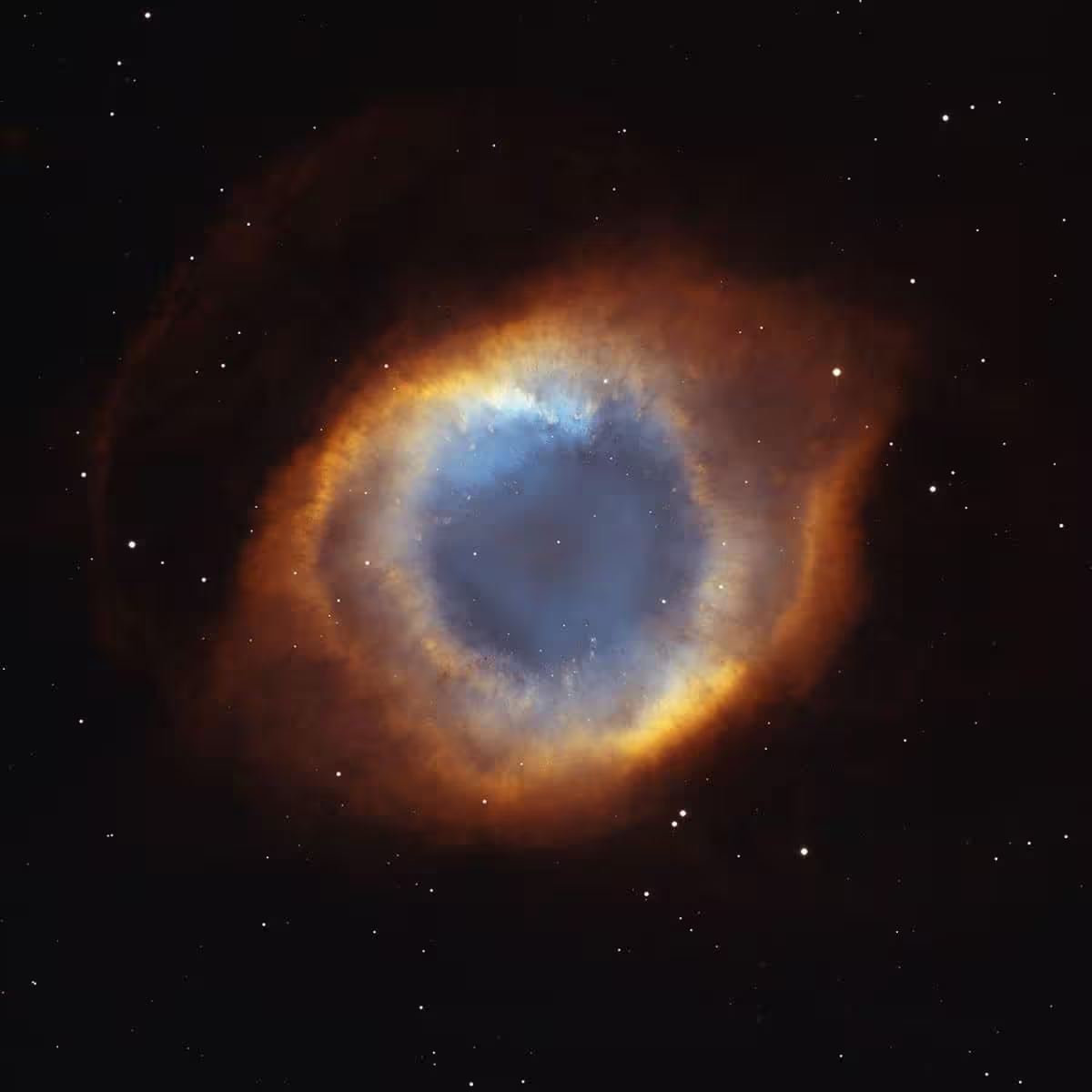
The resulting image displays a vivid interplay of colors, where blue denotes the glow of ionized oxygen and red highlights emissions from hydrogen and nitrogen.
Stellar Evolution and Cometary Filaments
At the core of the nebula, a Sun-like star has completed its life cycle, shedding its outer layers into the surrounding space. This process has birthed a dense, intensely hot white dwarf, which continues to illuminate the expanding gas and dust.
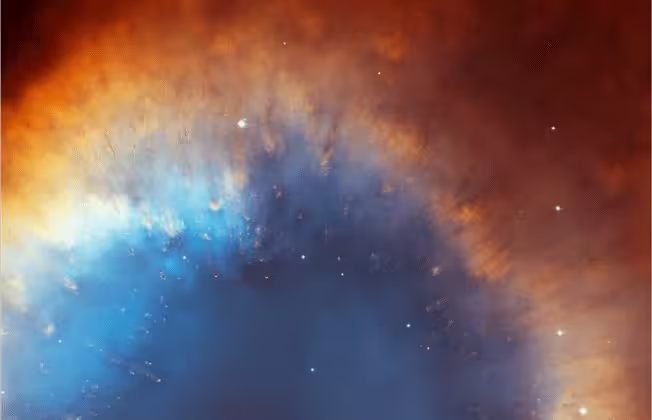
Perhaps the most striking features are the thousands of comet-like filaments radiating toward the center. These structures arose from the interaction between high-energy stellar winds and the cooler, outer shells of gas left behind by the dying star. While ground-based telescopes have tracked these features for decades, Hubble’s deep-space vantage point has confirmed them with newfound precision, suggesting they may exist within a disk-like structure or collar encircling the central white dwarf.
An Enduring Astronomical Landmark
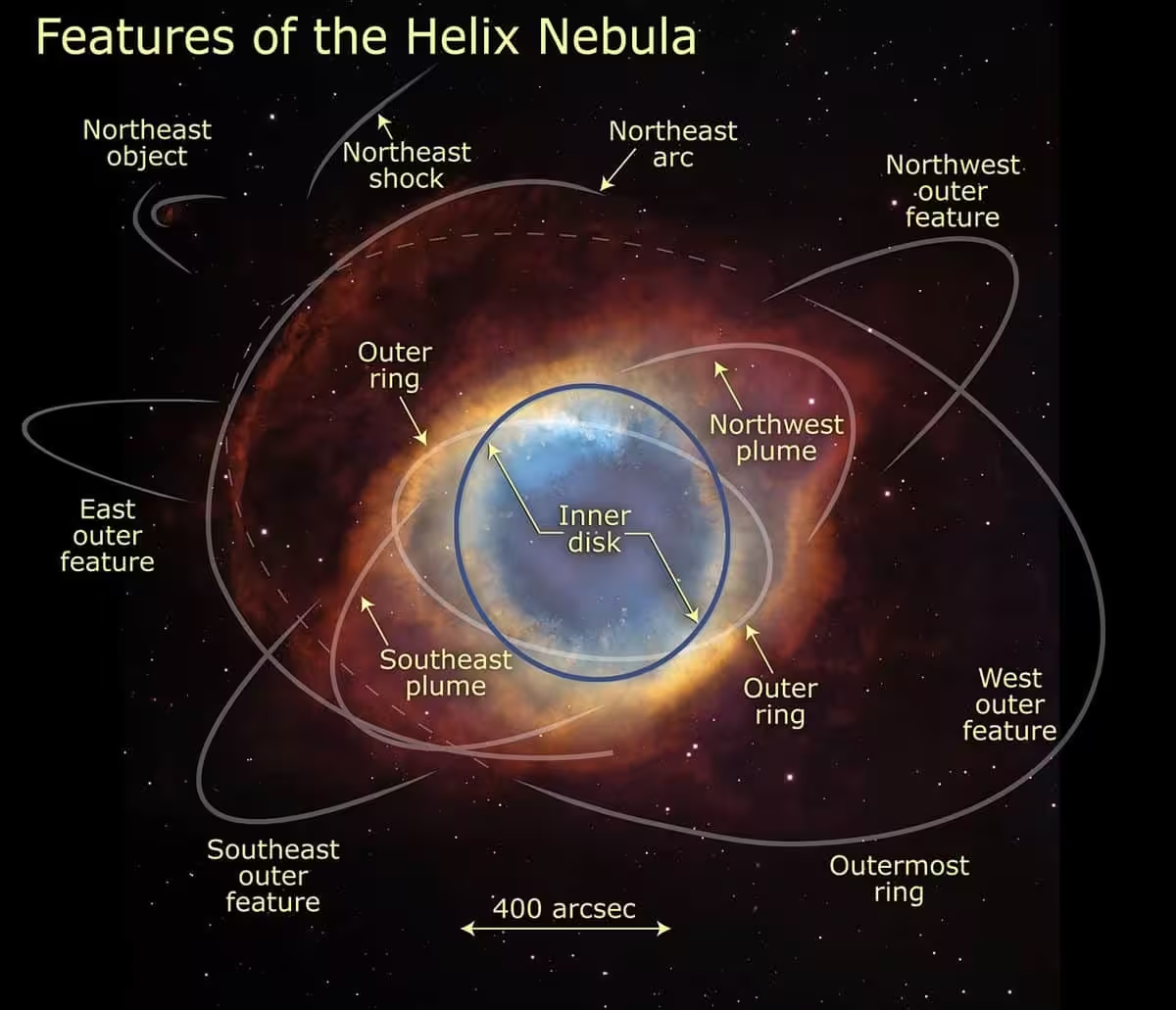
Spanning roughly 3 light-years across, the Helix Nebula remains a prime subject for study due to its relative proximity within the constellation Aquarius. Its size and composition provide a unique laboratory for observing the final stages of stellar evolution.
For skywatchers, the nebula offers a compelling target. Amateur observers using binoculars may catch a glimpse of a faint, greenish hue, while more substantial telescopes can resolve the distinct circular form of the nebula. However, the radial streaks that define its unique texture remain the exclusive domain of professional, high-aperture observatories, reminding us of the depth of detail that lies just beyond the reach of the naked eye.
This article has been fact checked for accuracy, with information verified against reputable sources. Learn more about us and our editorial process.
Last reviewed on .
Article history
- Latest version
Reference(s)
- Belleville, Michelle. “Advanced Camera for Surveys - NASA Science.”, January 26, 2023 NASA <https://science.nasa.gov/mission/hubble/observatory/design/advanced-camera-for-surveys/>.
- Espinoza, Luis. “Iridescent Glory of Nearby Helix Nebula - NASA Science.”, May 9, 2003 NASA <https://science.nasa.gov/asset/hubble/iridescent-glory-of-nearby-helix-nebula/>.
Cite this page:
- Posted by Aisha Ahmed