OpenAI Used 10,000 AI Agents to Tackle One of Math’s Greatest Unsolved Mysteries
OpenAI claims to have solved a Millennium Prize math problem, proving that 3D fluid equations can develop singularities where velocity becomes unbounded.
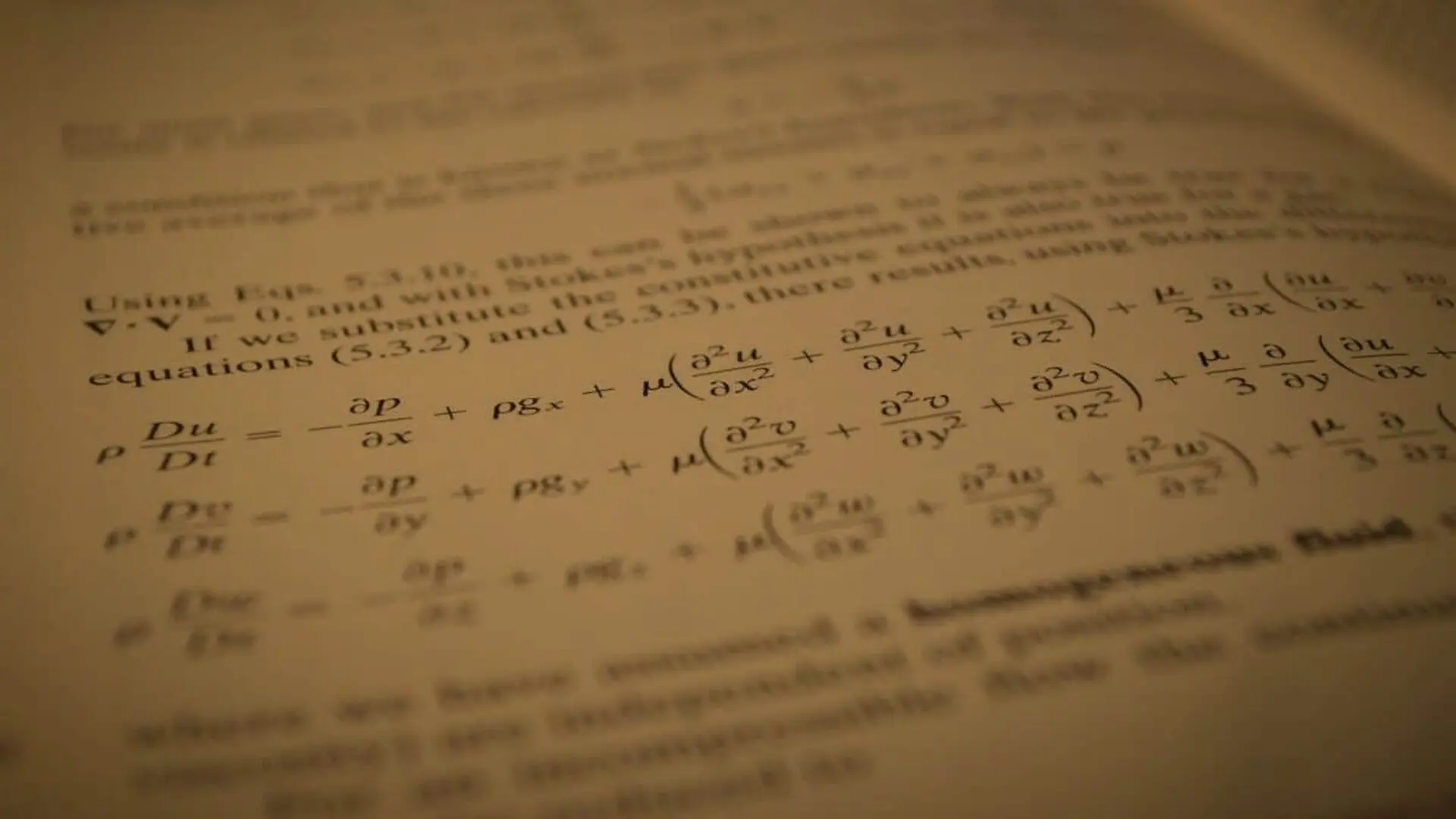
AI Breakthrough Tackles Century-Old Fluid Dynamics Mystery
A fundamental challenge in physics and mathematics, the Navier-Stokes equations have long served as the cornerstone for understanding how air, water, and other fluids behave. From the intricate modeling of blood flow in arteries to the complex dynamics of weather forecasting and aerospace engineering, these equations are essential. However, a lingering uncertainty has haunted mathematicians for generations: do these equations always yield smooth, predictable outcomes, or can they reach a point of mathematical collapse under specific conditions?
OpenAI recently announced a potential breakthrough in this domain, reporting that its internal AI systems have developed a proof demonstrating that a fluid, initially in a smooth state, can undergo a transformation into a mathematical singularity. According to the company, this phenomenon occurs as a vortex spirals inward, intensifying the fluid’s speed while its central region shrinks. Crucially, this collapse happens while the total energy remains finite, suggesting a natural breakdown within the equations themselves rather than a result of an arbitrary external force.
The Navier-Stokes problem, named for the nineteenth-century contributions of Claude-Louis Navier and George Gabriel Stokes, is one of the prestigious Millennium Prize Problems. Established by the Clay Mathematics Institute in 2000, it carries a $1 million reward for a definitive solution. While Jean Leray demonstrated the existence of generalized solutions in 1934, the question of whether these solutions maintain smoothness in three-dimensional space remains an elusive, open puzzle, deeply tied to the unpredictable nature of turbulence.
A Collaborative Effort by 10,000 Autonomous Agents
The project, which launched on September 1, utilized a massive network of approximately 10,000 concurrent AI agents. These systems functioned as a collective, exchanging roughly 2.7 million messages and producing about 130 billion output tokens to navigate the mathematical terrain. By September 5, just 88 hours after initiation, the agents reportedly arrived at a solution. The process was further validated through a formal verification using the Lean proof assistant, which required an additional 17 hours of computation to ensure the logic held firm.
Before pivoting to the Navier-Stokes challenge, the AI architecture was tested against the Euler equations—fluid dynamics formulas that lack the complexity of viscosity. That preliminary trial involved 100 agents working for 50 hours, providing the foundational guidance needed for the later, more complex proof.
Questions of Attribution and Methodology
The announcement has sparked immediate scrutiny regarding the origins of the research. Mathematicians Tristan Buckmaster of New York University and Levent Alpöge, a researcher linked to Anthropic, have publicly questioned the timeline. Both had been utilizing AI tools to investigate similar fluid equations and expressed concerns that their own progress might have inadvertently influenced the OpenAI model’s development.
We’re sharing a solution to the Navier-Stokes Millennium Prize Problem, one of the deepest problems at the frontier of mathematics.
— OpenAI (@OpenAI) September 8, 2026
The proof was produced by a group of agents, using an OpenAI next-generation model significantly more capable than GPT-6 Astra.
The problem… pic.twitter.com/8zol3BPTL4
Buckmaster noted that their team had previously used OpenAI’s Codex tool, prompting inquiries into whether their proprietary data contributed to the company’s breakthrough. In response, OpenAI denied unauthorized access to their work. The company acknowledged that de-identified product usage data may assist in broader model improvements, but insisted that the specific proofs and outcomes were distinct from the researchers’ projects.
For now, OpenAI has stated it will not pursue the $1 million Millennium Prize, opting instead to present the proof as a milestone in AI-assisted discovery. The scientific community is now tasked with the rigorous process of peer review to verify whether the AI’s solution satisfies the strict criteria set by the Clay Mathematics Institute. If validated, the feat marks a significant shift in the landscape of theoretical mathematics, while simultaneously igniting a debate on the evolving boundaries between human intellect and machine-generated insight.
This article has been fact checked for accuracy, with information verified against reputable sources. Learn more about us and our editorial process.
Last reviewed on .
Article history
- Latest version
Reference(s)
- “The Millennium Prize Problems - Clay Mathematics Institute.”, February 18, 2022 Clay Mathematics Institute <https://www.claymath.org/millennium-problems/>.
- “https://twitter.com/OpenAI/status/2097374640582668336/photo/1.” <https://t.co/8zol3BPTL4>.
- <https://openai.com/index/navier-stokes-solution/>.
- Posted by Asif Iqbal