Space Is Slowly Erasing Interstellar Objects Before They Can Ever Reach Us
New research suggests an icy ’Oumuamua lost massive amounts of material over millions of years, revealing a cosmic filter shaping interstellar visitors.
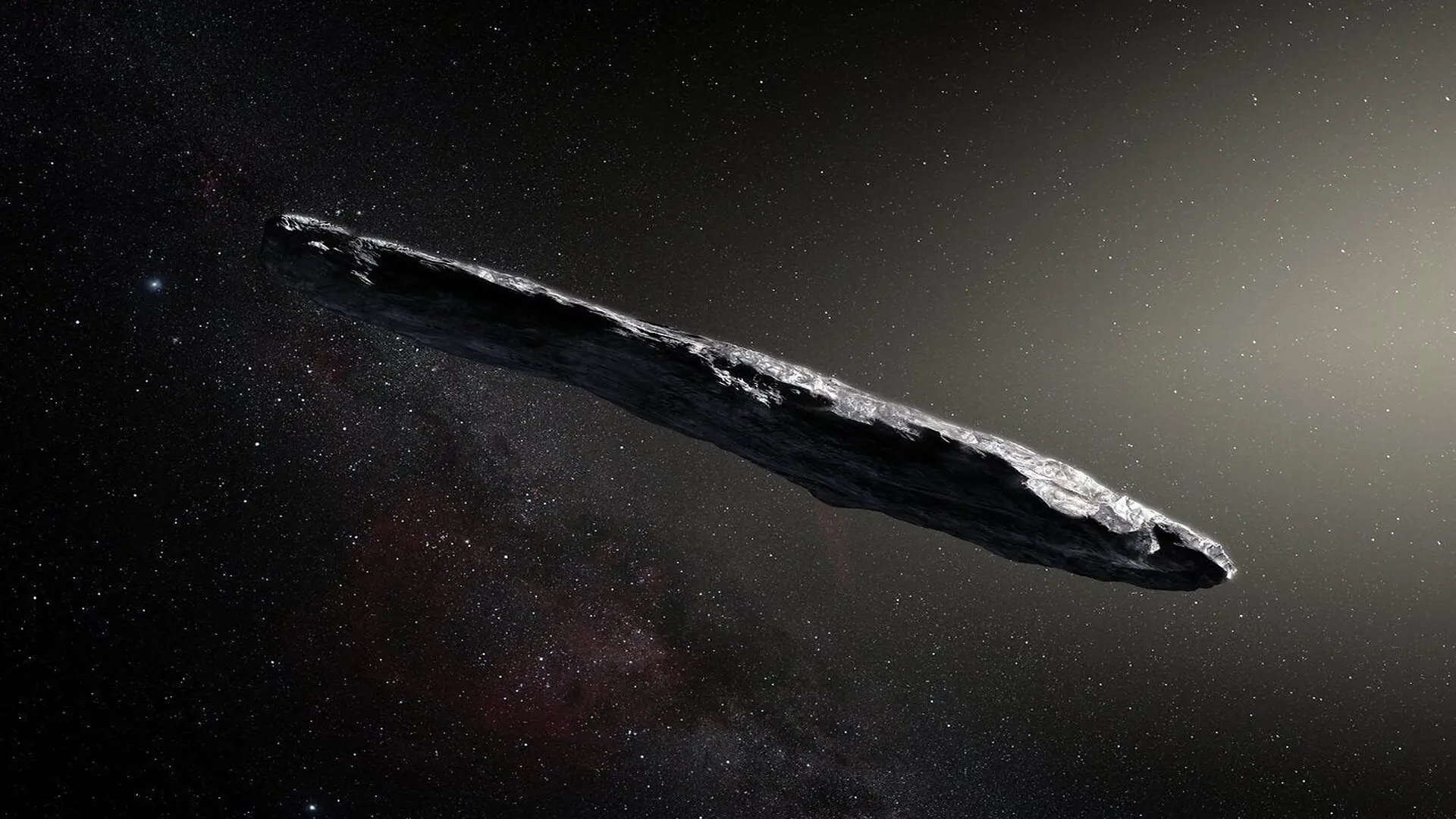
Interstellar space might appear to be a vast, empty void, but for frozen objects drifting between star systems, it is a hostile environment. New theoretical research suggests that the relentless bombardment of cosmic rays and collisions with sparse interstellar gas act as a cosmic filter, whittling down or destroying icy bodies far more efficiently than previously understood.
The study, published by researchers at Aachen University, examines the survival prospects of objects composed of nitrogen, carbon monoxide, carbon dioxide, or methane as they traverse the Milky Way. When these frozen wanderers are exposed to high-energy galactic cosmic rays, the particles deposit energy into the ice, causing localized heating that triggers evaporation and mass loss.
The Erosion of Frozen Travelers
By modeling cosmic-ray particles with energies reaching 10 gigaelectronvolts, the team determined that impulsive heating leads to significantly faster erosion rates than prior models indicated. While earlier estimates suggested that roughly 6 to 60 meters of nitrogen ice might vanish per billion years, the new findings indicate that destruction could occur one to two orders of magnitude faster. The specific chemical composition of the object plays a vital role, as varying molecular binding energies dictate how each material reacts to incoming radiation.
Beyond cosmic rays, these objects face constant friction from interstellar gas. While individual atomic impacts carry minimal energy, the cumulative effect over millions of years is substantial. This creates a complex survival dynamic: faster-moving objects spend less time exposed to cosmic rays but suffer more intense, destructive gas collisions. Consequently, an object’s ability to survive the journey to our solar system is a delicate trade-off between its speed, composition, and the density of the interstellar medium it traverses.
Revisiting the Mystery of ‘Oumuamua
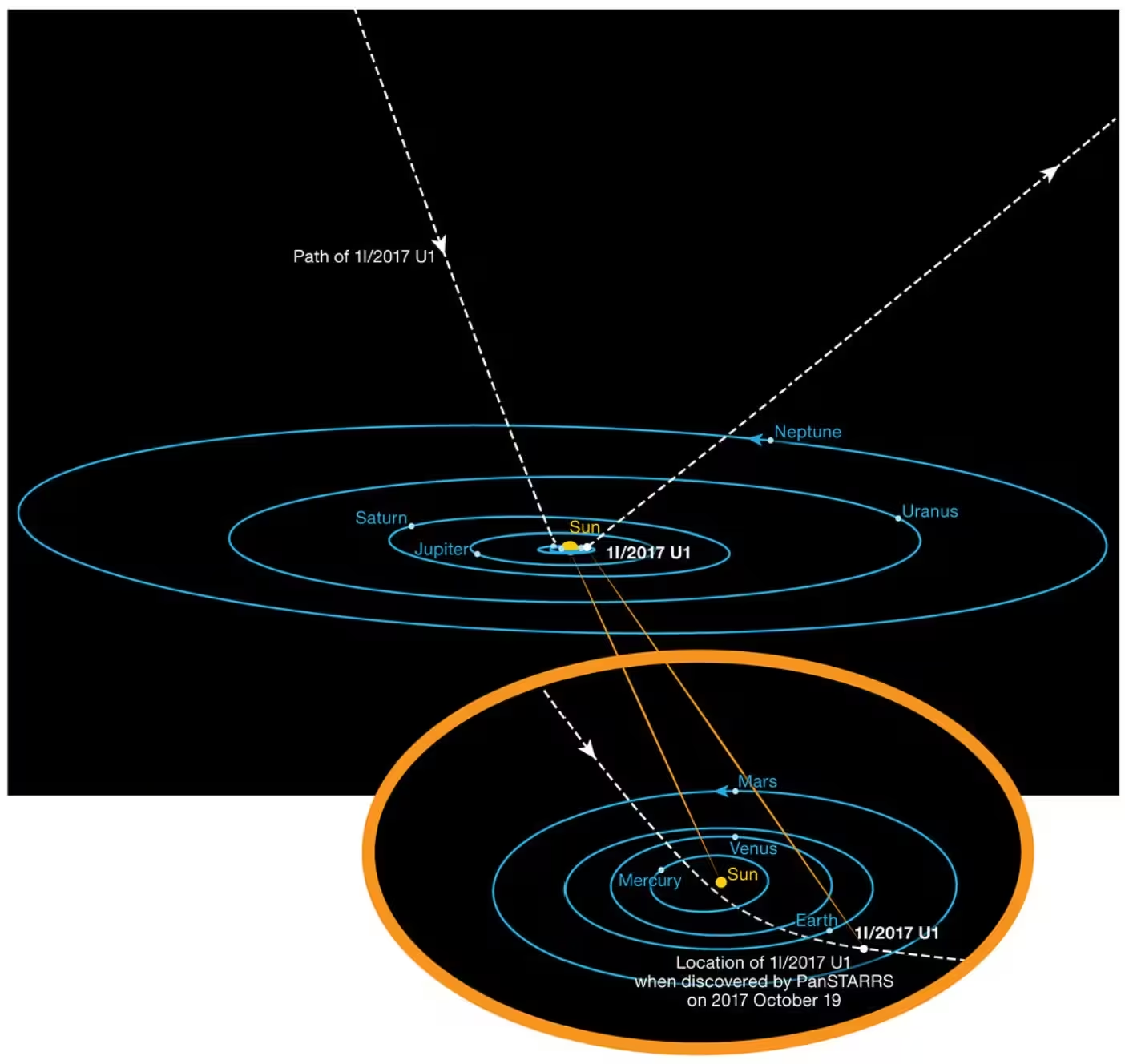
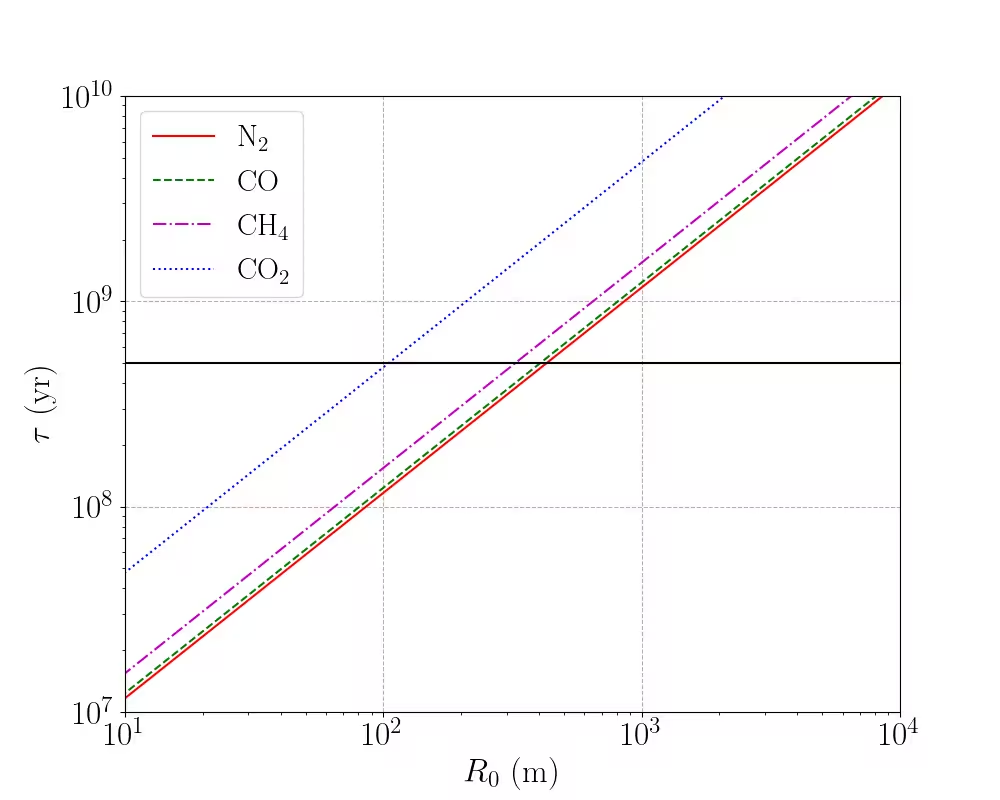
These findings offer new insights into the origin of ‘Oumuamua, the first interstellar visitor identified by astronomers. One prevailing hypothesis suggests that ‘Oumuamua was a fragment of nitrogen ice ejected from a Pluto-like world in another star system roughly 400 to 500 million years ago. If this timeline holds, the current research suggests the object must have been significantly larger at the time of its departure.
According to the team’s calculations, an object moving at typical interstellar speeds would have needed an initial radius of at least 0.5 to 2.5 kilometers to survive such a long journey without being completely eroded. Furthermore, the internal structure of such a body would likely undergo significant modifications due to cosmic-ray heating, meaning the object that arrived in our solar system may have been chemically and structurally transformed from its original state.
Tracing Origins Through Survival
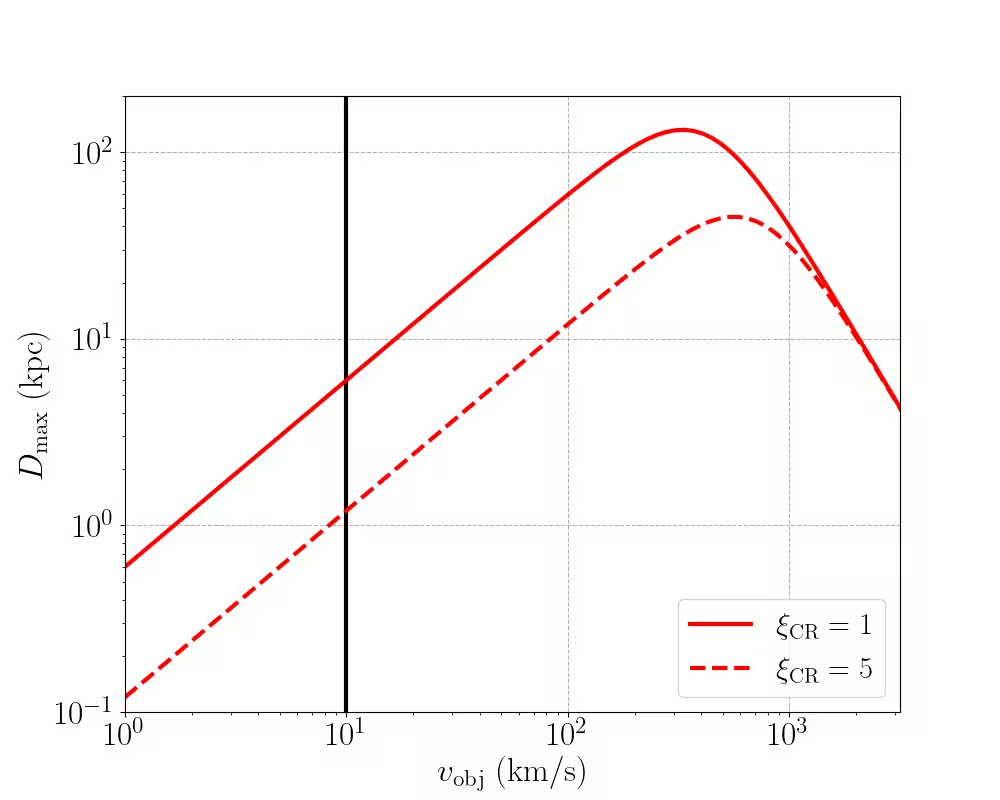
This model could eventually help astronomers map the origins of interstellar visitors. By analyzing the physical state and size of a detected object, researchers may be able to place constraints on the maximum distance it could have traveled. However, significant uncertainties remain, particularly regarding the distribution of cosmic-ray intensity across the Galactic disk and the specific composition of these interstellar bodies.
The research emphasizes that what we observe in our solar system is a biased sample. Because smaller or more volatile objects are likely to be destroyed during their transit, the interstellar visitors we manage to detect are likely the toughest, largest, or most recently ejected specimens. As our ability to detect these travelers improves, this cosmic filter will become an essential factor in understanding the population of objects moving through the Milky Way.
For further reading on interstellar objects:
- The Interstellar Interlopers: An in-depth review of the properties and population of objects like ‘Oumuamua and 2I/Borisov. (Annual Review of Astronomy and Astrophysics, 2023)
- Project Lyra: A study on potential spacecraft trajectories to intercept and study interstellar objects. (Acta Astronautica, 2022)
- Comet Interceptor: A mission profile from the European Space Agency targeting pristine comets and potential interstellar candidates. (European Space Agency, 2026)
This article has been fact checked for accuracy, with information verified against reputable sources. Learn more about us and our editorial process.
Last reviewed on .
Article history
- Latest version
Reference(s)
- Jewitt, David., et al. “The Interstellar Interlopers.” Annual Review of Astronomy and Astrophysics, vol. 61, no. 1, August 18, 2023, pp. 197-236. Annual Reviews, doi: 10.1146/annurev-astro-071221-054221. <https://www.annualreviews.org/content/journals/10.1146/annurev-astro-071221-054221>.
- Hibberd, Adam., et al. “Project Lyra: A mission to 1I/’Oumuamua without Solar Oberth Manoeuvre.” Acta Astronautica, vol. 199, October 1, 2022, pp. 161-165. Elsevier BV, doi: 10.1016/j.actaastro.2022.07.032. <https://www.sciencedirect.com/science/article/pii/S0094576522003782>.
- “Comet Interceptor.” <https://www.esa.int/Science_Exploration/Space_Science/Comet_Interceptor>.
Cite this page:
- Posted by Aisha Ahmed