Cosmic Leaf Blower Could Solve the Mystery of How Early Galaxies Shine So Brightly
New calculations reveal how light from young stars acts as a cosmic leaf blower, clearing dense gas to reveal the universe’s earliest, brightest galaxies.
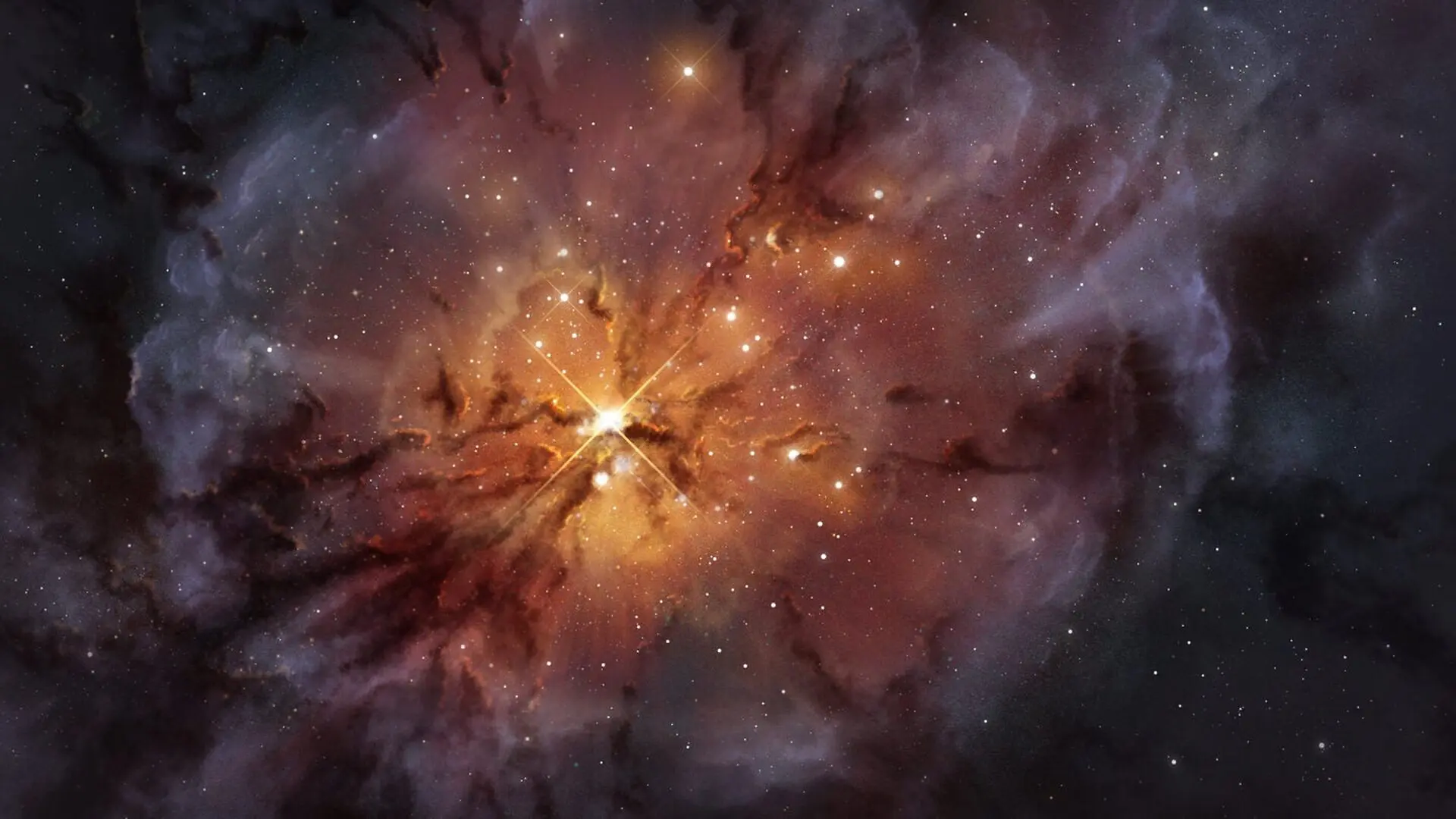
The James Webb Space Telescope (JWST) has sparked intense debate among astronomers by uncovering an unexpectedly high number of luminous galaxies in the infant universe. While some suggest these observations imply galaxies were forming stars far more rapidly than established models predicted, a new study offers a compelling alternative: these cosmic structures might simply be better at cleaning up their own messes.
Researchers from the Flatiron Institute and the University of Texas at Dallas have proposed that ultraviolet light, specifically Lyman-alpha radiation, acts as a cosmic leaf blower. By pushing aside the dense curtains of gas and dust that typically shroud young star clusters, this radiation could render these galaxies significantly more visible to our telescopes without requiring an exotic excess of stars.
The Mechanics of Cosmic Clearing
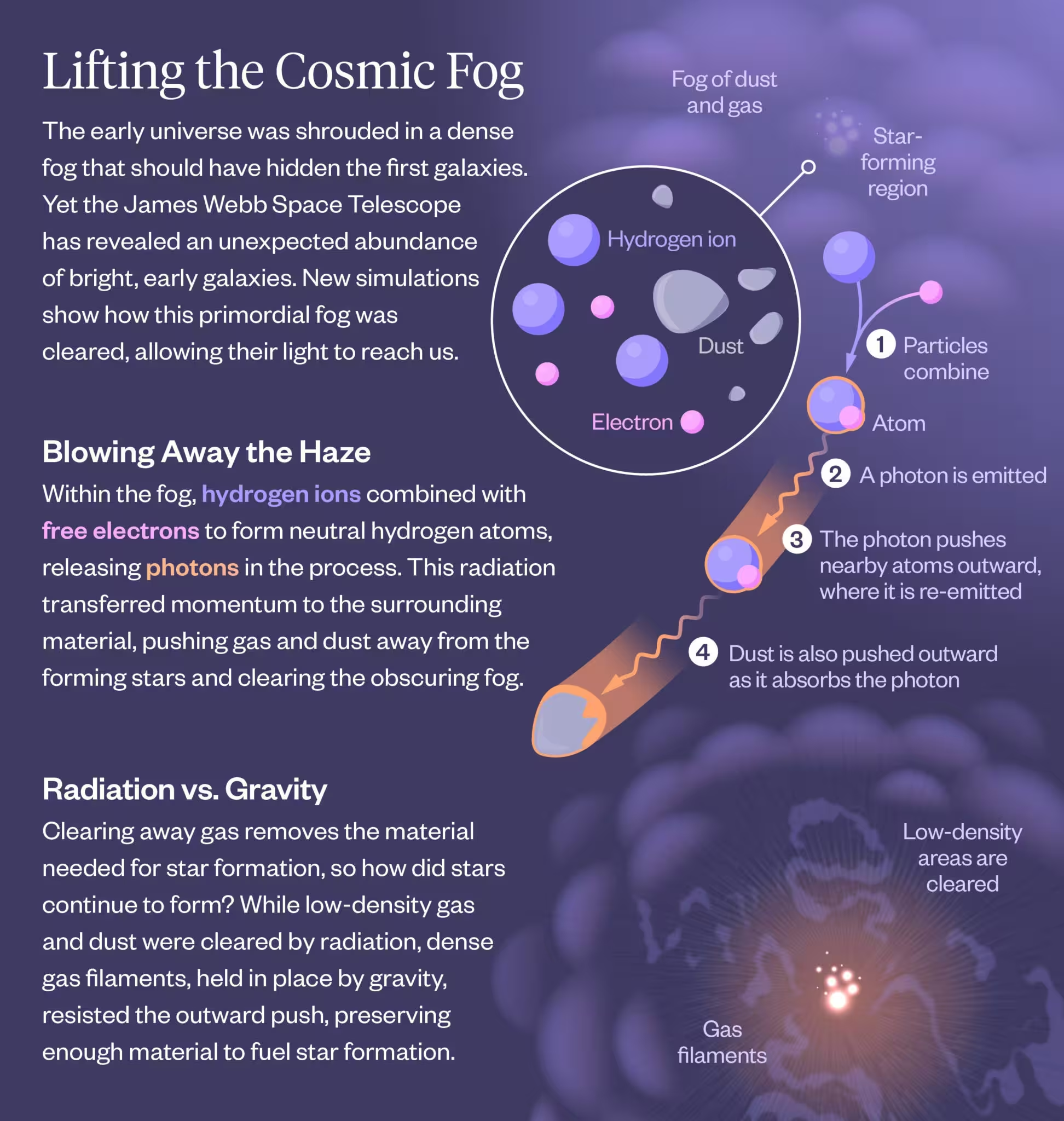
Lyman-alpha light is produced in abundance by young, massive stars. Because this radiation is resonant, it tends to scatter repeatedly off neutral hydrogen atoms. This constant bouncing effect allows the light to exchange momentum with the gas, effectively exerting pressure that pushes material outward.
“We’ve known for a very long time that Lyman-alpha radiation could be important because it carries a lot of force,” explains lead author Shyam Menon, a research fellow at the Flatiron Institute’s Center for Computational Astrophysics. “But we’ve never actually been able to estimate how important it is in a realistic environment because of how challenging it is to model.”
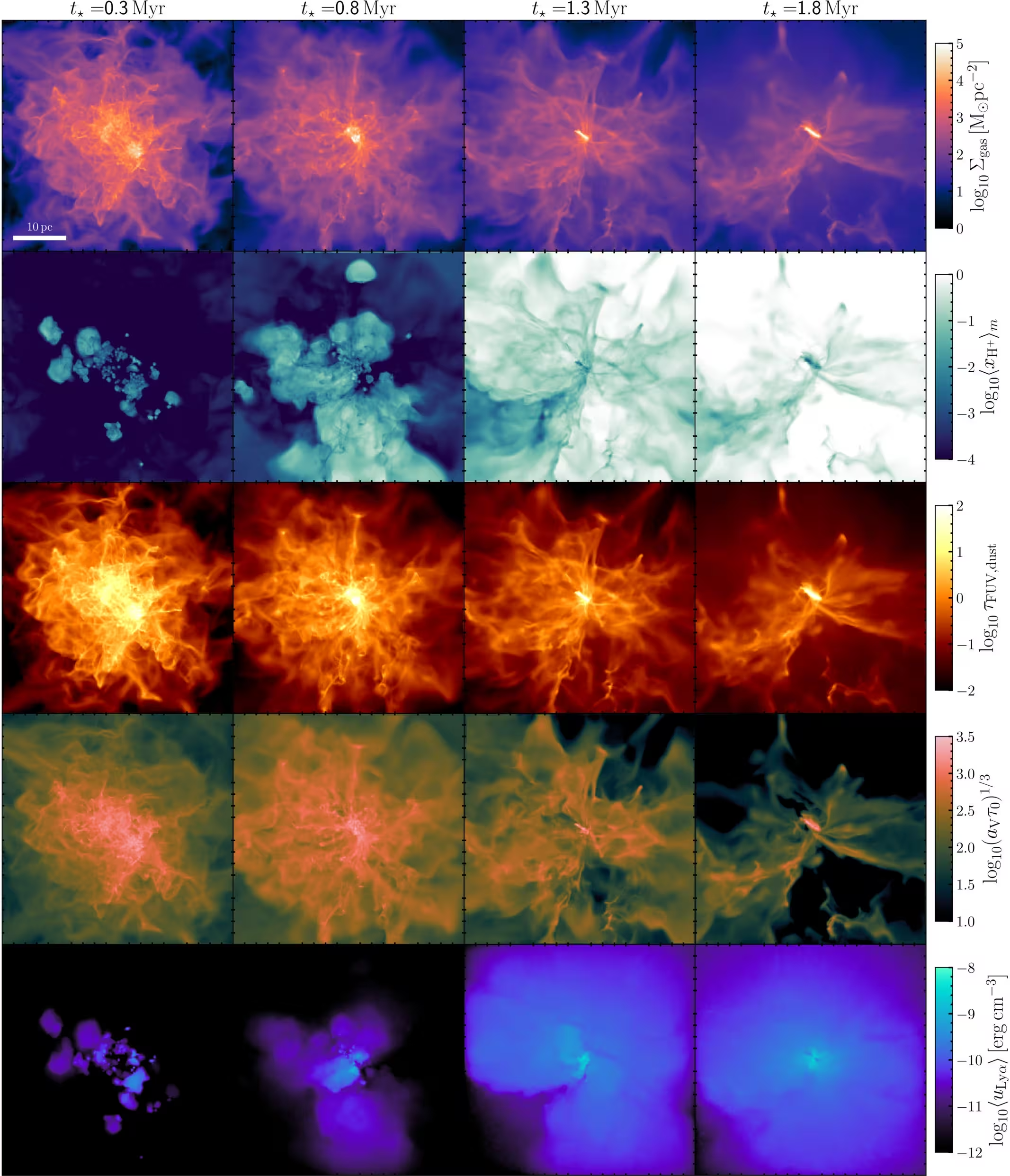
To quantify this, the team used the radiation-transfer code COLT to map how this light interacts with the turbulent, three-dimensional structures of early star-forming regions. Their findings, published in The Astrophysical Journal, demonstrate that while this pressure is potent enough to clear away low-density material, it is not always strong enough to halt star formation entirely.
Dense Filaments Defy the Push
A critical nuance in the study is that not all gas is created equal. The simulations show that gas in early galaxies naturally gathers into dense, narrow filaments where gravity dominates. Even when intense radiation pressure strikes these regions, the densest pockets of gas remain bound, allowing star formation to continue unabated.
Essentially, the mechanism selectively clears the diffuse “fog” surrounding these clusters. The team estimates that this process can shorten the time required to create clear sight lines by up to a factor of two, potentially revealing stellar nurseries within just 4 million years of their birth.
The Role of Cosmic Dust
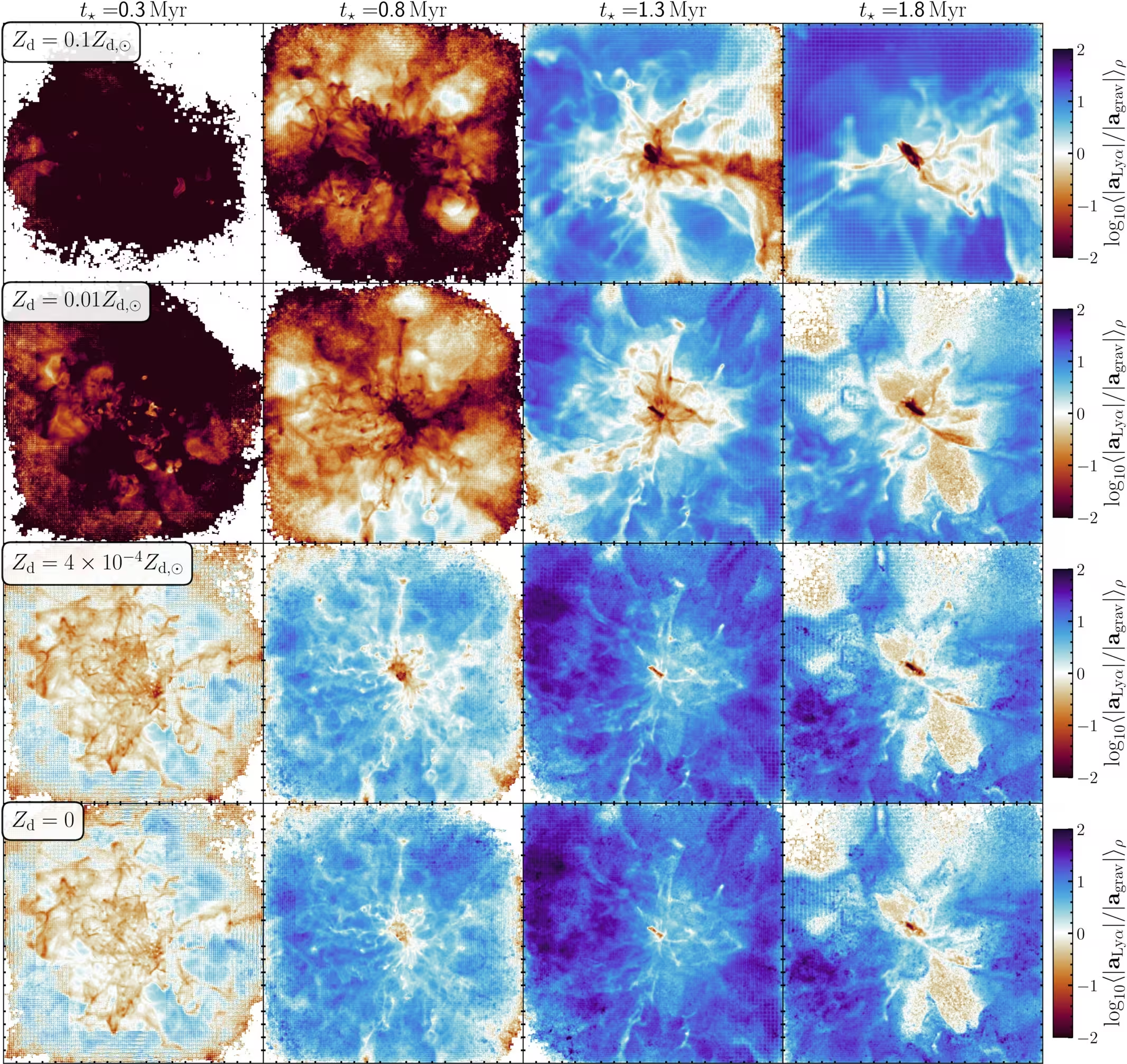
The study highlights a delicate balance governed by dust content. While dust can absorb ultraviolet light—thereby weakening the “pushing” force—it also provides the very obstruction that obscures galaxies from view. The team’s simulations, which tested varying levels of dust, found that the clearing effect is most pronounced in relatively dust-poor environments.
However, the researchers caution that their work is not a definitive solve for the “bright galaxy puzzle.” Because the analysis relies on static snapshots rather than a dynamic, evolving model where radiation and gas motion feed back into one another, it serves as a foundational step rather than an final explanation. Other factors, such as stellar winds and magnetic fields, likely play significant roles that remain to be integrated.
Next Steps in Understanding the Dawn of Time
Connecting these local simulations to the observed population of early galaxies will require more comprehensive, multi-physics models. Future studies aimed at evolving radiation, gas dynamics, and star formation simultaneously will be essential to determine if this mechanism explains the sheer luminosity observed by Webb across the cosmic dawn.
For now, the research provides a vital clue: the universe’s earliest, brightest galaxies may not necessarily be more active than we thought, but simply more efficient at stepping out from the shadows.
Further Reading
- Lyman-alpha Pressure Strongly Enhances Pre-Supernova Feedback at Cosmic Dawn: The First Multi-Dimensional Lyman-alpha Radiation Hydrodynamics Simulations (arXiv, June 2026)
- Lyman α resonant-line radiative transfer in expanding media (MNRAS, June 2025)
- Bound star clusters observed in a lensed galaxy 460 Myr after the Big Bang (Nature, June 2024)
This article has been fact checked for accuracy, with information verified against reputable sources. Learn more about us and our editorial process.
Last reviewed on .
Article history
- Latest version
Reference(s)
- “Flatiron Institute – Simons Foundation.”, November 5, 2026 Simons Foundation <https://www.simonsfoundation.org/flatiron/>.
- <https://www.utdallas.edu/>.
- Menon, Shyam H.., et al. “Ly α Radiation Pressure in Dense Star Clusters: Implications for Star Formation and Winds at Cosmic Dawn.” The Astrophysical Journal, vol. 1011, no. 2, November 4, 2026, pp. 201 American Astronomical Society, doi: 10.3847/1538-4357/aeaed6. <https://iopscience.iop.org/article/10.3847/1538-4357/aeaed6>.
- Nebrin, Olof. “Lyman-alpha Pressure Strongly Enhances Pre-Supernova Feedback at Cosmic Dawn: The First Multi-Dimensional Lyman-alpha Radiation Hydrodynamics Simulations.” arXiv.org <https://arxiv.org/abs/2606.02711>.
- <https://academic.oup.com/mnras/article/541/1/179/8160349>.
- Adamo, Angela. “Bound star clusters observed in a lensed galaxy 460 Myr after the Big Bang - Nature.”, vol. 632, no. 8025, pp. 513-516. Nature, doi: 10.1038/s41586-024-07703-7. <https://www.nature.com/articles/s41586-024-07703-7>.
Cite this page:
- Posted by Karan Das