Archaeologists Uncover 6,500-Year-Old Cemetery and Mysterious Stone Giant Beneath Paris
Archaeologists have uncovered a massive stone figure near ancient graves outside Paris, but one mysterious monument remains completely empty.
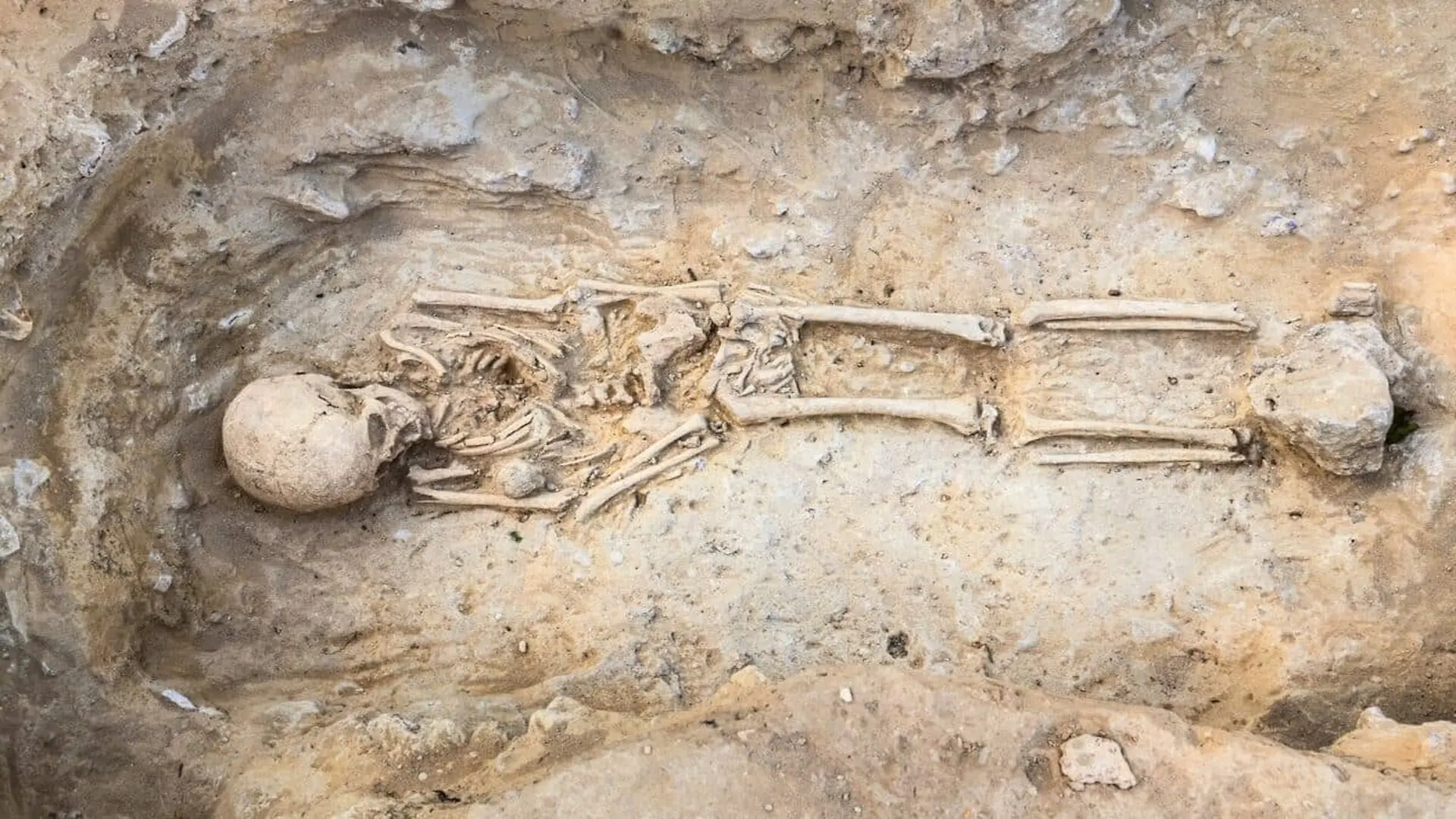
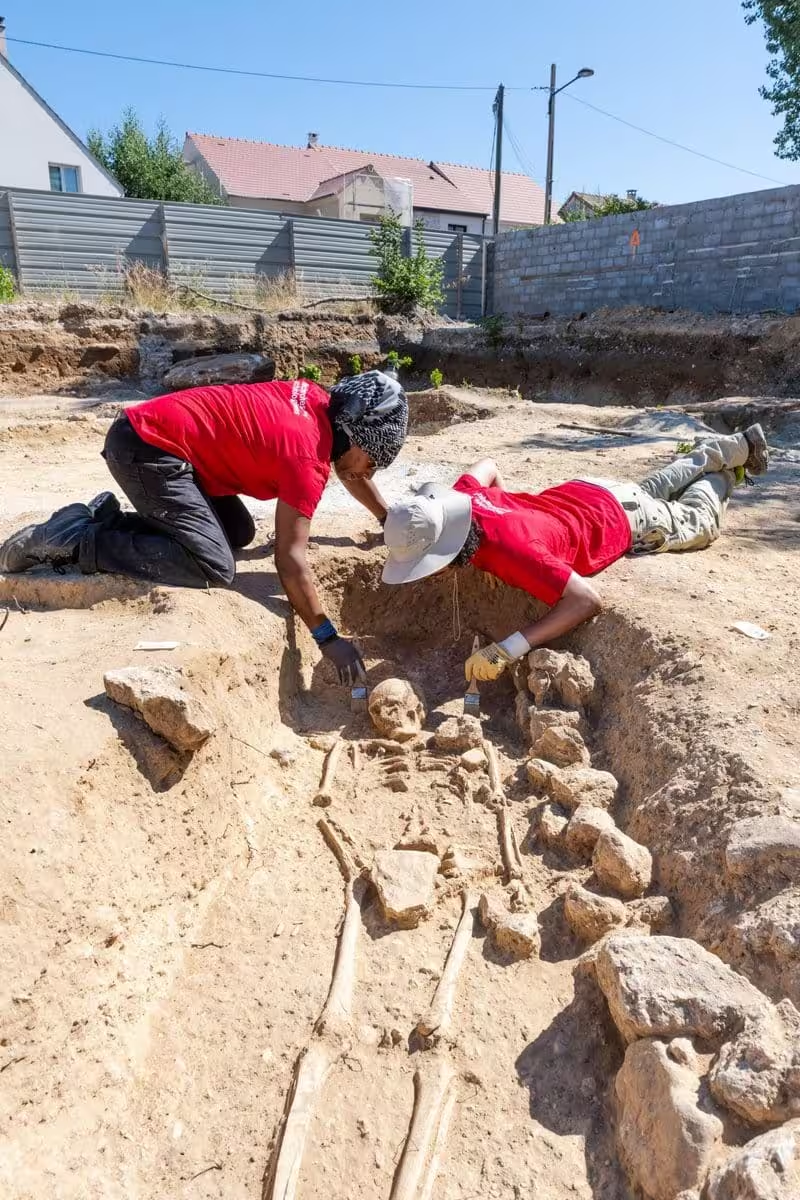
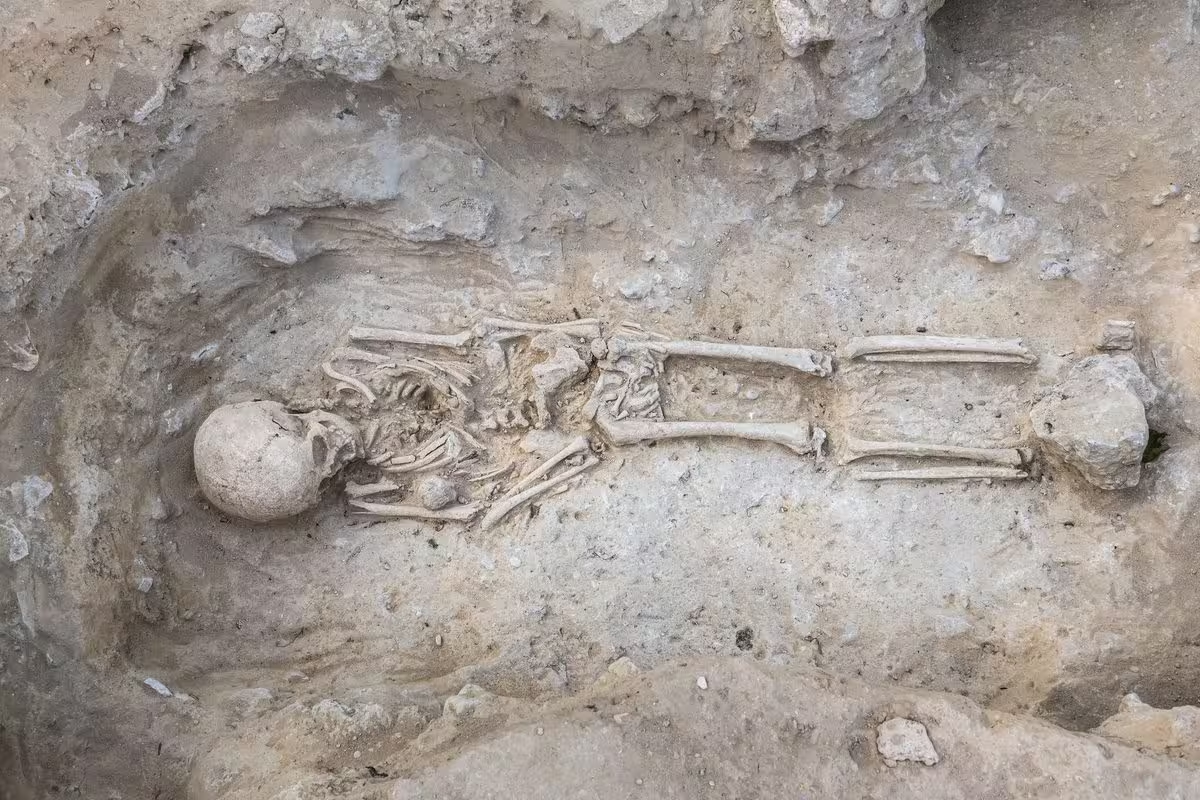
Archaeologists working in the Paris suburb of Champigny-sur-Marne have unearthed a sprawling 6,500-year-old cemetery that challenges conventional understanding of Neolithic funerary practices. The excavation, led by France’s national preventive archaeology institute, Inrap, revealed a sophisticated landscape featuring 11 graves, an enigmatic earthen monument, and a massive, anthropomorphic stone statue that once stood as a silent guardian over the site.
A Neolithic Giant Unearthed
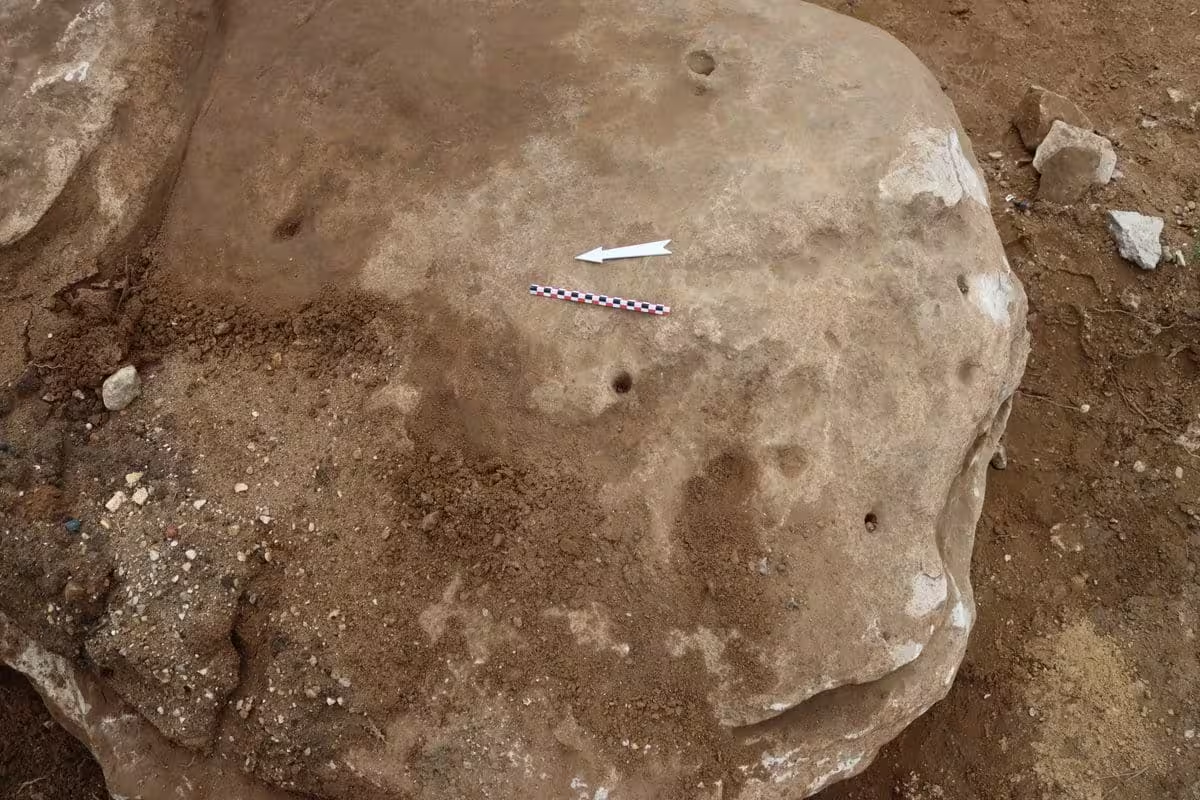
The centerpiece of the discovery is a colossal statue-menhir, a slab of stone weighing approximately 9.7 metric tons. Measuring 10 feet long and more than 2 feet thick, the monument was found lying flat within the very pit that once supported its upright position. The craftsmanship is striking, featuring a carved belt and surface textures achieved through precise pecking. Researchers noted that the figure includes a series of natural pits modified into a decorative arch, with lingering traces of black and white residue suggesting the statue may have been vividly painted thousands of years ago.
Complex Burial Rites and Architectural Innovation
Dating to the Middle Neolithic period, between 4750 and 4300 BC, the cemetery offers a rare glimpse into the lives of early farming communities in the Marne river valley. While most burials involved individuals laid in extended positions, the site displays a remarkable diversity of funerary treatment. Excavators discovered stone tools, including flint blades, arrowheads, and a sandstone axe, alongside the remains. Postholes identified near the graves suggest the presence of former wooden markers, likely used to commemorate the resting places.
One of the most perplexing findings is a 30-square-meter mound located in the site’s southeast corner. Despite the structure’s clear architectural complexity—incorporating pits, ditches, and a broken stele—archaeologists found no human remains inside, hinting that it may have functioned as a symbolic landmark or ritual focal point rather than a tomb.
Advanced Engineering and Ancient Mysteries
The builders of this site demonstrated a sophisticated grasp of construction materials. By mixing carbonate-rich silt and sand with gravel, they created a hardened substance reminiscent of primitive cement. This material was used to stabilize grave edges and support standing stones, a practice more commonly associated with Mediterranean domestic architecture than with burial sites of this era in Northern France.
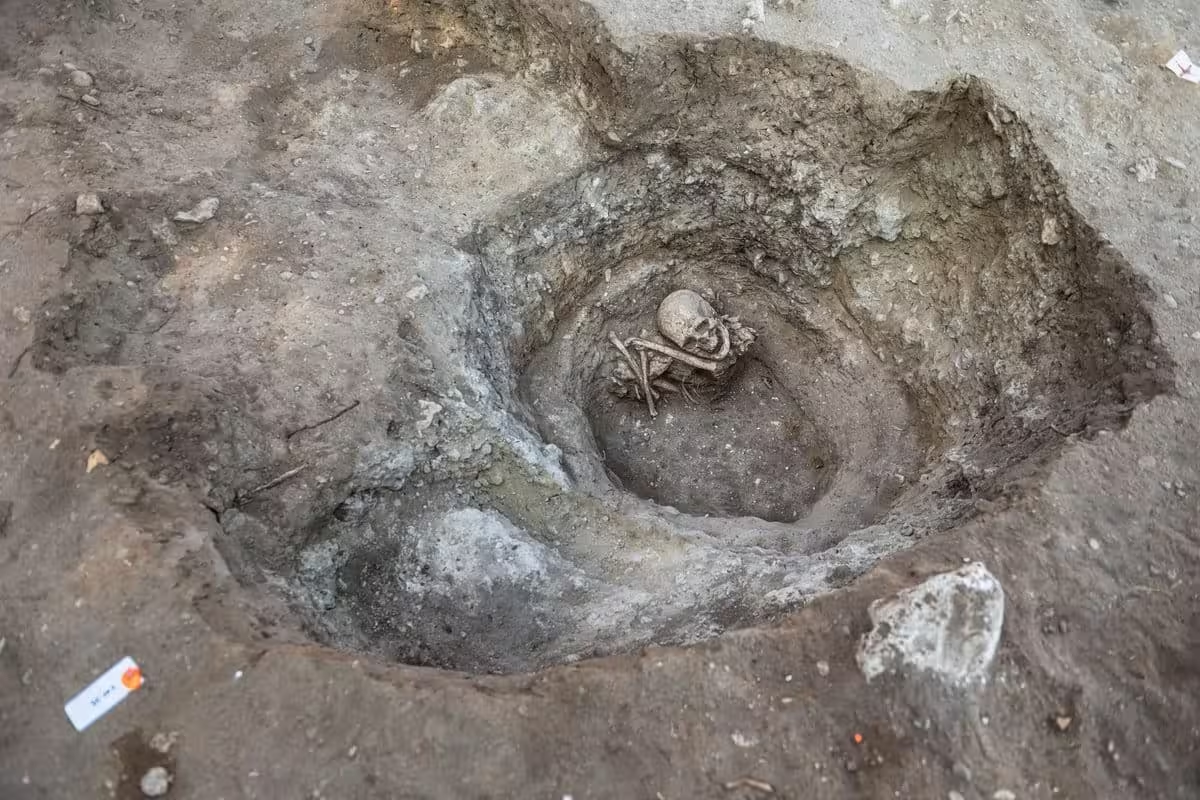
The most striking anomaly, however, is the “seated burial.” One adult was placed in a narrow, well-like shaft, remaining in an upright position. Over millennia, the site’s unique geological conditions led to a natural accumulation of calcite, which encased the individual’s lower limbs in a hard, mineralized shell.
As researchers look toward future studies involving ancient DNA and isotopic analysis, they hope to determine the origins, health, and social roles of the individuals buried at Champigny-sur-Marne. For now, the site remains a testament to the complex, deeply held traditions of a farming society that left its mark on the landscape in ways that still intrigue modern science.
This article has been fact checked for accuracy, with information verified against reputable sources. Learn more about us and our editorial process.
Last reviewed on .
Article history
- Latest version
Reference(s)
- “Actualité | Des sépultures et des menhirs du Néolithique découverts à Champigny-sur-Marne (Val-de-Marne).”, November 2, 2026 Inrap <https://www.inrap.fr/des-sepultures-et-des-menhirs-du-neolithique-decouverts-champigny-sur-marne-val-21017>.
Cite this page:
- Posted by Vikram Desai