Ancient Ritual Site Predating Stonehenge Found in Czech Republic With Human Remains
Archaeologists have unearthed a massive 6,500-year-old circular monument in the Czech Republic, revealing the sophisticated astronomical knowledge of its builders.
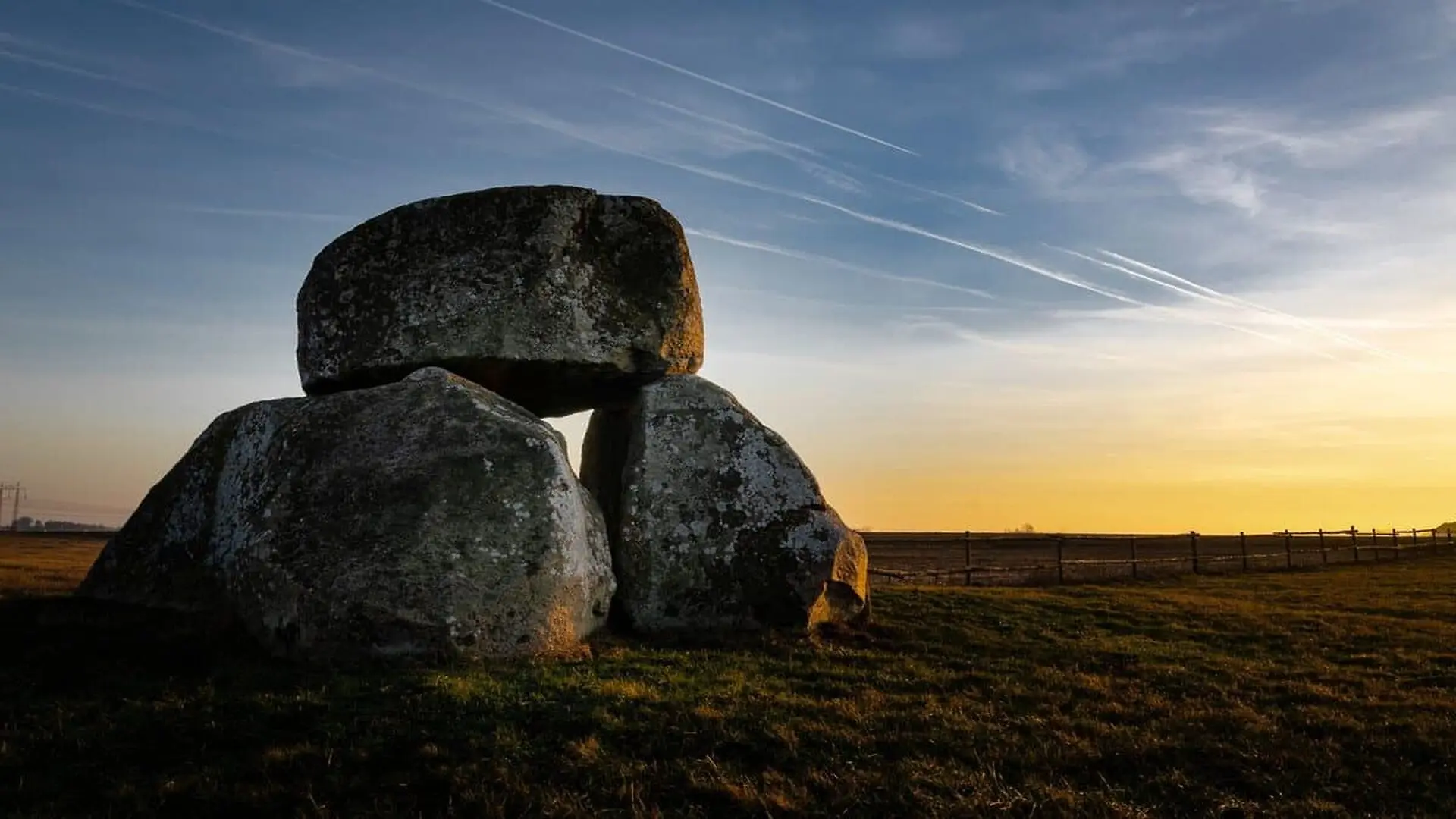
Archaeologists working near the Czech municipality of Chleby have uncovered a 6,500-year-old circular monument that provides an extraordinary look into the sophisticated astronomical knowledge of early Central European farming societies. The site, which predates the iconic Stonehenge by roughly a millennium, served as both a ritual center and a precise observational tool, allowing Neolithic inhabitants to track the celestial movements essential for agricultural planning.
The research, directed by Petr Krištuf of the University of West Bohemia, reveals a structure designed with a sophisticated understanding of solar and lunar cycles. By anchoring their lives to the changing positions of the sun and moon, these early farmers were able to establish reliable calendars for planting and harvesting long before the advent of written records.
Precision Engineering and Celestial Alignment
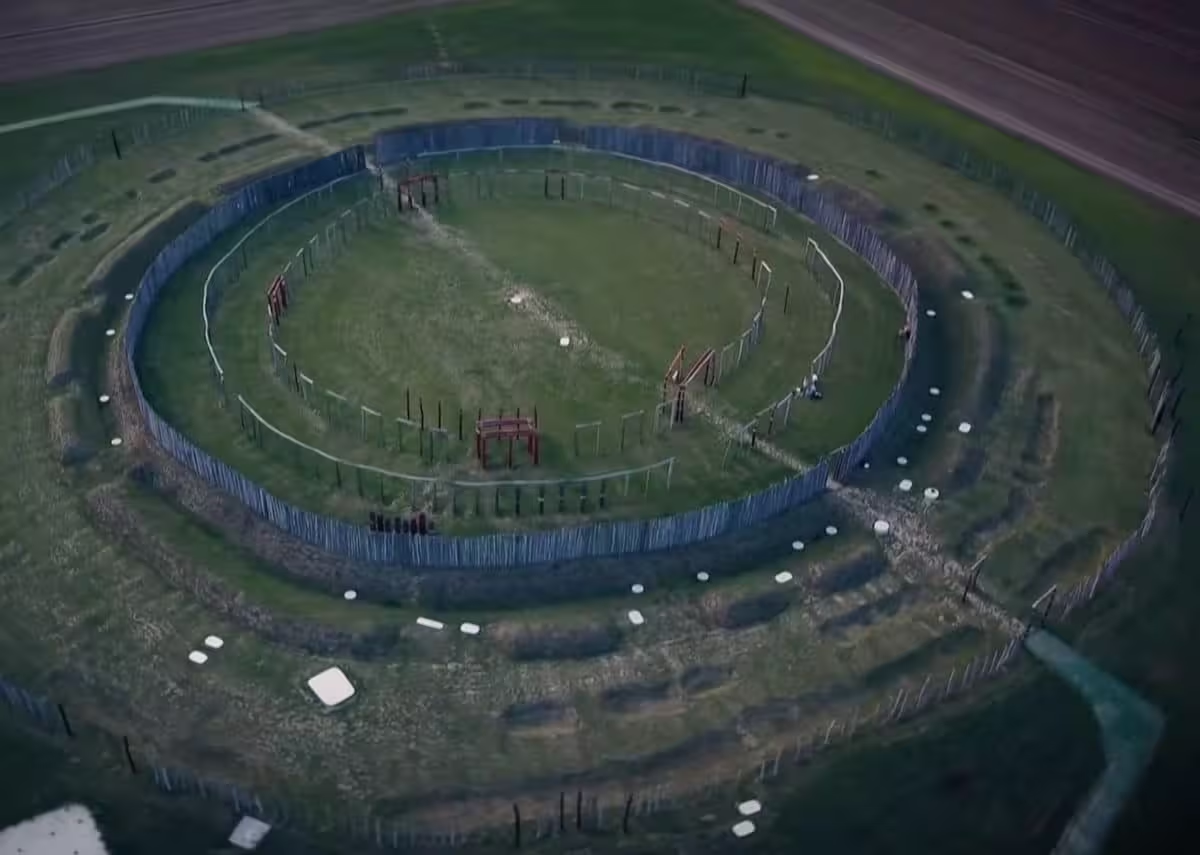
The monument’s layout suggests a dual-purpose observational design. The structure incorporated features specifically tuned to the lunar cycle, monitoring the moon as it shifted toward its extreme celestial positions, alongside orientations that captured the summer solstice sunrise and winter solstice sunset. These two solar events marked the definitive poles of the agricultural year, symbolizing cycles of growth and dormancy.
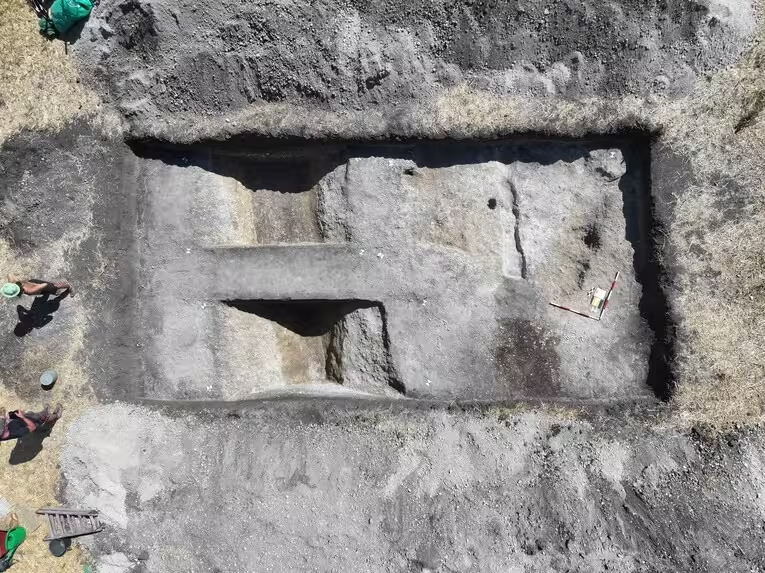
Beyond these primary alignments, investigators identified 12 peripheral openings distributed around the enclosure, further refining the site’s function as a complex timekeeping system. According to Krištuf, the intentional architectural link between the horizon and the calendar reflects a structural logic strikingly similar to later megalithic monuments, despite the Chleby site having been constructed independently and much earlier in history.
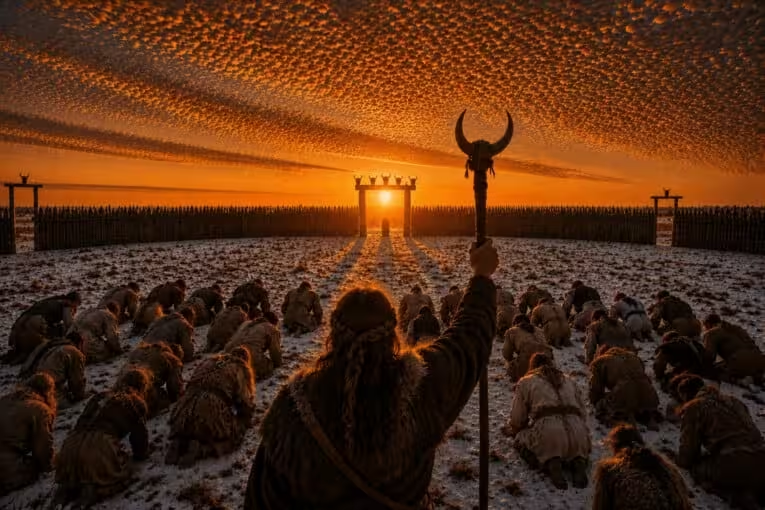
“For prehistoric farming communities, the connection between sunrise and the summer solstice symbolized a beginning, while sunset and the winter solstice represented an ending,” Krištuf noted in a recent project update. He emphasized that the site’s alignment mirrors the main axis found at Stonehenge, demonstrating a shared cognitive approach to the cosmos despite the substantial gap in time.
Evidence of Ritual and Symbolic Power
The physical remains at the site suggest a deeper layer of ritual significance. A deep, eight-foot ditch encircling the monument contained the skeletal remains of 18 individuals, deposited over an extended period. While the criteria for these burials remain a subject of investigation, the placement of the remains highlights the monument’s role as a sacred site for the local community.
Archaeologists also discovered bovine remains, including skulls, near the entrance. This discovery aligns with a wider “cult of the bull” that spanned ancient Europe from the Danube to the Aegean. Researchers believe these animals were likely displayed at the entrance to imbue the site with religious authority and symbolic strength.
Trade, Innovation, and the Únětice Legacy
The site is associated with the Únětice culture, an influential prehistoric society that established extensive trade networks across Central Europe. Known for their mastery of metalworking and long-distance exchange, these people traded Baltic amber and metals as far as the Mycenaean world. They are also credited with early advancements in accounting, utilizing clay or stone tablets known as “bread loaf idols” to track commercial transactions.
As the excavation continues, the team plans to conduct detailed analysis of the human remains and soil samples to further clarify the daily life and religious activities of the site’s users. Historical evidence suggests the monument gradually fell out of use, eventually losing its cultural and spiritual significance by the arrival of the Iron Age.
This article has been fact checked for accuracy, with information verified against reputable sources. Learn more about us and our editorial process.
Last reviewed on .
Article history
- Latest version
Reference(s)
- <https://zcu.academia.edu/PetrKri%C5%A1tuf>.
- “A thousand years older than Stonehenge: Archaeologists explore a Czech sanctuary near Chleby.” <https://info.zcu.cz/clanek.jsp?id=9882&lang=en>.
- “Bull And Bull Leaping Iconography Knossos Tell El Daba And Beyond.” <https://web.sas.upenn.edu/discentes/2023/12/24/bull-and-bull-leaping-iconography-knossos-tell-el-daba-and-beyond/>.
Cite this page:
- Posted by Vikram Desai