Ancient Teeth Reveal Humans Used Psychoactive Drugs 25,000 Years Ago
Ancient teeth discovered on Sulawesi reveal that Ice Age hunter-gatherers used whole nuts in a surprising way, rewriting the history of human drug use.

Archaeologists have uncovered evidence that hunter-gatherer communities in Indonesia were utilizing psychoactive substances as early as 25,000 years ago, pushing back the known timeline for habitual drug use by several millennia. The discovery, detailed in a new study published in Science Advances, suggests that the consumption of betel nuts was a deeply rooted practice long before the dawn of agriculture.
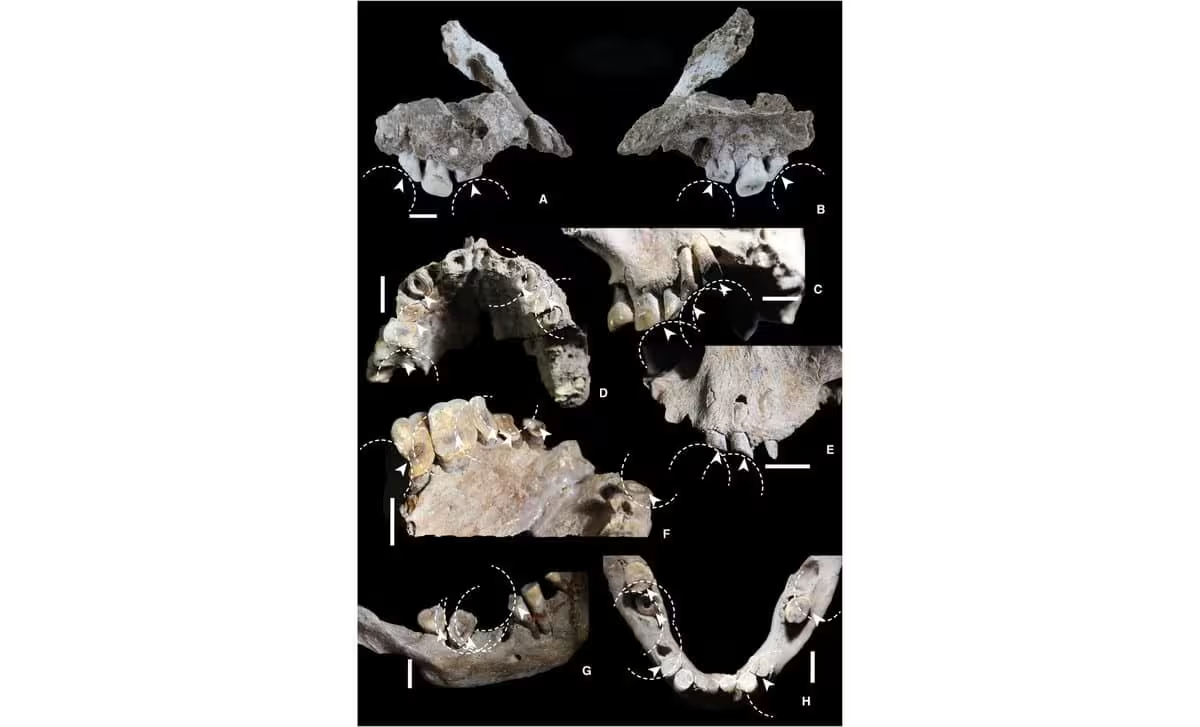
The findings center on the analysis of skeletal remains recovered from Sulawesi, representing two pre-agricultural foragers. The first, identified as Maros-LBB-1a, dates back between 25,000 and 16,000 years, while the second, CPL-R2a, lived between 7,600 and 6,300 years ago. Dental examination revealed distinct, deep, rounded grooves on the teeth of both individuals—a wear pattern inconsistent with standard dietary habits. Researchers concluded these marks were caused by the prolonged and repetitive act of holding and sucking on whole, hard areca seeds.
A Prehistoric Habit with Modern Roots
While contemporary betel consumption typically involves a processed quid of areca seed and slaked lime to enhance the release of the stimulant arecoline, these ancient users appear to have ingested the raw, intact seeds. To verify that this method could produce psychoactive effects, the research team conducted laboratory trials using artificial saliva to extract compounds from whole nuts. These extracts were then tested on frog egg cells modified with human neural receptors, confirming that the intact seeds released sufficient levels of arecoline to affect the human nervous system. Chemical analysis of the ancient dental samples further confirmed the presence of the compound.
Medicinal Necessity or Early Vice?
Professor Adam Brumm of Griffith University, who spearheaded the investigation, suggests the habit may have originated as a primitive form of pain management. The individuals analyzed suffered from poor dental health, and the mild anesthetic or pain-relieving properties of the betel nut could have provided relief for oral discomfort. Ironically, the practice likely exacerbated the condition, as the constant abrasion from the seeds caused significant dental wear, in one instance exposing the inner pulp chambers of the teeth and increasing the risk of infection.

Previously, the earliest documented evidence of betel use was dated to Bronze Age Thailand, roughly 3,000 to 3,500 years ago. By shifting this window back to the Late Pleistocene, the Sulawesi findings fundamentally alter the historical narrative, proving that complex, habitual engagement with botanical psychoactives was well-established among hunter-gatherers long before the rise of sedentary civilizations. While it remains unclear if this practice directly evolved into the modern cultural rituals seen today, the discovery highlights the enduring human desire to modify perception and manage physical ailment through the natural environment.
This article has been fact checked for accuracy, with information verified against reputable sources. Learn more about us and our editorial process.
Last reviewed on .
Article history
- Latest version
Reference(s)
- Brumm, Adam., et al. “Betel nut sucking is the earliest recorded evidence for the habitual use of a neuroactive plant drug.” Science Advances, vol. 12, no. 37, September 11, 2026 American Association for the Advancement of Science (AAAS), doi: 10.1126/sciadv.aei1901. <https://www.science.org/doi/10.1126/sciadv.aei1901>.
Cite this page:
- Posted by Vikram Desai