6,500 Year Old Monument Found With Human Remains Predates Stonehenge By A Millennium
Archaeologists have uncovered a monumental 6,500-year-old circular structure in the Czech Republic, revealing surprising ancient astronomical knowledge.
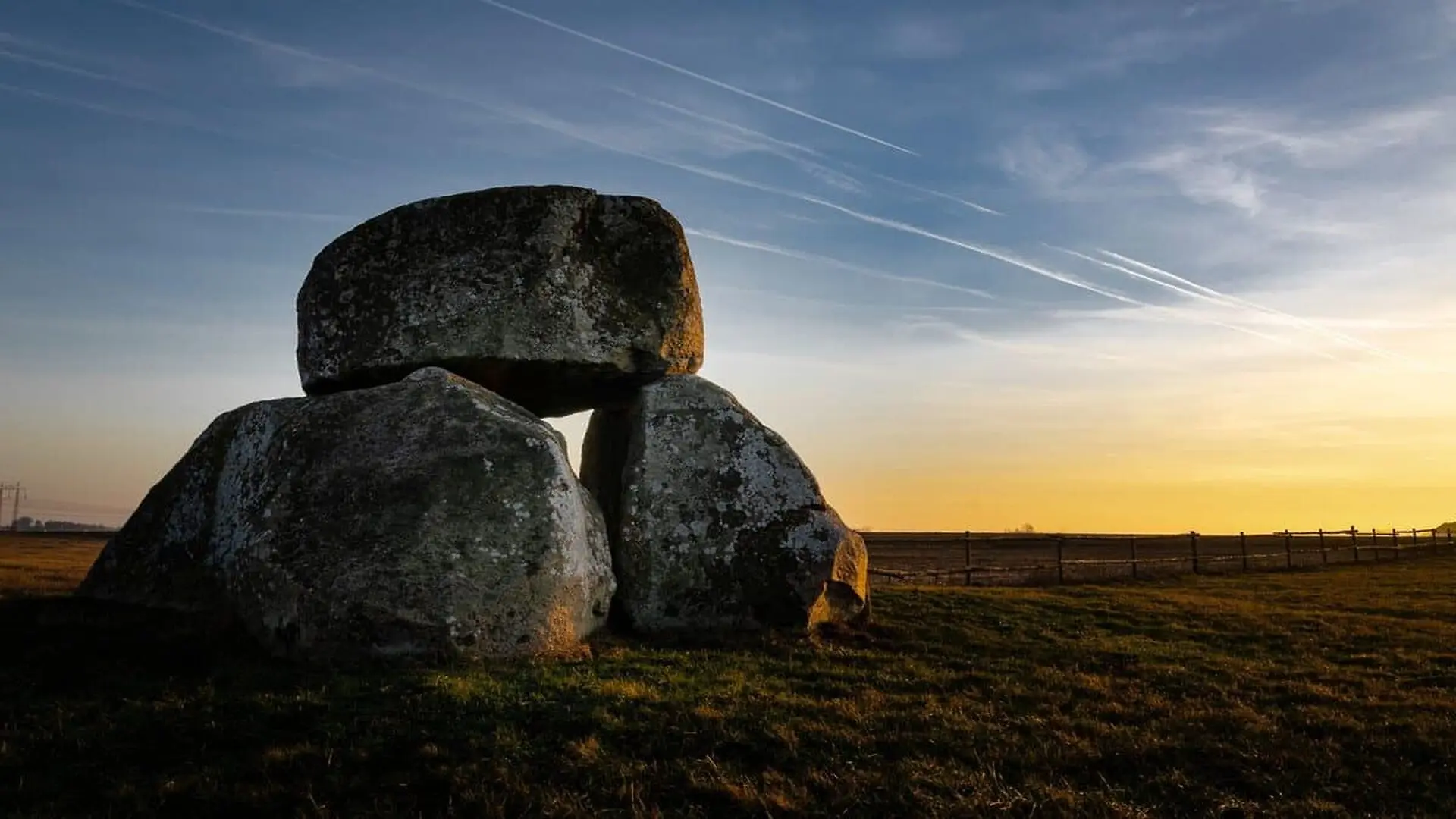
Archaeologists working near the Czech municipality of Chleby have uncovered a circular monument dating back 6,500 years, revealing a sophisticated ritual site that predates the famous Stonehenge by roughly a millennium. This discovery, led by Petr Krištuf of the University of West Bohemia, highlights the advanced astronomical capabilities of Neolithic agricultural societies long before the advent of written calendars.
Architectural Precision and Celestial Alignment
The site was designed as a functional observatory, allowing early farmers to track essential celestial movements to dictate their planting and harvest schedules. The monument features two primary observation points calibrated to different rhythms: one tracks the lunar cycle, monitoring the moon’s extreme positions, while the other captures the solar extremes of the summer and winter solstices. Beyond these primary markers, twelve additional openings are positioned around the perimeter, aligning with specific solar and lunar axes to act as a complex seasonal clock.
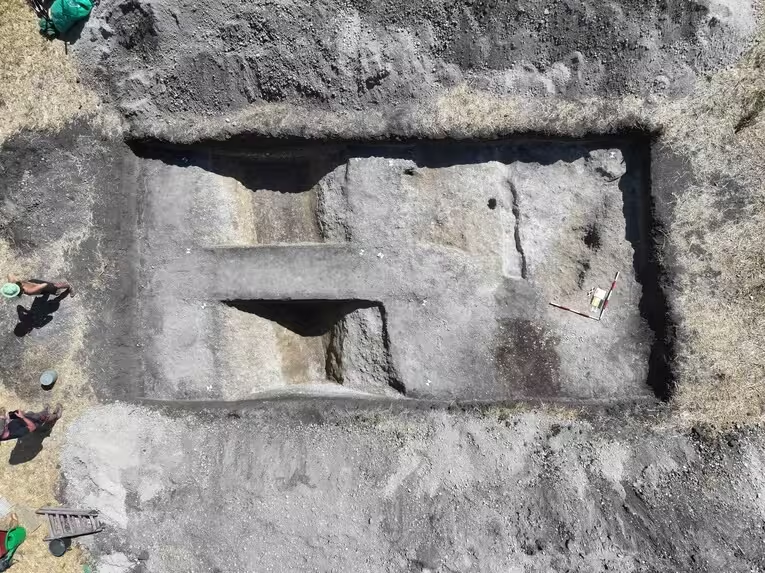
Krištuf notes that the structural logic found at Chleby shares striking similarities with the design principles of Stonehenge. While the two sites emerged independently, the Chleby monument demonstrates that the drive to codify the relationship between the sun and the changing seasons was a cornerstone of ancient European civilization.
Ritual Burials and Symbolic Power
Excavations of the eight-foot ditch surrounding the enclosure revealed the remains of 18 individuals, deposited over a long duration rather than in a single burial event. The purpose of these interments remains a subject of investigation, as researchers work to determine whether these individuals were chosen for their social standing or religious significance.
Near the site’s main entrance, the team discovered the remains of bulls, pointing to the existence of a “cult of the bull” that spanned from the Aegean to the Danube. Evidence suggests these skulls were likely displayed at the entrance to imbue the monument with symbolic authority.

Tracing the Legacy of the Únětice Culture
The monument is associated with the Únětice culture, a prominent Bronze Age society that facilitated expansive trade networks. Known for moving commodities like copper, tin, and Baltic amber across Europe, this culture also utilized early accounting methods, including geometric tablets referred to as “bread loaf idols.”
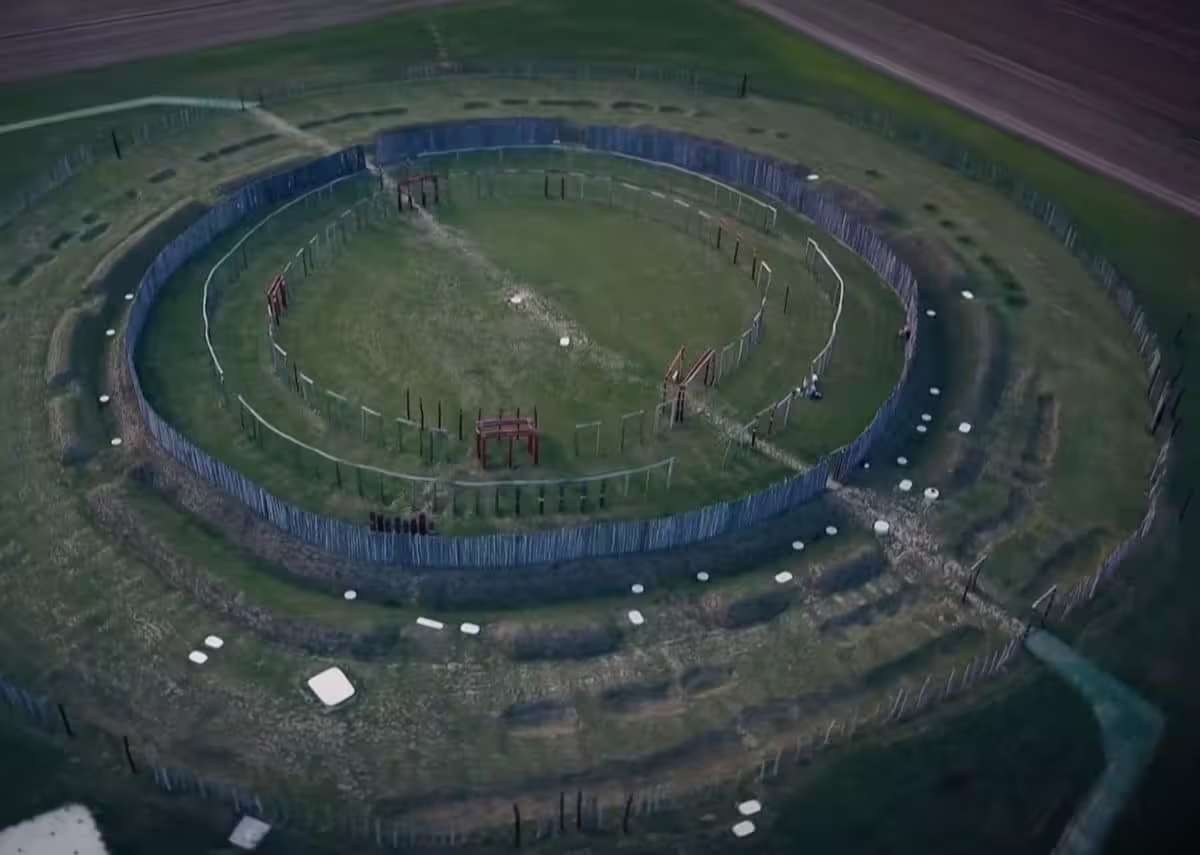
Moving forward, the research team intends to conduct detailed forensic analysis on the human remains and soil samples to better understand the daily lives of the site’s inhabitants and the evolution of the monument’s use. By the onset of the Iron Age, the site appears to have lost its original ceremonial relevance, marking the end of a long-standing tradition of celestial observation in the region.
This article has been fact checked for accuracy, with information verified against reputable sources. Learn more about us and our editorial process.
Last reviewed on .
Article history
- Latest version
Reference(s)
- “Bull And Bull Leaping Iconography Knossos Tell El Daba And Beyond.” <https://web.sas.upenn.edu/discentes/2023/12/24/bull-and-bull-leaping-iconography-knossos-tell-el-daba-and-beyond/>.
- <https://zcu.academia.edu/PetrKri%C5%A1tuf>.
Cite this page:
- Posted by Vikram Desai