New Erosion Analysis Suggests The Great Pyramid May Be Thousands Of Years Older Than Thought
New engineering analysis of weathering patterns at the Great Pyramid suggests the structure may be thousands of years older than previously thought.
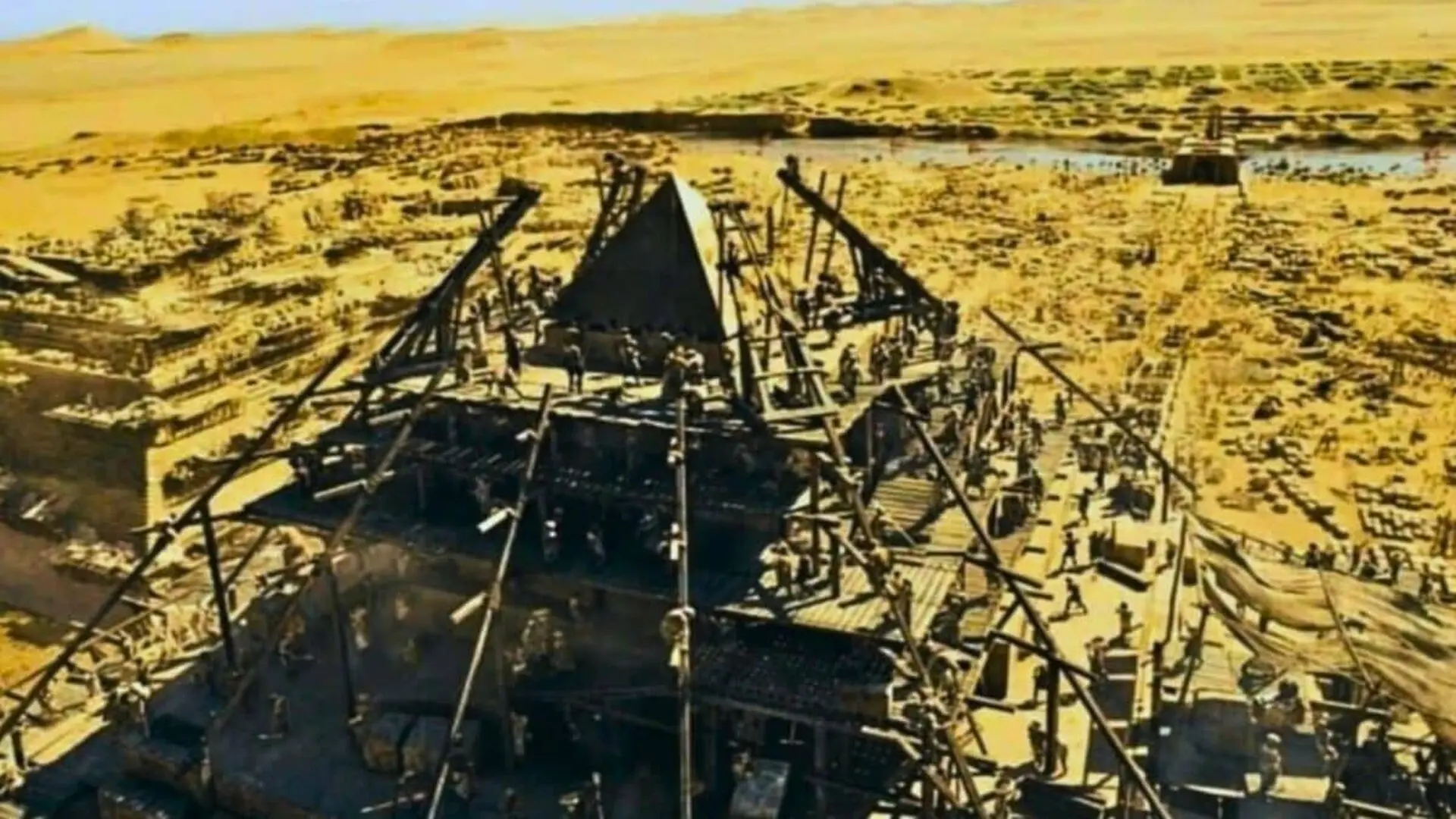
A Controversial Erosion Study Challenges the Established Timeline of the Great Pyramid
The majestic Great Pyramid of Giza was originally encased in polished limestone, creating a brilliant, smooth surface that has largely vanished over the millennia. While many of these casing stones were repurposed for construction in Cairo—a process accelerated by a powerful earthquake in 1303—a select few remained shielded from the elements, preserved under layers of desert sand until modern times. This historical anomaly has provided the foundation for a new, provocative analysis regarding the monument’s true age.
Alberto Donini, an engineer at the University of Bologna, recently proposed a fresh approach to dating the structure known as the Great Pyramid. His research, detailed in a preliminary report uploaded to ResearchGate in early 2026, utilizes what he terms the Relative Erosion Method (REM). By measuring the physical degradation of stone surfaces that were protected by casing until the medieval era and comparing them to surfaces exposed since antiquity, Donini sought to calculate a more precise chronology of the site.
Challenging the Historical Record
The findings generated by this model are striking, suggesting an age far older than the conventional archaeological consensus of approximately 2560 BC. According to Donini’s calculations, the exposure data indicates a mean construction date of 22,941 BC. His statistical confidence interval identifies a likely construction window spanning from 8,954 BC to 36,878 BC. Based on these figures, the report suggests the possibility that the Pharaoh Khufu may have merely renovated a pre-existing, ancient structure rather than ordering its original construction.
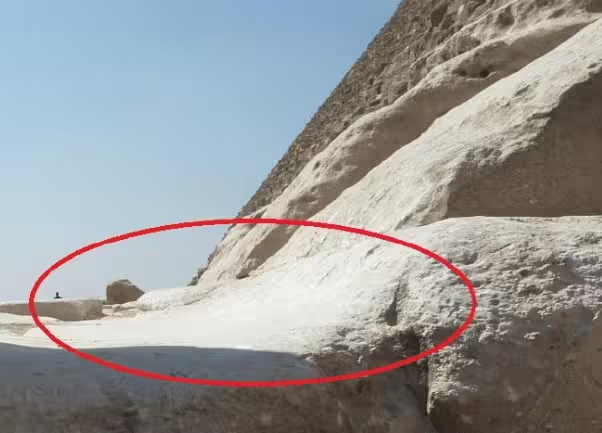
However, the author acknowledges the limitations of this method. The study is currently not peer-reviewed and is intended as a probabilistic tool for estimating the order of magnitude of exposure, rather than a definitive historical timestamp.
Scientific Skepticism and Environmental Variables
The core premise of the REM model relies on the assumption that limestone erodes at a constant, predictable rate. Many researchers argue this is a difficult standard to uphold, given the significant climatic shifts in the region, most notably the African Humid Period. During that era, significantly higher rainfall would have dramatically altered the weathering rate of the limestone, introducing a massive variable that could skew results.
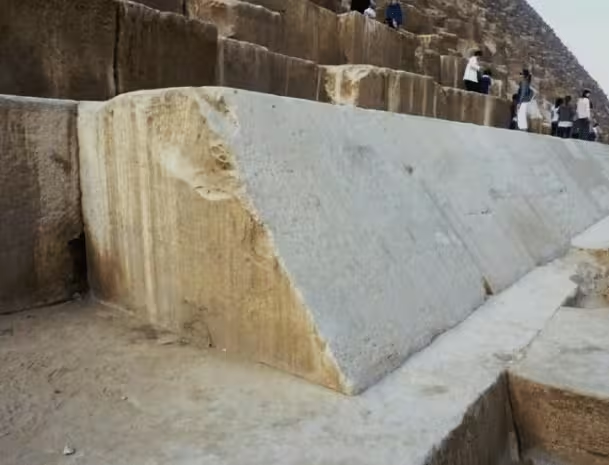
Furthermore, external factors such as fluctuating wind patterns, periods of burial by sand, microbial colonization, and modern human impact—including increased tourism—complicate the data. The method also assumes that the stone surfaces being compared are identical in composition and condition, a factor that has not been independently verified.
The Weight of Conventional Evidence
Mainstream Egyptology continues to rely on a multidisciplinary approach that places the Giza pyramids firmly within the Fourth Dynasty. Archaeologists like Mark Lehner have emphasized that the pyramids are dated based on their integration into the broader context of Egyptian architectural and cultural evolution spanning three millennia.
This timeline is reinforced by multiple independent sources of evidence:
- Ceramic Analysis: Pottery shards discovered at the Giza site match the specific styles associated with the reigns of Khufu, Khafre, and Menkaure.
- Radiocarbon Dating: Expert researchers, including those from the University of Oxford, have calibrated the age of Egyptian monuments using organic materials, such as seeds and plant remains, tied to the precise reigns of known pharaohs like Djoser.
- Epigraphic Records: Contemporary inscriptions found in nearby quarries and tombs explicitly attribute the monumental projects to the era of Khufu, aligning with existing dynastic records.
Unlike erosion-based models, these traditional methods are largely immune to the environmental variability of the Sahara, as chemical dating of organic matter—such as charcoal found in construction mortar—provides a direct chronological anchor that remains consistent regardless of ancient weather patterns.
This article has been fact checked for accuracy, with information verified against reputable sources. Learn more about us and our editorial process.
Last reviewed on .
Article history
- Latest version
Cite this page:
- Posted by Vikram Desai