Ancient Warrior Buried With Gold Coin and Evidence of Ritual Sacrifice in Russia
Archaeologists in Russia have unearthed a 2,100-year-old warrior’s grave, offering rare new insights into the burial customs of the ancient Maeotian people.
Archaeologists working at the Vinogradny 1 necropolis near Krymsk, Russia, have uncovered a striking burial site that bridges the cultural gap between local Maeotian traditions and ancient Greek funerary customs. The site, which includes 155 graves, centers on a specialized ritual area where researchers discovered a combination of animal remains, mysterious artifacts, and evidence suggesting that an elite warrior was laid to rest with a coin intended to pay the ferryman of the underworld.
A Warrior’s Passage to the Afterlife
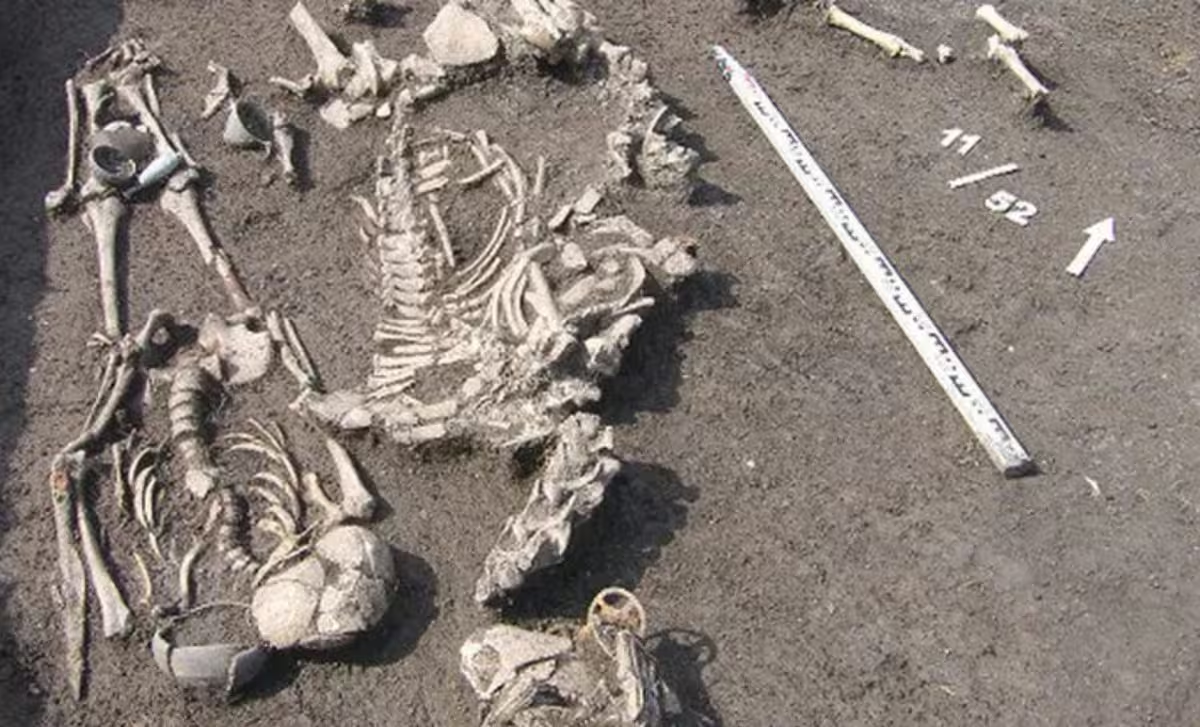
The centerpiece of the discovery, designated as Burial 52, contained the remains of a man estimated to be between 25 and 30 years old. Given the presence of iron weaponry, riding gear, and a horse buried alongside him, experts believe the individual was a high-ranking member of the Maeotian social hierarchy. Most intriguing was the placement of an eight-gram gold coin directly beneath the man’s lower jaw, a clear nod to the Greek tradition of the Charon’s obol, where a coin was placed in the mouth of the deceased to pay for their transit across the river to the afterlife.
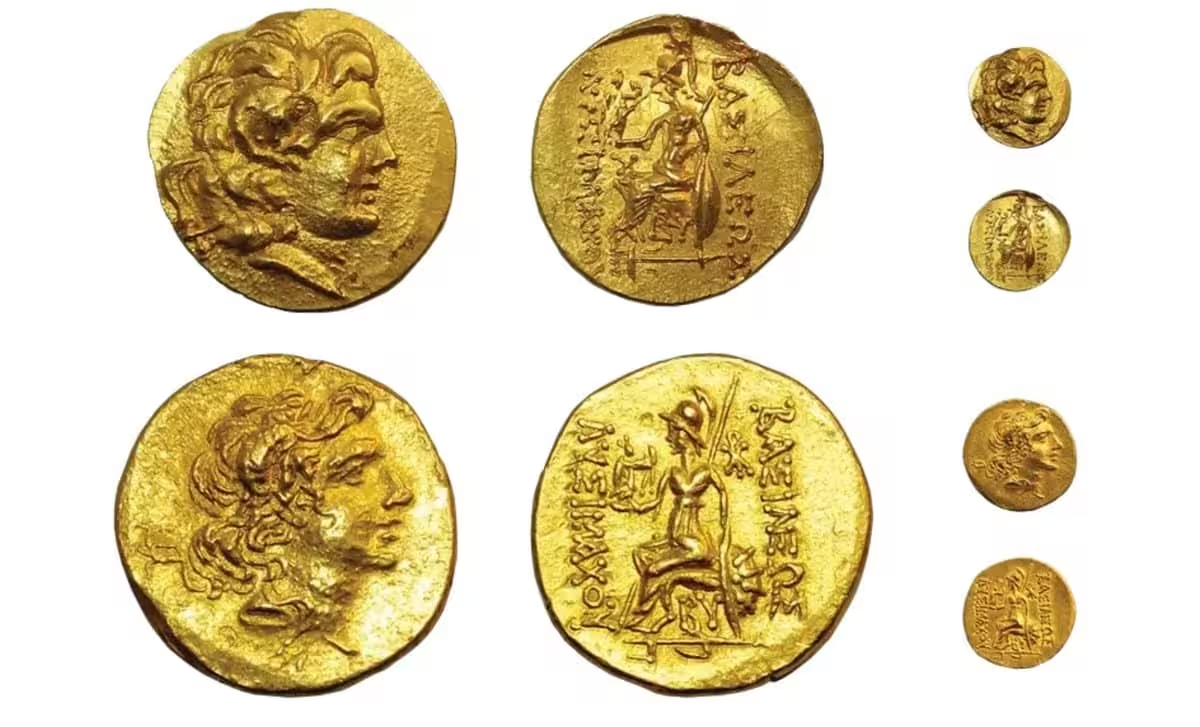
The coins identified at the site—Lysimachus-type gold staters minted under Mithridates VI Eupator in the first century B.C.—depict the deified Alexander the Great on one side and Athena holding Nike on the reverse. A second coin was recovered from the bottom of a nearby six-foot-deep ritual shaft, which led down nine steps toward the groundwater table, suggesting it served as a deliberate religious offering.
Ritual Offerings and Protective Symbols
The site’s findings, as detailed in the journal Russian Archaeology, describe a complex burial landscape. Beyond the human graves, researchers encountered Burial 97, an assemblage containing the complete skeletons of three horses, a young bull, a pig, a dog, and a cow. Of particular note was the recovery of a human pelvic fragment, which has fueled speculation that the site may have hosted human sacrifice to accompany the elite burials.
The grave goods also highlight the intersection of local beliefs and Mediterranean influence. Alongside the weaponry, the warrior was buried with a clay drinking vessel known as a kantharos, which was engraved with a five-pointed star or pentagram. As noted by All That’s Interesting, archaeologists interpret this as an apotropaic symbol, likely used to ward off supernatural threats. Furthermore, a glass alabastron, likely imported from the Levant or Cyprus for holding perfumes, underscores the active trade networks that linked this North Caucasus community to the broader Mediterranean world.
While the exact origins of the human remains and the full scope of the ritual remain open to interpretation, the discovery offers a rare glimpse into how the Maeotian elite adopted and adapted Hellenistic funerary practices to suit their own religious and social framework.
This article has been fact checked for accuracy, with information verified against reputable sources. Learn more about us and our editorial process.
Last reviewed on .
Article history
- Latest version
Reference(s)
- Г, Абрамзон. “FIRST-CENTURY BC COMPLEXES WITH GOLD LYSIMACHUS TYPE STATERS FROM THE MAEOTIAN NECROPOLIS OF VINOGRADNY 1.”, no. 3, May 12, 2026, pp. 206-220. Russian Archaeology, doi: 10.7868/S3034577426030152. <https://journals.rcsi.science/0869-6063/article/view/454250>.
- Spitz, Ella. “Ancient Warrior Grave Found In Russia Along With Pentagram Jug.”, October 6, 2026 All That's Interesting <https://allthatsinteresting.com/russia-ancient-maeotian-warrior-grave>.
Cite this page:
- Posted by Vikram Desai