Ancient 3,000 Year Old Blade Found In China Was Forged From A Fallen Star
Archaeologists have discovered an ancient, corroded blade forged from materials originating far beyond Earth, revealing a cosmic mystery from the past.
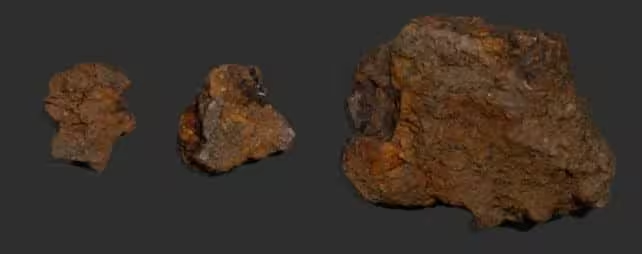
Archaeologists working at the Sanxingdui site in China’s Sichuan Province have unearthed a rare artifact that challenges existing timelines for iron use in the region. Discovered in 2021 within the ritual-rich confines of Pit 7, the corroded object was initially identified as a blade, measuring approximately 20 centimeters in length. Due to its precarious state, the team extracted the item alongside its surrounding soil matrix, only for it to fracture into three pieces during laboratory analysis.
Recent testing, published in the journal Archaeological Research in Asia, confirms the artifact is composed of meteoritic iron. X-ray fluorescence revealed a composition of over 90 percent iron with a 7.41 percent nickel content, a signature hallmark of iron originating from outer space. Led by Haichao Li of Sichuan University, the research team identifies this as the oldest meteoritic iron object discovered in Southwest China, dating back roughly 3,000 years—well before the advent of iron smelting in the area.
Anomalous Metallurgy in the Ancient Shu Kingdom
The Sanxingdui site, which flourished during the Shang Dynasty (c. 1600–1050 BC), is renowned for its enigmatic collection of bronze masks, towering trees, and various ritual objects. The discovery of nearly 17,000 artifacts across eight sacrificial pits suggests a culture deeply invested in elaborate ceremonies, often involving the burning and burial of high-status items. Pit 7, where the iron blade was recovered, has alone yielded over 4,300 cataloged items, all associated with the late Shang period.
In the Central Plains of China, historical evidence shows that artisans occasionally integrated small fragments of meteoritic iron into bronze weaponry. The Sanxingdui find, however, is distinct. It consists entirely of iron, marking it as the largest known meteoritic iron artifact from China’s Bronze Age. This departure from standard regional practices highlights a unique metallurgical tradition in the Sichuan Basin, according to Li, indicating that the ancient Shu people possessed both the knowledge and the technical skill to utilize extraterrestrial materials.
A Mystery of Ritual and Resource
While the exact function of the blade remains a subject of academic debate, its axe-like silhouette and placement within the sacrificial pit suggest it may have served a ceremonial or symbolic purpose. Researchers have not ruled out the possibility that the iron was used as a tool to work bronze, given that meteoritic iron is significantly harder than standard bronze alloys.
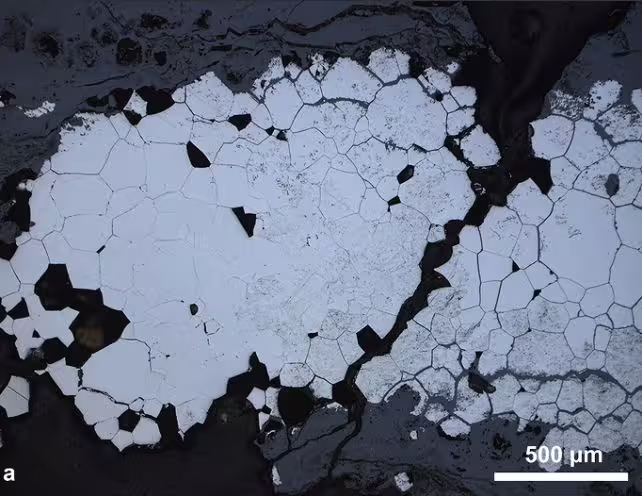
Despite these preliminary findings, identifying the specific parent meteorite remains an ongoing challenge. Co-author Zishu Yang of Sichuan University noted that while current scanning electron microscopy (SEM-EDS) provides vital chemical data, it is not yet sufficient to classify the meteorite type as reported previously. As the team continues to study the fragile remains, they aim to employ high-resolution imaging to further clarify the history of this rare piece of space-borne metal.
This article has been fact checked for accuracy, with information verified against reputable sources. Learn more about us and our editorial process.
Last reviewed on .
Article history
- Latest version
Reference(s)
- Li, Haichao., et al. “The earliest meteoritic iron artefact of the Chinese Bronze Age discovered at Sanxingdui, Southwest China.” Archaeological Research in Asia, vol. 46, June 1, 2026, pp. 100692 Elsevier BV, doi: 10.1016/j.ara.2026.100692. <https://doi.org/10.1016/j.ara.2026.100692>.
- “三星堆首次发现陨铁器-新华网.” <https://www.news.cn/local/20260510/258126695ef54a2dbe31c8a33304ff6e/c.html>.
- Saraceni, Jessica. “Bronze Age Chinese Iron Weapon Fragments Analyzed.”, March 27, 2026 Archaeology Magazine <https://archaeology.org/news/2026/03/27/bronze-age-chinese-iron-weapon-fragments-analyzed/>.
Cite this page:
- Posted by Vikram Desai