Stitched With Rope and Filled With Gold: The Mystery of the 1,200-Year-Old Belitung Shipwreck
Fishermen have discovered an ancient Arab shipwreck filled with Chinese cargo, sparking a new investigation into a centuries-old maritime mystery.
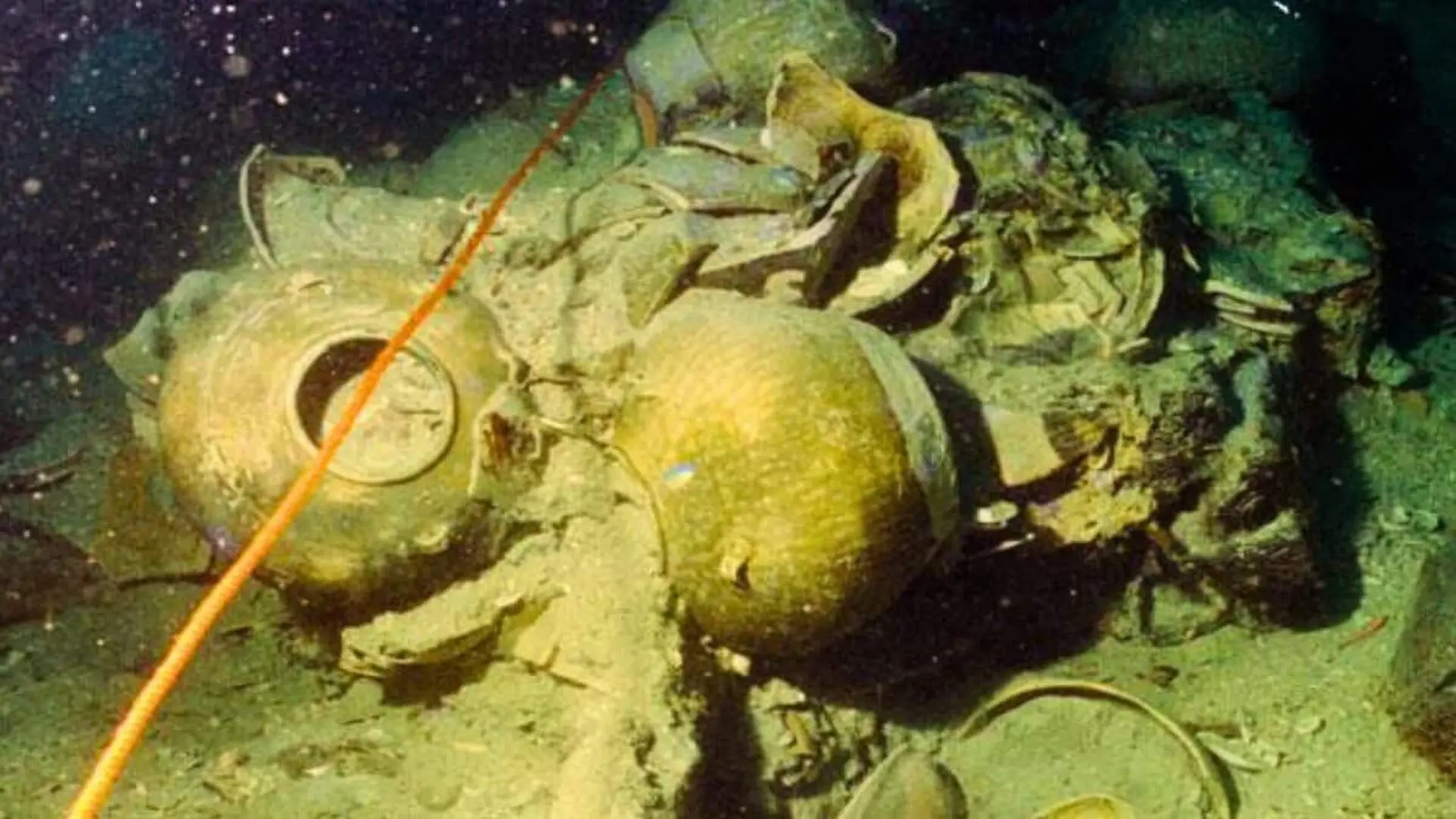
In the summer of 826, a worker at a kiln site in southern China etched a specific date—the 16th day of the 7th month of the 2nd year of the Baoli era—onto the base of a simple stoneware bowl. This humble object was destined for a long journey, packed into the hold of an Arab merchant vessel alongside tens of thousands of other ceramic pieces. The ship, however, would never reach its intended market in the Middle East.
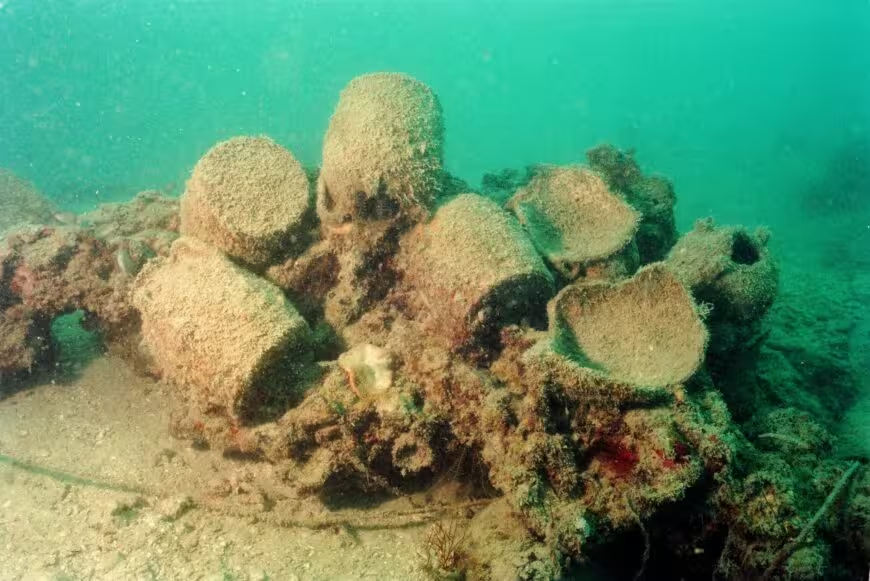
The remains of this vessel, now known as the Belitung shipwreck, were uncovered in 1998 by fishermen searching for sea cucumbers in the Gelasa Strait off Indonesia. Lying approximately 17 meters (56 feet) beneath the surface, the site offered a pristine snapshot of maritime commerce during the Tang dynasty. The vessel’s discovery has fundamentally altered historical understanding regarding the scale of trade between China and the Islamic world.
Engineering an Ancient Dhow
The shipwreck is identified as a dhow, an Arab vessel measuring roughly 18 meters in length. It stands as a significant archaeological landmark, being the first ancient Arab ship ever excavated. Remarkably, the ship was constructed without the use of metal nails; instead, its planks were held together by hand-stitched coconut fiber rope—a technique previously described in historical texts but never before seen in the archaeological record.
Analysis of the timber indicates the vessel likely originated in India or Arabia, incorporating materials from across the Indian Ocean. While the exact reason the ship was traversing the waters near Belitung remains a mystery—given that it had deviated significantly from the standard maritime route toward the Strait of Malacca—the cargo provides a comprehensive inventory of the era’s global exchange.
A Massive Cargo of Tang Dynasty Artifacts
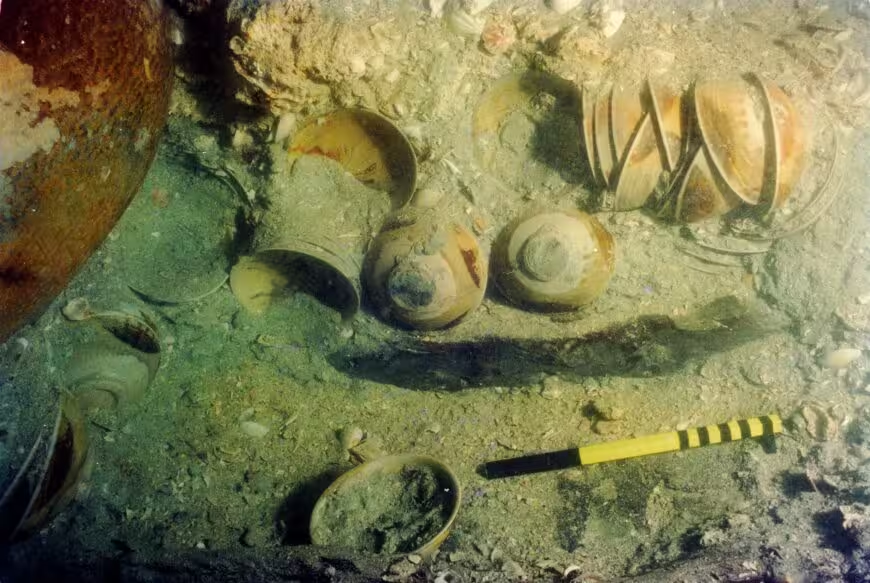
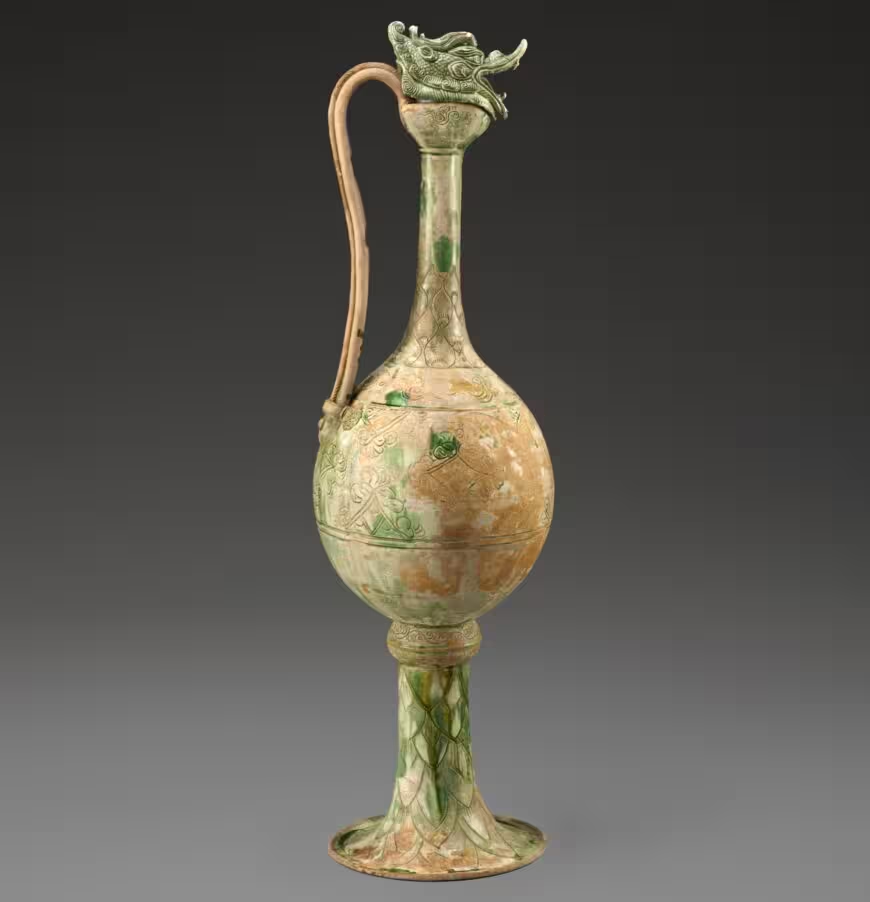
The haul, totaling nearly 60,000 items, consists primarily of stoneware from the Changsha kilns. These ceramics demonstrate a keen awareness of foreign markets, featuring motifs ranging from Buddhist lotus patterns to Arabic calligraphy and Persian-influenced designs. Among the more significant finds are the earliest intact blue-and-white dishes, which predate the mass production of Chinese porcelain by several centuries.
Beyond pottery, the ship carried bronze mirrors, silver boxes, and an ornate, eight-sided gold cup depicting musicians. The presence of these luxury items, alongside the dated bowl and radiocarbon-dated star anise, allows researchers to confidently pinpoint the vessel’s departure to approximately 830.

The Ethics of Salvage
The recovery process remains a point of contention in the archaeological community. Because Indonesian authorities lacked the infrastructure for a controlled scientific excavation at the time, they commissioned a commercial salvage firm, Seabed Explorations, to retrieve the items. While this preserved the collection from being scattered into the black market, critics argue that the speed of the operation compromised the site’s integrity.
Tensions flared in 2012 when the Smithsonian’s Sackler Gallery considered exhibiting the collection. Fearing that such a display might incentivize unauthorized treasure hunting, researchers pushed back against the show, leading to its eventual postponement. Conversely, proponents argue that the decision to maintain the collection in its entirety—eventually sold to a Singapore-government-linked entity for $32 million—ensured that these artifacts remained accessible for academic study at the Asian Civilisations Museum.
This article has been fact checked for accuracy, with information verified against reputable sources. Learn more about us and our editorial process.
Last reviewed on .
Article history
- Latest version
Reference(s)
- projects, Contributors. “Archaeological wreck of an Arabian dhow which sank around 830 AD.”, February 15, 2011 Wikimedia Foundation, Inc. <https://en.wikipedia.org/wiki/Belitung_shipwreck>.
- “Fig. 4 Scaled.” <https://smarthistory.org/wp-content/uploads/2024/01/fig.-4-scaled.jpg>.
- <https://www.roots.gov.sg/Collection-Landing/listing/1308235>.
Cite this page:
- Posted by Vikram Desai