Archaeologists Discover Massive Lost Roman City With 8,000 Seat Amphitheater
Archaeologists have uncovered a hidden Roman city in Austria, but the most fascinating aspect of this discovery lies beyond the artifacts themselves.
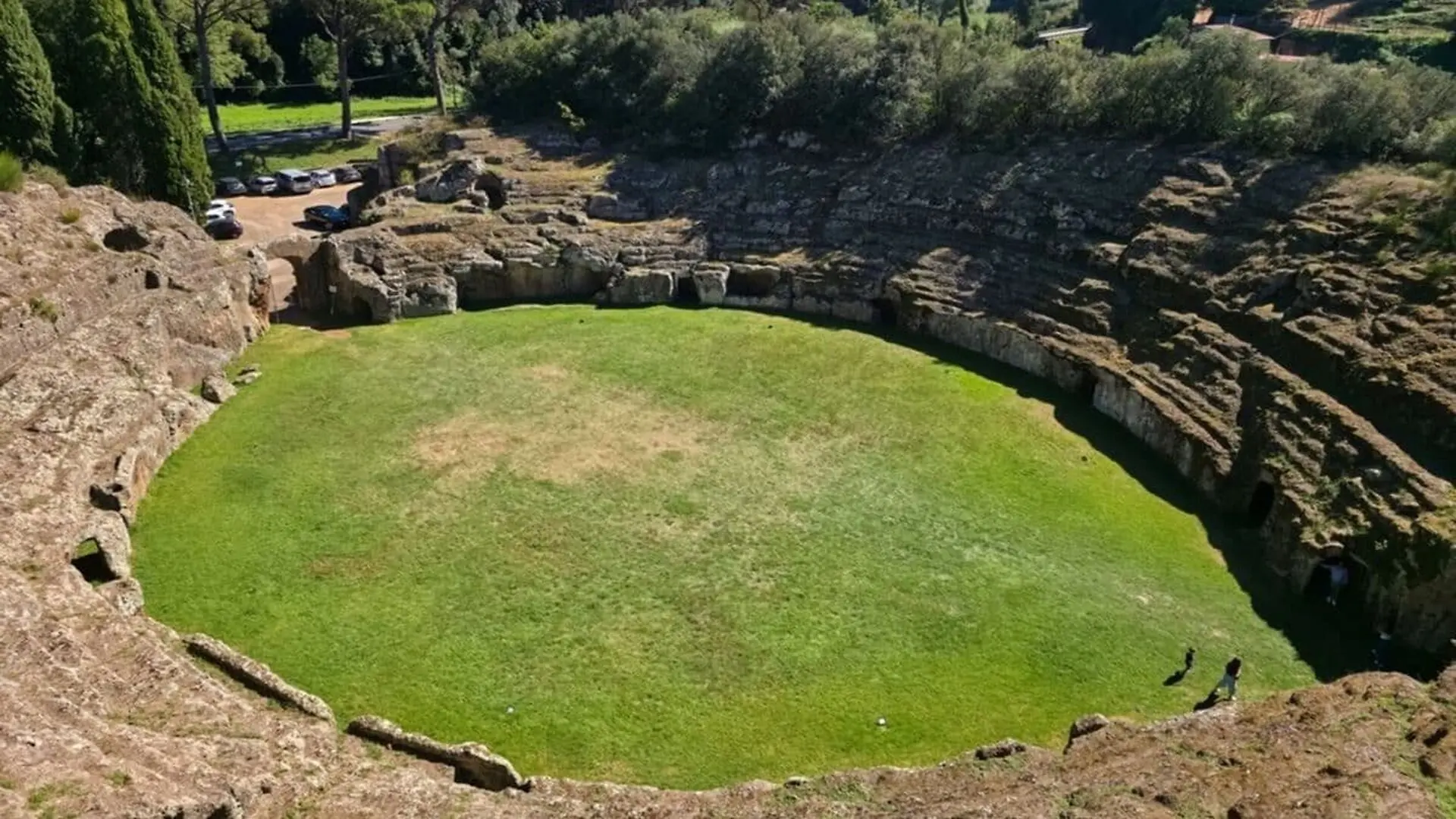
Archaeologists have unveiled a substantial, previously undocumented Roman city hidden beneath agricultural fields in Austria. The sprawling settlement, situated near the modern-day village of Stein along the Danube, features a massive amphitheater capable of seating 8,000 spectators. This significant find, detailed in a 2025 study published in ArchéoSciences, provides a new perspective on life along the Danube Limes, the critical northern frontier of the Roman Empire.
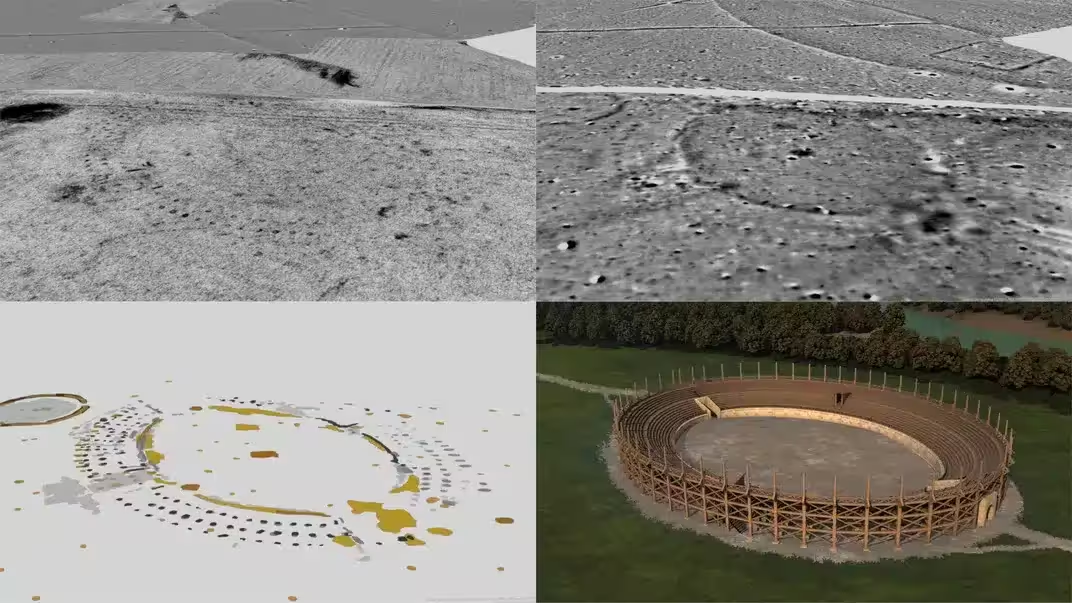
For three years, a research team led by Mario Wallner of GeoSphere Austria utilized advanced non-invasive mapping technologies, including magnetometry and ground-penetrating radar, to reveal a sophisticated urban layout spanning 62 to 74 acres. The site features a meticulously organized grid of streets and residential zones integrated with a central military fort. The scale of the infrastructure, particularly the amphitheater, suggests a center of considerable regional influence, comparable in stature to the well-known Roman hub at Carnuntum.
Unlocking the Geography of an Ancient Enigma
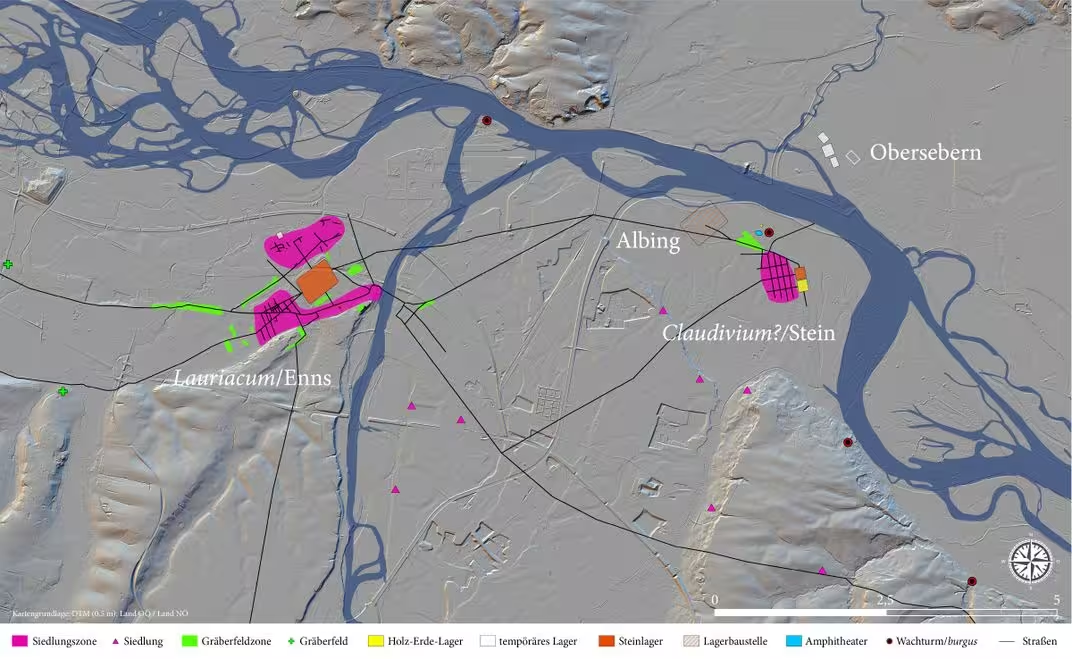
The discovery has reignited discussions regarding the identity of “Claudivium,” a city documented in the geographic records of the ancient scholar Claudius Ptolemy. The site’s location near the Aist River and its operational window—roughly 80 CE to 180 CE—align with historical descriptions of the elusive city. However, researchers caution that conclusive evidence remains absent, as no epigraphic records or site inscriptions have been unearthed to confirm the city’s official name.
Excavations have unearthed roughly 640 coins and extensive burial grounds containing opulent funerary monuments, underscoring the site’s former economic vitality. Despite this wealth, the archaeological record shows no signs of violent destruction, fire, or warfare, which would typically accompany the collapse of a frontier city.
A Strategic Shift in Roman Frontier Policy
The lack of destruction layers leads experts to believe the city was abandoned in an orderly fashion. Historians point to the aftermath of the Marcomannic Wars, which forced a major reorganization of the Roman military presence. Under the reign of Emperor Commodus, military resources were consolidated at the nearby base of Lauriacum. The discovery of identical artisan tools, such as bronze-casting equipment and clothing pins, at both the Stein site and Lauriacum suggests that the population—including skilled laborers—likely migrated to the new, more fortified center.
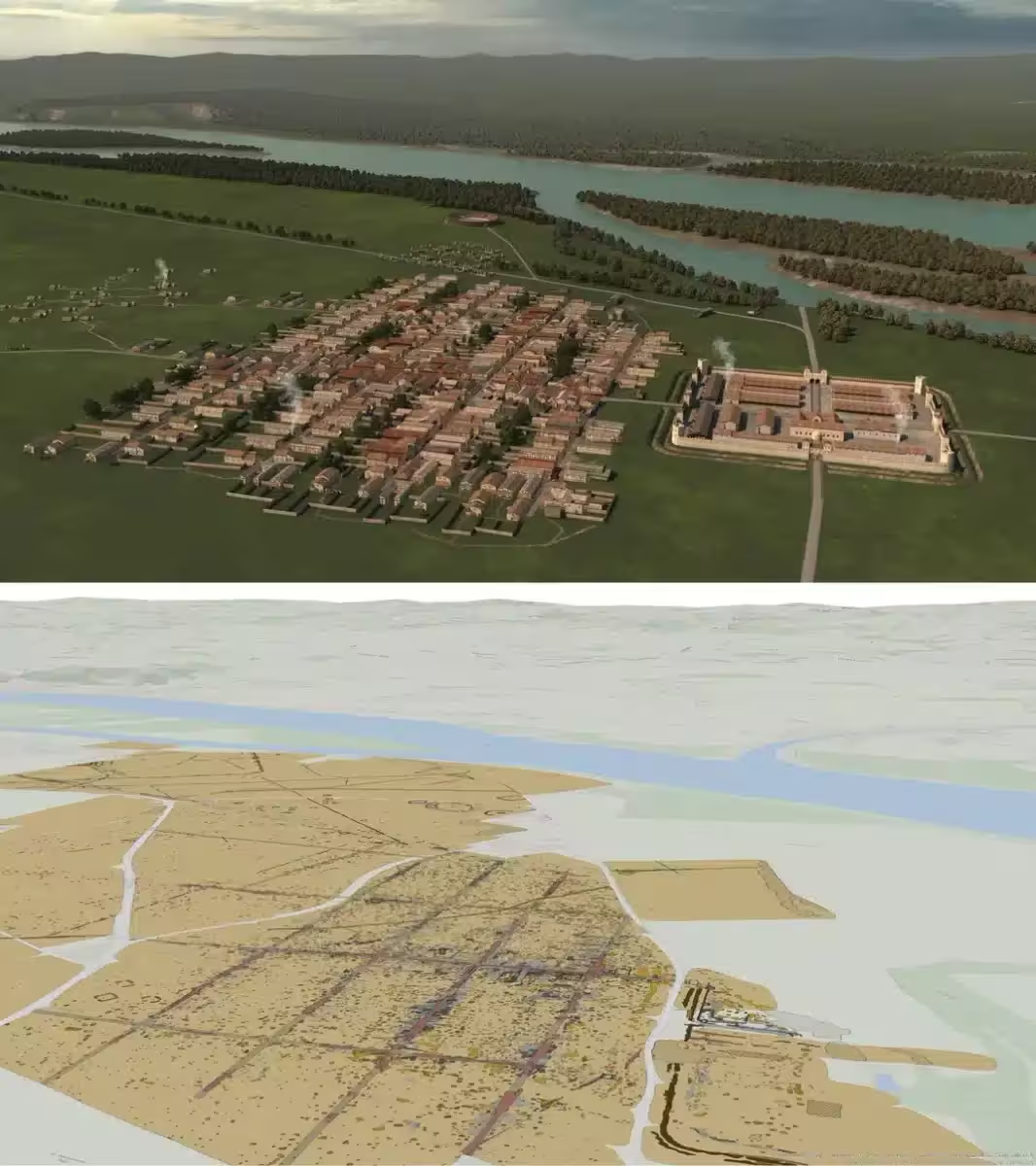
While the geophysical survey has provided an unprecedented look at the urban structure of the site, experts emphasize that this represents only the beginning of investigations. Rebecca Jones, a specialist in Roman frontiers, noted that the survey highlights the profound scientific potential waiting to be uncovered in the region. Future excavations may eventually resolve the questions surrounding the city’s true name and the precise triggers for its quiet, centuries-old exodus.
This article has been fact checked for accuracy, with information verified against reputable sources. Learn more about us and our editorial process.
Last reviewed on .
Article history
- Latest version
Reference(s)
- “17268.” <https://journals.openedition.org/archeosciences/17268>.
- Green, Jane. “The story of Ptolemy, the ancient astronomer who shaped our view of the cosmos for centuries.”, April 4, 2024 BBC Sky at Night Magazine <https://www.skyatnightmagazine.com/space-science/ptolemy>.
- <https://www.nms.ac.uk/profile/dr-rebecca-jones>.
Cite this page:
- Posted by Vikram Desai