Archaeologists Unearth Mysterious Aztec Era Ossuary During Railway Construction In Mexico City
Archaeologists have uncovered a mysterious cache of Aztec skulls and ritual artifacts buried deep beneath the rail tracks of Mexico City.
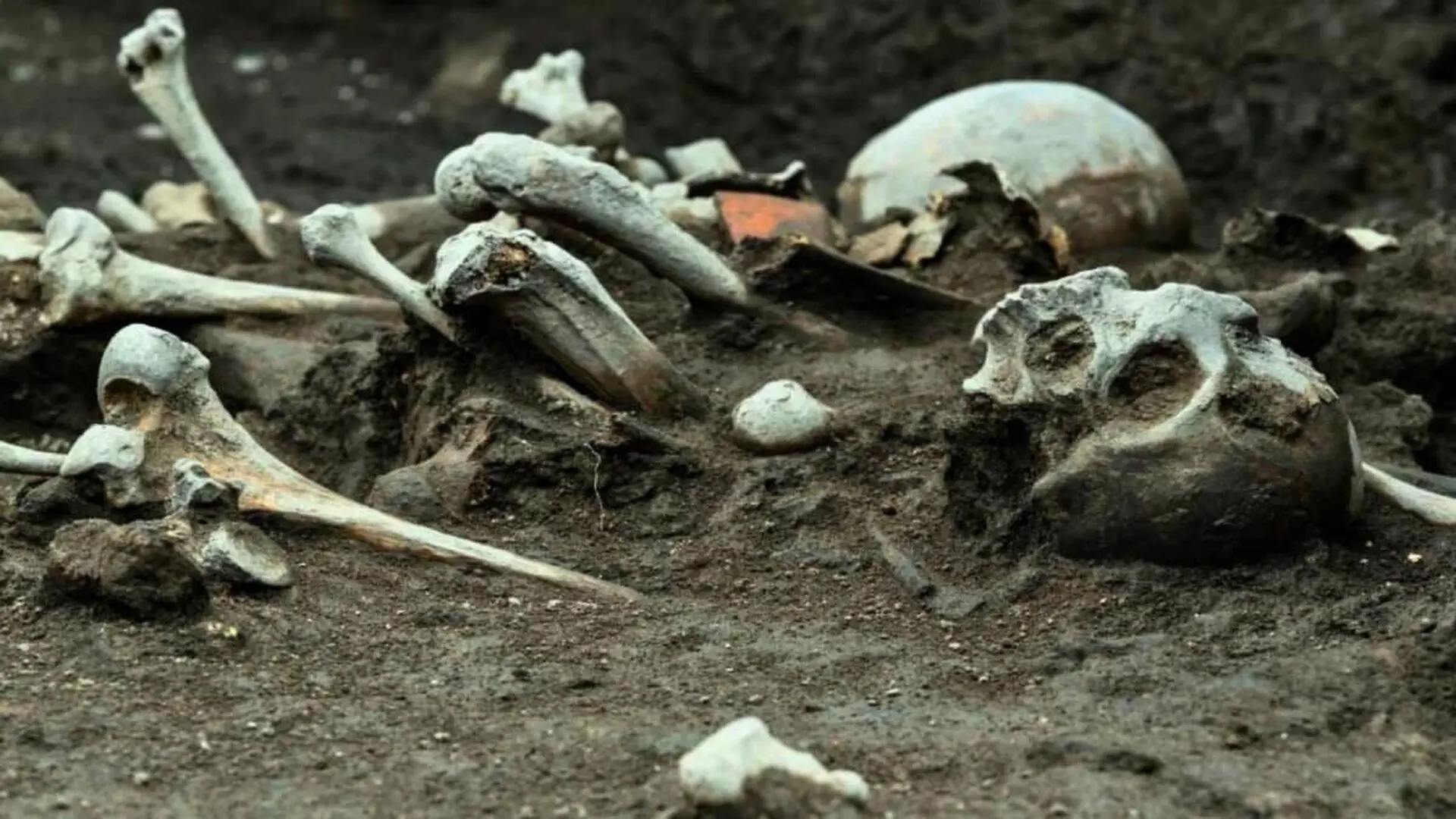
Archaeologists working on a rail infrastructure project in Mexico City have unearthed a significant cache of human remains, including nine skulls, five jawbones, and a collection of femurs, ribs, and hip fragments. Discovered approximately 1.4 meters beneath the surface near the busy Buenavista transport terminal, the site appears to be a communal ossuary, a location where bones were gathered and deposited following the decomposition of bodies.
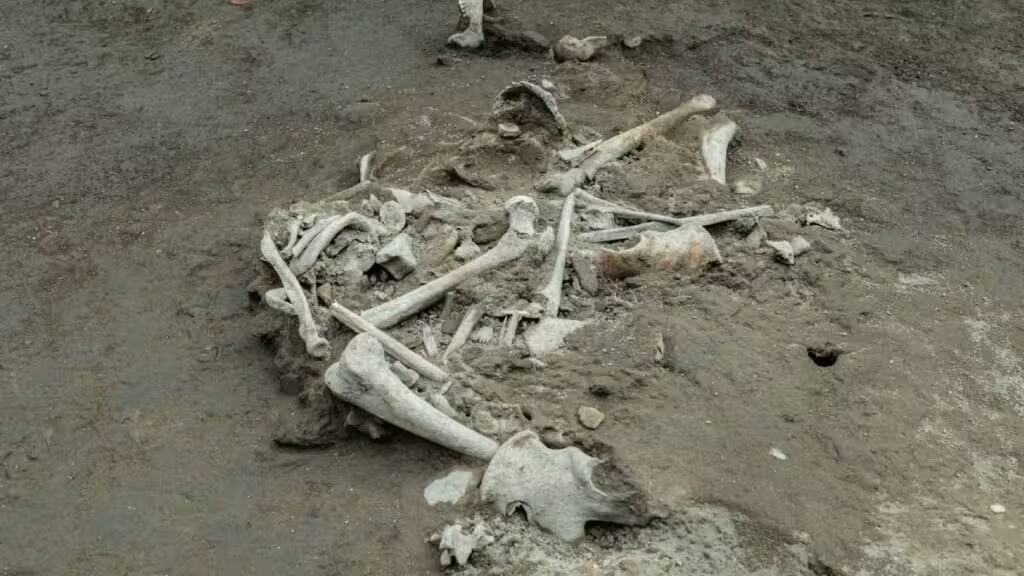
The discovery was made during excavations for the Mexico City–Querétaro passenger train. According to the National Institute of Anthropology and History (INAH), the disorganized state of the remains—which lacked the expected anatomical alignment of a traditional grave—is a primary indicator that the site served as an ossuary rather than a standard burial plot.
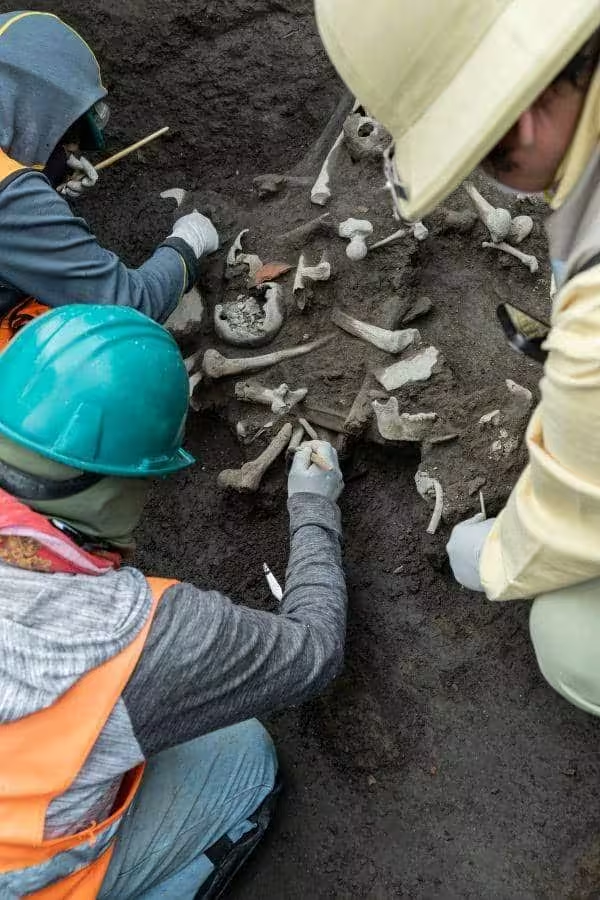
The excavation team, directed by Víctor Francisco Heredia Guillén, found that the deposit was heavily composed of robust skeletal elements like skulls and long bones, with smaller, more fragile bones noticeably absent. Physical anthropologist Abril Machain Castillo noted that this pattern is consistent with historical practices where communities cleared space in existing cemeteries by relocating older remains to a communal secondary burial site.
A Window Into a Turbulent Era
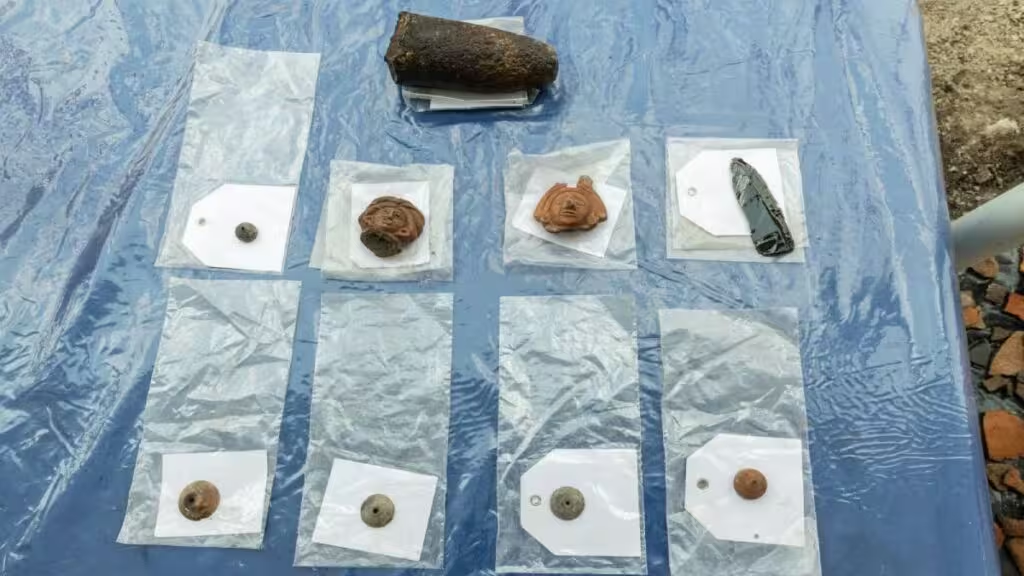
The remains were discovered alongside a collection of artifacts, including pottery from the Aztec III period (1350–1520). These items consist of cooking vessels, plates, and specialized containers once used for extracting salt from the waters of Lake Texcoco. Researchers also identified two clay figurines, seven miniature spindle whorls, and obsidian blades sourced from the Sierra de las Navajas.
Experts are currently working to determine whether the deposit dates to the final years of the Aztec Empire or the early decades of the Spanish colonial period. The proximity of the site to the historical neighborhood of Nonoalco—a district within the island city of Tlatelolco—adds further complexity to the timeline. Tlatelolco was a major commercial hub that suffered during the final stages of the Spanish conquest, eventually falling in 1521 after the capture of the emperor Cuauhtémoc.
Scientific Analysis Underway
Initial examinations have revealed that at least two of the skulls display signs of cranial modification. The recovered items have been transported to laboratories in Hidalgo, where specialists in ceramics and physical anthropology will conduct detailed cleaning and analysis. Future studies are expected to clarify the age, sex, and health status of the individuals, as well as the specific cultural significance of the burial.
The site’s proximity to the 16th-century San Miguel Nonoalco church suggests that the area may have been a bridge between indigenous burial traditions and the religious shifts introduced during the colonial era. As investigators analyze the soil layers and artifact distribution, they hope to distinguish whether this ossuary reflects the continuity of pre-Hispanic funerary rites or a response to the profound societal upheaval following the arrival of Spanish forces.
This article has been fact checked for accuracy, with information verified against reputable sources. Learn more about us and our editorial process.
Last reviewed on .
Article history
- Latest version
Reference(s)
- marco.jimenez, “Descubrimiento prehispánico; INAH halla osario con nueve osamentas en obras del Tren México-Querétaro.”, November 4, 2026 Uno TV <https://www.unotv.com/ciencia-y-tecnologia/inah-descubre-posible-osario-prehispanico-con-nueve-osamentas-en-obras-del-tren-mexico-queretaro/>.
- <https://www.ancient-history-sites.com/?p=133474>.
Cite this page:
- Posted by Vikram Desai