Earth Has Been Quietly Hosting A Second Moon For Months And No One Noticed
Astronomers have discovered that Earth briefly captured a tiny second moon in April, revealing new details about its strange and fleeting orbital journey.
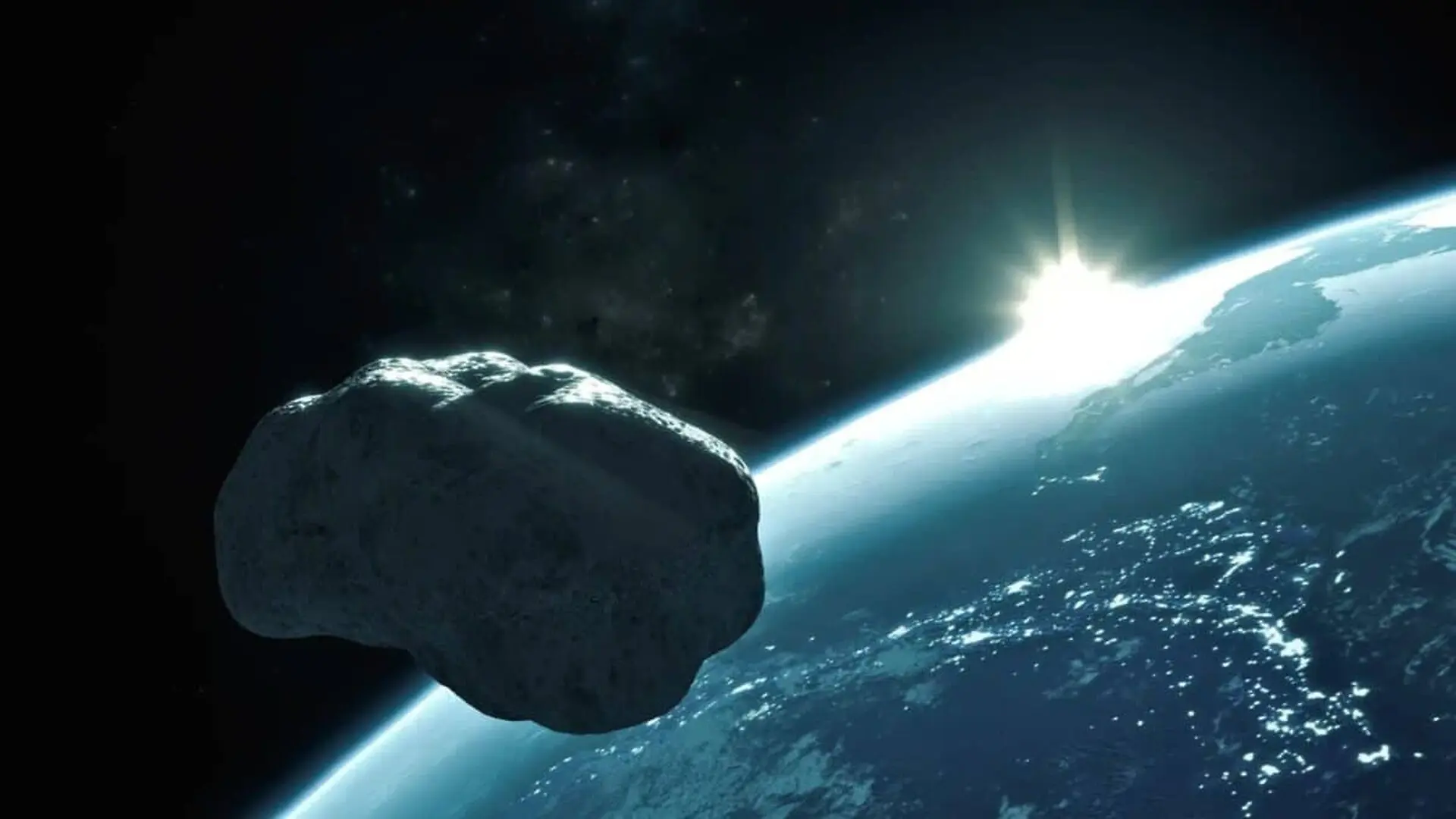
For nearly four months, Earth has hosted an elusive, pint-sized companion that went entirely undetected until late summer. The object, a small asteroid measuring roughly one meter in diameter, was ensnared by our planet’s gravitational field back in April 2026. It remained a silent neighbor until Hungarian astronomer Krisztián Sárneczky identified it in August.
Designated 2026 QQ8, the asteroid has been officially categorized by the Minor Planet Center as a temporary mini-moon. On October 29, researchers confirmed that orbital analysis shows the rock is currently tethered to Earth, marking the latest instance of our planet capturing an unexpected visitor from the inner solar system.
Discovery from the Hungarian Highlands
The detection occurred on August 20 at the Piszkéstető Observatory in northern Hungary. Sárneczky, who has developed a reputation for identifying near-Earth objects, spotted the faint flicker of the asteroid during routine survey work. Following the initial sighting, observatories across the globe mobilized to track the faint object, a challenging task given its minuscule size and diminishing brightness as it moved through the sky.
Discerning Rock from Space Debris
Initial investigations were clouded by the possibility that the object was merely space debris, such as a discarded rocket booster from a past mission. Earth’s orbital neighborhood is cluttered with man-made detritus that occasionally mimics the flight paths of natural asteroids.
To confirm its nature, astronomers in Hawaii and Arizona analyzed the object’s trajectory, specifically looking for evidence of solar radiation pressure. Unlike hollow rocket shells, which are easily nudged by the light of the Sun, dense asteroid rock responds differently to these subtle forces. The Minor Planet Center ultimately concluded there was no evidence linking the object to any known artificial craft, confirming its status as a natural, albeit fleeting, resident of Earth’s vicinity.
While the prospect of a second moon might sound dramatic, the rock poses zero risk to the planet. According to EarthSky, the asteroid is expected to drift out of our gravitational grasp by the end of December, eventually returning to its primary orbit around the Sun in 2027.
A Transitory Celestial Loop
The capture of 2026 QQ8 was made possible by the Hill sphere, the zone surrounding our planet where Earth’s gravity exerts more influence than the Sun’s. By entering this region at the correct velocity and angle, the asteroid was pulled into an irregular, looping path.
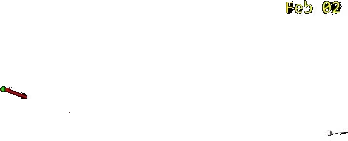
Orbit modeler Tony Dunn has visualized this trajectory, showing the asteroid tracing a wide, complex arc around the Earth-Moon system. Despite being a “moon,” it remains at a significant distance, never venturing closer than 570,000 kilometers—roughly 1.5 times the distance of our permanent Moon. This is not the object’s first close shave; records indicate it passed near Earth in 1965, and it is projected to return for another visit in 2058.
Distinguishing Mini-Moons from Quasi-Moons
Astronomers distinguish these temporary captures from quasi-moons. While mini-moons like 2026 QQ8, 2020 CD3, and 2024 PT5 are temporarily gravitationally bound to Earth, quasi-moons remain locked in an independent orbit around the Sun. A quasi-moon simply travels in a path that stays synchronized with Earth’s, creating the illusion of a companion.
The orbital period of 2026 QQ8 is approximately 358 days, nearly matching Earth’s, with an orbital tilt of just half a degree. This near-perfect alignment is precisely what allowed the asteroid to drift into our neighborhood, providing researchers with a brief, fascinating opportunity to study a transient natural satellite before it vanishes back into the deep cold of space.
This article has been fact checked for accuracy, with information verified against reputable sources. Learn more about us and our editorial process.
Last reviewed on .
Article history
- Latest version
Reference(s)
- “MPEC 2026-U95 : 2026 QQ8: Temporarily Captured Object.” <https://www.minorplanetcenter.net/mpec/K26/K26U95.html>.
- Whitt, Kelly. “A new mini-moon for Earth! Meet 2026 QQ8.”, November 4, 2026 EarthSky <https://earthsky.org/space/mini-moon-for-earth-2026-qq8/>.
- “Tony Dunn (@tony873004.bsky.social).”, September 3, 2026 Bluesky Social <https://bsky.app/profile/tony873004.bsky.social/post/3mun6tcijh22j>.
Cite this page:
- Posted by Aisha Ahmed